
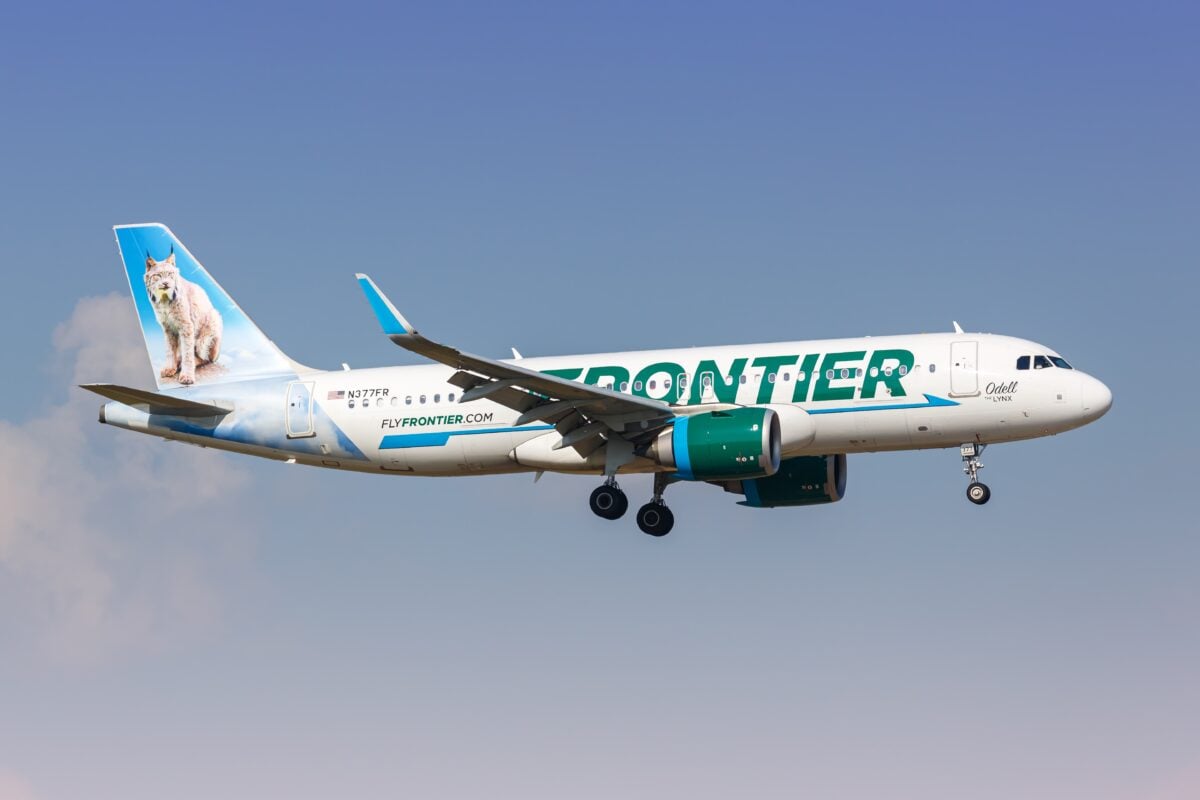
Editorial credit: Markus Mainka / Shutterstock.com
Frontier is lining up four late-2026 route launches with intro fares built for people who’d rather spend money on the trip than the flight. The new service touches Denver, Detroit, Fort Lauderdale, Houston, San Juan, Kansas City, Los Angeles, and Orlando, with launch prices starting at $69 on the cheapest pair and $99 on the rest.
The timing runs straight into November and December 2026, which is exactly when fares have a habit of becoming annoying. If you’re planning holiday travel, a winter sun break, or a quick family visit, these additions give you a few more nonstop options to price out. Frontier is also tying the launch to its broader cabin and loyalty refresh, part of the same budget-airline shuffle seen elsewhere in the market, including Frontier’s earlier push for cheap flights after Spirit’s collapse.
The Four New Route Launches
There are four underlying new route pairs here, listed in both directions in the schedule. Most are daily, with Kansas City to Orlando running a little lighter. The headline fares look sharp for deal hunters, although the usual extras still matter once bags, seats, and timing enter the chat.
- Denver International Airport (DEN) to Fort Lauderdale (FLL) starts Nov. 20, daily, from $99.
- Detroit Metropolitan Wayne County Airport (DTW) to Los Angeles (LAX) starts Nov. 20, daily, from $99.
- Fort Lauderdale-Hollywood International Airport (FLL) to Denver (DEN) starts Nov. 20, daily, from $99.
- George Bush Intercontinental Airport (IAH) to San Juan (SJU) starts Dec. 17, daily, from $99.
- Los Angeles International Airport (LAX) to Detroit (DTW) starts Nov. 20, daily, from $99.
- Kansas City International Airport (MCI) to Orlando (MCO) starts Nov. 20, four times a week, from $69.
- Orlando International Airport (MCO) to Kansas City (MCI) starts Nov. 20, four times a week, from $69.
- Luis Muñoz Marín International Airport (SJU) to Houston Bush (IAH) starts Dec. 17, daily, from $99.
For anyone comparing options airport by airport, Denver to Fort Lauderdale gives South Florida-bound flyers another nonstop into a major leisure market, while Detroit to Los Angeles adds a direct link on a route that often swings wildly in price around peak dates. Houston to San Juan is the obvious winter-weather play, and Kansas City to Orlando is the sort of route families and theme-park planners tend to search early.
Where The Cheapest Fares Sit
The lowest advertised entry point in this batch is $69 one way, and it’s tied to the Kansas City–Orlando route. Every other new route in the rollout opens from $99. If you’re choosing by fare first, Orlando is the bargain end of the list, especially for anyone planning a short break with flexible midweek dates.
Those prices come with the usual promo fare conditions. Tickets have to be booked by 11:59 pm Eastern time on Jul. 20, 2026. The sale applies to nonstop travel on select days through Jan. 4, 2027, and the blackout dates cut across the busiest Thanksgiving, Christmas, and New Year periods, which is hardly shocking but definitely worth checking before you build the whole trip around the headline fare.
- Purchase deadline: Jul. 20, 2026 at 11:59 pm Eastern
- Advance purchase: 21 days required
- Travel window: through Jan. 4, 2027
- Blackout dates: Nov. 20-25, Nov. 27-30, Dec. 23-24, Dec. 26-27, Dec. 30-31, 2026, and Jan. 2-3, 2027
If you’ve priced holiday flights before, you already know what happens next: the cheapest seats don’t usually hang around for long, and the lowest fare buckets often vanish first on Friday and Sunday departures. Frontier’s sale setup is most useful for people who can leave midweek, travel light, and avoid the obvious peak dates.
What The New Routes Mean For City Breaks And Winter Trips
The Denver–Fort Lauderdale route makes plenty of sense for winter escapes, cruises out of South Florida, and family visits where a connection just adds another chance for delays. Fort Lauderdale is also a handy arrival point if Miami prices are looking silly, with Brightline and local transport giving people more flexibility once they land.
Detroit–Los Angeles is a very different sort of route but just as useful. It connects a major Midwest hub with one of the busiest airports in the country, and nonstop service matters on a long domestic run like this. Anyone heading to Southern California for a city break, work trip, or a split stay between LA and the coast will usually take the direct option if the price is close enough.
The new Houston–San Juan service lands right in peak Caribbean planning season. San Juan has strong appeal for people who want beach time without dealing with currency exchange, and it works well as both a city stay and a jumping-off point for the rest of Puerto Rico. If winter sun is the whole goal, this route is one of the more practical additions in the set.
Kansas City–Orlando is the cheapest route in the launch and probably the easiest one to understand. Theme parks, school holidays, family trips, and quick sunshine breaks keep Orlando busy all year, and a $69 starting fare will get attention even after add-ons. People comparing Florida breaks may also end up weighing this against other low-cost beach options like the places featured in these cheapest beach towns in the USA for a budget holiday.
The calendar matters almost as much as the route map. Flights starting in late November and mid-December land in one of the priciest booking windows of the year, so even a modest increase in nonstop options can help keep fares from climbing quite as fast on competing routes.
Frontier’s Broader Product Push
Frontier is using the route launch to keep pushing The New Frontier, its current package of product upgrades and loyalty perks. One of the more noticeable changes is UpFront Plus, a seating option in the first two rows with extra legroom, extra elbow room, a window or aisle seat, and a guaranteed empty middle seat. For a budget airline, that’s a fairly direct attempt to tempt people who want a bit more comfort without booking a full-service carrier.
First Class is also due in 2026, which says plenty about where the airline thinks the market is heading. Budget flyers still chase low base fares, but plenty will pay extra for space on a longer route if the upsell stays reasonable. Other carriers have been making similar plays around premium add-ons, loyalty tie-ins, and retention, as seen in moves like American Airlines’ newer loyalty push.
The same goes for Frontier Miles. Members earn based on dollars spent, starting at a standard 10X multiplier and rising to 20X at higher elite tiers. Elite status begins at 10,000 points, and the benefits can include priority boarding, seat selection, and free bags depending on status level. Family pooling is available for Elite members too, which can help households collect points faster if several people are flying a couple of times a year rather than one person flying constantly.
Frontier has also promoted unlimited companion travel for its most loyal customers, plus the ability to switch companions from one flight to the next. That kind of flexibility is useful if trips are split between partners, relatives, or friends, and it’s the sort of perk that sounds niche until you’ve paid for a second ticket enough times.
How To Read The Sale Fare Fine Print
Promo fares only really work if you read them with a slightly suspicious eye. Frontier says these launch prices are one-way fares, they do not require a round-trip purchase, and they apply only on select days of the week. That can still be a solid deal, but only if the return fare doesn’t undo the savings.
Availability also varies by route and date, which is standard for ultra-low-cost sales. The cheapest seats are limited, and once those are gone, the fare jumps. Frontier’s booking flow also means your final total can move quite a bit depending on carry-on bags, checked luggage, seat assignments, and boarding options. The base fare gets you in the air; everything else can start stacking up quickly.
If you’re trying to keep the total cost sensible, a few old rules still hold up:
- Search flexible dates instead of locking yourself to one departure.
- Check the blackout dates before planning a Thanksgiving or Christmas break.
- Compare baggage costs, especially if another airline includes more in a slightly higher fare.
- Book early if you want the launch price rather than the next tier up.
It also helps to compare the full trip, not just the flight. A cheap fare into Orlando during a school holiday can still turn expensive once hotels, park tickets, and airport transfers pile on. The same logic applies in South Florida and Los Angeles, where accommodation can swing from reasonable to painful depending on the weekend.
A Small Network Update With Big Budget Appeal
These additions are not a massive network overhaul, but they do slot into some very busy trip patterns: Colorado to Florida, Michigan to California, Texas to Puerto Rico, and Kansas City to Orlando. That’s a clean mix of leisure demand, family visits, and winter-sun traffic, with enough mainstream appeal that the launch fares should draw attention quickly.
Frontier is leaning on two familiar ideas at once: cheap intro pricing and a stronger push on comfort and loyalty perks. If you’ve been waiting for a cheaper nonstop on one of these city pairs, it’s worth pricing the route before the booking deadline passes. And if you’re comparing broader air travel trends, it sits alongside other recent route expansions such as Glasgow Airport’s restored direct New York flights, where demand and convenience are still doing most of the heavy lifting.
