

Television is very good at lying about geography. A country estate becomes an aristocratic fantasy, a Georgia town becomes a zombie stronghold, and a California backlot somehow convinces millions of people that Stars Hollow exists.
That trick is part of the fun, but the real places matter. They shape the mood of a series in ways viewers feel even when they do not know the map. A dry New Mexico horizon does different work than a damp English county. A preserved Southern main street carries a different weight than a studio facade.
Here are The Real-Life Locations Where 6 Famous TV Shows Were Filmed, with the specific places that did the heavy lifting on screen and the practical details that make them worth knowing off screen too. If you like this kind of screen geography, you’ll probably enjoy small towns in the US you will recognize from movies too, because the same sleight of hand shows up there in a slightly different costume.
1. Downton Abbey: Highclere Castle, Hampshire, England
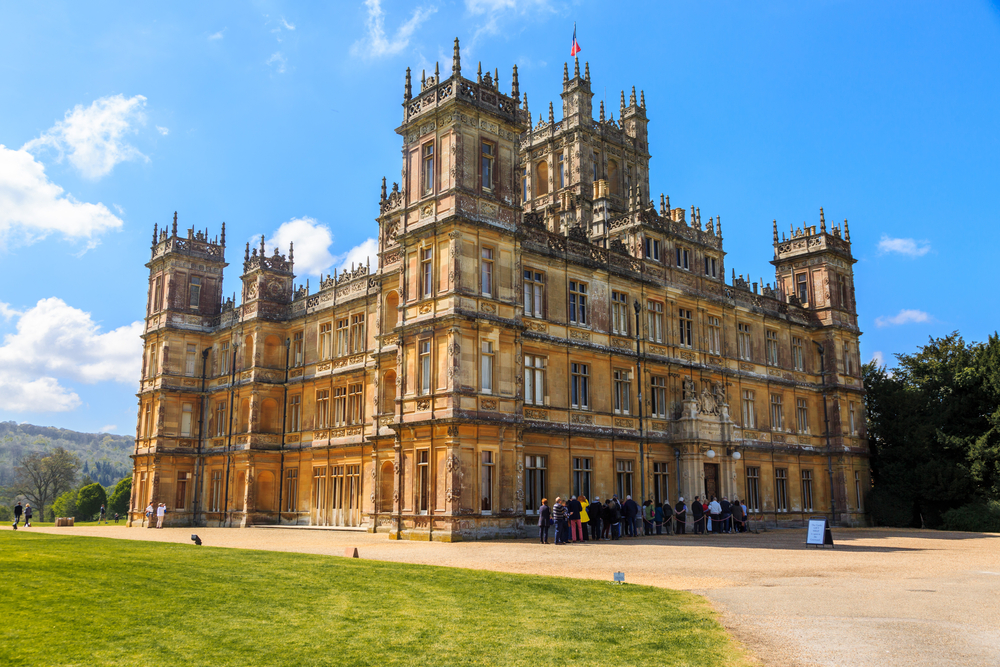
Let’s start with the obvious question, because nearly everyone asks it after a few episodes: is Downton Abbey a real house? Not by that name. But the estate most people picture absolutely is.
The grand exterior and many interior scenes were filmed at Highclere Castle in Hampshire. The estate covers 5,000 acres, which helps explain why the show feels so expansive. Highclere was built in 1679 and renovated in the 1840s, so even before the cameras arrived it already carried the layered look of an old English seat that had been revised over centuries rather than designed in a single burst. The current house is closely associated with Sir Charles Barry, the same architect who helped reshape the Palace of Westminster, which tells you a lot about why the facade reads as stately rather than merely large.
Fans can visit Highclere for tours, though dates are usually limited and tend to cluster around seasonal openings and special events, so this is not the sort of place to assume you can simply wander into on a random Tuesday. You cannot book a room in the castle itself, but the estate does offer stays in two lodges on the grounds. That is a useful distinction if you are planning a trip and have imagined yourself sleeping in the main house under a canopy bed with stern footmen outside. Television has limits. So does the booking system.
The show also leaned on other English locations. Bampton, Oxfordshire doubled as the village of Downton, while Byfleet Manor in Surrey stood in for the Dowager Countess’s home. If your interest is less about the grand staircase and more about the texture of village England, Bampton is arguably the more revealing stop. It shows how much the series depended on existing settlement patterns, parish buildings, and roads that already looked right. If you’re building out a southern England trip, it also helps to think practically about your base rather than charging around the counties like an overexcited location scout.
2. Breaking Bad: Albuquerque, New Mexico, USA
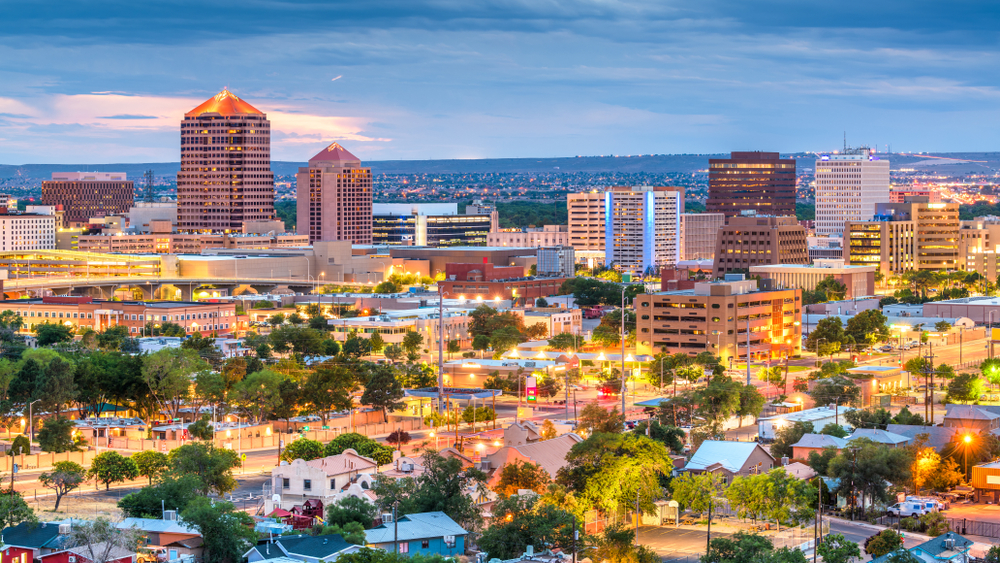
Breaking Bad is set so firmly in Albuquerque that the city becomes part of the plot, not just the backdrop. The hard light, wide roads, low buildings, and desert edge all feed the show’s moral atmosphere. You could not pick it up and drop it into Boston without the whole thing becoming nonsense.
Albuquerque was not the original plan. Production had reportedly considered Riverside, California, but the series ended up in Albuquerque, New Mexico, where tax incentives helped and the landscape gave the show its visual identity. That second part is the important one for viewers. The city does not just host the story. It sharpens it.
Visitors still seek out the best-known locations: Walter White’s house, Los Pollos Hermanos, the car wash, and Sandia Mountain. A lot of these are easy enough to find, but easy to find is not the same as easy to visit well. Walter White’s house, in particular, is a private residence, and that has produced years of bad fan behavior, enough that barriers and warning signs became part of the story around the place. The research also points to dedicated tour companies in Albuquerque that focus on these locations. That matters if you want context instead of just pulling over for quick photos on residential streets.
There is also a practical advantage here. Many of the show’s locations line up reasonably well with broader New Mexico sightseeing, which means a fan itinerary does not have to be a narrow pilgrimage. You can fold it into a larger trip rather than spending a full day driving from one parking lot to another. If you want another film-location rabbit hole after this one, where was The Karate Kid Part 2 filmed makes a good companion read.

We earn a commission if you buy through this link, at no extra cost to you.
3. The Walking Dead: Senoia, Georgia, USA
If Albuquerque gave one show its visual grammar, Senoia, Georgia did something similar for The Walking Dead. The town served as Woodbury, and fans know it well enough that the line between screen identity and real identity has blurred. Senoia has even been described as the “zombie capital”, which is not a phrase many towns set out to earn.
What makes Senoia interesting is that it is not just a single landmark. It is a whole small-town streetscape that production could use repeatedly. That continuity is why television tourism works especially well here. You are not hunting one house at the end of a cul-de-sac. You are walking through a place with a strong sense of itself, which the series adapted rather than invented wholesale. The downtown core is compact enough to do on foot, which is fortunate, because filming towns are always more legible at walking pace than through a windshield.
The fan culture around the show got organized enough that viewers created and shared a Walking Dead map. That is one of those practical clues editors like me pay attention to. When fans start mapping a place for one another, it usually means the location is legible on the ground, not just famous in abstract. The flip side is that longtime visitors do mention the occasional tension between fandom traffic and ordinary town life, especially on busy weekends, so going earlier in the day is usually the less annoying option for everyone involved.
If you’re considering a stop, treat it as a town visit first and a fandom stop second. That approach tends to make filming locations more enjoyable and less performative. Also, the residents will thank you, even if not verbally. If you’re plotting a wider trip through the state, spring break in Florida where to go beyond the party beaches is not a Georgia guide, obviously, but it does pair well if you’re stretching a southeastern US itinerary beyond the usual one-stop plan.
4. Game of Thrones: Northern Ireland, Croatia, Iceland, and Spain
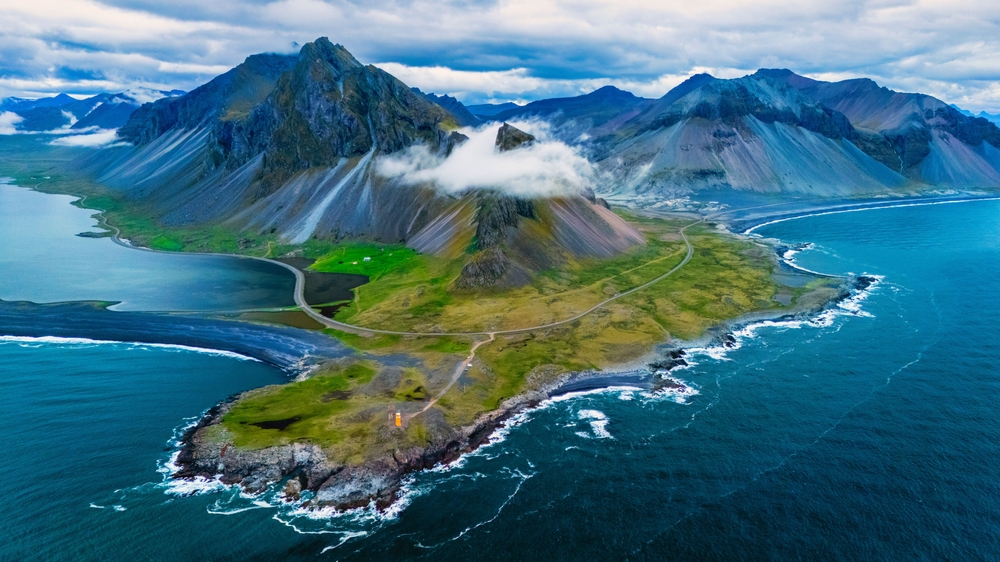
Game of Thrones is the opposite of a single-city production. It built Westeros by spreading itself across several countries, using real landscapes and historic settings to give each political region its own physical logic.
The production spanned Northern Ireland, Croatia, Iceland, and Spain. That is a wide footprint, but it was not random. Northern Ireland supplied much of the series’ core production base, especially around Belfast and County Down. Croatia brought in fortified stone cities and coastal grandeur, above all Dubrovnik for King’s Landing. Iceland handled the severe northern landscapes, where lava fields, glaciers, and black-sand terrain did half the acting for the lands beyond the Wall. Spain added sun-baked terrain and monumental architecture that could pass for older, harsher kingdoms, with Seville and Osuna among the most recognizable examples.
For travelers, this is the show on this list that most rewards choosing a single region rather than trying to “do it all.” A Dubrovnik-focused trip in Croatia gives you a very different experience from an Iceland route built around volcanic and glacial scenery. Both are valid. They just answer different versions of the fan question. Spain, meanwhile, often appeals most to travelers who want their filming locations wrapped inside a broader architectural trip, because the sites there stand up perfectly well even if you have never once argued about succession in Westeros.
If your interest is in how television uses real geography, this series is a useful case study. It did not merely find pretty places. It matched terrain to political mood. Once you see that, the location choices feel less like fan trivia and more like part of the storytelling structure.
5. Stranger Things: Atlanta Area, Georgia, USA
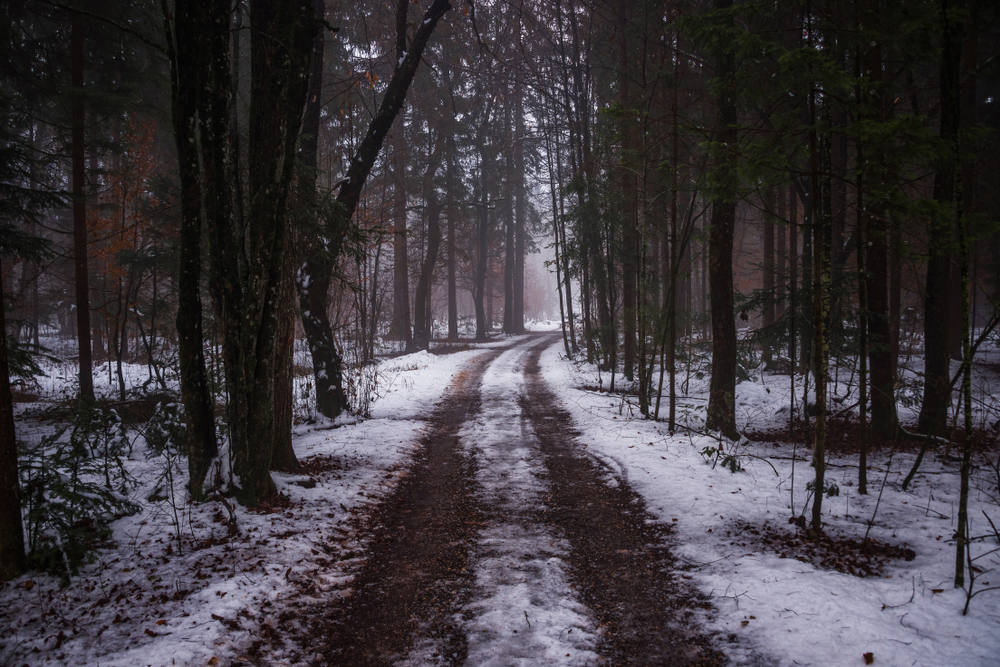
Stranger Things is set in fictional Hawkins, Indiana, but the series was filmed outside of Atlanta. That mismatch is a good reminder that American screen geography has always been a little fraudulent in a very confident way.
The reason the Atlanta region works is not that it resembles Indiana in every detail. It is that it offers neighborhoods, roads, woods, and civic buildings flexible enough to become a plausible 1980s Midwestern town once the production design steps in. Television rarely needs exact duplication. It needs a place that can carry the right social feeling. Jackson, Georgia, is one of the key places fans usually seek out, since parts of its downtown were used for Hawkins scenes, while other locations were scattered across metro Atlanta and beyond.
Atlanta and its surrounding communities have become major production territory, so fans interested in screen locations usually benefit from pairing a Stranger Things stop with a broader look at Georgia filming sites. That gives the trip more shape than chasing a single fictional town that was always assembled from multiple real-world components anyway. It also keeps expectations in check, because Hawkins was never one neatly packaged destination waiting to be discovered whole.

We earn a commission if you buy through this link, at no extra cost to you.
6. Gilmore Girls: Warner Bros. Backlot, Burbank, California, USA
Now for a different kind of filming location, because not every famous TV place is a “real town” in the usual sense. Gilmore Girls built much of Stars Hollow on the Warner Bros. backlot in Burbank, and that matters because the backlot itself has become a kind of geography in American television.
The studio tour identifies the same area as having served not only Stars Hollow but also Bluebell, Alabama in Hart of Dixie and Rosewood in Pretty Little Liars. In other words, one walkable production environment has played several famous TV towns. That is not a disappointment. It is the point. The square that many viewers mentally file under one fictional town has been redressed repeatedly, which is a neat reminder that television memory is often just very persuasive set dressing.
If Highclere Castle shows what happens when a series uses a real estate with centuries of history built into the walls, the Burbank backlot shows the other side of the craft. Streets can be rearranged, dressed differently, and filmed from flattering angles until they become places viewers swear they know. Studio fakery, when done well, is an art form.
For visitors, the Warner Bros. Studio Tour Hollywood is the practical way in. This is less about standing outside one iconic facade and more about understanding how television manufactures familiarity. It is also a useful stop if your real interest is production design rather than pure fandom. Burbank also slots easily into a wider Los Angeles trip, which is handy if your tolerance for studio nostalgia is high but not unlimited.
How to Visit TV Filming Locations Without Being a Nuisance
This part is less glamorous, but it matters. Plenty of famous filming locations are in active neighborhoods or function as real businesses. Fans are guests, not claimants.
- Check whether a site is a residence, a business, a tour stop, or a ticketed attraction. Highclere Castle is meant for visitors on designated terms. A private house in Albuquerque is a different situation.
- Use official tours when they exist. The Warner Bros. Studio Tour and dedicated Breaking Bad tours exist for a reason. They give you access and context without turning ordinary streets into a fan obstacle course.
- Group nearby stops into one region-based itinerary. Hampshire and Oxfordshire work well together for Downton Abbey. Albuquerque can anchor a broader New Mexico trip. Atlanta-area locations fit naturally into a Georgia screen-tourism plan.
- Remember that “the location” may be several locations. That is especially true for Stranger Things and Game of Thrones, where the fictional setting is assembled from multiple real places.
Where to Stay if You’re Building a Filming-Locations Trip
If you want to turn one of these into an overnight stop, the easiest base from this list is probably Albuquerque, New Mexico. It has several recognizable locations tied to one show, broader regional sightseeing around it, and a straightforward city structure for visitors who do not want to spend half the trip deciphering rural roads.
Hampshire also makes sense if your main goal is Downton Abbey, especially if you plan to combine Highclere Castle with village stops in Bampton. Burbank works well for travelers who care about studio production history and want an easier urban base than a scattered location hunt. For travelers who prefer practical neighborhood planning before they book anything, guides like where to stay in Lima, what to do there are useful reminders that the same principle applies everywhere: your base shapes the trip more than people think.
Why These Places Stick in the Mind
The best TV filming locations do more than look good on camera. They carry social history, street patterns, climate, architecture, and scale that the audience absorbs almost subconsciously. That is why Highclere feels inherited, Albuquerque feels exposed, Senoia feels unnervingly self-contained, and the Warner backlot feels like a memory made out of plywood and perfect angles.
So yes, television cheats. Constantly. But it usually cheats with real places, and the best of those places are worth understanding on their own terms, not just as evidence that your favorite show existed.