
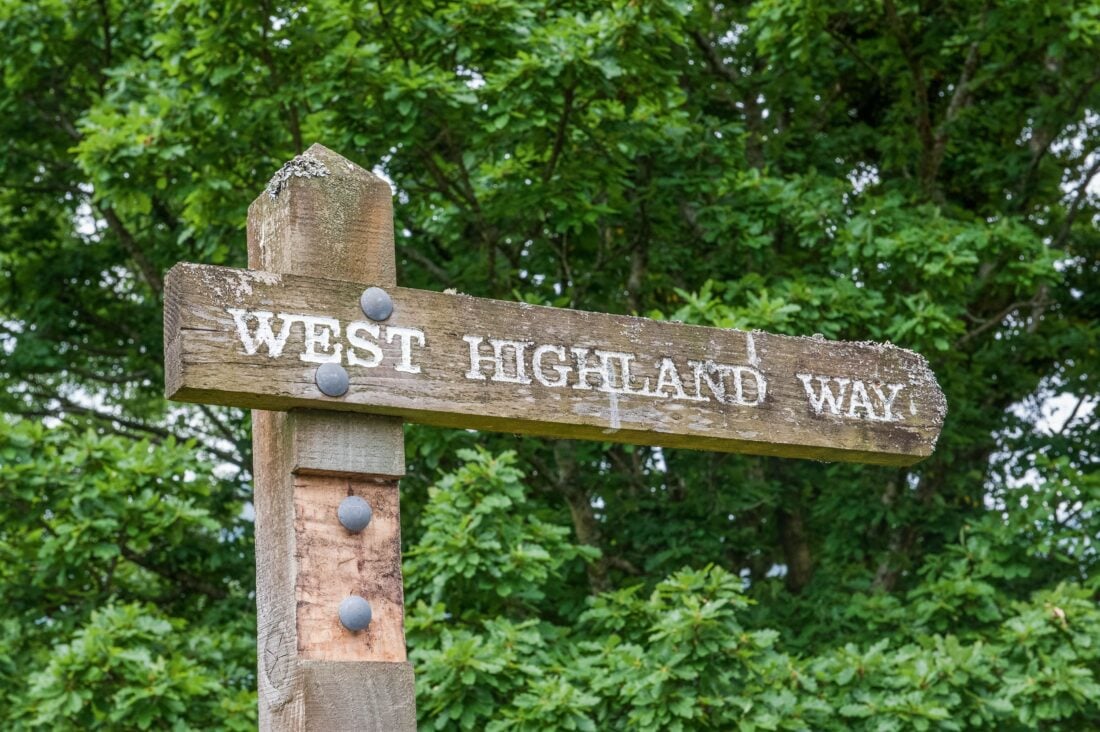
The West Highland Way is a 96-mile (155 km) long-distance trail running from Milngavie (pronounced “mil-gai”), just north of Glasgow, to Fort William in the Scottish Highlands. It is moderate in difficulty, not technical, and genuinely manageable for beginners who can walk long distances on consecutive days. Most people complete it in 5 to 8 days, though a leisurely pace with rest days can stretch it to 10. The currency is British pounds (£/GBP), and English is spoken everywhere along the route.
The trail is well-marked throughout with Scotland’s Great Trails thistle symbol. Navigation is straightforward. What catches beginners out is not the route-finding but the cumulative mileage, the unpredictable Scottish weather, and the Loch Lomond section’s relentless tree roots and boulders. If you want the condensed version of everything below, grab our free West Highland Way cheat sheet before you start planning.
| Detail | Answer |
|---|---|
| Distance | 96 miles (155 km) |
| Start / End | Milngavie to Fort William |
| Typical duration | 5 to 8 days (up to 10 with rest days) |
| Difficulty | Moderate – suitable for beginners with reasonable fitness |
| Highest point | Devil’s Staircase at 548 metres |
| Total ascent | 4,019 metres |
| Best months | May to June (driest) or early autumn |
| Direction | South to north (recommended) |
| Baggage transfer | Available – Baggage Freedom from £45 per bag, up to 3 stops |
| Book accommodation | 6 months to a year in advance |
Is the West Highland Way Suitable for Beginners?
Yes, but with a realistic expectation of what “beginner” means. You do not need prior backpacking experience, but you do need to be able to walk long distances over varied terrain for multiple days in a row. One hiker’s son completed the trail with virtually no long-distance training, though he found it hard going.
The terrain mixes footpaths, stony and rocky tracks, old military roads, and short tarmac stretches through villages. The southern half is gentler; the northern half opens up into moorland and mountain passes. Train for it. Gradually increase your walking distances before you go, covering different terrain and weather conditions.
The Route: Stages and Key Stops
The standard direction is south to north. The main stops along the trail are:
Milngavie – Drymen – Balmaha – Rowardennan – Inversnaid – Inverarnan – Tyndrum – Bridge of Orchy – Kingshouse – Kinlochleven – Fort William
Here is a breakdown of the harder segments with distances and elevation:
| Stage | Distance | Elevation Gain |
|---|---|---|
| Balmaha to Rowardennan | 8 miles | 922 ft |
| Rowardennan to Inversnaid | 7.5 miles | 787 ft |
| Inversnaid to Inverarnan | 9 miles | 928 ft |
| Inverarnan to Tyndrum | 13 miles | 2,707 ft |
| Tyndrum to Bridge of Orchy | 8.5 miles | 1,191 ft |
| Bridge of Orchy to Kingshouse | 10.5 miles | 3,100 ft |
| Kingshouse to Kinlochleven | 10 miles | 1,883 ft |
| Kinlochleven to Fort William | 16 miles | 2,800 ft |
Day 1: Milngavie to Drymen (or Garadhban Forest)
The opening stretch is flat and well-trodden, a good warm-up. The path to Drymen has minimal inclines, so enjoy it while your legs are still fresh and optimistic. A popular detour on this first day is Glengoyne Distillery, located between Milngavie and Drymen. Honestly, starting a long-distance hike with a whisky tasting is a very Scottish move and I’m here for it. If you stop in Drymen, book a table at the Clachan Inn in advance; it fills up fast. You can pick up an official West Highland Way Passport in Milngavie from Gavin’s Mill, Creature Comforts, or the Spar.
Day 2: Drymen to Balmaha
This stage crosses Conic Hill, which marks the Highland Boundary Line and gives you your first clear views of Loch Lomond. Balmaha has limited accommodation, so the Oak Tree Inn is the main option listed. Boat trips from Balmaha reach Inchcailloch, part of the Loch Lomond National Nature Reserve, if you want a short detour. Keep your eyes peeled for Highland cows in the fields around here (and yes, the females have horns too, which catches a lot of people off guard).
Day 3 and 4: The Loch Lomond Stretch (the Hard Part)
The section from Balmaha to Inverarnan along Loch Lomond is widely considered the most demanding on the trail. Tree roots, rocky shorelines, and boulders make it physically and mentally draining despite the relatively short distances. Hikers describe it as “nature’s obstacle course,” with fallen trees and scrambling over boulders. Fellow hikers tend to help each other through it, which is part of what makes the trail’s community feel genuine.
The Inversnaid Bunkhouse is a recommended stop here, it has a strong reputation for food and needs to be booked well in advance due to limited bunk availability. Waterbus services run from Inversnaid to Tarbet and Inveruglas if you need an exit option; check departure times before you go.
Day 5 to 6: Tyndrum, Bridge of Orchy, and Kingshouse
Tyndrum is one of the larger trail towns and has more dining and accommodation options than most stops. The Green Welly Stop here is useful for picking up snacks and gear. Bridge of Orchy Hotel is well regarded for food and accommodation.
The section from Bridge of Orchy to Kingshouse has the highest elevation gain of any stage listed (3,100 ft). This is where the landscape properly shifts into big, open Highland scenery. Kingshouse Hotel and its bunkhouse are key landmarks. The bunkhouse has had some cleanliness issues due to staffing, though the main areas have been reported as clean. Glencoe Mountain Resort is a nearby accommodation option slightly off the trail with clear signage.
Day 6 to 7: Devil’s Staircase and Kinlochleven
The Devil’s Staircase is the highest point on the trail at 548 metres. It sounds worse than it is. The ascent is steep but manageable, and the top offers panoramic views that make it a natural lunch stop. Weather can shift fast here, heavy showers, icy winds, and sunshine can all happen on the same climb.
After descending into Kinlochleven, the Grey Mare’s Waterfall is worth a short detour. Dipping your feet in cold water is a genuine way to reduce swelling and foot pain.
Final Day: Kinlochleven to Fort William
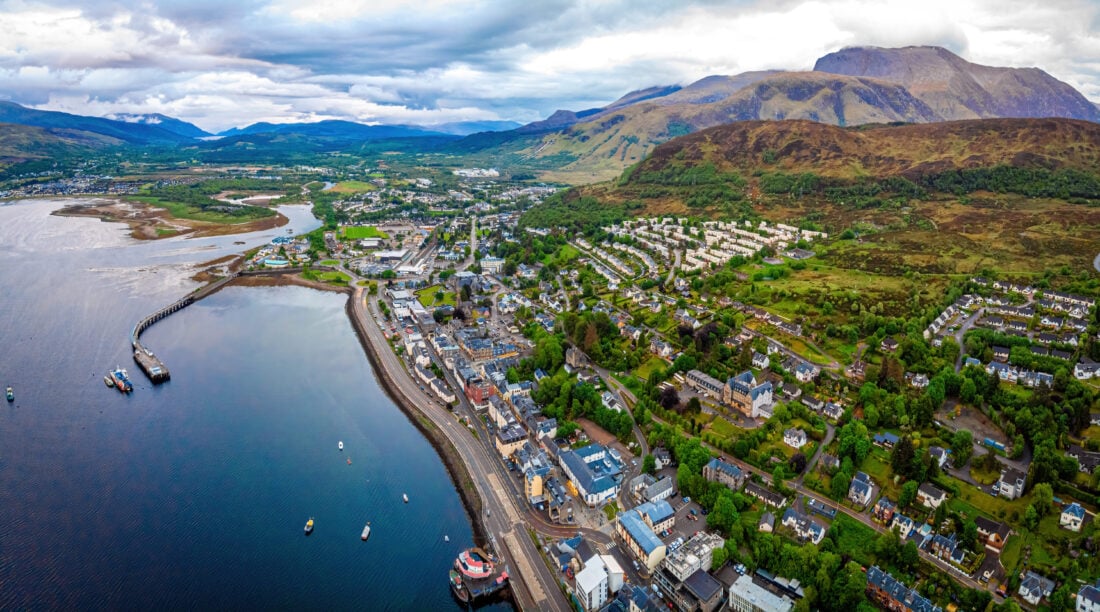
At 16 miles with 2,800 ft of elevation gain, this is the longest stage. Not gonna lie, after nearly a week on your feet, this one tests you. It starts with a steep but short ascent, then descends into Fort William. The trail ends in Fort William town centre at the “Sore Feet Statue,” which feels extremely appropriate by that point. The original end point is just outside town, closer to Ben Nevis.
What the West Highland Way Actually Feels Like
The southern half gives you lochs, woodland, and rolling hills. The northern half opens into moorland, mountain passes, and bigger skies. The camaraderie among walkers is real, strangers share walking poles on boulder sections, warn each other about accommodation shortages, and end up eating dinner together most nights.
Accommodation can sell out quickly, especially in peak season. Showing up without a booking and then walking further than planned in heavy rain is a common and avoidable mistake. Book ahead. We have a full breakdown of West Highland Way accommodation options if you want the details on what’s available at each stop.
When to Walk the West Highland Way
- May to June – typically the driest months and a good balance before midge season peaks
- July to August – busiest period; midge season is at its worst
- September – quieter, cooler, midges start to thin out
- Avoid mid-summer if you are sensitive to midges
Midge season runs from May to September. July and August are the worst months. Use midge-specific insect repellent (DEET-based products work) and carry a midge net. Ticks are also present; wear light-coloured clothing so you can spot them, and use insect repellent.
Scotland’s weather is unpredictable regardless of season. Expect rain. Expect it to clear. Expect it again.
What to Pack for the West Highland Way
Keep your pack weight to no more than 10% of your body weight. Only carry essentials. If you want a full rundown of exactly what to bring (and what to leave at home), check out our West Highland Way packing list.
Clothing (layer system):
- Short-sleeve shirts and long-sleeve sun shirts
- Leggings or hiking pants, plus shorts
- Fleece and a puffy jacket
- Full waterproofs (jacket and trousers)
- Appropriate footwear, waterproof, good grip, broken in before you go
Kit essentials:
- First aid kit
- Whistle and torch
- Paper map and compass (Harvey’s XT40 West Highland Way map is recommended)
- OS Maps Explorer app for digital backup and escape routes
- High-energy snacks
- Water and electrolytes
- Midge net and insect repellent
- Sunscreen and sunhat
- Emergency information card
Navigation: The trail is well-signed throughout. Alltrails works well for tracking distance, elevation, and time. Download maps offline before each day’s walk.
Footwear note: Wear boots you have already broken in. Waterproof with good ankle support. Foot pain is the most common issue on the trail. Dipping your feet in cold water at every opportunity genuinely helps with swelling.
Accommodation on the West Highland Way
Options range from wild camping and bothies to bunkhouses, youth hostels, B&Bs, and hotels. Accommodation is sparse in the Highlands. Book 6 months to a year in advance, especially for the popular stops like Rowardennan, Inversnaid, and Kingshouse.
Wild camping: Legal in Scotland under the Land Reform Act, but not everywhere along the route. There is a wild camping ban along Loch Lomond from 1st March to 30th September. An alternative is the wild camping permit site at Lochan Maoil Dhuainne.
Baggage transfer: If you do not want to carry a full pack, Baggage Freedom will transport your luggage between accommodations from £45 per bag for up to three stops. Travel Lite is another operator. Your bags will be waiting at the next stop but will not be taken to your room, ask at the front desk.
Food and Drink on the Trail
Food options are better than you might expect. Most accommodations offer breakfast with options like toast, eggs, porridge, juice, and tea or coffee. Packed lunches, typically a sandwich, crisps, fruit, and a snack bar, can usually be arranged at check-in. Specify dietary needs when you book.
Vegetarian and gluten-free options are widely available. Vegan options exist but are more limited. Asking to mix sides as a main meal works at most places.
For snacks and resupply, the Green Welly Stop in Tyndrum is the most useful trail store. Honesty boxes appear on the first half of the route. Turnip the Beet deli in Killearn sells camping gas.
Getting to Milngavie and Back from Fort William
- Glasgow to Milngavie: Train from Glasgow, running approximately every 30 minutes. Milngavie station puts you close to the trail start, there is a Tesco and Costa Coffee nearby.
- Fort William to Glasgow: Train or Citylink coach. Some baggage transfer companies offer return packages from Fort William back to Milngavie.
Top Tips for First-Timers
- Book accommodation 6 to 12 months in advance. Do not leave it until the last minute.
- Train before you go. Build up to long-distance days on varied terrain.
- Break in your boots properly before the trail. New boots on day one will end badly.
- Carry a midge net. The midges in the Highlands are not a minor inconvenience.
- Use baggage transfer if carrying a full pack puts you off going at all, there is no shame in it.
- Download the trail maps offline each morning before you set off.
- The Loch Lomond section is the hardest mentally. Expect it and it becomes manageable.
- Join the West Highland Way Facebook community before you go for recent, first-hand tips from other walkers.
- The Devil’s Staircase is not as bad as it sounds. Save energy for the Kinlochleven to Fort William stage, which is longer.
- Dip your feet in cold water whenever you get the chance. It works.
