
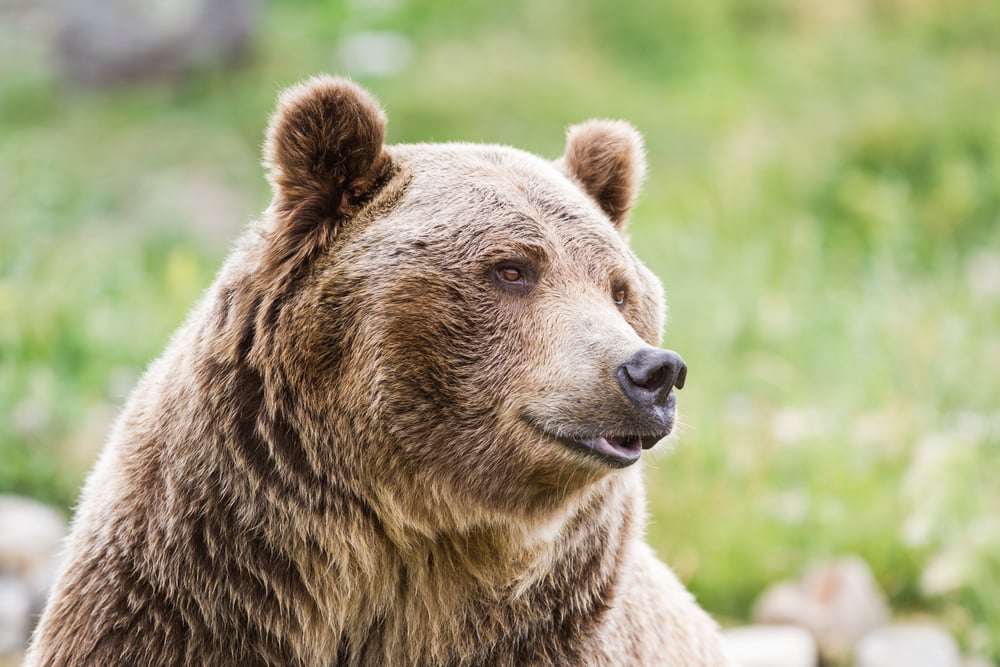
I spent a solid chunk of time before my first trip to the Cairngorms half-convinced I needed to know bear safety protocol. I’d watched too many North American wildlife documentaries and my brain had apparently decided Scotland and British Columbia were interchangeable. They are not.
So, short answer: no. There are no wild bears in Scotland. You can hike, camp, and wander the glens without a single bear-related thought in your head.
But the longer answer is genuinely more interesting than that.
Quick Answer: Bears in Scotland at a Glance
- Wild bears in Scotland? No. None. Brown bears went extinct in Scotland roughly 1,500 years ago by some estimates, though the exact date is debated.
- Bears in captivity in Scotland? Yes, polar bears at Highland Wildlife Park, plus bears at Edinburgh Zoo, the Scottish Deer Centre, and a few others.
- Could bears return? There are rewilding conversations happening, but no active plans to release bears into the wild.
- Biggest wild predator in Scotland right now? The badger. Yes, really.
When Did Bears Go Extinct in Scotland?
Brown bears roamed Scotland for thousands of years. We know this from bones scattered across caves and peat bogs, from Dumfriesshire in the south up to Caithness in the north. The youngest bear bone found in Scotland so far, a femur from the bone caves near Inchnadamph in the northwest Highlands, has been radiocarbon-dated to around 2,700 years old.
The commonly cited extinction date is around 450 AD, but that’s not the full picture. Some researchers think bears may have hung on much longer, potentially into the Middle Ages, maybe even as late as the 15th or 16th centuries. The honest answer is nobody knows for certain, and the evidence is patchy enough that the debate is still open.
What we do know is that Caledonian bears had a reputation well beyond Scotland’s borders. The Romans considered them particularly fierce and prized, and during the opening of the Colosseum in 80 AD, a Caledonian bear was reportedly unleashed on a bound criminal for the entertainment of 50,000 spectators. Not a great day for the bear, or the criminal.
Pictish stone carvings from the 8th and 9th centuries, found in places like Shetland, Easter Ross, Angus, and Perthshire, also depict bears, which suggests they were culturally significant long after their populations had thinned.
The old Gaelic word for bear, “mathan”, even survives in the modern Scottish surname Mathieson. Language outlasting the animal itself by several centuries.
Why Did Brown Bears Disappear from Scotland?
The usual combination: deforestation, overhunting, and persecution by farmers protecting livestock. The same pattern that wiped out brown bears across much of Western Europe, except that countries like Spain, France, and the Nordic nations managed to hold onto small populations while Britain did not.
The last strongholds were probably areas like the Cairngorms, which maintained large-scale woodland cover for longer than most of Scotland.
Where to See Bears in Scotland Today
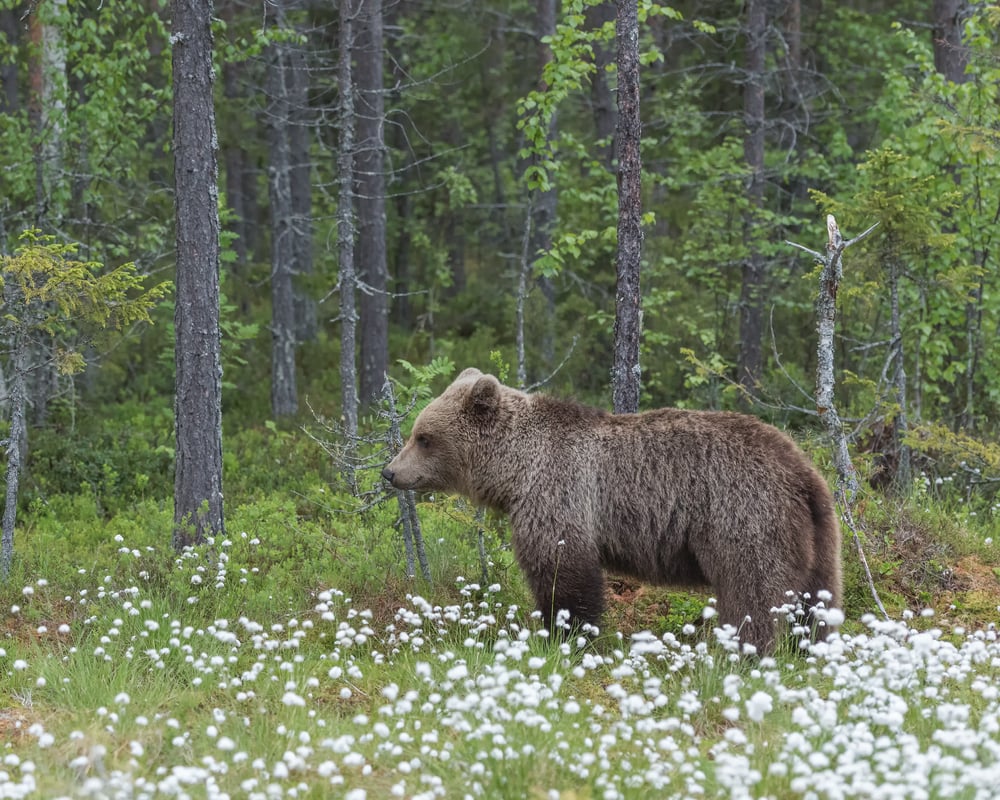
If you want to actually see a bear in Scotland, captivity is your only option. Here’s where to go:
- Highland Wildlife Park (near Kingussie/Aviemore) – polar bears, part of the European Endangered Species Programme
- Edinburgh Zoo – giant pandas and a Malayan sun bear
- Scottish Deer Centre – European brown bears (previously at Blair Drummond Safari Park)
- Camperdown Wildlife Centre
- Five Sisters Zoo
The Highland Wildlife Park is probably the most notable stop. The Royal Zoological Society of Scotland started housing polar bears there in 2009, and the park made headlines when a polar bear named Hamish became the first cub born in the UK in 25 years. Currently, three polar bears live at the park: Arktos (born November 2007), Walker (born December 2008), and Brodie (born December 2021), though Brodie has been temporarily relocated to Yorkshire Wildlife Park during habitat renovations.
All three are part of the European Endangered Species Programme, which is doing genuinely important conservation work given that climate change is shredding polar bear habitat in the Arctic at pace.
A note on the polar bear angle: there’s also a prehistoric twist here. A polar bear skull was found at the Inchnadamph Bone Caves in Sutherland in 1927, dated to over 18,000 years old. So polar bears have a longer Scottish connection than most people realise, even if it predates anything resembling recorded history.
Could Bears Be Reintroduced to Scotland?
This is where it gets genuinely interesting, and also where people get into arguments.
Rewilding, restoring lost species and natural processes to landscapes, has become a serious conversation in Scotland. The Cairngorms National Park is frequently mentioned as a candidate site for reintroducing extinct species. Paul Lister, who owns a 23,000-acre Highland estate, has publicly stated his ambition to use part of it for a rewilding experiment that would include bringing bears and wolves back.
None of this has translated into actual bears being released anywhere. There are no current plans to do that. The debate sits at the level of ecological theory, tourism economics, and landowner ambition, with no governmental green light in sight.
The broader rewilding argument is that the absence of apex predators is causing real ecological damage, with unregulated deer populations preventing forest regeneration across huge areas of Scotland. The counterargument involves livestock, land use, and the practicalities of bears and humans sharing a relatively small country.
For what it’s worth, the largest wild predator currently living in Scotland is the Highland Wildcat, which is critically endangered and the subject of its own breeding and release programme. We haven’t even sorted that out yet.
A Few Facts Worth Knowing (Miscellaneous Bear Scotland Trivia)
- Hercules, a tame grizzly bear owned as a pet by a former wrestling champion in Scotland, escaped during a film shoot on Benbecula in the Outer Hebrides in 1980. He was missing for over three weeks before being found swimming in the sea and tranquilized. Genuinely one of the better Scottish wildlife stories.
- The Disney film Brave, set in Scotland, features a bear transformation. This has apparently led some visitors to wonder if bears are actually native here. They are not, and past-me was not the only one making that mistake.
- Brown bears are still found in large numbers in Russia’s Ural mountain region, and in Sweden, Finland, and Estonia, so the species isn’t gone from Europe, just from Britain.
Is Scotland Safe for Hiking and Wildlife Watching?
Completely. The absence of large predators means Scotland is genuinely safe for exploring on foot. No bears, no wolves, no big cats (officially, anyway, there are always those big cat sightings in the tabloids, but that’s a different article). If you’re planning a driving trip through the Highlands, our road trip tips cover the practical stuff you’ll want sorted before you go.
The wildlife you will encounter is worth the trip on its own terms: red squirrels, red deer, ospreys, golden eagles, red kites, pine martens, and if you’re lucky, a Highland Wildcat that definitely doesn’t want to be your friend. Interest in the Cairngorms has been climbing steadily, with search trends peaking in January, March, and April, so if you’re visiting in winter or early spring, pack for serious Highland weather. Our winter travel tips will help you layer up properly. And if you’re extending your Scotland trip beyond the national park, the west coast is a completely different landscape worth adding to the itinerary.
Just don’t go in expecting Yellowstone. Scotland has its own thing going on, and honestly, once you’re actually there, you stop missing the megafauna pretty quickly.
