

An embarrassing amount of time can be spent before a first Reykjavik trip researching the perfect angles for Hallgrímskirkja and the ideal moment to photograph Harpa, only to realise that the resulting itinerary mirrors what every visitor to Iceland already knows. Classic.
Reykjavik rewards the people who wander slightly off-script. The city is small enough that you can cover the famous stuff in a day and still have time to find the places locals actually use. The weather right now is sitting at 32°F with light snow and 74% humidity (as of March 2026), so layer up and lean into it. Here’s what going off-script looks like in practice.
Quick Answers: Reykjavik Local Favorites at a Glance
- Best local coffee: Mokka Kaffi (open since 1958, the first espresso machine in Reykjavik) or Reykjavik Roasters Garðastræti
- Best free view: Harpa Concert Hall rooftop terrace, fourth floor
- Best nature escape inside the city: Elliðaárdalur Valley or Heiðmörk Nature Reserve
- Most underrated pool: Vesturbæjarlaug or Ásvallalaug, far fewer tourists than Laugardalslaug
- Weirdest museum (worth it): Icelandic Phallological Museum
- Best hot dog order: Bæjarins Beztu Pylsur, say “eina með öllu” (one with everything)
- Best cemetery (yes, really): Hólavallagarður, feels more like an ancient forest
- Currency: Icelandic króna (ISK, kr). At current rates, £1 gets you roughly kr166 and $1 gets you about kr125, so budget accordingly.
Where Locals Actually Drink Coffee
Mokka Kaffi on Skólavörðustígur has been around since 1958 and holds the distinction of being Reykjavik’s first cafe to install an espresso machine. It doubles as an art gallery, serves waffles with cream and jam, and feels nothing like a tourist trap. Locals have been recommending it for decades, which either means it’s genuinely that good or Icelanders are fiercely loyal. Probably both.
Café Flóra, tucked inside the Laugardalur Botanical Gardens, is one of those places that feels like a reward for finding it. Plants everywhere, goldfish, a calm that most city cafes can’t fake. It only opens seasonally (May to October), so plan accordingly.
Café Rosenberg (formerly Stofan Cafe) on Vesturgata is the kind of place you sit in for two hours without noticing. Vintage furniture, board games, draft beer, homemade cakes. It’s within walking distance of Laugavegur and somehow still not overrun.
Kaffitár gets a consistent local recommendation for reliably good coffee and food, one local specifically mentioned the bagel with hummus, which is not glamorous advice but is the kind of thing that’s actually useful.
The Pools Nobody Tells You About
Reykjavik has 18 geothermal pools. Most visitors end up at Laugardalslaug (the biggest) or Sky Lagoon (the most photogenic). Both are fine. But if you want the experience locals actually have, try Vesturbæjarlaug or Ásvallalaug. Less queuing, more actual Reykjavik residents sitting in hot pots discussing things you can’t understand.
Vesturbæjarlaug also has a dry sauna that gets mentioned by multiple locals as a best-kept secret. The pool at Sundhöll Reykjavíkur is another one worth knowing, particularly for its hot pot.
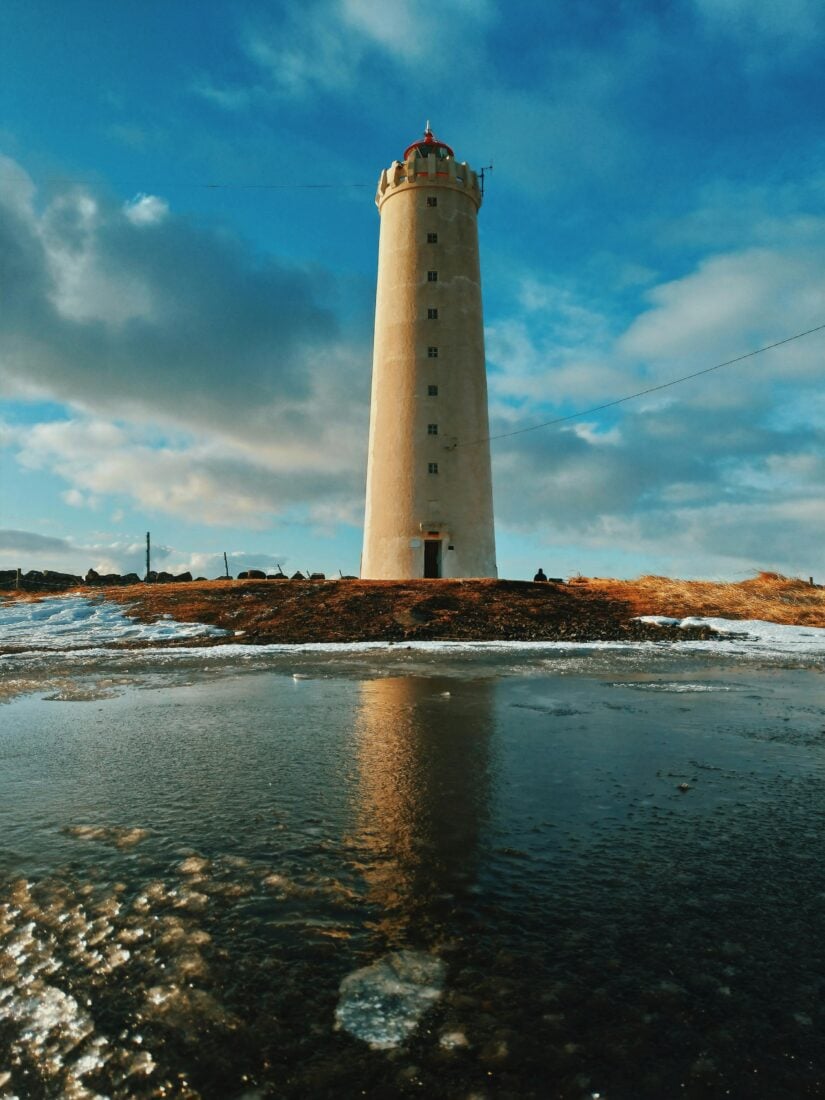
And at Grótta, near the lighthouse on the Seltjarnarnes Peninsula, there’s a hole with geothermally heated water right by the shore. You soak your feet, look out at the ocean, and feel briefly like you live there. It’s also one of the better spots for northern lights viewing in winter, which in March you’ve still got a decent shot at.
Eat Like a Reykjavik Regular
Bæjarins Beztu Pylsur is technically famous, but the local tip is in how you order. Ask for “eina með öllu,” one with everything. Eat it near Austurvöllur Square. Done.
Kaffivagninn is one of Reykjavik’s oldest eateries and is known for its fish soup. Not flashy, not expensive, genuinely good.
Við Tjörnina does traditional Icelandic food in a style that locals describe as healthy and well-executed. Á Næstu Grösum is a vegetarian restaurant with a loyal following, praised for fair prices and consistently good cakes.
Ban Thai comes up repeatedly in local recommendations, with specific mentions of dish number 19 and the tom-yum soups. Austur-Indía Félagið is the go-to for Indian food, the lobster starter and salmon main are the ones to order.
Hamborgarabúlla Tómasar handles burgers and handles them well, according to people who live here.
Múlakaffi is a diner-style spot for traditional Icelandic food, the kind of place that doesn’t try to be anything other than what it is. Honestly, those are usually the best ones.
For something more specific: Sandholt does a tower-shaped chocolate soufflé that has its own small fan club.
Bars Worth Finding
Kaffibarinn gets mentioned for its music and atmosphere. Boston is praised specifically because the music isn’t so loud that you can’t have a conversation, which is a more useful recommendation than it sounds. Bakkus offers reasonably priced beer and has some interactive features. Hornið has good food and an entertaining view of the street.
Gaukurinn and Paloma are the spots for live music. Dillon is another live music venue that locals use without it feeling like a tourist experience.
The Icelandic Punk Museum is technically a museum but earns a mention here because it’s housed in a repurposed public restroom and contains memorabilia and music listening stations dedicated to Iceland’s punk movement. It’s exactly as good as that sounds.
Nature Inside the City
Elliðaárdalur Valley is one of the largest green spaces in Reykjavik and sits east of the city center. There’s a path to Kermóafoss Waterfall, wild rabbits moving through the trees, and the Elliðaárstöð Power Station if you want to understand how the river powered the city. Locals use it for foraging wild berries in late summer. It feels genuinely removed from the city despite being inside it.
Heiðmörk Nature Reserve is about 30 minutes from the center and covers over 7,900 acres. The highlight is Rauðhólar, a Mars-like landscape of 5,200-year-old pseudocraters that are the remnants of the Elliðaárhraun lava field. You can hike, cycle, or ride horses out here, and it’s accessible by city bus.
Öskjuhlíð Hill near the city center has remains of a World War II military base and a hidden rock associated with Icelandic huldufolk (hidden people) folklore. It’s a quiet walk with more layers than it looks like from the road.
Ægisíða, the coastal path, is lined with wooden fish-drying racks and used by locals for running and dog walking. It’s not a tourist route. That’s the point.
Offbeat Museums and Cultural Spots
Árbær Open Air Museum (Kistuhylur 110, open 1-5 PM daily) has over 20 historical buildings with costumed guides and seasonal events. It’s on the outskirts of the city and gives a genuine sense of how Icelandic village life worked. Particularly good at Christmas.
The Settlement Exhibition (Aðalstræti 16, open until 9 PM) is built around an actual 10th-century longhouse with interactive displays about Reykjavik’s Viking history. The Aðalstræti extension covers the city’s development up to the present.
Reykjavik Maritime Museum is housed in a former fish-freezing plant at Grandagardur 8. The main exhibition, “Fish and Folk, 150 Years of Fisheries,” covers the role of fishing in Iceland’s economy and culture. You can also tour the Coast Guard vessel Odinn, which was involved in the Cod Wars.
Aurora Reykjavik Northern Lights Center has interactive exhibits on the science and folklore of the aurora borealis, plus a 4K time-lapse film. Better than standing outside in the cold hoping for the best (though you should do that too).
The Icelandic Phallological Museum contains over 200 penile specimens from land and sea mammals, phallic art, lampshades made from bull scrotums, and 15 silver casts representing the genitalia of the Icelandic national handball team. In 2011 it received its first human specimen, donated by an Icelandic man. I cannot stress this enough: it is a real place and it is worth going.
Alfaskolinn, the Icelandic Elf School (Sidumuli 31, open Sundays 8 AM to 4 PM), runs sessions on Iceland’s belief in huldufolk with storytelling and personal encounter discussions. Traditional Icelandic pancakes and coffee are included. Genuinely fascinating, not remotely embarrassing to attend.
Bíó Paradís (Hverfisgata 54) screens Icelandic films with English subtitles alongside cult classics and international indie cinema. A proper local cinema experience.
Kjarvalsstaðir is an art museum with exhibits and a cafe that locals rate. Kling & Bang is a gallery with a grassroots feel, run by artists for artists.
Salurinn Concert Hall in nearby Kópavogur is celebrated for its acoustics and intimate classical music performances. Far fewer people than Harpa, arguably better for the music itself.
The Free View Everyone Misses
Most people admire Harpa Concert Hall from the outside and move on. The fourth-floor rooftop terrace is accessible and free, and gives you a clear view across the harbor. It takes five minutes and costs nothing. Do yourself a favour and don’t skip it.
Streets and Neighborhoods Worth Knowing
Haðarstígur, a quiet street within the Þingholt neighborhood, is a local favorite for its calm and beauty. Not famous. Not crowded. Just a nice street.
Norðurmýrin is a neighborhood where the streets are named after Icelandic sagas. Worth a wander if you want to feel like you’re actually in the city rather than on a tour of it.
Hverfisgata Street and the Grandi neighborhood have strong concentrations of street art in Reykjavik. The murals are large-scale, painted on building sides, and change over time.
Hólavallagarður Cemetery, right in the city center, looks more like an ancient forest than a graveyard. Gothic headstones, heavy tree cover, and the grave of Jón Sigurðsson, Iceland’s national hero. Under snow in winter it looks genuinely fairytale. I was not expecting to enjoy a cemetery this much.
Practical Notes
- Most of these spots are reachable on foot or by Reykjavik’s city bus network. You don’t need a car for anything inside the city.
- Early mornings and shoulder seasons (spring and autumn) give you the quietest experience at popular spots.
- The Icelandic philosophy of “þetta reddast” (it will all work out) is a reasonable approach to planning here. Over-scheduling Reykjavik is a mistake.
- Kolaportið flea market is the place for hand-knitted sweaters, fresh seafood, and vintage items at non-tourist prices.
- For live music beyond the main venues: Mal og Menning (the former bookstore) hosts regular singalong sessions. Not what you’d expect, very Reykjavik.
- If you like this style of writing about local spots over tourist checklists, you might also enjoy our locals guide to Las Penitas in Nicaragua, which takes the same approach in a very different climate.
| Spot | Type | Best For |
|---|---|---|
| Mokka Kaffi | Cafe | Authentic coffee, waffles, local art |
| Elliðaárdalur Valley | Nature | Walking, berry foraging, waterfalls |
| Vesturbæjarlaug | Pool | Local hot pot experience |
| Hólavallagarður Cemetery | Historic | Quiet walks, Icelandic history |
| Bíó Paradís | Cinema | Icelandic films, cult classics |
| Icelandic Phallological Museum | Museum | Exactly what it says |
| Harpa Rooftop Terrace | Viewpoint | Free harbor views |
| Heiðmörk Nature Reserve | Nature | Hiking, lava fields, pseudocraters |
| Árbær Open Air Museum | History | Icelandic village life, seasonal events |
| Bæjarins Beztu Pylsur | Food | Hot dogs, order “eina með öllu” |
