
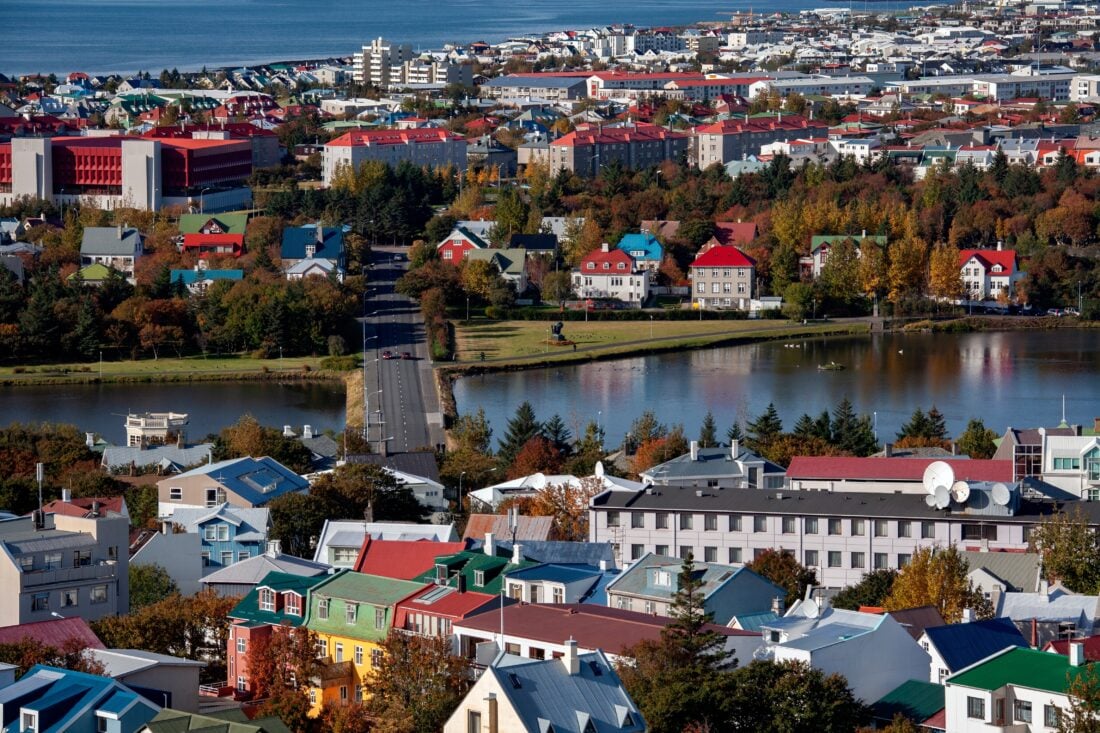
Travelers often arrive in Reykjavik without giving safety much thought, assuming a small capital city won’t present many risks. That assumption isn’t far off, although the biggest challenges visitors face tend to have nothing to do with crime and everything to do with the elements.
The short answer is yes, Reykjavik is extremely safe. The longer answer is that the things most likely to disrupt a trip aren’t criminal concerns, but weather conditions, changing daylight hours, and being unprepared for Iceland’s unpredictable climate.
Quick Answer: Is Reykjavik Safe for Tourists?
- Crime: Very low. Violent crime is rare, pickpocketing is uncommon, and street scams are essentially nonexistent.
- For solo travelers: Considered one of the safest cities in Europe, including for solo women.
- For LGBTQIA+ travelers: Welcoming and inclusive, with legal protections and a visible community.
- For families: Walkable, child-friendly, and relaxed.
- Main risks: Weather, natural hazards, and icy pavements in winter. Not people.
- Emergency number: 112 (police and ambulance).
How Safe Is Reykjavik, Really?
Reykjavik consistently ranks in the top twenty safest capital cities in the world, and Iceland has held the top spot on the Global Peace Index for eleven years running. Berkshire Hathaway Travel Protection named Reykjavik the safest city in the world for two consecutive years as of 2026. Over 90% of Icelanders agree their country is a safe travel destination.
The city has a population of around 140,000 and operates with what locals describe as a small-town feel. Trust is embedded in daily life in a way that catches most visitors off guard. You will see babies left outside in prams while parents sit inside a cafe. Child abduction is largely unheard of. People leave belongings unattended and generally get them back.
Non-sexual violent crime is rare and rarely escalates beyond minor incidents. There are no significant pickpocketing issues, no mugging culture, and no street scams to speak of. Public spaces are clean and well-lit. Buses are reliable. Online transactions and public Wi-Fi are considered safe thanks to solid digital infrastructure.
The one caveat the UK government adds is worth knowing: petty theft and antisocial behaviour can occur around bars in downtown Reykjavik on weekends. Keep an eye on your stuff if you’re out late. That’s about as dramatic as the crime picture gets.
Is Reykjavik Safe for Solo Female Travelers?
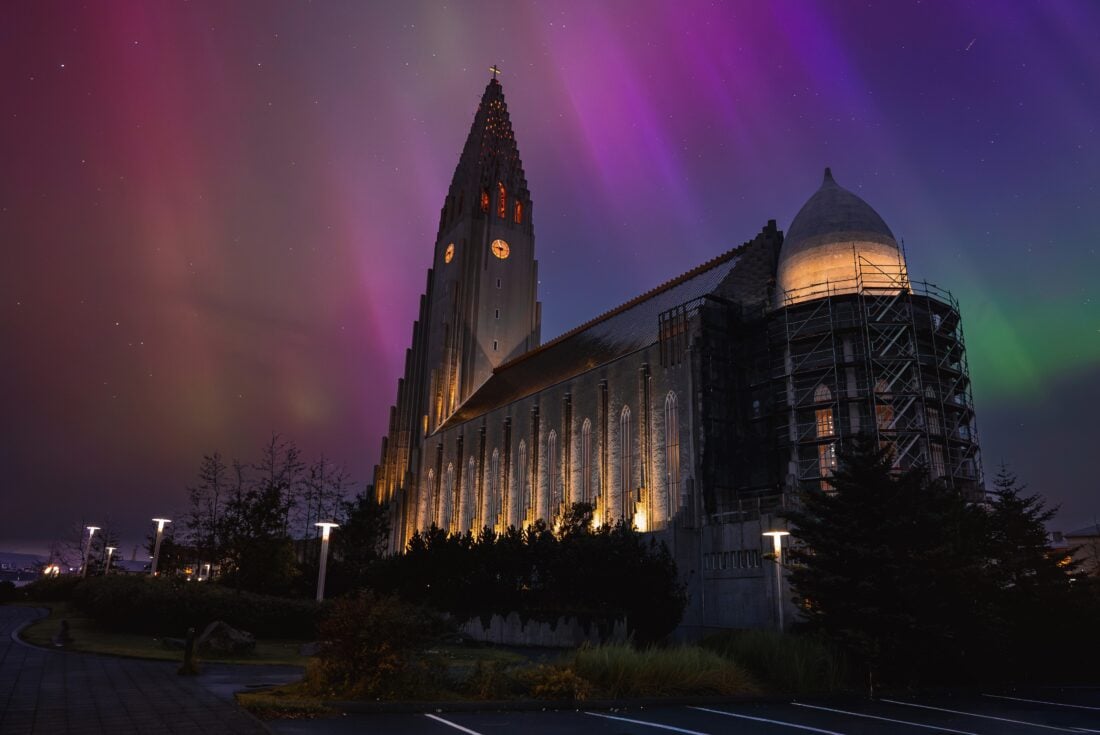
Reykjavik is consistently cited as a top destination for solo women. Iceland is ranked the world’s most gender-equal country, and that translates into a city where street harassment is genuinely rare. There is a strong support network for women, and the absence of the low-level menace you might feel in other cities is something visitors comment on regularly.
Normal travel awareness still applies, but you are not going to feel like you need to run a mental safety checklist every time you walk somewhere after dark.
Is Reykjavik Safe for LGBTQIA+ Travelers?
Yes, straightforwardly. Same-sex relationships are legally recognised, same-sex marriage and adoption are legal, and the city has a visible and welcoming LGBTQIA+ community with inclusive spaces in the centre. People of colour and queer travellers generally do not need to take extra safety precautions in Reykjavik beyond what anyone else would.
The Actual Risks in Reykjavik (and Iceland)
Here is where the safety conversation gets more interesting. The weather and Iceland’s natural environment are the primary hazards for tourists, not other humans.
The Icelandic saying is that if you don’t like the weather, wait five minutes. That is not a joke. Conditions change fast, and being underprepared in the wrong place at the wrong time is how people get into trouble. To give you a snapshot, Reykjavik is currently sitting at 32°F with light snow and 74% humidity (as of March 2026), which is pretty standard for this time of year but still cold enough to make you miserable if you’ve packed wrong.
In the city itself:
- Icy pavements in winter are a genuine hazard. Wear grippy boots.
- Sudden windstorms can appear without much warning.
- The tap water is excellent, by the way. Don’t buy bottled water.
Outside the city:
- Never go on a glacier without a guide. Hidden crevices are not visible from the surface.
- Reynisfjara beach has powerful, unpredictable waves. Stay well back from the water’s edge.
- Do not step on or climb icebergs at Diamond Beach or Jokulsarlon. They can flip or drift.
- Cliff edges in Iceland are geologically unstable. Do not approach them.
- New lava fields are sharp and can still be hot. Stay off them.
- Volcanic eruptions and earthquakes are a real feature of Icelandic life. There is ongoing volcanic activity on the Reykjanes peninsula. Follow advice from the Icelandic Met Office and Safe Travel Iceland.
- Off-road driving is illegal and carries serious penalties.
Essential Safety Tips for Reykjavik and Iceland
- Register your plans on safetravel.is before heading into remote areas. Leave your itinerary with your accommodation too.
- Check the weather before any outdoor activity. The Icelandic Meteorological Office forecasts are reliable, but conditions can still shift quickly.
- Download three apps: the Icelandic weather app, the Safetravel app by ICE-SAR, and the 112 Iceland App.
- Dress for it. In summer, warm waterproof layers and sturdy boots. In winter, thermal layers, hat, gloves, scarf, and thick socks even for walking around town. If you need a refresher on how to pack for cold and unpredictable conditions, I’ve put together a full guide on winter travel tips that covers this in detail.
- Know the emergency number. 112 covers police and ambulance.
- Stick to marked trails when hiking. Do not attempt routes beyond your experience level.
- Winter driving requires appropriate tyres and a suitable vehicle. Study road conditions before you go. Drink driving limits are stricter than the UK. If you’re planning to explore the Golden Circle or beyond, my road trip tips cover a lot of the practical stuff that applies here too.
- Carry some ID. Not legally required, but a photocard driving licence or a copy of your passport’s photo page is sensible.
- Get travel insurance that covers medical emergencies, theft, and cancellations. Landspitali, the National University Hospital, provides high-quality care but you want coverage in place.
- Budget accordingly. Iceland runs on the Icelandic króna (ISK), and honestly, the numbers can look alarming at first. As of March 2026, £1 gets you roughly kr166 ISK and $1 gets you about kr125 ISK. So £100 converts to around kr16,556. Card payments are accepted practically everywhere, even for tiny amounts, so you don’t really need to carry much cash.
- English is spoken everywhere. The official language is Icelandic, but almost every Icelander is fluent in English, and many speak Danish, German, French, or Spanish too. You will not struggle to communicate.
- Mobile reception in the highlands can be patchy. Do not rely on it.
- Smoking is illegal in restaurants, bars, public transport, and public buildings. Fines apply.
- Time zone: Iceland runs on UTC year-round with no daylight saving, which is handy for keeping things simple but means it can catch you off guard if you’re arriving from a country that’s just switched clocks.
Getting Around Reykjavik Safely
Public transport is efficient and safe. The BSI Bus Terminal has frequent departures. Taxis are reliable across the city. Bicycle hire is available, though cyclists should stay alert to traffic.
If you are arriving from the airport, pre-arranging a transfer is a straightforward option and removes any guesswork at the end of a long flight.
What About Terrorism?
Iceland has no recent history of terrorism. The UK government notes that attacks cannot be ruled out given the global picture, but this is standard boilerplate for any destination rather than a specific Iceland concern. It is not something that should feature in your trip planning.
Reykjavik Safety: The Summary
| Category | Risk Level | Notes |
|---|---|---|
| Violent crime | Very low | Rare, rarely escalates |
| Pickpocketing | Very low | Not a notable issue |
| Nightlife areas | Low-moderate | Some petty theft/antisocial behaviour downtown on weekends |
| Weather | Moderate-high | Unpredictable, changes fast |
| Natural hazards (outside city) | High if unprepared | Glaciers, cliffs, beaches, lava fields |
| Solo female travel | Very safe | Top-ranked globally |
| LGBTQIA+ travel | Very safe | Legal protections, welcoming community |
| Family travel | Very safe | Walkable, child-friendly |
Reykjavik is genuinely one of the easiest cities in the world to feel comfortable in. The preparation that matters is not about watching your back, it is about not turning up to a glacier in a denim jacket. Learn from my mistakes on the trouser front and you will be absolutely fine.
