
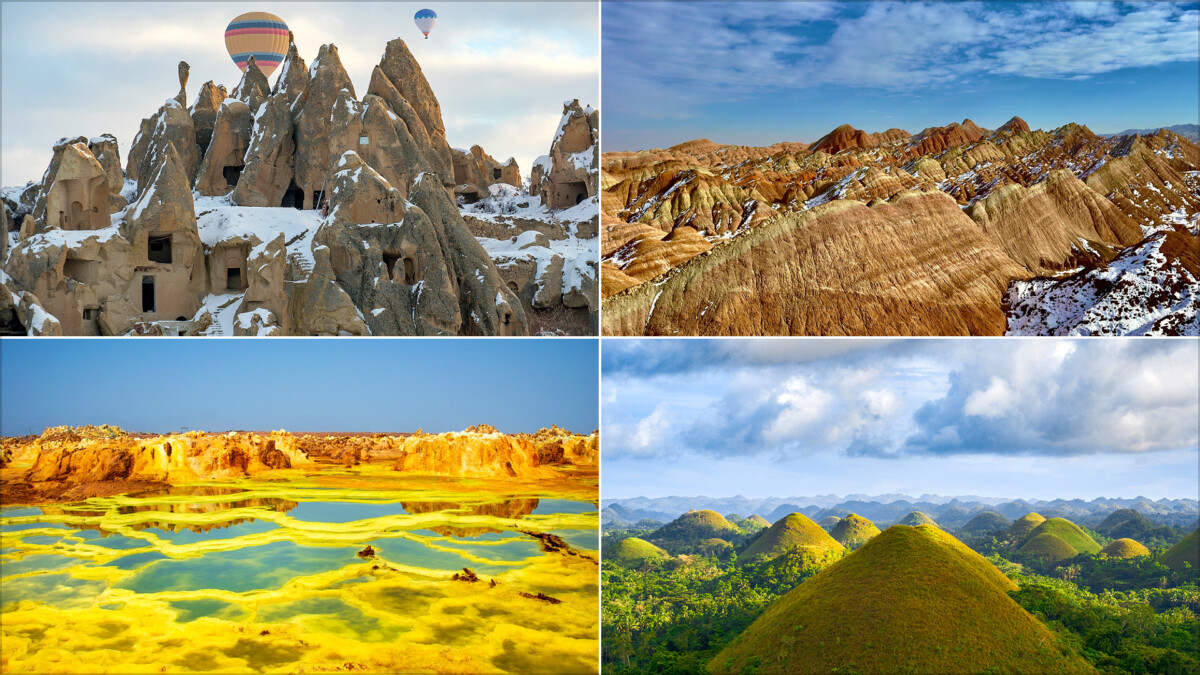
The most bizarre landforms on the planet include blue marble caves in Patagonia, rust-red water flowing over Antarctic ice, striped mountains in China, and thousands of near-identical hills in the Philippines.
None needs a science-fiction backstory. Water, wind, minerals, volcanoes, glaciers, and an almost unreasonable amount of time did the work. The strange part is how little the results resemble the tidy landscapes most of us draw as children.
These seven places are worth knowing for the geology as much as the photos. Some are straightforward scenic stops; others are remote environments where conditions, access rules, and timing deserve serious attention.
1. Marble Cathedral, Lake General Carrera, Chile
The Marble Cathedral, or Catedral de Mármol, is a network of pale calcium-carbonate caves, columns, and vaulted chambers on Lake General Carrera in Chilean Patagonia. Lake water, rock, and glacial movement gradually shaped the formations over millennia.
What makes the site feel improbable is the light. The lake’s deep turquoise water reflects into the stone, giving parts of the caverns a soft blue cast. The lower sections become more visible when winter water levels fall. Puerto Río Tranquilo is the practical departure point for boat and kayak trips, since the formations sit offshore and cannot be reached by road.
This is a good choice for people who want a dramatic landscape without a long trek, but lake conditions can determine whether small-craft outings operate. A boat ride is the sensible option for most groups; kayaking is best left to people comfortable on open water. Anyone drawn to bigger mountain country can also compare Patagonia with the U.S. states with the most mountain ranges.
2. Chocolate Hills, Bohol, Philippines
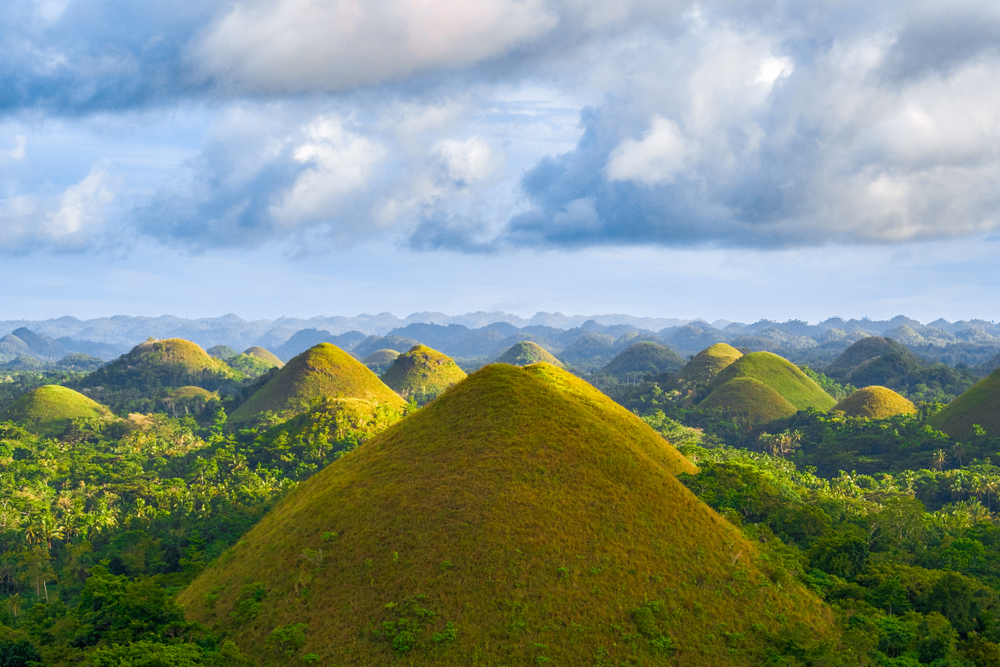
Bohol’s Chocolate Hills look less like a normal mountain range than a field of giant drops of batter set to cool. There are more than 1,200 conical limestone hills spread across the island’s interior, with individual hills ranging from about 100 to 395 feet high.
The hills are remnants of limestone deposits from a time when Bohol lay beneath a shallow sea. During the dry season, usually by early May, grass turns brown and gives the landscape its chocolate-themed name. It is a small branding miracle that happened to be geologically accurate.
The Chocolate Hills Complex, between Batuan and Carmen, is a familiar viewpoint. Reaching its viewing deck involves climbing 214 steps, so anyone with limited mobility should account for that before treating it as a quick roadside stop. Local stories offer more colorful explanations, including feuding giants and a giant grieving for a lost love.
3. Dallol, Danakil Depression, Ethiopia
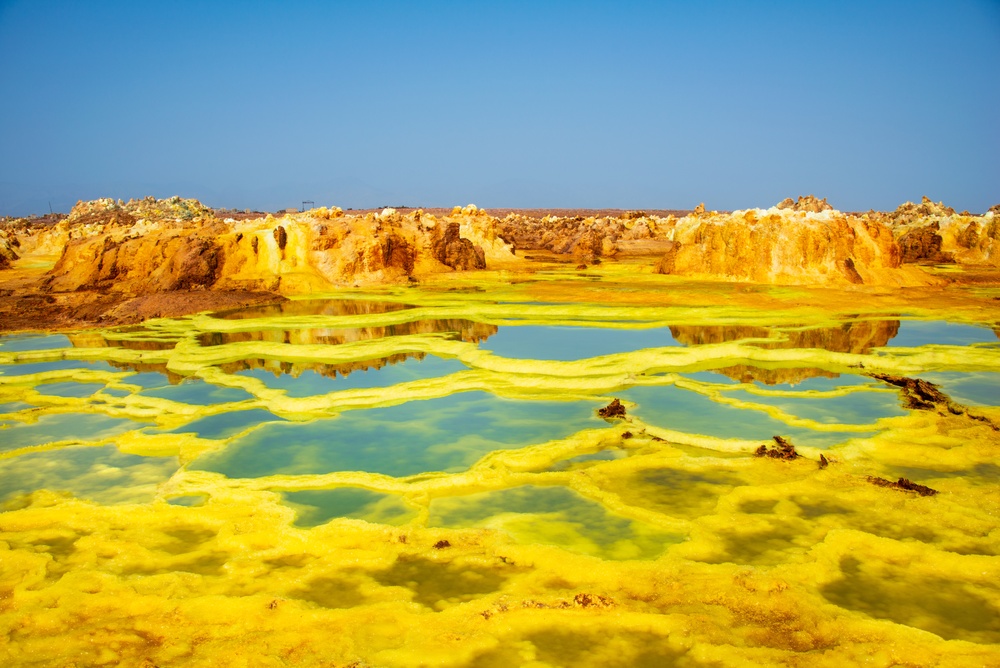
Dallol sits in Ethiopia’s Danakil Depression, a landscape associated with volcanic activity, salt, heat, and mineral-rich hydrothermal features. Its intense yellows, greens, oranges, and whites can look digitally enhanced even when they are not.
The colors come from minerals and chemical processes around hot springs and fumaroles. This is not a casual wander-around-and-see-what-happens destination. Dallol is in a harsh, remote setting, and access planning should be handled with experienced local operators who understand the route, security situation, and conditions.
For anyone building a wider geology-focused trip, the Danakil Depression is a reminder that “beautiful” and “comfortable” are not permanent travel companions. Carrying plenty of water and treating local guidance as non-negotiable is basic good sense.
4. Zhangye Danxia Landform Geological Park, China
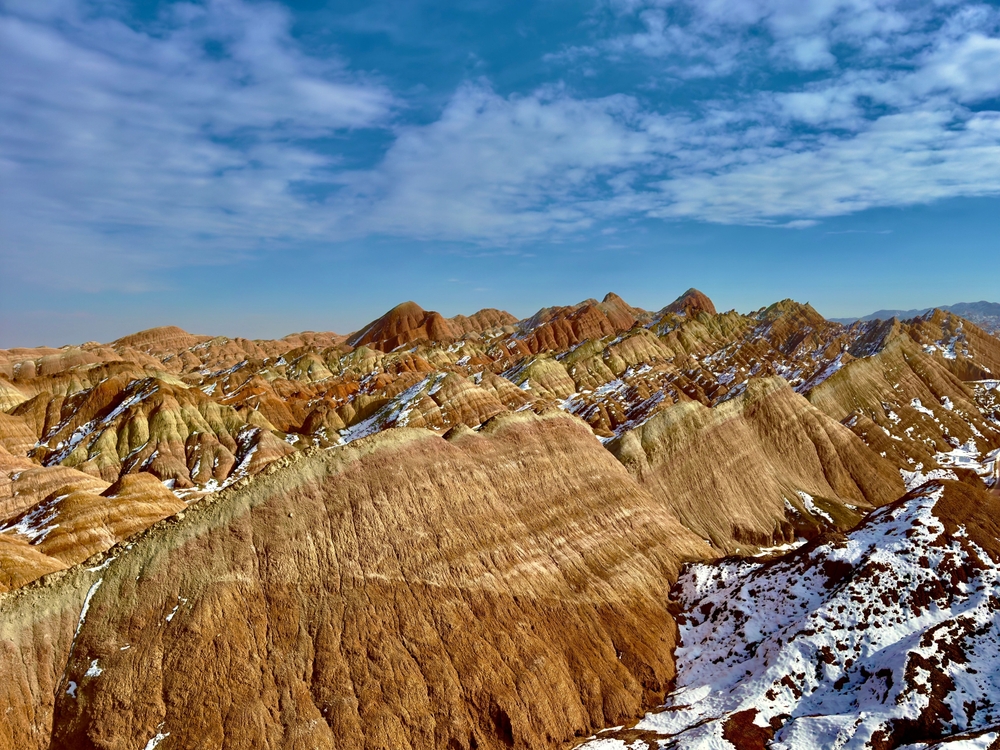
China’s Zhangye Danxia Landform Geological Park is known for ridges and hills striped in reds, golds, greens, and bluish tones. The effect is why the area is widely called the Rainbow Mountains, though the terrain is made of rock, not paint.
The bands formed in Cretaceous sandstone and siltstone that predate the Himalayas. Subsequent uplift and erosion exposed the layers in long, folded sweeps across the landscape. The scale is part of the appeal: these are not isolated colorful rocks but whole slopes carrying their own geological crosshatching.
Light strongly changes how the stripes read in photographs. Clear conditions and angled sun tend to reveal more definition than flat midday light, while heavy haze can mute the contrast. Keep expectations realistic, too: nature has no obligation to match a saturated social-media edit.
5. Blood Falls, Taylor Glacier, Antarctica
Blood Falls is a red-stained outflow that seeps from Taylor Glacier into the ice-covered West Lake Bonney in Antarctica’s McMurdo Dry Valleys. It is one of the planet’s more startling sights, particularly because the surrounding world is overwhelmingly white and blue.
The color is not blood. Iron-rich, salty water oxidizes after encountering air, turning the briny flow red as it emerges from the glacier. The science is satisfying, even if the first view still resembles a scene somebody should probably investigate.
Antarctica is not a place to add to an itinerary on a whim. Protected landscapes, expedition logistics, weather, and strict environmental requirements govern access. For most people, Blood Falls remains an extraordinary example of how much weird geology exists beyond ordinary road-trip range.
6. Fairy Chimneys, Cappadocia, Türkiye
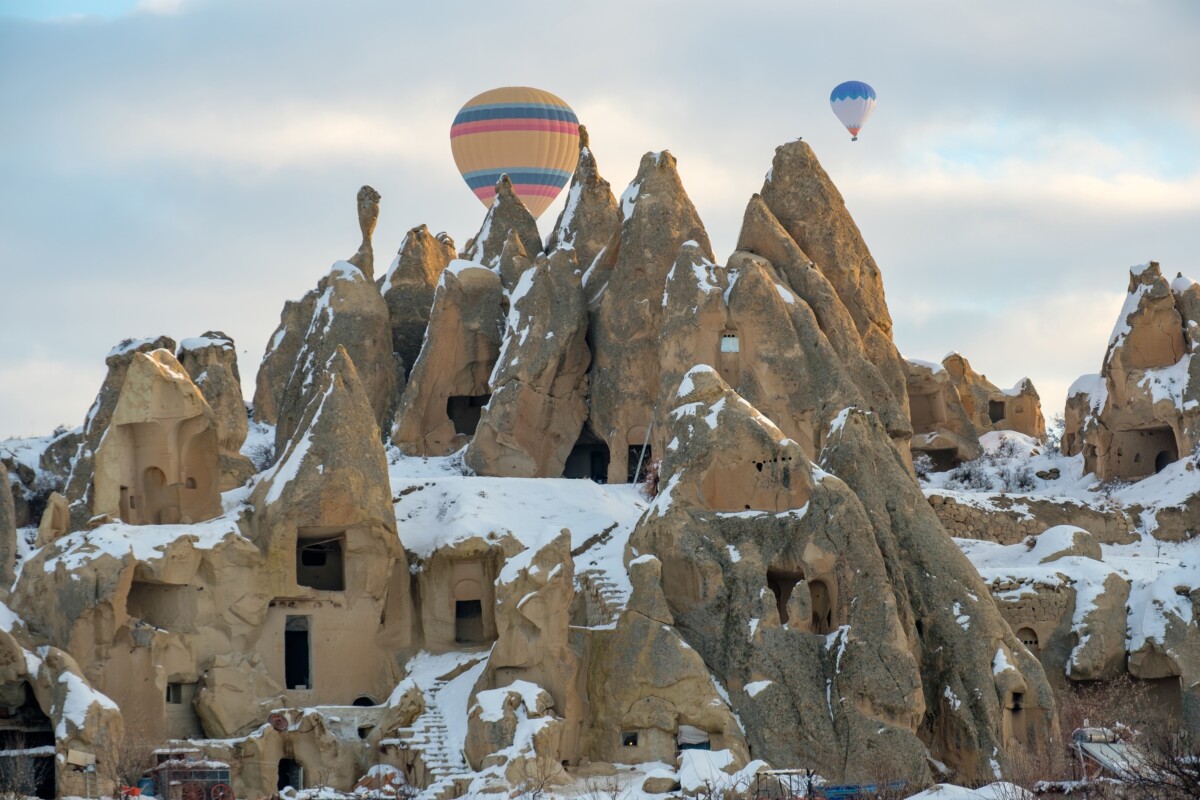
Cappadocia’s fairy chimneys are tall, tapered rock spires, many topped with darker caps of more resistant stone. They formed as wind and rain eroded softer volcanic material while tougher layers protected the columns beneath.
The formations are especially associated with central Türkiye, where erosion has produced valleys filled with cones, pillars, and carved rock dwellings. Their shapes can appear carefully designed, but the underlying recipe is simple: volcanic deposits, contrasting rock hardness, and patient erosion.
For a visit with the most variety, pair the chimneys with the broader volcanic landscape around Cappadocia. The region’s rock-cut architecture adds a human layer to the geology, showing how people adapted natural formations into homes and other spaces over long periods.
7. Arches National Park, Utah, United States
Arches National Park contains a dense concentration of natural sandstone arches, fins, balanced rocks, and other forms shaped by erosion in the high desert of Utah. It is a useful counterpoint to the remote locations on this list because its geology is highly accessible, though never casual in summer heat.
The U.S. National Park Service includes Arches among its rock landscape destinations, alongside places such as Bryce Canyon, Canyonlands, Devils Tower, and Craters of the Moon. That larger list is a useful starting point for anyone who wants to turn a single strange formation into a full geology-driven road trip, especially alongside America’s most underrated national parks.
Arches rewards early starts and patient looking. A named arch may be the headline, but the fins and fractured walls around it tell the fuller story of how water, ice, and wind reshape sandstone over time. For more eccentric stateside scenery, see these oddly named U.S. landscapes.
How To Plan a Trip Around Unusual Landforms
The best planning rule is simple: match the destination to your tolerance for remoteness. Marble Cathedral and the Chocolate Hills are easier to build into wider trips around Puerto Río Tranquilo and Bohol. Dallol and Blood Falls call for much more specialized logistics.
- Check access conditions first. Water, weather, permits, and conservation restrictions can matter more than a standard opening-hours search.
- Use established guides where conditions demand it. This is particularly important in remote volcanic, desert, polar, and open-water environments.
- Protect the landscape. Geological formations are durable on a planetary timescale, not necessarily against climbing, carving, litter, or straying off designated routes.
- Allow for light and weather. Rainbow-striped rock, reflective cave walls, and dry-season grass all look different across the day and year.
UNESCO has recognized geological and geomorphological value across dozens of World Heritage sites, describing such places as records of Earth’s long history. That perspective is useful on the ground: the odd-looking view is only the visible edge of a much older process.
Where To Stay When Planning These Destinations
For Marble Cathedral, use Puerto Río Tranquilo as the base because local boat and kayak departures serve Lake General Carrera from the town. On Bohol, staying near Carmen or Batuan keeps the Chocolate Hills viewpoint within the island’s central area. Trips toward Dallol need a more specialized itinerary and should be arranged with experienced local operators.
Frequently Asked Questions About the Most Bizarre Landforms on the Planet
What Causes Strange Landforms?
Strange landforms usually result from erosion, volcanic activity, mineral deposits, glaciers, groundwater, and differing rock hardness. The most unusual-looking sites often combine several of those processes over very long periods.
What Is the Most Colorful Landform on This List?
Zhangye Danxia Landform Geological Park is among the most visibly colorful because its sandstone and siltstone layers form broad stripes across hillsides. Dallol also shows intense mineral colors, but it is far more remote and demanding to visit.
Are the Chocolate Hills Actually Made of Chocolate?
No. The Chocolate Hills are limestone formations on Bohol Island. Their name comes from the brown appearance they take on when vegetation dries during the dry season.
Can You Visit Blood Falls?
Blood Falls is in Antarctica’s McMurdo Dry Valleys, where access is limited by expedition logistics, environmental rules, and weather. It is not a typical independent sightseeing stop.
