
Four days is enough time to see Vienna’s essential imperial sights, major art museums, coffee houses and historic centre without turning the trip into a frantic checklist. This 4 Days in Vienna itinerary groups stops by area, so you spend more time in palaces and cafés and less time staring at a transport map.
Vienna is wonderfully walkable in places, though its grand sights stretch farther than they first appear. Use the U-Bahn and trams for the longer hops, reserve palace tickets ahead, and leave room for coffee and cake. It would be rude not to.
This plan works well for a first visit, couples on a city break, solo travellers and families with older children. It assumes four full days, but each day has an easy swap if one museum, market or palace calls more loudly than another.
Before You Start: Where To Stay and How To Get Around
For a first trip, staying near Stephansplatz, Karlsplatz or the edge of the Innere Stadt keeps the historic centre close and gives you straightforward access to the U-Bahn. Hotel City Central sits on the edge of the 1st district and is around a 10-minute walk from St. Stephen’s Cathedral, while Mercure Vienna First is also close to Stephansplatz. Both areas suit a sightseeing-heavy schedule. Our guide to the best areas to stay in Vienna compares the main districts in more detail.
Westbahnhof is another practical base if you value rail and U-Bahn connections. JO&JOE Vienna and IntercityHotel Wien are near the station, while K+T Boardinghouse is by Mariahilfer Strasse, Vienna’s principal shopping street. Book well ahead for school holidays, Advent weekends and major cultural events, when central rooms can go quickly.
Vienna has an extensive public-transport network operated by Wiener Linien. The U-Bahn is useful for big jumps across the city, while trams are excellent for seeing the Ringstrasse as you travel. Keep in mind that Vienna Mitte and Wien Hauptbahnhof are different stations. The City Airport Train goes to Vienna Mitte, whereas regular ÖBB services are the relevant option if your accommodation is near Hauptbahnhof.
Opening times and admission arrangements change by season, public holiday and exhibition programme. Check the Vienna Tourist Board’s visitor information and each attraction’s own website before fixing your schedule.
Day 1: Schönbrunn Palace, MuseumQuartier and Spittelberg
Start your four days in Vienna at Schönbrunn Palace, the former Habsburg summer residence and part of Vienna’s UNESCO World Heritage-listed historic centre landscape. It is the one palace first-timers should not leave out, and it deserves a morning rather than a rushed hour between other sights. Timed entry is a sensible booking, particularly in busy periods, because the palace is one of Vienna’s most visited historic complexes.
Give yourself time after the interiors to walk through the gardens. This is a good place to slow the pace at the start of the trip: formal grounds, long sightlines and an imperial palace are a fairly efficient introduction to Vienna’s sense of occasion. Walk uphill to the Gloriette if your legs and the weather cooperate; the view looks back across the palace towards the city.
After lunch, take the U-Bahn back towards central Vienna for MuseumQuartier. The complex is a useful cultural stop even if you do not want to spend an entire afternoon indoors. Choose one museum that matches your interests and commit to it, instead of trying to consume several galleries at the speed of a competitive quiz show.
Finish in Spittelberg, the compact quarter beside MuseumQuartier. Its smaller streets offer a contrast to the vast palace and boulevard architecture earlier in the day. It is particularly atmospheric in winter, when the wider area is associated with seasonal markets, but it works in any season as a gentle evening wander.
Day 2: The Ringstrasse, Hofburg and Vienna’s Grand Centre
Day two is for the grand civic and imperial core. Begin at the Vienna State Opera and walk through the surrounding Ringstrasse area. The Ring is not a single attraction with a ticket desk. It is a broad boulevard lined with monumental buildings, so it rewards a loose route and regular pauses.
From the Opera, walk through Burggarten towards the Hofburg. The Hofburg Palace was the Habsburgs’ principal city residence and remains one of the clearest places to grasp how central Vienna was to the dynasty’s imperial world. Plan this as your main indoor visit of the day, then allow time for the courtyards and surrounding streets.
Nearby choices include the Albertina Museum and the Butterfly House in the Burggarten. The Albertina is the stronger pick for a substantial art visit, with a permanent collection known for works on paper alongside changing exhibitions. Choose the Butterfly House if your group needs a shorter, lighter stop, especially on a wet afternoon.
Continue to Maria-Theresien-Platz, framed by two major museums, then walk to Volksgarten. The sequence is simple: Hofburg, square, park, then the Parliament and City Hall area. It avoids the common first-timer mistake of bouncing repeatedly between the Ring and the old town.
For dinner, head back towards Karlsplatz or the Innere Stadt. A traditional Viennese coffee house is a good late-afternoon stop before an evening meal. Order coffee and cake as separate decisions if you have discipline. Most people do not.
Day 3: St. Stephen’s Cathedral, Stadtpark and Belvedere
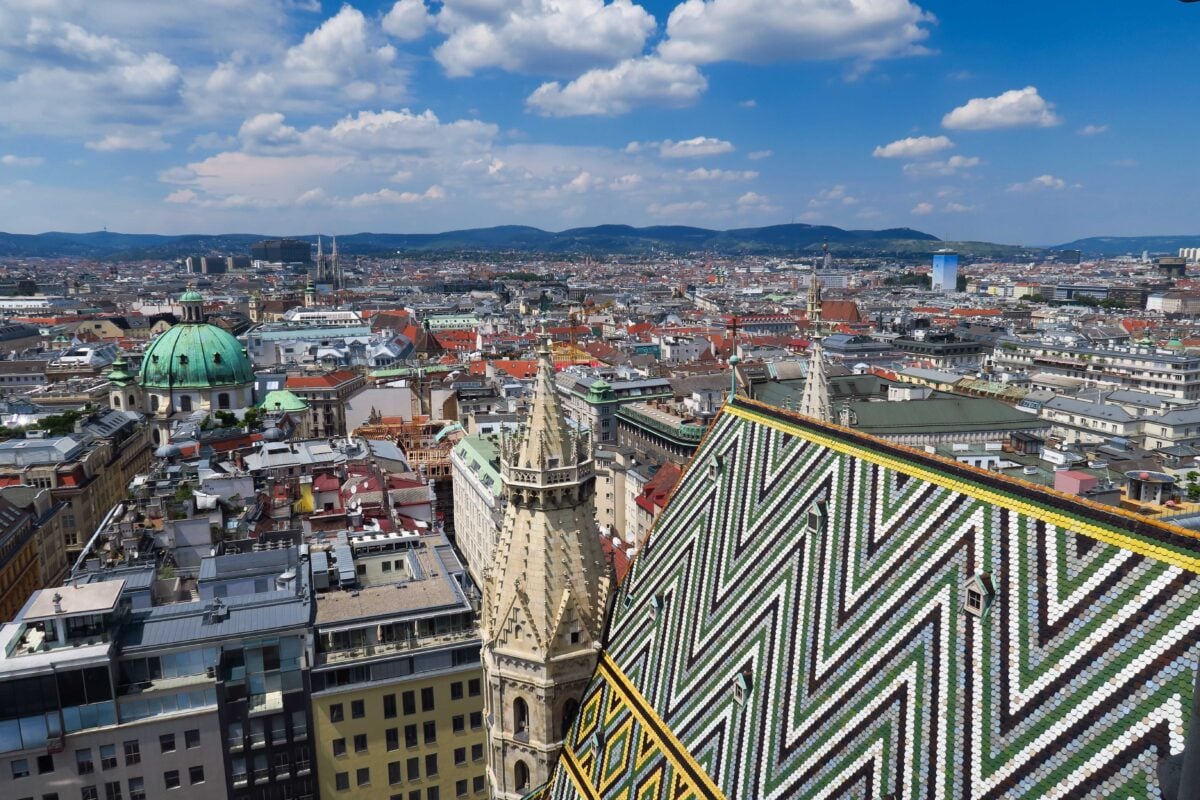
Begin early at St. Stephen’s Cathedral in Stephansplatz, the geographic and emotional centre of old Vienna. The cathedral combines Romanesque and Gothic elements, and different ticketed areas have their own access and hours. The South Tower, North Tower, cathedral interior and catacombs are separate experiences, so check the cathedral calendar before deciding what to include.
If views are your priority, the published ticket options have included separate admission for the towers. The South Tower and North Tower offer different experiences, while the catacombs are a better choice for those interested in the city’s religious and burial history. Avoid assuming the same access rules apply every day.
Walk through the pedestrianised lanes around Graben and Kärntner Strasse, then make your way east to Stadtpark. It is a useful green break between the dense old town and the museum-heavy afternoon ahead. Continue south to Belvedere Palace, a Baroque palace complex and home to Gustav Klimt’s The Kiss, one of Vienna’s major art stops.
Belvedere works best when you choose a clear focus before arrival. If art is the priority, reserve enough time for the collection rather than treating the palace as a quick exterior photograph. If the gardens and Baroque setting appeal more, build in outdoor time and pair it with a slower evening nearby.
For a different route, swap Belvedere for the Hundertwasserhaus and Kunst Haus Wien. Hundertwasserhaus is an instantly recognisable break from Vienna’s symmetrical imperial architecture, while Kunst Haus Wien gives the artistic context. This option makes particular sense for people more drawn to architecture and design than another palace interior.
Day 4: Naschmarkt, Prater and a Flexible Vienna Finish
Use the final morning for Naschmarkt, near Karlsplatz. It is Vienna’s best-known food market, with more than 100 stands selling items including spices, meat, vegetables, pastries and pasta, alongside places to sit for a meal. The market has traditionally operated Monday to Saturday, with Saturday often the fullest day for browsing, but verify opening arrangements before travelling.
Arrive with an appetite, but do not rely on Naschmarkt as a universal early-morning plan. Individual stall and restaurant hours vary. It is better treated as a late breakfast or lunch stop, leaving you free to browse without attempting a military operation around a pastry counter.
In the afternoon, take public transport to the Prater. The historic amusement area is home to the Giant Ferris Wheel, which has turned above Vienna since 1897 and remains one of the city’s classic skyline experiences. It is a refreshing change after three days of dynastic rooms, museum galleries and gold-heavy façades.
If you would prefer one final cultural afternoon, use this slot for an exhibition you skipped at MuseumQuartier or the Albertina. Another strong alternative is a local wine tasting in a historic cellar, which offers a more social finale than another monument. Keep the final evening unscheduled enough for a repeat visit to a favourite café, a concert or a long dinner.
How To Adjust This Vienna Itinerary
For art lovers: Give Belvedere, the Albertina and MuseumQuartier more time. Drop Prater if necessary, but retain a stroll through Stadtpark or Burggarten to avoid spending four days entirely under painted ceilings.
For families: Keep Schönbrunn’s gardens, the Butterfly House and Prater. The cathedral towers and long palace tours may suit older children better than younger ones, so choose one major interior each day and use parks as pressure-release valves.
For a winter break: Build in more museum time and check Rathausplatz for its Christmas market during the Advent season. Schönbrunn and the historic centre remain rewarding, but outdoor pauses will be shorter and timed-entry tickets become even more valuable. Pack warm layers and sturdy shoes, and check our Vienna packing list before you go.
For a slower trip: Keep one palace, one major museum and one neighbourhood walk per day. Vienna rewards sitting down. A schedule with no space for coffee, cake or an unplanned tram ride is technically efficient, but mildly misses the point.
Booking Tips for a First Visit
- Reserve Schönbrunn Palace first. Choose a timed entry that leaves room for the gardens and travel time back to the centre.
- Check attraction calendars individually. St. Stephen’s Cathedral access, guided tours and tower availability can vary by day and season.
- Use public transport for cross-city moves. Walking is often ideal inside the Innere Stadt, but Schönbrunn, Belvedere, Prater and Hundertwasserhaus are not one compact loop.
- Carry a payment backup. Cash remains useful at smaller businesses and market stalls, even though card payments are common in many central venues.
- Choose your concert carefully. Vienna’s music heritage is a major draw, but the best evening plan is one with clear venue details, programme information and an easy journey back to your accommodation.
Frequently Asked Questions About 4 Days in Vienna
Is Four Days Enough for Vienna?
Yes. Four days is enough for Schönbrunn Palace, the historic centre, Hofburg, one or two major art museums, Belvedere and Prater, with time for Vienna’s coffee-house culture. It is not enough for every museum or a day trip, so prioritise your interests.
What Is the Best Area To Stay in Vienna for First-Timers?
Stephansplatz, Karlsplatz and the Innere Stadt are the most convenient areas for a first-time sightseeing itinerary. Westbahnhof is a practical alternative for strong transport links and easy access to Mariahilfer Strasse.
Should I Buy Palace Tickets in Advance?
Yes, booking Schönbrunn Palace ahead is wise because it is a heavily visited historic complex. Advance planning also helps you build a realistic day around the gardens, MuseumQuartier and travel time.
Can I Do a Day Trip From Vienna in Four Days?
You can, but it means sacrificing a full day of Vienna itself. First-time visitors who want the core city experience should keep all four days in Vienna; people returning to the city can make room for a regional outing.
Continue Planning Your Vienna Trip
If your schedule shrinks, use our guide to what to do in Vienna in three days to trim this route without losing the core sights. For a tightly planned weekend, our two-day Vienna itinerary focuses on the essential central sights. If you have a fifth day or are planning a return visit, browse our ideas for day trips from Vienna, including rail-friendly options beyond the capital.
Vienna also combines neatly with Central European city breaks; our three days in Budapest itinerary is a useful next stop for anyone continuing east by train. Useful next guides for this Vienna cluster include where to stay in Vienna by neighbourhood, the best Viennese coffee houses and cakes to try, a Schönbrunn Palace planning guide, and the best day trips from Vienna by train.