Looking for 100+ Scottish Gaelic names for boys, girls and unisex choices? Start with this: Scottish Gaelic names often have an English equivalent, an anglicised spelling, or both, so the same name may appear in more than one form. That is normal, and it is one reason Scottish naming can get confusing fast.
This guide is part of our Scottish Names collection. Browse our complete Scottish Names directory for A–Z first names, surnames, Gaelic names, meanings, and themed collections.
This guide pulls together a big, practical list of Scottish Gaelic names, split into boys, girls and unisex options, with short meaning notes and simple pronunciation help where it is useful. If you are naming a baby, a character, or just tracing family roots, this should save you a lot of tab-hopping.
We have kept the focus on Scottish Gaelic names, not general Celtic names. You will still spot overlap with Irish forms in a few cases, but the spellings here lean Scottish where possible. Gaelic is still spoken in Scotland today, with the 2022 census recording just over 69,000 Gaelic speakers, so these names are tied to a living language rather than museum-piece history.
What Counts As A Scottish Gaelic Name?
Scottish Gaelic is a Goidelic language of Scotland, and many traditional names in the Highlands and Islands passed into English in altered spellings over time. So you might see Caitrìona beside Catriona, or Alasdair beside Alistair or Alexander.
That does not always mean one version is right and the other is wrong. Often, it means a family used the Gaelic form at home and the English form in official records. If you have looked through old Scottish documents, that sort of double life will not surprise you.
It also helps to separate Gaelic names from Scots surnames used as first names. Names like Blair, Cameron and Lennox are popular Scottish choices, but they are not all originally Gaelic given names. We have included a small unisex section with some crossover names because people searching this topic usually want both.
How To Read Scottish Gaelic Spellings
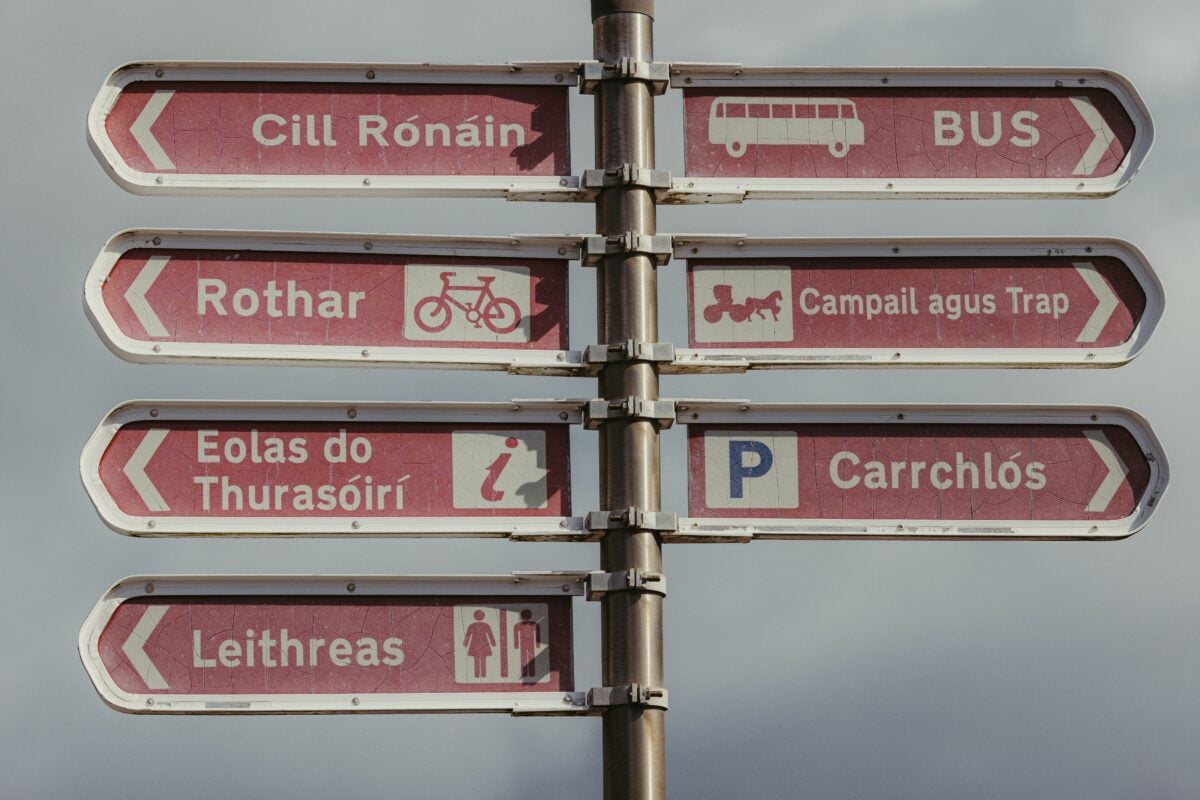
You do not need perfect Gaelic to use these names, but a few patterns help.
- bh and mh often sound like a v sound.
- ch is usually the throat sound heard in loch.
- Accent marks matter. In Scottish Gaelic, the grave accent appears in names such as Màiri and Caitrìona.
- Many names have an established English version, which families may prefer for ease of spelling.
If pronunciation is your main worry, it can be sensible to choose a name with a common anglicised form, such as Calum/Callum or Eilidh, which are widely recognised beyond Scotland. Even in Scotland, Eilidh still catches people from outside the country off guard, while Callum tends to sail through with fewer spelling corrections.
Scottish Gaelic Girl Names
Scottish Gaelic girl names range from saints’ names to island staples to forms that became familiar across the wider UK. Some are clearly Gaelic on the page. Others look closer to English because they have been adapted over generations.
- Ailios – linked with Alice
- Ailis – linked with Alice
- Aimil – linked with Amelia or Emily
- Aingealag – linked with Angelica
- Anabla – linked with Annabella
- Anna – Anne or Ann
- Barabal – Barbara
- Baraball – Barbara
- Barabla – Barbara
- Bearnas – linked with Bernice
- Beasag – Bessie, Betsy or Betty
- Beathag – linked in records with Beth, Rebecca, Sophia or Sophie
- Beileag – a pet form linked with Bella
- Beitidh – Betty
- Beitiris – Beatrice
- Beitris – Beatrice
- Bhioctoria – Victoria
- Brighde – Bride or Bridget
- Brìghde – Bride or Bridget
- Brìde – Bridget
- Cairistiòna – Christine
- Cairistìne – Christina
- Cairstiona – Christina
- Cairistìona – Christina or Christine
- Caitir – a form associated with Catherine
- Caitrìona – Catherine, Katherine or Catriona
- Catrìona – Catherine, Katherine or Catriona
- Ceana – Kenna
- Ceit – Kate or Katie
- Ceiteag – Katie, Katy or Kitty
- Ceitidh – Katie
- Ciorsdan – Christina
- Ciorstag – Kirsty
- Ciorstaidh – Kirsty
- Ciorstan – Kirsten
- Cotrìona – Catherine
- Criosaidh – Chrissie
- Curstag – Kirsty
- Curstaidh – Kirsty
- Ealasaid – Elizabeth
- Eilidh – often linked with Helen
- Eimhir – a Gaelic form also seen in Irish
- Fionnaghal – linked with Fenella
- Iseabail – Isabel
- Lìosa – Lisa
- Màiri – Mary
- Mairead – Margaret
- Marsaili – Marjory or Marjolein family forms, often anglicised as Marsali
- Moire – Mary
- Oighrig – Euphemia
- Peigi – Peggy
- Raonaid – Rachel or Rachel-adjacent usage in some name lists
- Seònaid – Janet
- Sìne – Jean or Jane
- Sorcha – brightness, a name shared across Gaelic traditions
- Teasag – Jessie or Janet in some Scottish use
- Ùna – Una
Eilidh, Màiri, Caitrìona and Iseabail are among the most recognisably Scottish-looking choices in that list. If you want a Gaelic name that still feels familiar to many English speakers, they are good places to start.
Popular Styles Within Scottish Gaelic Girl Names
A few patterns turn up again and again.
- Saint and church-linked names: Brìde, Màiri, Iseabail, Ealasaid.
- Names with obvious English cousins: Ceit, Seònaid, Sìne, Beitiris.
- Island and Highland staples: Eilidh, Catrìona, Marsaili, Oighrig.
If you want more female name ideas beyond Gaelic forms alone, pair this list with a broader Scottish names guide and a dedicated round-up of unusual Scottish girl names.
Scottish Gaelic Boy Names
Scottish Gaelic boy names include some of the best-known names in Scotland, plus older forms that still appear in family trees, clan history and Highland records. Some have travelled well. Others still feel strongly local, which is part of the charm.
- Ailean – Alan
- Ailpein – linked with Alpin
- Aindrea – Andrew
- Aonghas – Angus, often explained as one strength
- Artair – Arthur
- Calum – dove, related to Columba
- Callum – the common anglicised Scottish form of Calum
- Cailean – Colin
- Coinneach – Kenneth
- Colla – an old Gaelic name
- Còmhghan – often rendered as Cowan or Coan family forms
- Dòmhnall – Donald
- Donnchadh – Duncan, often glossed as dark warrior
- Dubhghall – Dougal or Dugald, often explained as dark stranger
- Eairdsidh – Archie or Archibald-linked Scottish use
- Eòghainn – Ewan, Eugene or Owen-related forms depending on tradition
- Fearchar – Farquhar
- Fionnlagh – Finlay or Findlay
- Fiontan – Fintan
- Fionn – fair or white
- Gilleasbaig – Gillespie or Archibald-linked usage
- Iain – John
- Iomhair – Ivor
- Lachlann – Lachlan
- Maol Chaluim – Malcolm
- Muiris – Morris
- Muireadhach – Murdoch
- Niall – Niall or Neil family forms
- Nìll – Neil
- Odhar – dun-coloured or pale brown in meaning traditions
- Pàdraig – Patrick
- Parlan – Bartholomew-linked Scottish form
- Ruairidh – Rory
- Raghnall – Ronald
- Seumas – James
- Somhairle – Sorley
- Tadhg – a Gaelic name more familiar in Ireland, but known in Gaelic tradition
- Tormod – Norman
- Torcall – Torquil
- Uilleam – William
- Uisdean – Hugh
- Alasdair – Alexander or Alistair, defender of the people
- Alastair – common Scottish spelling linked with Alasdair
- Alistair – another established anglicised form
- Fergus – often explained as man of vigour or force
- Hamish – a Scots form linked to Seumas/James
- Innes – more often a surname and place-name, but used as a first name in Scotland
- Kenneth – English form of Coinneach
- Lorne – Scottish place-name use
- Murray – surname and regional name used as a first name
- Neil – common anglicised form of Niall or Nìll
Alasdair, Calum, Lachlann, Ruairidh and Seumas are strong starting points if you want names that feel plainly Scottish without being impossible for non-Gaelic speakers to handle.
Which Scottish Gaelic Boy Names Travel Best?
If you live outside Scotland, some names cross borders more easily than others. Callum, Angus, Rory, Ewan and Malcolm are familiar in both the UK and North America. Donnchadh, Gilleasbaig and Somhairle are more distinctly Gaelic on the page, and that is often exactly why people love them.
For a bigger mix of classic and modern options, it also makes sense to pair this list with a broader Scottish boy names guide. You will also see some of these names more often in Highland families and island communities, especially if you are already reading up on the Scottish Highlands and the western isles.
Unisex Scottish Names With Gaelic Or Scottish Roots
Truly unisex names in traditional Scottish Gaelic are less common than modern baby-name lists sometimes suggest. What usually happens is that Scottish surnames, place names and anglicised forms move into the unisex column over time.
- Ainsley – used for all genders, more Scots and English than Gaelic
- Blair – Scottish place-name and surname use
- Blane – linked with Gaelic roots and used across genders in modern lists
- Bowie – Scottish surname use
- Bryce – Scottish surname and first-name use
- Cameron – from Gaelic elements, long used as a surname and first name
- Campbell – surname from Gaelic elements, now used as a first name
- Druim – Gaelic place-name element meaning ridge
- Fife – Scottish place name used occasionally as a given name
- Iona – the island name, widely used for girls but sometimes placed in unisex lists
- Irvine – Scottish surname and place-name use
- Jamie – used across genders, though still more often male in Scotland
- Kyle – from a Gaelic word for a narrow strait
- Lennox – Scottish surname and regional name now used as a first name
- Leslie – long-established Scottish surname and first-name use
- Mackenzie – surname from Gaelic roots, now widely unisex
- Muir – Scottish surname and landscape word
- Nairn – place-name option
- Skye – island name with modern unisex appeal
- Yarrow – river name shared across the Borders landscape
If you want a name that sounds Scottish without being tightly tied to one gender, Blair, Cameron, Leslie, Mackenzie and Skye are the easiest modern picks. If you want something more obviously Gaelic, the field narrows quickly.
Gaelic Names Vs Scots Names: What’s The Difference?
This trips people up all the time, so here is the short version.
Scottish Gaelic names come from the Gaelic language. Examples include Alasdair, Màiri, Seumas and Caitrìona.
Scots or broadly Scottish names may come from surnames, place names, clan names, Norman influence, Norse influence or long-established English usage in Scotland. Examples include Blair, Douglas, Fraser, Cameron and Lennox.
Both are Scottish. They are just not the same linguistic category.
If your aim is heritage accuracy, especially for genealogy or family naming, it is worth deciding which lane you want. Some parents want a clear Gaelic language connection. Others just want a name that feels at home in Scotland. That choice also affects how easily a name will be recognised outside Gaelic-speaking areas.
Popular Scottish Gaelic Names You’ll Hear Often
A few names come up again and again in Scottish life, school registers, family circles and popular name lists. Official baby-name data in Scotland still shows Callum, Finlay, Rory, Isla and Freya among the regular favourites, while Gaelic spellings remain more niche but very much alive.
Among girls, names like Eilidh and Catriona-adjacent forms are widely recognised. Among boys, Callum, Rory, Angus, Lachlan and Ewan are the names most people outside Scotland have a fair chance of pronouncing on the first go. Fair chance, mind. Guaranteed would be pushing it.
If ease matters, choose a name with a well-known alternate spelling. If distinctiveness matters more, the original Gaelic form is often the point.
How To Choose A Scottish Gaelic Name
A long list is useful. A shortlist is better. These questions usually narrow things down fast.
- Do you want the Gaelic spelling or the anglicised form?
Alasdair and Alistair carry the same heritage in different ways. - Will pronunciation be a daily issue where you live?
Eilidh may need explaining outside the UK more than Isla or Iona. - Do you want a direct meaning?
Names such as Calum, Fergus and Aonghas are often chosen partly for their meaning notes. - Are you honouring family records?
Old Scottish documents often preserve forms like Màiri, Iain, Seumas and Dòmhnall. - Do you want clearly Scottish or simply Scottish-leaning?
There is a big difference between Ruairidh and Blair.
Our practical tip is simple: say the full name aloud with the surname. Then spell it out once as if you were giving it over the phone. That catches a lot of future hassle. It is also worth checking how much you care about dropping accents in everyday paperwork, because Màiri and Caitrìona do not always survive online forms intact.
Quick List: 25 Standout Scottish Gaelic Names
If 100-plus options feels like too much, start here.
- Girls: Eilidh, Màiri, Caitrìona, Iseabail, Brìde, Marsaili, Oighrig, Seònaid, Sìne, Mairead
- Boys: Alasdair, Calum, Aonghas, Coinneach, Dòmhnall, Donnchadh, Lachlann, Ruairidh, Seumas, Uilleam
- Unisex: Blair, Cameron, Iona, Leslie, Lennox
That shortlist gives you a good spread of traditional, familiar and distinctly Scottish names without drowning you in variants.
Final Thoughts On Scottish Gaelic Names
Scottish Gaelic names are rarely one-size-fits-all. The same name can carry a Gaelic form, an English equivalent, a family spelling and a modern streamlined version. That is not a flaw in the tradition. It is the tradition.
If you are building your shortlist, start with the names that feel good said out loud, then work backwards to spelling, meaning and heritage fit. Calum or Callum. Caitrìona or Catriona. Alasdair or Alistair. There is often more than one good answer.
And if you are going deeper into Scottish naming, this list works best as your hub page. Next, branch into more unusual Scottish girl names, Scottish boy names, and surname-style first names used across Scotland. If place-based inspiration appeals, a look at the best Scottish islands to visit and even classic phrases like hoots mon gives you a better feel for the language world these names come from.