
This article has links to products and services we love, which we may make commission from.
I’ve lost count of how many times I’ve heard someone call Scotland “bonnie” and wondered if they actually knew what they were saying. Turns out, most of us do it on autopilot (myself included, until I looked this up).
Quick Answer: Why Is Scotland Called Bonnie?
Bonnie is a Scots word meaning beautiful, attractive, or pleasing. Scotland earned the nickname “Bonnie Scotland” because people have been using it to describe the country’s stunning landscapes, warm culture, and general charm for centuries. The word itself comes from Middle French (“bon” or “bonne,” meaning good) with Latin roots in “bonus.” The phrase appeared in print at least as far back as 1881 in George MacDonald’s novel Warlock o’ Glenwarlock, though the word bonnie itself dates to the 15th century in Scottish poetry.
It’s less an official title and more a centuries-old habit of calling Scotland what it is: genuinely lovely.
What Does Bonnie Actually Mean?
Let’s start with the word itself. Bonnie translates to beautiful, attractive, or pleasing in Scots. It’s not Scottish Gaelic (common mistake). Scots evolved from Old English with French and Latin influence, and bonnie arrived via Middle French.
The earliest recorded use of “bonny” in Scots goes back to before 1513, showing up in the work of poet William Dunbar. The spelling bounced around over the centuries (bony, bonie, bonny, bonnie), but bonnie became the standard by the 18th century.
You’ll hear it used for people (“bonnie lass,” “bonnie lad,” “bonnie bairn”), places (Glencoe, Loch Lomond, the Isle of Skye), and things. It’s versatile. Sometimes it means fine or excellent. Sometimes it’s sarcastic. Context matters.
Pronunciation varies slightly across Scotland. In the northeast (Doric), it sounds broader. In Glasgow and the central belt, it’s sharper. Either way, you’re saying BON-ee.
Where Did “Bonnie Scotland” Come From?
The phrase Bonnie Scotland has been kicking around for centuries, but its earliest confirmed appearance in print is George MacDonald’s 1881 novel Warlock o’ Glenwarlock: A Homely Romance. That doesn’t mean it wasn’t in common use long before that. People don’t suddenly start calling a country bonnie in a novel unless they’ve been saying it out loud for years.
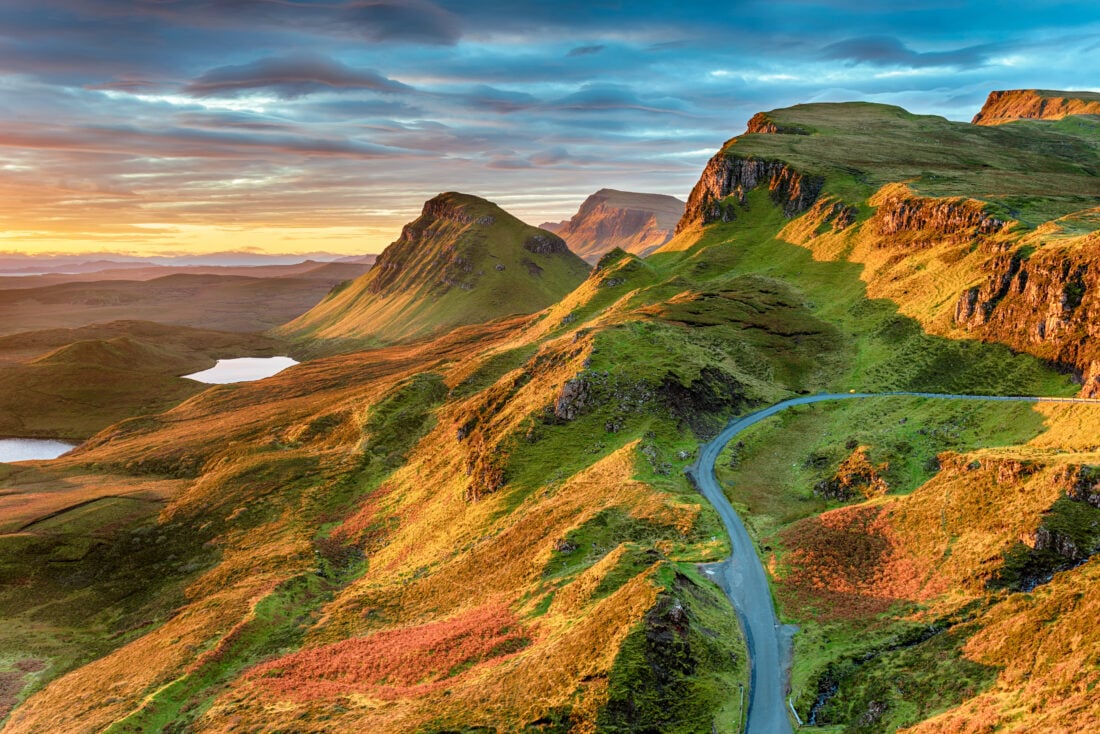
The term stuck because it fits. Scotland has misty mountains, serene lochs, bagpipes, and kilts, and a cultural warmth that makes “bonnie” feel accurate rather than flowery. It’s romantic without being dishonest.
You’ll also find bonnie all over Scottish songs and poetry. “The Bonnie Banks o’ Loch Lomond” is probably the most famous example, celebrating the beautiful shores of Loch Lomond. “My Bonnie Lies over the Ocean” is another well-known tune. The word weaves through Scottish art and music in a way that makes it inseparable from the national identity.
Why Scotland Specifically?
Honestly, the sources don’t spell out why Scotland became “Bonnie Scotland” instead of, say, bonnie anywhere else. But I’d argue it’s because the landscape earned it. Glencoe, Loch Lomond, Edinburgh, the Isle of Skye, the Cairngorms, St Andrews, these places are objectively stunning. Calling them bonnie isn’t marketing spin. It’s just observation. If you’re planning a trip to see what all the fuss is about, our complete Scotland guide is a solid starting point.
The phrase also carries a sense of pride and endearment. It’s not just that Scotland is beautiful. It’s that Scots feel warmly about their country and wanted a word that captured both the scenery and the sentiment. Bonnie does that.
Interestingly, bonnie isn’t exclusive to Scotland. It’s used in the north of England, particularly around Newcastle and the northeast. But it’s Scotland that claimed “Bonnie Scotland” as a cultural shorthand.
Bonnie in Scottish Culture
The word shows up everywhere in Scottish life. You’ll hear it in expressions, songs, place names, and casual conversation. It’s a term of endearment, a compliment, and sometimes an intensifier (like “very”).
Bonnie Prince Charlie is probably the most famous historical figure associated with the term. He led the 1745 Jacobite attempt to reclaim the British throne, and his nickname stuck in part because of how the word bonnie was already woven into Scottish identity.
The name Bonnie (or Bonny) also became popular as a given name, particularly in North America. It comes directly from the Scots word and means pretty or beautiful.
A Few Bonnie Places Worth Mentioning
If you want to see why Scotland earned the nickname, here are a few places that fit the bill:
- Glencoe – Dramatic, moody, and stunning even in bad weather
- Loch Lomond – The bonnie banks themselves, immortalized in song
- Edinburgh – Historic, hilly, and genuinely beautiful from most angles
- Isle of Skye – Rugged, remote, and worth the bridge crossing
- The Cairngorms – Wild, stark, and rewarding if you like mountains
- St Andrews – Coastal, historic, and well worth a visit
Not gonna lie, I’ve been guilty of over-researching trips to Scotland and then still being caught off guard by how good it actually looks in person. The photos don’t lie, but they also don’t quite capture it. If you’re thinking of a road trip through Scotland, that’s honestly one of the best ways to experience the bonnie-ness firsthand, because the landscape changes every twenty minutes. The weather right now is surprisingly mild at 61°F with clear skies, though the humidity sits at 88%, so layers are still your friend (as of March 2026).
The west coast in particular is where a lot of locals will quietly point you. It’s rawer and less polished than the big-name spots, which is exactly the appeal.
Is Bonnie Still Used Today?
Yes. You’ll hear it in everyday conversation across Scotland, though frequency varies by region and generation. It’s not archaic. It’s not quaint. It’s just part of the language.
The phrase “Bonnie Scotland” is still used in tourism, literature, and music, though it leans a bit nostalgic now. That said, nostalgia doesn’t make it inaccurate. Scotland is still bonnie, and people still say so.
Final Thoughts
So why is it called Bonnie Scotland? Because bonnie means beautiful, and Scotland is. The phrase has been in use for centuries, appearing in literature, songs, and everyday speech. It’s rooted in the Scots language, shaped by French and Latin, and tied to a national identity that values both landscape and warmth.
It’s one of those nicknames that just works. No one had to force it. It stuck because it fit.
Do yourself a favor and visit sometime. You’ll understand why the word bonnie became Scotland’s go-to adjective.