
This article has links to products and services we love, which we may make commission from.
I turned up to Vienna expecting to be mildly impressed and left feeling slightly embarrassed that I’d underestimated it so badly. It’s the kind of city that doesn’t need to try very hard. The architecture alone could carry it. But then you add the coffee, the music, the food, the sheer density of things that were either invented here or perfected here, and it starts to feel almost unfair.
So if you’re wondering what Vienna is actually known for, here’s the honest answer: a lot. More than most cities can reasonably claim.
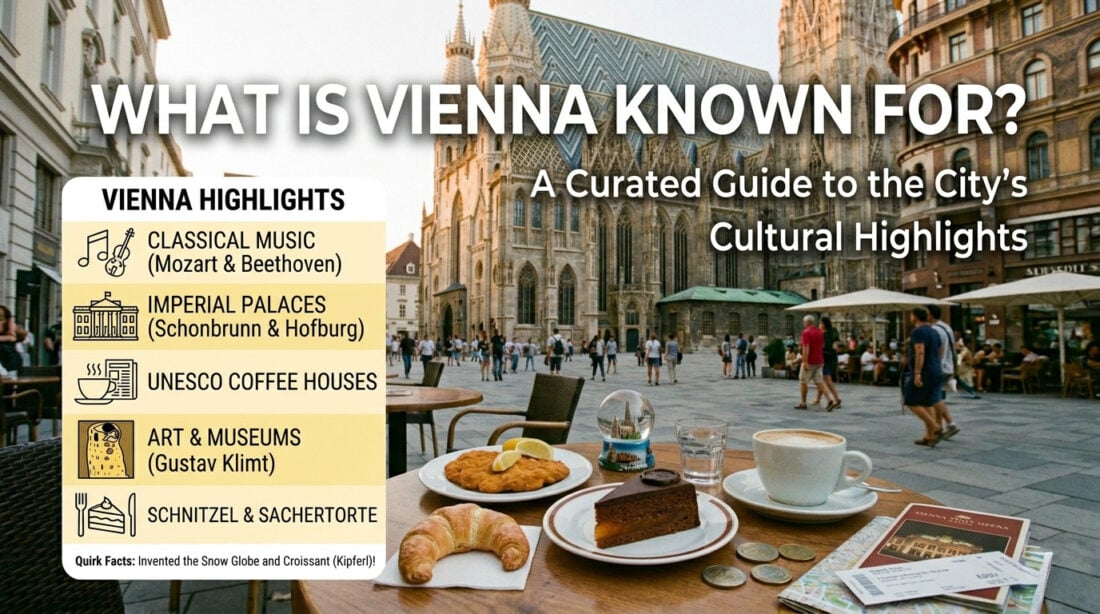
Quick Answer: What Is Vienna Known For?
- Classical music – Mozart, Beethoven, Brahms, Schubert, Mahler and more all lived and worked here
- Imperial architecture – the Habsburg dynasty left behind palaces, boulevards, and grand public buildings on a scale that still stops people in their tracks
- Coffee house culture – UNESCO-listed as an Intangible Cultural Heritage, dating back to 1683
- World-class museums – around 100 of them, including the MuseumsQuartier, one of the largest cultural complexes in Europe
- Wiener schnitzel and Sachertorte – the food alone is worth the trip
- The Vienna State Opera – roughly 350 performances a year
- Diplomatic importance – home to the UN, OPEC, and hundreds of international organisations
- Wine – yes, Vienna has over 1,700 acres of vineyards within city limits
- The world’s oldest zoo – Schonbrunn Zoo, founded in 1752
- Ball season – over 300 balls a year, January through March
Vienna and Classical Music: The World Capital of the Form
Vienna’s reputation as the global home of classical music is not marketing copy. Beethoven, Brahms, Bruckner, Haydn, Mahler, Mozart, Schoenberg, Schubert, and both Johann Strausses either grew up here or relocated here to work. That’s not a coincidence. The city actively pulled in talent for centuries.
The Vienna State Opera hosts around 350 performances a year and is known internationally for its acoustics. The Wiener Musikverein is home to the Vienna Philharmonic Orchestra, and the Wiener Konzerthaus is headquarters to the Vienna Symphony Orchestra. You can also catch concerts in historic churches like Karlskirche and Peterskirche, which is a genuinely good way to spend an evening.
On the more unexpected end: Vienna also hosts the Donauinselfest, which is reportedly the largest open-air music festival in the world. And Falco, who recorded “Rock Me Amadeus” – the only German-language song to reach number one on the US Billboard Hot 100 – is from here. The city contains multitudes.
Imperial Architecture and the Habsburg Legacy
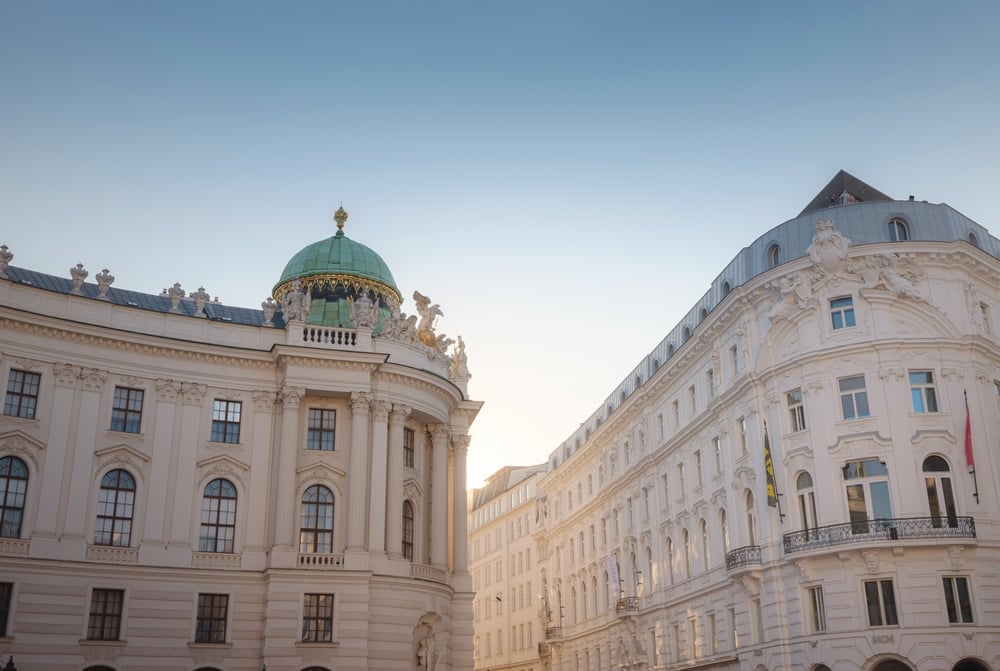
The Habsburg dynasty ruled from Vienna from 1278 to 1918, and they were not subtle about it. What they left behind is an architectural landscape that genuinely requires several days to take in properly.
Schonbrunn Palace was the imperial summer residence – 1,441 rooms, formal gardens, and a Gloriette building on the hill above. It’s now Vienna’s most visited attraction, and it’s also home to the world’s oldest zoo (more on that in a moment). Hofburg Palace served as the main imperial residence for over 600 years and is now the official workplace of Austria’s Federal President. It houses the Sisi Museum, the Imperial Treasury, and the Vienna State Spanish Riding School.
The Ringstrasse, a grand boulevard encircling the city center, was built in the 19th century and lined with the Opera House, the Parliament, City Hall, the Burgtheater, and more. Austrians claim it’s the most beautiful boulevard in the world, which is the kind of thing Austrians would say, but they’re not entirely wrong.
The historic center of Vienna was designated a UNESCO World Heritage Site in 2001 – though it was added to the list of World Heritage in Danger in 2017.
The Palaces Vienna Is Known For
| Palace | What It’s Known For |
|---|---|
| Schonbrunn | Former imperial summer residence, 1,441 rooms, oldest zoo in the world on site |
| Hofburg | Main imperial residence for 600+ years, now houses multiple museums |
| Belvedere | Baroque palace complex, houses Gustav Klimt’s “The Kiss” |
Gustav Klimt’s “The Kiss” lives at the Upper Belvedere, which was originally the summer residence of Prince Eugene of Savoy. The Belvedere also holds the world’s largest collection of Klimt’s works. If you go to Vienna and skip it, I genuinely don’t know what to tell you.
Museums: About 100 of Them
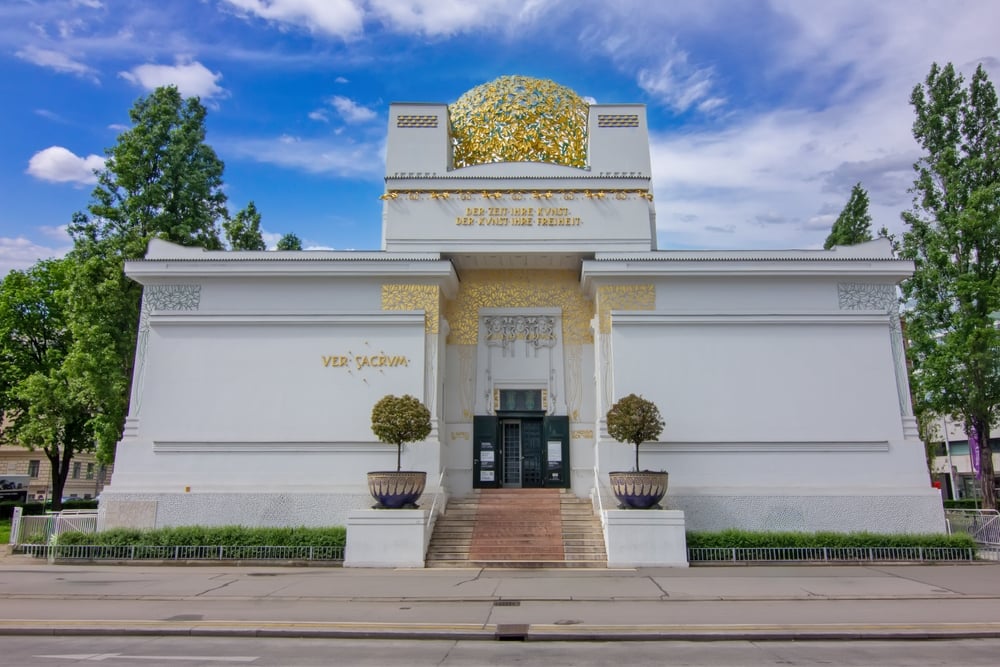
Vienna has roughly 100 museums. The MuseumsQuartier is one of the largest cultural complexes in Europe, covering 645,000 square feet across 60 cultural institutions. It was originally the Habsburg Imperial Stables before being transformed in 2001.
A few worth flagging:
- Kunsthistorisches Museum – built by Emperor Franz Joseph I to house the Habsburgs’ private collection, featuring Raphael, Titian, Rembrandt, Vermeer, and Pieter Bruegel the Elder
- Naturhistorisches Museum – 30 million objects, including the Venus of Willendorf
- Albertina – four floors of artwork including Monet and Picasso, housed in a former Habsburg residential palace
- Leopold Museum and MUMOK – modern and contemporary art, including works by Klimt and Egon Schiele
- Sigmund Freud Museum – because yes, Freud lived and worked in Vienna, which is why the city is nicknamed “The City of Dreams”
The Prunksaal National Library is also worth a mention: a Baroque hall containing books and manuscripts dating back to 1501. It’s one of those rooms that makes you feel like you’ve walked into a film set.
Vienna’s Famous Coffee House Culture
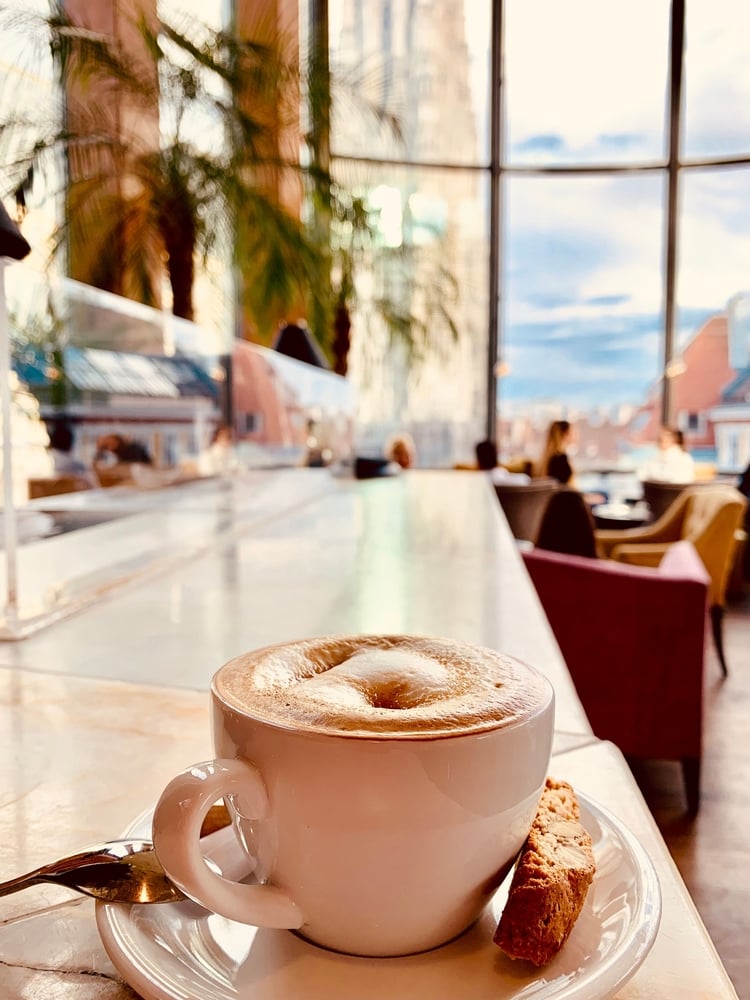
The story goes that when Ottoman forces retreated after the 1683 siege of Vienna, they left coffee beans behind. Whether or not that’s entirely accurate, the result was a coffee culture so specific and so embedded in Viennese life that UNESCO listed it as an Intangible Cultural Heritage of Austria.
Viennese coffeehouses became gathering places for intellectuals, artists, and writers through the 19th and early 20th centuries. Freud was a regular. Klimt too. The atmosphere – the word is gemutlichkeit, a sense of coziness and unhurried comfort – is the point. You’re not just buying a coffee, you’re buying the right to sit there for as long as you want.
The coffee itself has its own vocabulary:
- Kleiner Schwarzer – single espresso
- Grosser Schwarzer – double espresso
- Melange – espresso with steamed milk
- Einspanner – espresso with whipped cream, served in a glass
Don’t order a cappuccino and expect to be taken seriously. I’m not saying anything bad will happen, I’m just saying.
Notable coffeehouses include Cafe Central, Cafe Sperl, and Cafe Sacher. That last one is where you’ll find the Sachertorte, though Cafe Sacher and Cafe Demel had an actual legal dispute over which of them first created it. You can go to both and form your own opinion.
The Food: Schnitzel, Cake, and a Surprisingly Good Wine Scene
Wiener schnitzel – a breaded, fried veal cutlet – is Vienna’s most famous dish. September 9th is apparently National Wiener Schnitzel Day, which feels like exactly the kind of thing Vienna would do. The Naschmarkt is the city’s main food market, though it has a reputation for being tourist-heavy.
On the pastry side:
- Sachertorte – dense chocolate cake with apricot jam and dark chocolate icing, invented in 1832 by Franz Sacher
- Apfelstrudel – apple strudel, a staple
- Kardinalschnitte – a sponge cake with custard cream and meringue, first made by L. Heiner
The city’s pastry shops (konditoreien) include Demel, Aida, Gerstner, and Oberlaa. Gerstner is known for its Apfelstrudel specifically.
And then there’s the wine. Vienna is one of the few capital cities in the world with its own vineyards operating within city limits – over 1,700 acres of them. Local wines like Gruner Veltliner and Gemischter Satz are served at Heuriger, traditional wine taverns in districts like Grinzing and Nussdorf.
Things Vienna Invented That You Probably Didn’t Know About
This is the section that surprised me most, honestly.
- The snow globe – invented in Vienna in 1900 by Erwin Perzy, a fine instruments mechanic who was trying to improve surgical lamp brightness
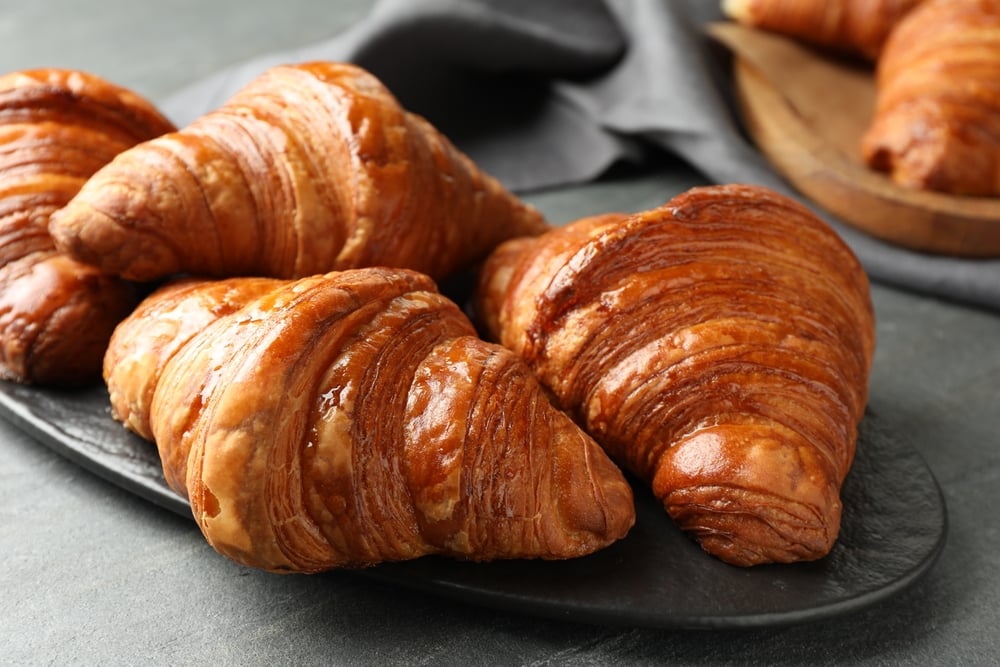
- The croissant – the French pastry originated from an Austrian pastry called the Kipferl
- The world’s oldest operating Ferris wheel – the Wiener Riesenrad in the Prater, built in 1897, which also appeared in the 1949 film “The Third Man”
- The world’s oldest zoo – Schonbrunn Zoo, founded in 1752
The Prater itself is worth a visit. It’s a large public park that’s been an amusement park since 1766, originally royal hunting grounds.
Vienna as a Diplomatic and Intellectual Centre
Vienna became a UN headquarters city in 1980 and now hosts the United Nations, OPEC, and numerous other international organisations at the Vienna International Centre. In 2022, the International Congress and Convention Association ranked Vienna first in the world for association meetings.
Over 300 international companies have their Eastern European headquarters in the city. It generates 25.1% of Austria’s GDP.
The intellectual history is equally significant. In the early 20th century, Vienna was the center of psychoanalysis (Freud), the Vienna Secession movement in art (Klimt), the Vienna Circle in philosophy, the Second Viennese School in music, and the architecture of Adolf Loos. Ludwig Wittgenstein was also from here. The University of Vienna, founded in 1365, is the oldest and largest university in the German-speaking world.
The Ball Season
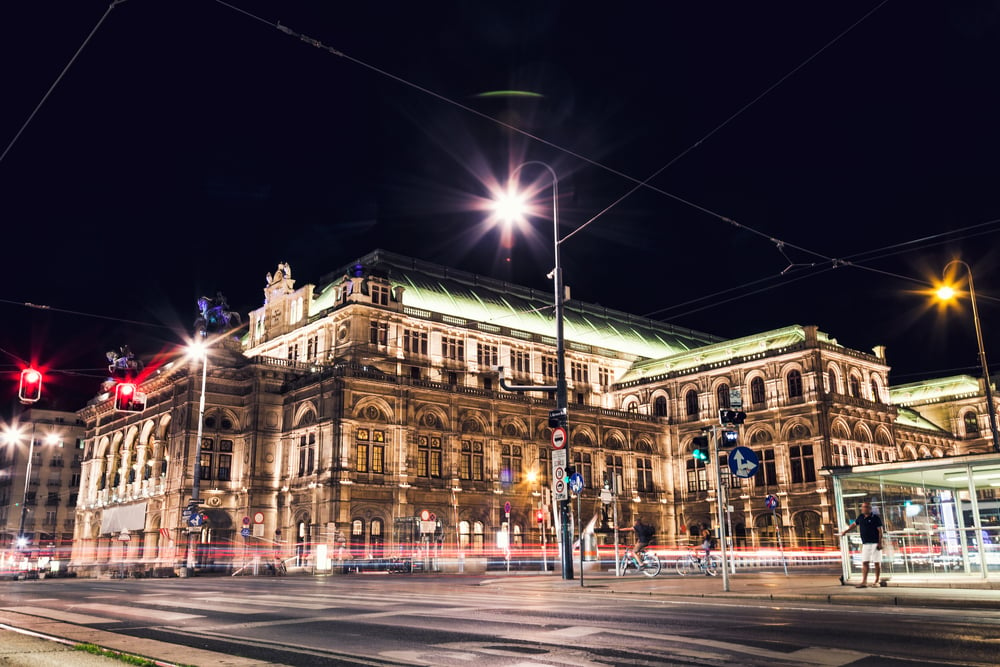
Over 300 balls take place in Vienna each year, running from January through March. The most famous is the Vienna Opera Ball, held at the State Opera House. Others include the Philharmonic Ball and the Hofburg Silvesterball. Strict dress codes apply, and traditional dances like the Viennese waltz are a genuine part of the evening rather than a novelty act.
The Vienna Woods
The Vienna Woods cover roughly half of the city’s area and sit at the northeasternmost foothills of the Alps. They feature beech and oak forests, vineyards, and trails. It’s a green lung that most cities this size simply don’t have.
Quick-Reference: What Vienna Is Famous For
| Category | What to Know |
|---|---|
| Music | Home to Mozart, Beethoven, Brahms, Mahler, Schubert and more; Vienna State Opera; Vienna Philharmonic |
| Architecture | Habsburg palaces, Ringstrasse, Baroque churches, Hundertwasserhaus |
| Art | Klimt’s “The Kiss” at Belvedere; 100+ museums including MuseumsQuartier |
| Food | Wiener schnitzel, Sachertorte, Apfelstrudel |
| Coffee | UNESCO-listed coffeehouse culture dating to 1683 |
| Wine | 1,700+ acres of city vineyards; Gruner Veltliner and Gemischter Satz |
| Diplomacy | UN, OPEC, 300+ international company HQs |
| Records | World’s oldest zoo (1752), world’s oldest Ferris wheel (1897), world’s largest open-air music festival |
| Intellectual history | Freud, Wittgenstein, Vienna Secession, Vienna Circle |
| Quirky facts | Invented the snow globe, invented the croissant |
Vienna is one of those cities that rewards the more you know going in. Do yourself a favour and don’t try to do it in a day.