

This article has links to products and services we love, which we may make commission from.
Someone can grow up in Scotland and still reach adulthood without fully appreciating just how many everyday things around them have Scottish origins. The TV. The telephone. The fridge. Even the ATM they’re permanently overdrawn at. All of it, Scottish. It’s the kind of detail that’s surprisingly easy to overlook.
So here it is: a proper rundown of Scottish inventions that changed the world, from the genuinely world-altering to the quietly brilliant.
Quick Answer
Scotland invented (or Scots were directly responsible for) the telephone, television, penicillin, the refrigerator, the MRI scanner, the ATM and PIN system, the pneumatic tyre, the vacuum flask, the hypodermic syringe, the kaleidoscope, the first colour photograph, Dolly the sheep (the first cloned mammal), and quite a lot more besides.
The Big Scottish Inventions: A Full List
| Invention | Inventor | Year |
|---|---|---|
| Telephone | Alexander Graham Bell | 1876 |
| Television | John Logie Baird | 1926 |
| Penicillin | Sir Alexander Fleming | 1928 |
| Refrigerator | William Cullen | 1748 |
| MRI scanner (clinical breakthrough) | University of Aberdeen team | 1980 |
| ATM and PIN system | James Goodfellow | 1966 |
| Pneumatic tyre (first version) | Robert Thomson | 1846 |
| Vacuum flask | Sir James Dewar | 1892 |
| Hypodermic syringe | Alexander Wood | 1853 |
| Colour photograph (three-colour process) | James Clerk Maxwell | 1855 |
| Kaleidoscope | Sir David Brewster | 1816 |
| S-bend for flushing toilets | Alexander Cumming | 1755 |
| Daily disposable contact lens | Ron Hamilton | 1995 |
| Pedal bicycle (velocipede) | Kirkpatrick Macmillan | – |
| Mackintosh coat | Charles Mackintosh | 1823 |
| Dolly the sheep (first cloned mammal) | Roslin Institute, University of Edinburgh | 1996 |
| Fingerprinting for criminal ID | Henry Faulds | 1880 |
| Steam engine improvements | James Watt | 1776 |
| Early light bulb (copper filament) | James Bowman Lindsay | 1835 |
| Dunlop cheese | Barbara Gilmour | Early 18th century |
| Deep-fried Mars bar | Unknown Scottish chip shop owner | 1980s |
Yes, the deep-fried Mars bar is on there. Scotland contains multitudes.

The Telephone (1876)
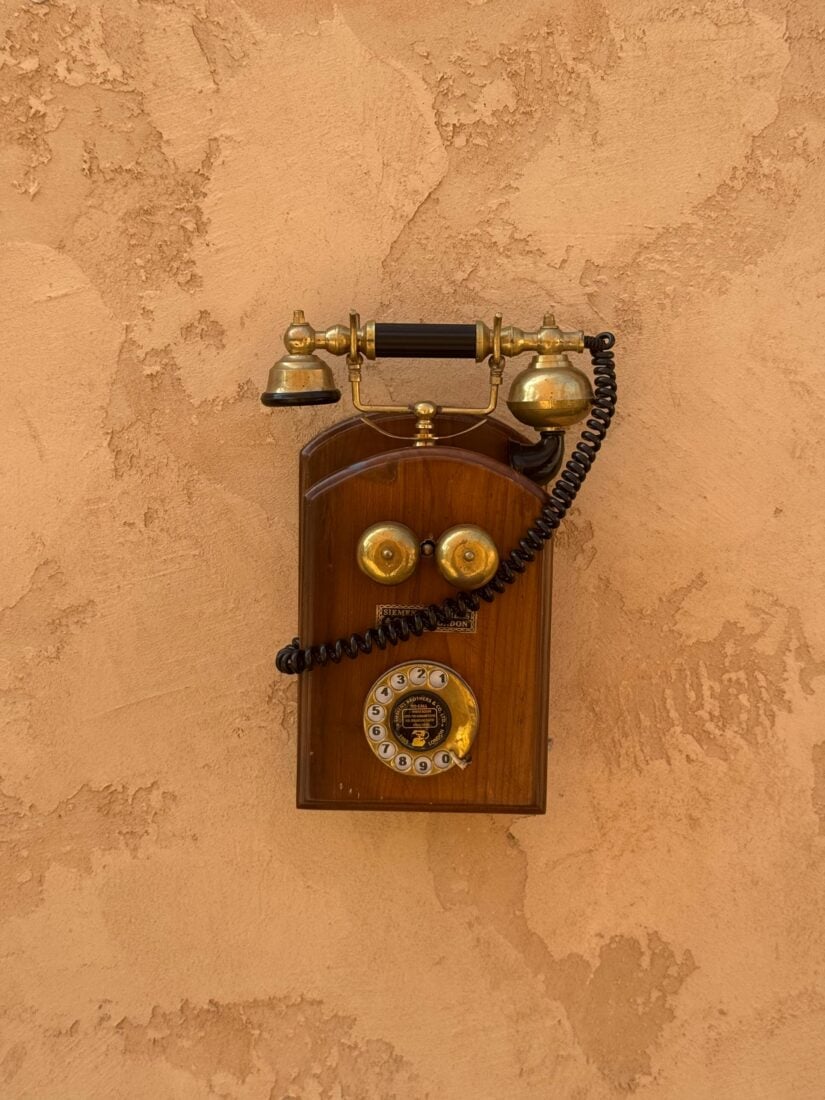
Alexander Graham Bell was born in Edinburgh and went on to patent the first practical telephone in 1876. The motivation behind it was personal: both his mother and his wife had hearing impairments, which shaped his lifelong interest in sound and communication. He received the first patent for the telephone that year.
Fun footnote: Bell apparently considered the telephone an intrusion on his actual work. The man invented one of the most transformative communication tools in human history and found it annoying. Relatable, honestly.
The Television (1926)
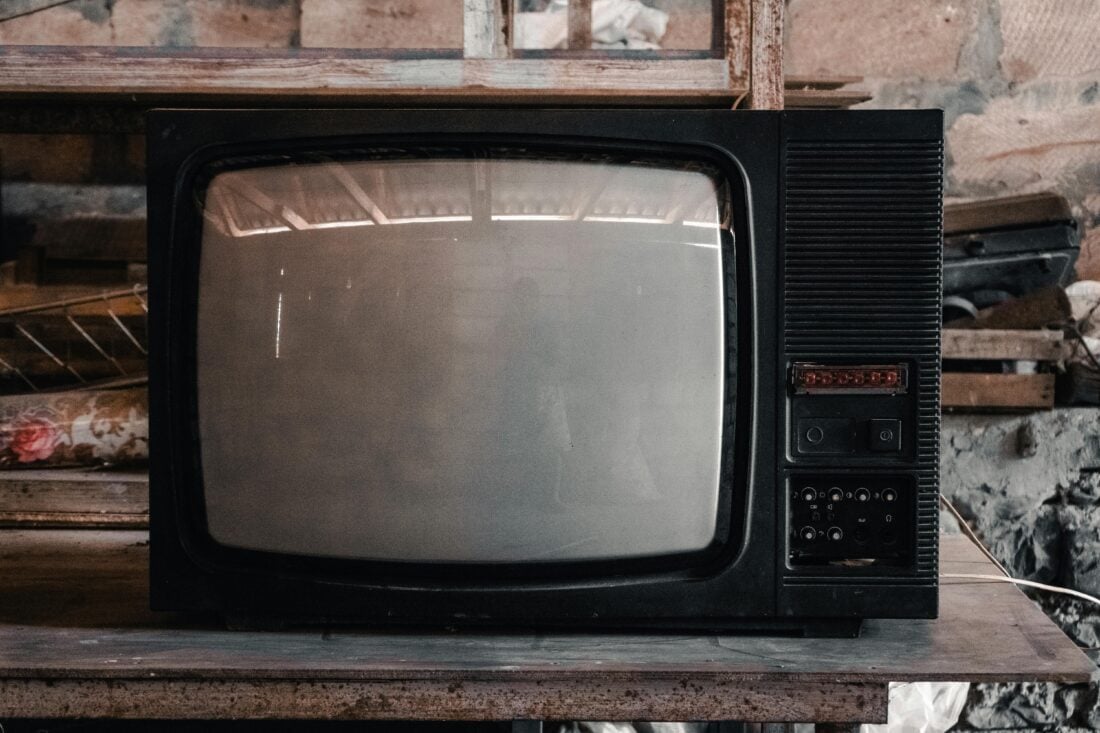
John Logie Baird demonstrated the first working television system in January 1926. He didn’t stop there either, he also achieved the first transatlantic television transmission and invented the first colour television. A Scotsman is responsible for every hour of reality TV ever broadcast. Make of that what you will.
Penicillin (1928)
This one genuinely saved hundreds of millions of lives. Sir Alexander Fleming discovered penicillin in 1928, and the story of how it happened is almost too good. He came back from a family holiday to find cultures he’d left stacked in a corner of his lab had been contaminated by mould. Rather than binning them, he noticed the mould was killing the bacteria around it. His untidiness, essentially, kickstarted the age of antibiotics.
Not a bad return on leaving your desk messy.
The Refrigerator (1748)
William Cullen demonstrated artificial refrigeration at Glasgow University in 1748. The modern fridge is a long way from that first experiment, but the principle started there. Before this, keeping food from spoiling was a constant problem. Cullen’s work opened the door (sorry) to everything that followed.
The MRI Scanner (1980)
A team at the University of Aberdeen produced the first clinically useful image of a patient’s internal tissues in 1980, marking the breakthrough for the MRI scanner. It’s now one of the most important diagnostic tools in medicine, particularly for soft tissue imaging where X-rays fall short.
The ATM and PIN System (1966)
James Goodfellow, from Paisley, invented the automated teller machine and the PIN number system in 1966. Every time you tap your four-digit code into a cash machine (or get it wrong three times and have your card eaten), you are interacting with a Scottish invention. Turns out, knowing what to tip in Scotland is arguably harder than using the machine itself.

The Pneumatic Tyre (1846)
This one has a slightly complicated credit history. Robert Thomson was actually the first to invent the pneumatic tyre, originally designed for horse-drawn carriages, in 1846. John Boyd Dunlop later improved and adapted the design specifically for bicycles. Thomson gets the original invention; Dunlop gets the one everyone remembers. Classic.
The Pedal Bicycle
Kirkpatrick Macmillan, a blacksmith from Dumfries, built the first pedal-driven bicycle, the velocipede. The modern bike evolved from his design. Worth remembering next time you’re grinding up a hill in the rain.
The Mackintosh Coat (1823)
Charles Mackintosh figured out in 1823 that sandwiching a layer of liquid rubber between two layers of fabric created a waterproof material. In Scotland. Where it rains constantly. The man was solving an immediate and pressing local problem and accidentally invented a coat worn worldwide. Honestly, if you’re planning a Scotland road trip, you’ll understand exactly why this invention was non-negotiable. The current weather is 61°F with clear skies and 88% humidity (as of March 2026), which sounds pleasant until you remember that can flip to sideways rain before you’ve finished your sentence.
Dolly the Sheep (1996)
On 5 July 1996, Dolly was born at the Roslin Institute, part of the University of Edinburgh. She was the first mammal ever cloned from an adult cell. Whatever your views on where that science leads, the achievement itself was extraordinary, and it happened in a field outside Edinburgh.
The Kaleidoscope (1816)
Sir David Brewster invented the kaleidoscope in 1816. He patented it, but due to a patent office error he saw almost no financial benefit from it. It became enormously popular anyway. Being the person who invented something and watching everyone else profit from it is a very Scottish kind of outcome, honestly.
The S-Bend Toilet (1755)
Alexander Cumming, a Scottish mechanic, invented the S-bend in 1755. The purpose was specific and important: the curved pipe traps water, which blocks sewer gases from coming back up through the toilet. Every functional flushing toilet in the world uses this principle. It is not glamorous. It is, however, essential.
The Hypodermic Syringe (1853)
Alexander Wood, a Scottish physician, developed the hypodermic syringe in 1853. He was apparently inspired by the mechanism of a bee’s sting. The idea that a bee sting led to one of the most important medical instruments ever created is the kind of detail that sounds made up but isn’t.
The Vacuum Flask (1892)
Sir James Dewar invented the vacuum flask in 1892 while researching cryogenics. You probably know it as a Thermos. The insulation principle, a vacuum between two walls to prevent heat transfer, came directly from his scientific work with extremely cold temperatures.
Colour Photography (1855)
James Clerk Maxwell produced the first colour photograph in 1855 using a three-colour process, demonstrating that all colours can be created from appropriate mixtures of red, green and blue light. Maxwell is also considered one of the most important physicists in history, often mentioned alongside Einstein and Newton. Scotland produced him and somehow this still surprises people.
Fingerprinting for Criminal Identification (1880)
Henry Faulds, a Scottish doctor, suggested in 1880 that fingerprints could be used to identify criminals. The entire forensic fingerprinting system used by police forces globally traces back to that idea.
The Steam Engine Improvements (1776)
James Watt didn’t invent the steam engine from scratch, but his improvements, including the separate condenser, transformed it from a limited, inefficient machine into the engine of the Industrial Revolution. His work in 1776 is one of the most consequential engineering contributions ever made. Scotland’s rail network still runs on that spirit of innovation, and ScotRail is set to replace its intercity trains by 2028, which Watt would probably have opinions about.
The Floating Tidal Turbine (Modern)
Scotland isn’t done yet. Orbital Marine Power developed the O2, a floating tidal turbine that generates electricity from tidal flows. It’s capable of powering approximately 2,000 UK homes annually. Scotland’s seas are now being put to work in ways that could matter a great deal for renewable energy, particularly along the west coast where the tidal resources are massive.
A Few Honourable Mentions
- James Bowman Lindsay demonstrated an early light bulb using a copper filament in 1835, contributing to the development that eventually led to Edison’s version.
- Barbara Gilmour invented Dunlop cheese in the early 18th century, made from unskimmed milk from Ayrshire cows.
- Ron Hamilton developed the daily disposable contact lens in 1995.
- The deep-fried Mars bar was created by an unnamed Scottish chip shop owner in the 1980s. Scotland invents things across the full spectrum of human ambition.
Why Does Scotland Have So Many Inventions?
That’s genuinely outside what the sources here cover, so I won’t speculate. What the list does show is that Scottish inventors were active across medicine, physics, engineering, food, and communications, often working from practical problems rather than abstract theory. Fleming’s messy lab. Bell’s family. Cumming’s very reasonable objection to sewer smells. A lot of these came from someone noticing something that needed fixing.
Scotland is a small country. The list above is not small at all.