
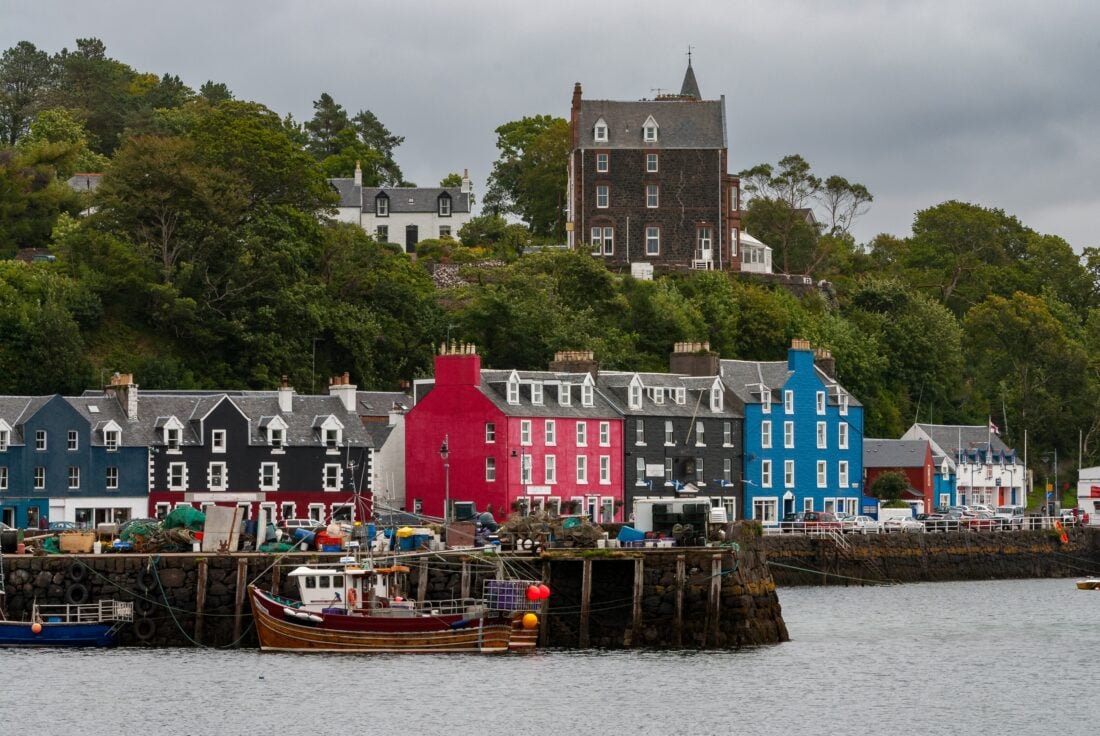
The Isle of Mull is Scotland’s fourth largest island and one of the most rewarding destinations in the Inner Hebrides. You can fill days with castle visits, whisky tours, serious hikes, white-sand beaches, eagle spotting, and island hopping to Iona, Staffa, and Ulva. A car is essential to get the most out of it.
Interest in Mull has been climbing steadily over the past year, with search trends peaking through late autumn and into spring. Honestly, it’s not hard to see why. The island delivers that raw Scottish scenery without the crowds you’d hit on Skye during peak season.
Mull’s top draws are Tobermory (the colorful harbor town), Duart Castle, Calgary Beach, hiking Ben More, wildlife watching for white-tailed sea eagles, and day trips to Iona and Staffa. The island suits hikers, history lovers, wildlife fans, and beach seekers equally well.
Getting to Mull
All three ferry routes to Mull are operated by Caledonian MacBrayne (CalMac). The main route runs from Oban to Craignure and takes approximately 45 minutes. Book this crossing in advance, especially in summer. You need to check in at least 30 minutes before departure.
Two alternative routes, Lochaline and Kilchoan, operate on a first-come, first-served basis.
From Glasgow, you can reach Oban by ScotRail train or Citylink coach. If you’re driving, the most direct route from central Scotland is via Crianlarich and Tyndrum. If you’re spending time in the city before heading north, check out our Glasgow travel guide for things to do and where to stay.
Practical tips before you go:
- Fill up with fuel on the mainland. Petrol is more expensive on Mull and options are limited in remote areas.
- Public toilets are scarce, particularly on the Ross of Mull and the West Coast Road. Use any you find.
- Roads on Mull are mostly single-track with passing places. Keep left, use passing places to let vehicles through, and avoid making other drivers reverse long distances.
Tobermory: Mull’s Main Town
Tobermory is the island’s largest town and the obvious first stop. Founded as a fishing settlement in the 18th century, it punches well above its size with a photogenic colored waterfront, independent shops, local crafts, and good eating options.
Tobermory Distillery is Mull’s only whisky distillery and well worth a visit. Tours cover the history of whisky production on the island and include tastings of two distinct malts: Tobermory (unpeated) and Ledaig (peated). The distillery also produces Tobermory handmade chocolate.
For food, Cafe Fish is one of the most respected seafood restaurants in Scotland (check seasonal opening times before visiting). The Mishnish is a solid backup with freshly caught seafood. Other dining options on the island include The Creel, Macgochans, and the Glass Barn Cafe at Isle of Mull Cheese.
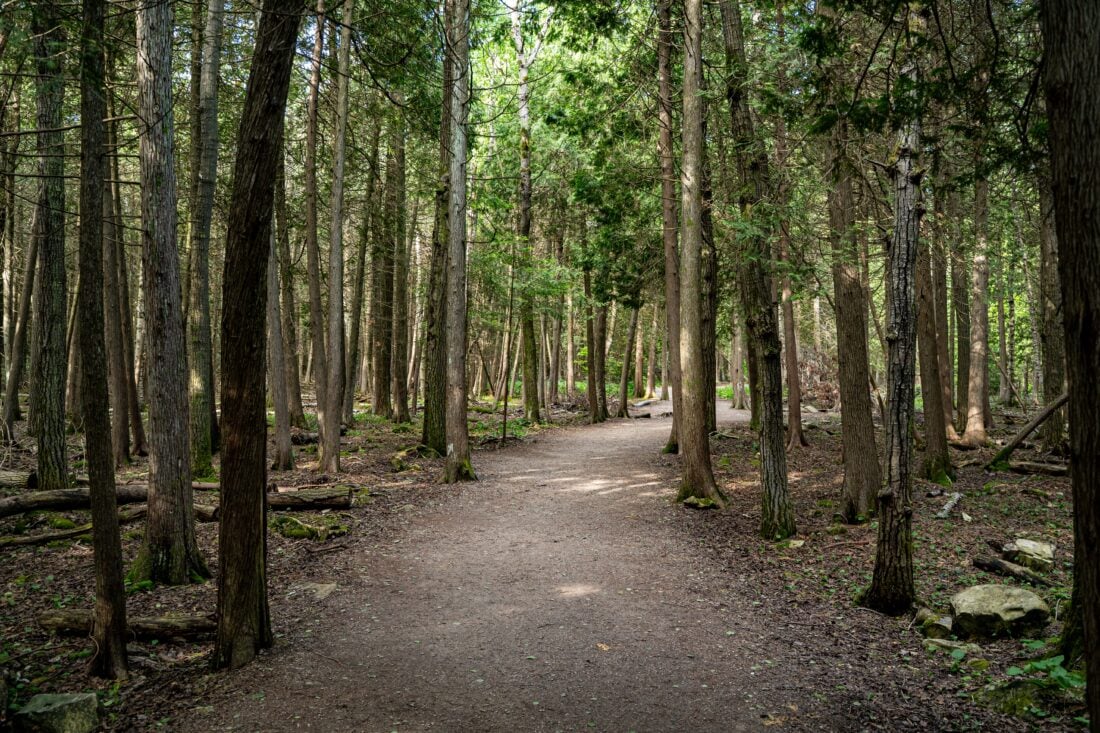
View of trail at Bruce Peninsula National Park in Tobermory.
Duart Castle
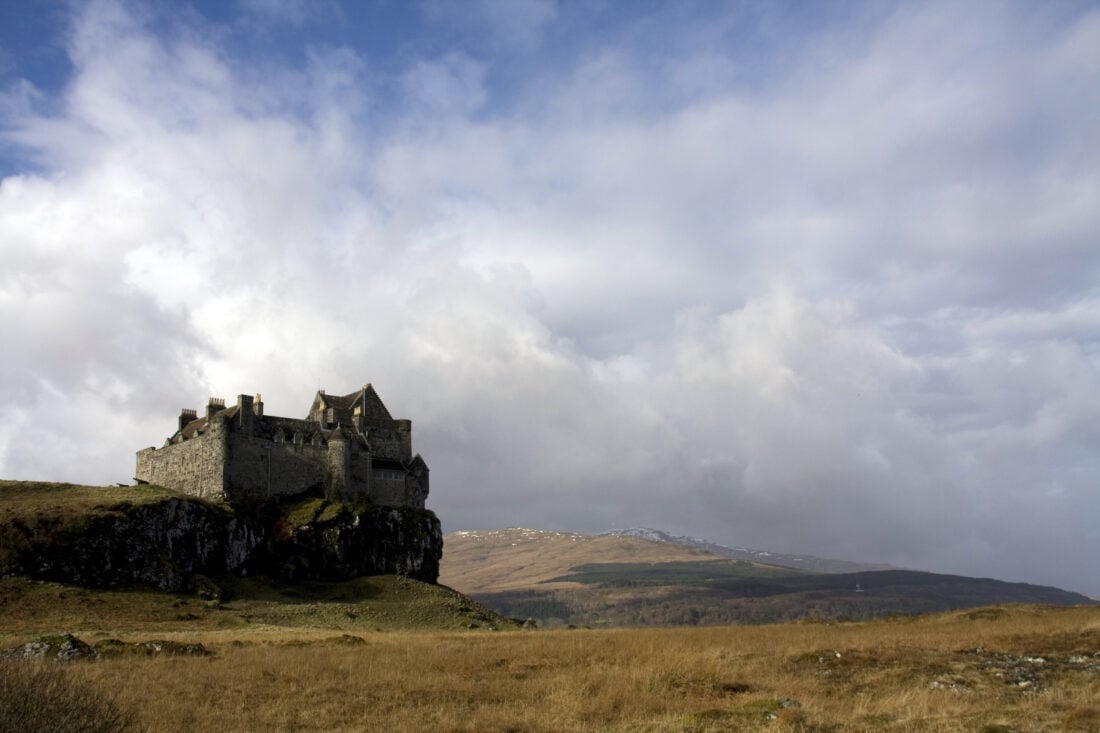
Duart Castle is a 13th-century fortress on the cliffs overlooking the Sound of Mull. It is the ancestral home of Clan MacLean and one of the oldest inhabited castles in Scotland. You can see it clearly from the Oban ferry as you arrive. Inside, visitors can explore the Great Hall, staterooms, and an exhibition. If you catch the early 6:45am ferry from Oban, you can reach the castle before the crowds arrive.
Mull’s Beaches
The island has several beaches worth the detour.
Calgary Beach is the most popular, with silver sands and good access for day visitors. It also has Calgary Arts in Nature, which offers workshops, a sculpture walk, and a cafe.
Fidden Beach, located 2 miles south of Fionnphort, has pink granite rocks, fine sand, and clear azure water. There’s a car park and campsite nearby, and seals are often spotted on the rocks.
Kilvickeon Beach requires a 20-minute walk from the car park at Old Kilvickeon Parish Church. At low tide you can reach a small tidal island. Sea eagles and seals are occasionally seen here.
Traigh Ghael translates as ‘white beach’ in Gaelic. It’s a tropical-looking beach with white sand and turquoise water, reached via a 2-3 hour hike through the Tireragan Nature Reserve. Not gonna lie, the effort to get there is real, but the payoff is one of the most stunning stretches of sand in Scotland.
Langamull Beach is another notable option in the north of the island.
Hiking on Mull
Ben More is Mull’s only Munro, standing at 966 metres (3,169 ft). It is also the only island Munro in Scotland outside of the Black Cuillin on Skye. Expect a demanding full-day hike. It is suitable for experienced hikers in good conditions. If you’re planning to tackle the Cuillin too, our guide to things to do on the Isle of Skye has everything you need.
For something less committing, the Carsaig Arches trail is a challenging but rewarding route across rough terrain in the south of the island. Along the way you’ll encounter wild goats, cliff-tumbling waterfalls, seabirds, and views across to the Paps of Jura, before reaching dramatic coastal rock formations.
For guided walking, Tony McLean of Walk Mull offers guiding services at £90.
Waterfalls
Two waterfalls are particularly accessible on Mull:
- Eas Fors Waterfall – a scenic spot reached via a half-hour walk.
- Aros Park Waterfall – the more accessible of the two, located near Tobermory.
Historical Sites Beyond Duart
Moy Castle is a 15th-century tower house near Lochbuie in the remote south of Mull. The surrounding area includes dramatic scenery and a clan mausoleum.
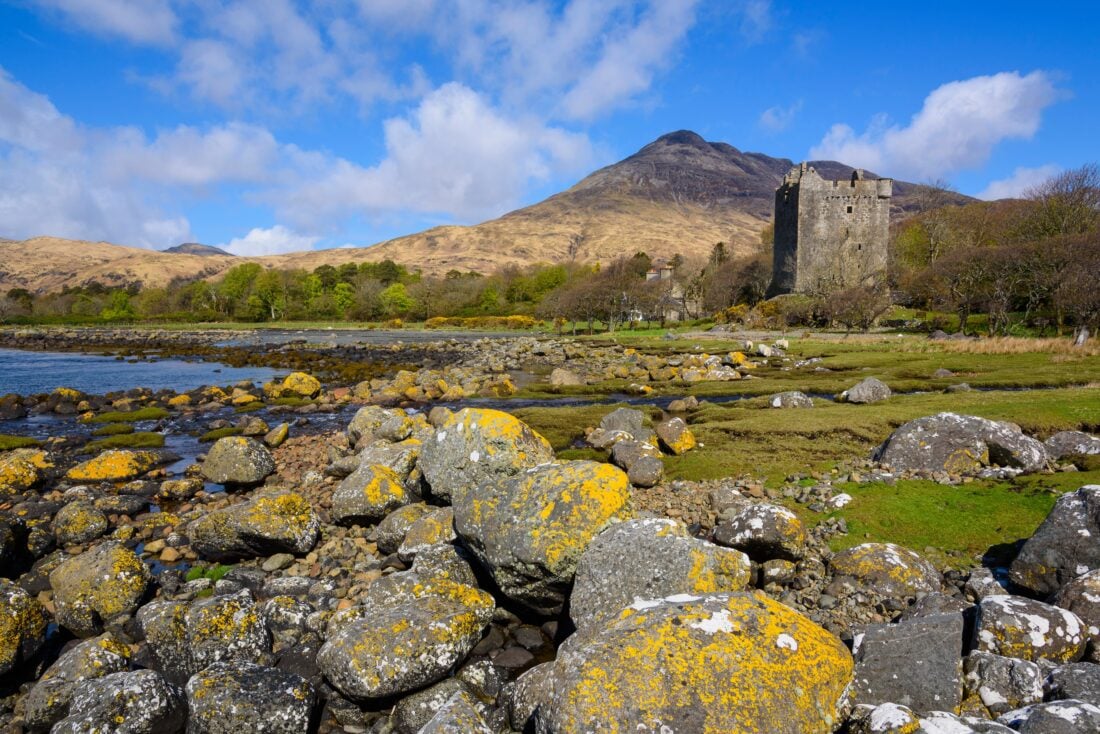
Moy Castle, Lochbuie, Isle of Mull
Lochbuie Stone Circle is the only complete stone circle on Mull, surrounded by historical cairns and standing stones.
Wildlife Watching
Mull has a strong reputation for wildlife. The island is considered the best place in Europe to spot white-tailed sea eagles, earning it the nickname ‘Eagle Island’. Golden Eagles are also present.
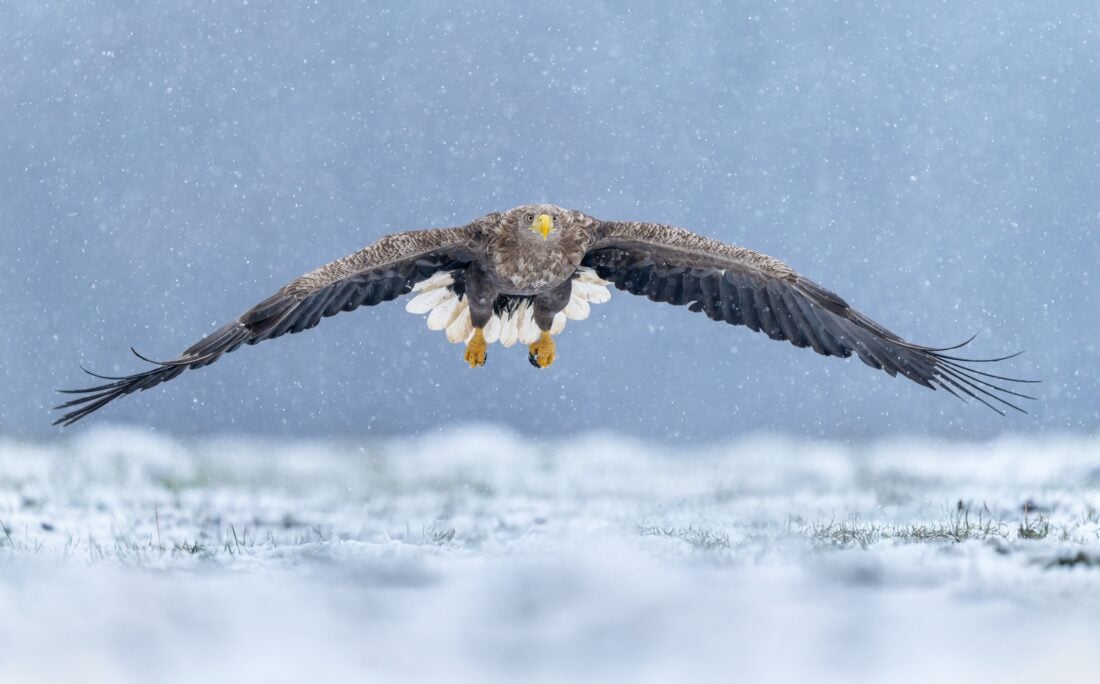
Other wildlife you might encounter includes otters, seals, fallow deer, dolphins, minke whales, Highland cattle, and puffins (on boat trips to nearby islands).
For a structured wildlife experience, Staffa Tours runs boat trips from April to October that include wildlife tours to the Isle of Lunga and Staffa, with good chances of seeing puffins.
Island Hopping from Mull
Iona
Iona is reached by a 10-minute passenger ferry from Fionnphort at the southwestern tip of Mull. In summer, ferries run every 30 minutes.
Iona is known as the birthplace of Scottish Christianity. St Columba and his followers landed here in 563 AD, established a monastery, and began converting the Picts on the mainland. The island is the final resting place of dozens of ancient Scottish kings. Iona Abbey is the main attraction, along with Celtic crosses including St Martin’s Cross, which is over 1,200 years old.
Take the earliest ferry and visit the Abbey as soon as it opens to beat the crowds.
Staffa
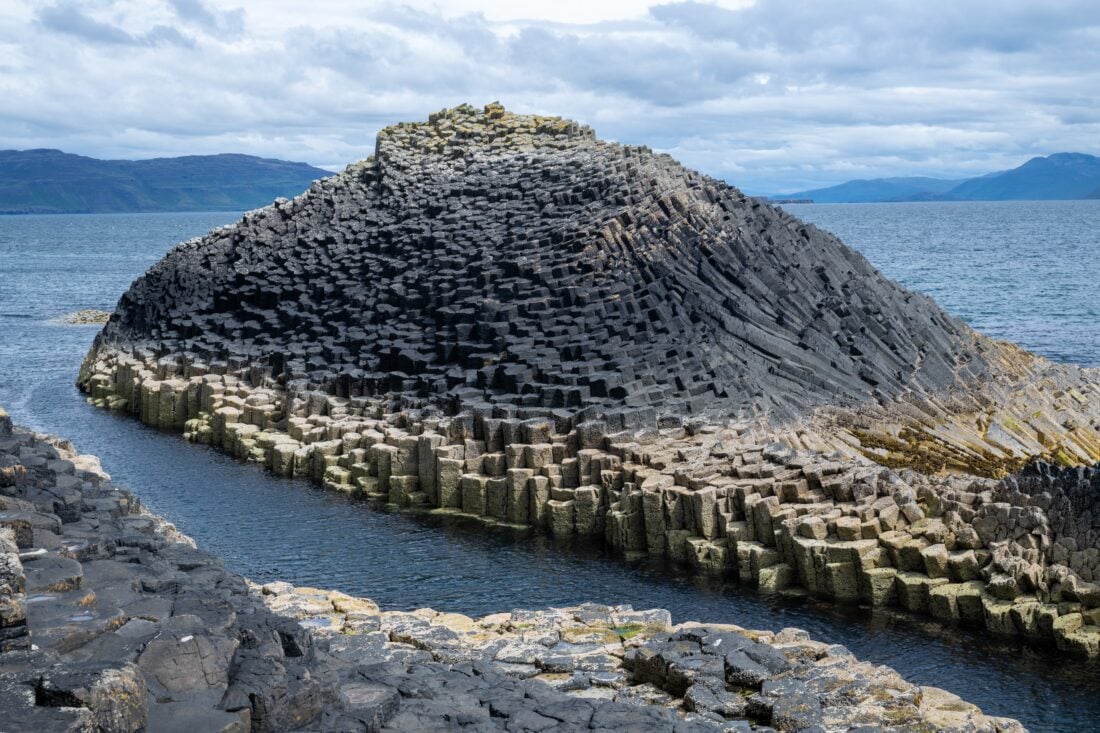
Staffa is an uninhabited island known for its dramatic black hexagonal basalt columns and a large sea cave with a strong folkloric history. Puffins nest on the island. Staffa Tours runs trips from April to October.
Isle of Ulva
Ulva is a community-owned island accessible by private ferry (the Ulva Ferry), operating seasonally from April to October. No vehicles are allowed on the island. Visitors can walk the trails and eat at The Boathouse. It is a good option for those wanting a quieter, more remote experience. If you enjoy exploring smaller Scottish islands, you might also like the West Island Way and things to do on Bute.
Scenic Drives
The West Coast Scenic Drive is worth doing at a leisurely pace, as sheep and cattle on the road keep speeds low regardless. A suggested route runs around Ben More, starting at Loch Beg Bridge towards Gruline, combining mountain and coastal scenery.
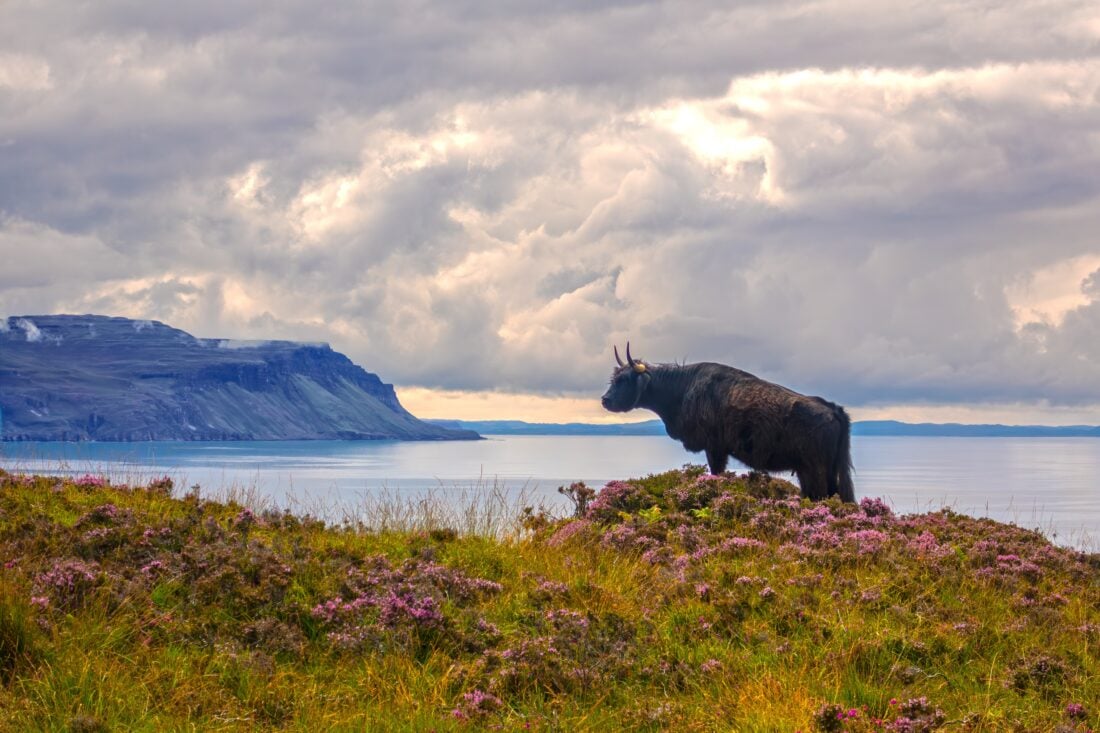
The southern shore of Loch Beg is a reliable spot to see Highland cattle, especially at low tide.
Where to Stay on Mull
Book accommodation early, especially for summer visits.
| Area | Options |
|---|---|
| Tobermory | Harbour View, Western Isles Hotel, Linndhu House |
| Island-wide | Glengorm Castle, Isle of Mull Hotel and Spa |
| Salen | Old School |
| South Mull | Bunessan Inn, Carsaig House |
| Iona | Iona Pods, St Columba Hotel |
| Budget / camping | Craignure Bunkhouse, Fidden Farm campsite |
Craignure Bunkhouse is convenient if you’re arriving late by ferry. It’s close to the terminal and has a kitchen and lounge.
Mull in Winter
Winter travel on Mull is possible but requires flexibility. Some attractions, including Duart Castle and Cafe Fish, close seasonally. Ferry crossings are less frequent. The upside is dramatic landscapes and very few other visitors. Duart Castle can still be viewed from outside even when closed.
Turns out, even in spring the weather keeps you honest. Current conditions on Mull are sitting at 36°F with moderate rain and 93% humidity (as of April 2026), so layers and waterproofs are non-negotiable well beyond winter months. Pack for all four seasons in a single day, because that’s genuinely what you’ll get.
Frequently Asked Questions
How do you get to the Isle of Mull?
All ferries to Mull are run by CalMac. The main route is Oban to Craignure, taking around 45 minutes. Book in advance for summer travel. You can reach Oban by ScotRail train or Citylink coach from Glasgow.
Do you need a car on Mull?
Yes, a car is strongly recommended. Bus services run by West Coast Motors connect the main villages, but many beaches, castles, and scenic spots are only practical to reach with your own transport. Roads are single-track with passing places.
What is Mull best known for?
Mull is best known for white-tailed sea eagles (it’s nicknamed ‘Eagle Island’), Tobermory’s colorful harbor, Duart Castle, Calgary Beach, and its proximity to Iona and Staffa. It’s also the only Scottish island outside Skye with a Munro (Ben More).
Can you visit Iona and Staffa as a day trip from Mull?
Yes. Iona is a 10-minute ferry from Fionnphort with frequent summer sailings. Staffa is reached by boat tour, and Staffa Tours runs trips from April to October. Both can be combined in a full day if you plan the timings carefully.