
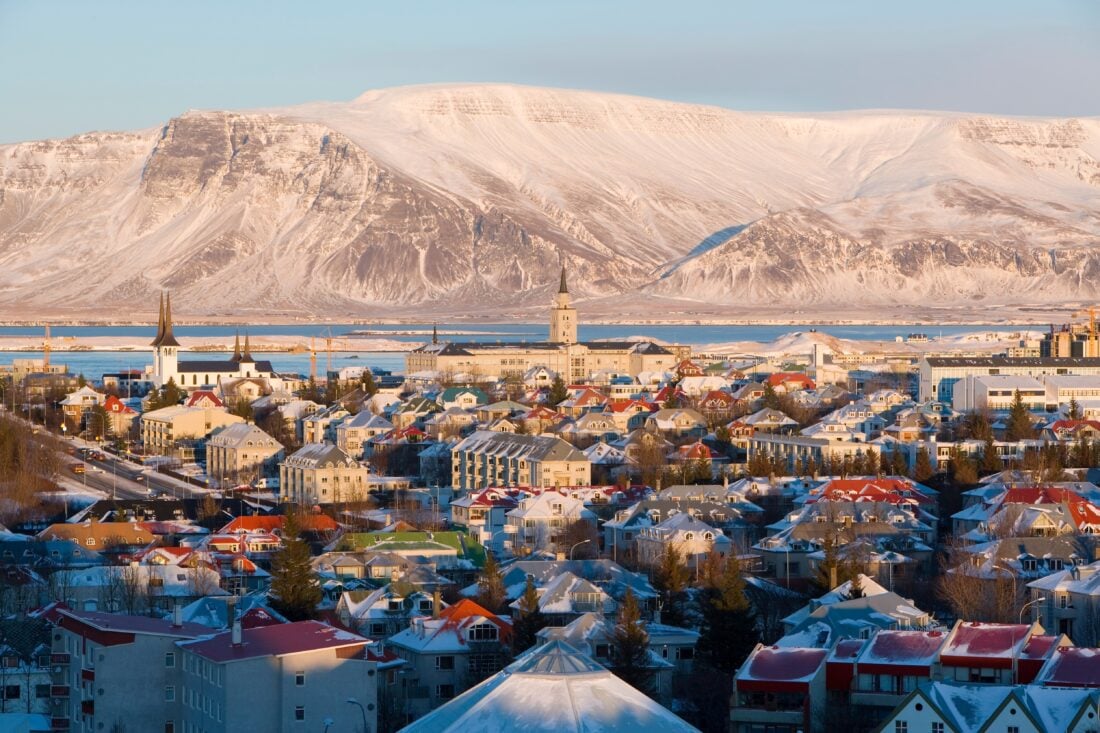
A trip to Reykjavik can look budget-friendly at first, with shoulder season flights, a hostel bunk, and cheap eats like hot dogs. It all seems manageable until the real prices start to add up, and the reality hits: this isn’t a cheap destination.
Reykjavik is expensive. Not “ouch, London prices” expensive. More like “I need to recalibrate what I think a beer costs” expensive. But it is manageable (with some planning), and knowing the numbers before you go makes a real difference. If you’re planning a bigger loop around the country, I put together a full breakdown of how much a trip to Iceland costs that covers everything beyond the capital too.
Quick Answer: How Much Does Reykjavik Cost Per Day?
| Travel Style | Estimated Daily Cost (USD) |
|---|---|
| Budget (hostel, hot dogs, walking) | $50 – $85 |
| Mid-range (hotel, sit-down meals) | $120 – $200 |
| Splurge (nice hotel, tours, dining out) | $200 – $388 |
For a week in Reykjavik, expect to spend somewhere between the range of $700 and $1,400 depending on how you travel (obviously this can vary). A full-on big-spender week, with a hotel at $235 a night and luxury car rental, can hit $2,720 total ($388 a day).
Accommodation Costs in Reykjavik
Hostels are for sure your best bet for keeping costs down. A dorm bed runs $42 to $75 per night. Named options like Hlemmur Square and KEX Hostel sit at the premium end of that range but are well regarded.
Hotels start around $120 per night and climb to $240 for a mid-range room. At the top end, you’re looking at anywhere up to $850 per night. A reasonable hotel stay of around $119 per night is what Guide to Iceland uses in their typical week estimate.
Rental apartments fall in the $110 to $250 per night range, which can work out cheaper if you’re self-catering for most meals.
For context on local costs: a one-bedroom apartment in central Reykjavik rents for around $1,650 a month. The city is not cheap to live in either.
Food and Drink Prices in Reykjavik
This is where Reykjavik gets you if you’re not paying attention!
All food has to be shipped to the island, which explains a lot. Grocery shopping is genuinely the smartest move you can make.
Cheapest supermarkets: Bonus is the budget option, followed by Kronan. Kjorbudin is more expensive.
Some actual grocery prices to give you a feel:
- Whole milk: $1.50 – $1.70 per litre
- Bread: $4.90 – $5.60
- Red apples: $0.50 – $1.10 each
- Hamburger meat: $8 – $10
- Chicken fillets: $14 – $22 per kg
- Icelandic hot dogs: $3.80 – $7.50

Icelandic Lamb Winter Hot Soup
Eating out:
- Hot dog from Baejarins Beztu Pylsur: $4.25 – $6 (the budget meal of Reykjavik, and honestly worth the hype)
- Budget breakfast: free at some hostels, up to $12 elsewhere
- Lunch: $7 – $20
- Dinner at a non-touristy restaurant: $15 – $25
- Inexpensive restaurant meal: $15 – $31
- Mid-range three-course dinner: $80 – $200
Drinks:
Alcohol is where Iceland really tests your commitment to having a good time. A pint of beer in a bar costs $9 – $12. Bars do run happy hours, but those tend to apply to beer only. Cocktails, shots, and mixers are usually excluded.
Alcohol is only sold in state-run stores called Vinbudin, which close on Sundays and public holidays. The single best piece of advice on this front: buy duty-free at the airport on arrival. You will thank yourself.
Coffee is certainly more forgiving. A latte or cappuccino runs about $5, black coffee is $2.50 – $4, and tea is around $3 (usually with free hot water refills).
Tap water in Reykjavik is excellent. Bring a refillable bottle and skip the bottled water entirely.
Getting Around Reykjavik
Reykjavik is a walkable city. For a lot of people, that alone cuts transport costs significantly.
When you do need a bus, the city’s Straeto service runs one-way tickets at around $3.60 – $4.95. Day passes and monthly passes are available if you’re staying longer or moving around a lot.
Renting a car gives you flexibility, especially for day trips outside the city, but it adds real cost. A self-drive tour of the Golden Circle and South Coast starts at $743 for the week. Luxury car rental on the higher end runs $95 a day just for the vehicle.
Fuel costs $2.20 – $2.40 per litre in Reykjavik, and more in rural areas.
An eSIM data plan for Iceland costs roughly $2 – $3 per day, which is worth having.
Attractions and Activities
Tours in Reykjavik range from $70 to $375 depending on what you’re doing. The Blue Lagoon is noted as one of the pricier experiences. A week that includes a hotel at $119 a night plus Blue Lagoon admission comes to around $1,594 total ($227 a day).
The Reykjavik City Card covers entry to several museums including the National Museum of Iceland, public transport, and discounts on tours. Worth calculating whether it covers what you actually plan to do.
Free walking tours exist and are a legitimate way to see the city without spending much.
The Kolaportid Flea Market is the one place in Reykjavik where you can try haggling. Icelandic wool products and vintage items. It’s also one of the few spots that might require cash rather than card.
When to Visit to Save Money
Timing makes a very noticeable difference to your total spend. If you’re visiting in winter or early spring, be prepared for proper cold. Reykjavik is currently sitting at 32°F with light snow (as of March 2026), so pack accordingly.
- Shoulder seasons (late spring and early fall): Lower prices, reasonable weather, still good daylight. The sweet spot for value.
- Winter: Significant savings on flights and hotels. Some attractions are harder to reach. You’re also gambling on weather.
- Summer: Peak prices across the board.
Iceland’s tourism landscape has been shifting. Increased infrastructure, lower inflation, and slightly cooled demand have brought costs down compared to a few years ago. It’s still expensive by most standards, just less aggressively so than before.
Practical Money Tips for Reykjavik
- Cards are accepted almost everywhere. 99% of places take card payments. Some markets like Kolaportid may need cash, so carry a small amount.
- The currency is the Icelandic króna (ISK). As of March 2026, £1 gets you roughly kr165.56 and $1 gets you kr124.69. Exchange any leftover ISK before leaving Iceland since it’s not easy to offload elsewhere.
- Buy alcohol duty-free at the airport. I cannot stress this enough. Vinbudin prices are high and the stores keep limited hours.
- Eat the hot dog. Baejarins Beztu Pylsur is an institution for good reason and it costs less than a coffee.
- Use the tap water. It’s genuinely some of the cleanest water you’ll drink anywhere.
- Grocery shop for breakfasts and lunches. Bonus is the budget supermarket. Eating out for every meal will drain your budget faster than anything else. If you’ve ever tried visiting London on a budget, same principle applies here, just with higher stakes.
What Does a Budget Week in Reykjavik Actually Look Like?
For a five-day budget trip, expect to spend $500 – $800 total. Add more comfort and that climbs to $1,200 – $1,500. A week at mid-range with a decent hotel and some activities sits around $1,594. Go full big-spender and you’re at $2,720 for seven days.
The honest answer to “is Reykjavik expensive” is yes, but the range is wide. A frugal day (hostel, hot dogs, free walking tour, city walking) can come in at $86. A relaxed mid-range day with a restaurant dinner and a tour sits closer to $150 – $200. You have more control over this than the reputation suggests, as long as you go in with a plan rather than winging it like past-me did.