
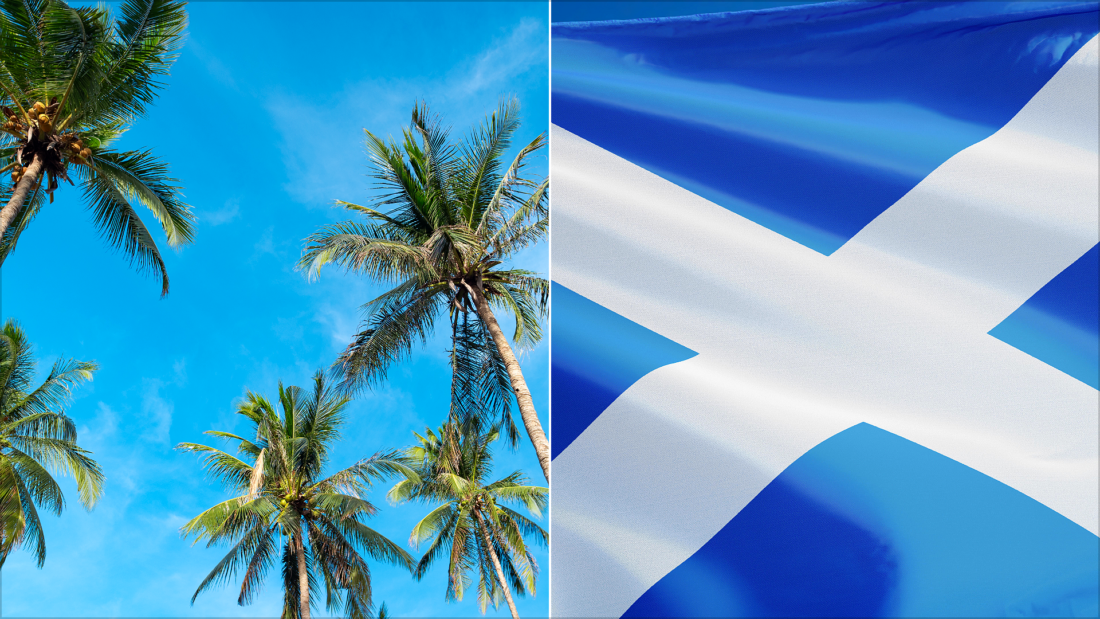
Yes, palm trees grow in Scotland. They are found mainly along the southwest and west coast and on several Scottish islands, kept alive by the warming influence of the Gulf Stream. The highest concentration is on the Rhinns of Galloway peninsula in the southwest. Plockton, on the northwest coast, is the most famous spot for seeing them in a village setting.
Quick Answer
Palm trees in Scotland grow primarily on the west coast and islands, where the Gulf Stream moderates winter temperatures. The Rhinns of Galloway has the highest concentration, centred on Logan Botanic Garden. Plockton is the most visited palm tree village. The hardiest species, Trachycarpus fortunei, can survive temperatures as low as -15C.
Why Do Palm Trees Grow in Scotland?
The Gulf Stream carries warm water from the Gulf of Mexico across the Atlantic and along Scotland’s western coastline. This raises coastal temperatures enough to keep frost-sensitive plants alive through winter. Without it, coastal Scotland could be 5 to 10 degrees colder, and palm trees would not survive outdoors.
The effect is most pronounced on the west coast and the Hebridean waterways. It also explains why the west coast is significantly wetter and greener than the east. Honestly, there’s a reason people call it Bonnie Scotland, and the lush, green west coast is a big part of that.
Where to See Palm Trees in Scotland
Rhinns of Galloway – the highest concentration
The Rhinns of Galloway peninsula, south of Stranraer in southwest Scotland, has more palm trees than anywhere else in the country. Logan Botanic Garden is the centrepiece: it grows large palms alongside tree ferns and eucalyptus trees. If you want to see Scottish palm trees in a dedicated garden setting, this is the best destination.
Plockton – Scotland’s palm tree village
Plockton sits along a curve of Loch Carron on the northwest coast. Rows of palm trees grow in the sea-facing gardens directly beside the water, with hills and woodland rising behind them. The National Trust for Scotland calls Plockton the “Jewel of the Highlands.”
The contrast between the palms and the surrounding Highland landscape is what makes Plockton worth the detour. You can also use it as a base for sailing, kayaking, hiking, and boat trips to local seal colonies. The Carn Na Frith-aird Viewpoint above the village gives panoramic views of the surrounding Highlands. The Isle of Skye is accessible from Plockton by car, and turns out a lot of travellers combine the two since Skye consistently draws people back with its landscapes (some visitors rate it as a genuine highlight of their entire trip).
To reach Plockton from Edinburgh, take the train through Glasgow and Inverness. If you’re planning a bigger loop, it fits neatly into a Scotland road trip itinerary.
Other locations
| Location | Type |
|---|---|
| Logan Botanic Garden, Rhinns of Galloway | Botanic garden |
| Plockton, Loch Carron | Village setting |
| Royal Botanic Garden, Edinburgh | Botanic garden |
| Isle of Arran | Island |
| Isle of Bute | Island |
| Isle of Jura | Island |
| Bridge of Earn, near Perth | Private garden |
A notable outlier: Ian Imrie grows a 22-foot palm tree in his garden at Bridge of Earn, near Perth, on the east side of Scotland, well outside the Gulf Stream’s main influence.
Which Palm Tree Species Grow in Scotland?
Two species are most commonly found growing outdoors in Scotland:
- Trachycarpus fortunei (Chusan Palm) – the hardiest option. It tolerates temperatures down to -15C and can be grown year-round across much of Scotland.
- Trachycarpus wagnerianus (Dwarf Chusan Palm) – has thicker, tougher leaves that handle exposed coastal positions well. Grows to 6 to 8 metres at full height.
Both carry an H5 hardiness rating, which means they can handle significant cold but may still suffer damage in a severe Scottish winter.
Rarer species found mainly in botanical gardens include Brahea armata, Butia capitata, and Chamaerops humilis, among others. These are specialist collections rather than garden-centre staples.
What About the Cordyline – Is It a Palm?
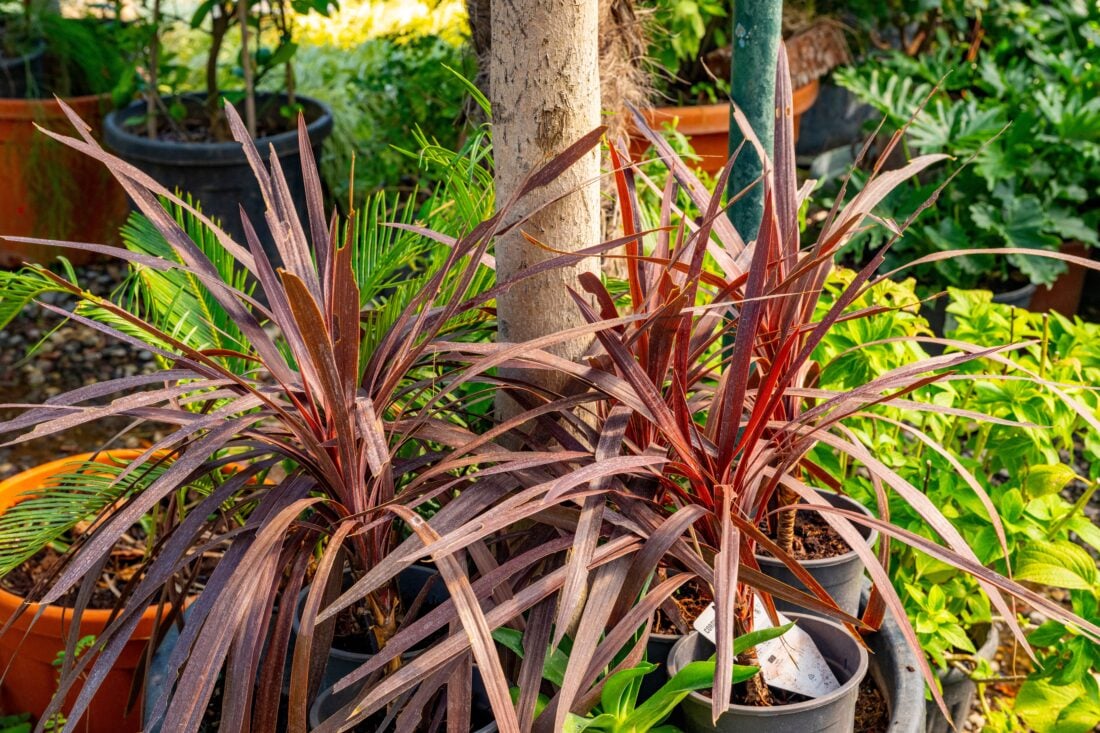
The Cordyline australis is frequently mistaken for a palm tree in Scottish gardens. It is not a palm. It is a monocotyledon more closely related to banana and plantain plants. You will see it widely planted across Scotland, but it is a different species entirely.
Do Scottish Palm Trees Produce Coconuts?
No. Palm trees in Scotland do not produce coconuts. Some species do produce small, marble-sized fruits, but nothing edible on a useful scale.
Caring for Palm Trees in Scotland
Even the hardiest palms can struggle in a bad Scottish winter. The main protective measure is wrapping the trunk and crown in horticultural fleece during cold spells. This is standard practice for outdoor palms in Scotland and makes the difference between a tree that survives and one that doesn’t.
The Gulf Stream is not a guaranteed buffer. Current conditions are unusually warm at 79°F with broken clouds (as of April 2026), but don’t let that fool you. Scottish weather is notoriously unpredictable, and plenty of travellers will tell you rain is basically the default setting, so your palms still need protection come winter. If you are growing a palm in a garden, choose Trachycarpus fortunei for the best cold tolerance, and site it somewhere sheltered from wind. One more thing: if you’re visiting the west coast in summer to see these palms, be warned that midges can be brutal in certain areas, so plan accordingly.
Frequently Asked Questions
Are there really palm trees in Scotland?
Yes. Palm trees grow outdoors in Scotland, mainly on the west coast and islands. The Gulf Stream keeps coastal temperatures mild enough for cold-hardy species like Trachycarpus fortunei to survive year-round. You can see them in village settings at Plockton and in garden collections at Logan Botanic Garden.
Where is the best place to see palm trees in Scotland?
Logan Botanic Garden on the Rhinns of Galloway has the highest concentration. Plockton on the northwest coast is the most photographed spot, with palms growing beside the sea in a small Highland village. The Royal Botanic Garden in Edinburgh also has specimens.
What is the hardiest palm tree for Scotland?
Trachycarpus fortunei, the Chusan Palm, is the most cold-tolerant palm available for Scottish gardens. It can withstand temperatures as low as -15C and carries an H5 hardiness rating.
Why does Plockton have palm trees?
Plockton sits on the northwest coast of Scotland where the Gulf Stream’s warming effect is strong. The warm Atlantic current raises winter temperatures enough for palms to survive outdoors in the sea-facing gardens along Loch Carron.