
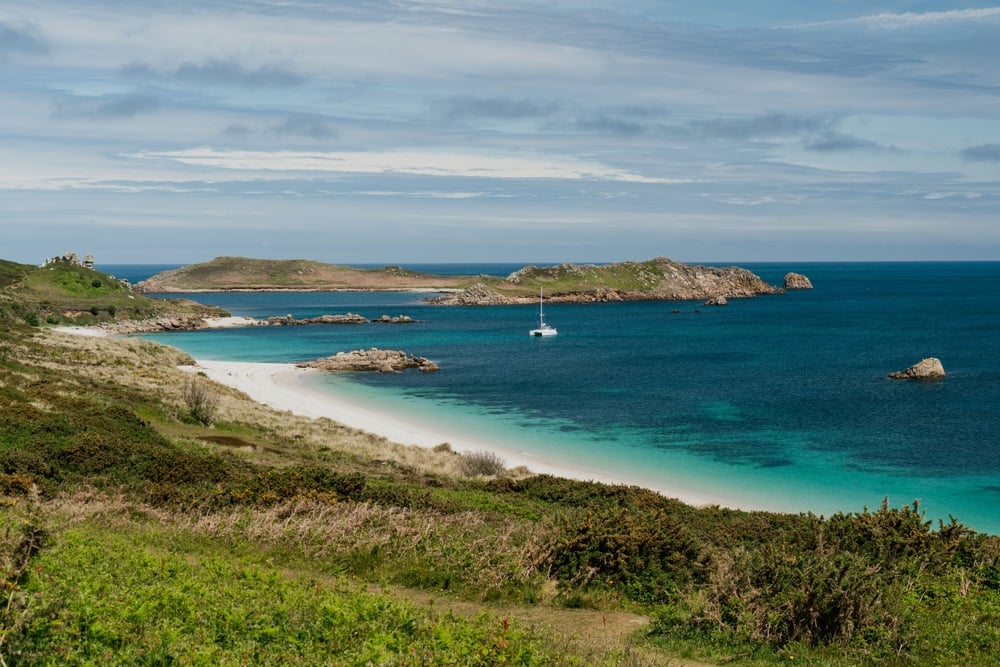
St Martin in winter is warm, sunny and split between two countries, with France in the north and the Netherlands in the south. The island was divided by treaty in 1648, and visitors can still move between the two sides without routine border checks.
Here’s when to go, how the French and Dutch sides differ, the island’s history, the best beaches and boat trips, and the practical details to sort before you fly.
Why Is St Martin a Good Winter Sun Destination?
St Martin is in the northeastern Caribbean and stays warm all year. The drier months generally run from December to April, which is also peak season, while the Atlantic hurricane season runs from June to November.
| Months | What to expect | Good for |
|---|---|---|
| December to April | Drier and busiest, with higher prices | Beaches, boat trips and dining outdoors |
| May | A changeover month, often quieter | Good-value stays before the rains |
| June to November | Hurricane season and the wettest months | Flexible travellers who keep an eye on forecasts |
Its location also makes it a handy base for island-hopping. Anguilla and St Barthélemy are both within reach by boat, and the coastline is full of sheltered bays and quiet coves that are easiest to see from the water. If you’re comparing options, this round-up of the best islands to visit in December covers other warm choices for the same month.

Why Is St Martin Split Between France and the Netherlands?
Indigenous peoples, including Arawak-speaking communities, lived on the island long before Europeans arrived. Christopher Columbus sighted it in 1493 on his second voyage. Over the following century, salt made the island valuable, and the Dutch, Spanish and French all took an interest.
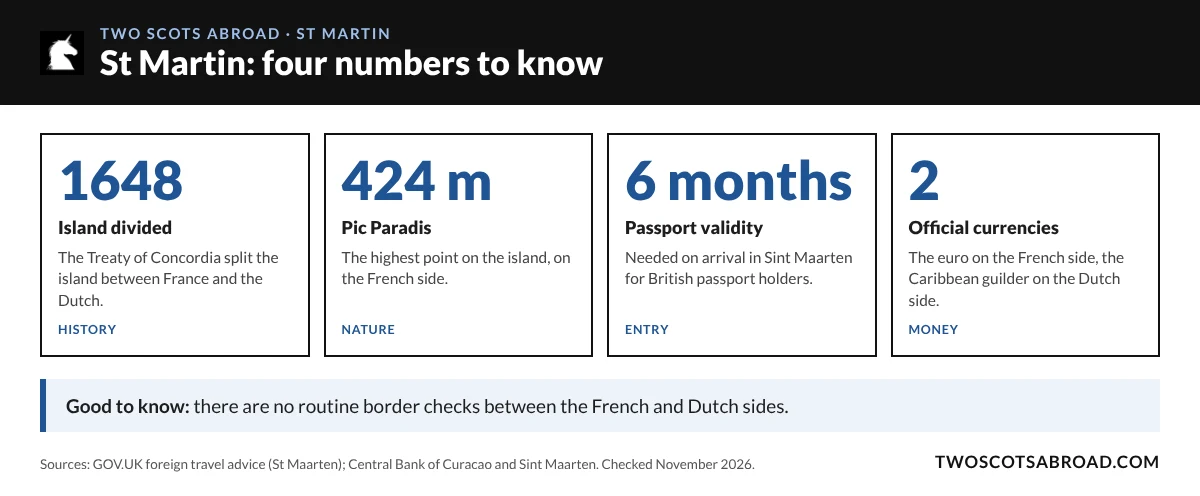
On 23 March 1648, the French and Dutch governors signed the Treaty of Concordia, splitting the island in two. France took the north and the Dutch took the south. The border didn’t settle straight away, though: it changed many times over the next 170 years as conflicts flared, before it was finally fixed in the early 1800s.
A popular local story says a Frenchman and a Dutchman walked around the coast in opposite directions to decide the border. It’s a good tale, but historians treat it as folklore.
The island’s history also includes plantation slavery. The island’s tourist office notes that France abolished slavery on the French side in 1848, and the Dutch side followed in 1863. Emancipation Day is still marked each year on 1 July in Sint Maarten.
What’s the Difference Between the French and Dutch Sides?
Today the French north, Saint-Martin, is an overseas collectivity of France with Marigot as its capital. The Dutch south, Sint Maarten, has been a constituent country within the Kingdom of the Netherlands since 2010, with Philipsburg as its capital.
| Feature | French side (Saint-Martin) | Dutch side (Sint Maarten) |
|---|---|---|
| Main town | Marigot | Philipsburg |
| Atmosphere | Quieter, with smaller coastal villages | Livelier, with more bars and nightlife |
| Known for | Grand Case restaurants and Orient Bay | Simpson Bay, Maho Beach and the airport |
| Official currency | Euro | Caribbean guilder |
| Entry rules set by | France | Sint Maarten |
Grand Case on the French side is known for its restaurants, where French cooking meets Caribbean ingredients, and Marigot has markets and waterfront cafes. The Dutch side is busier around Simpson Bay, Maho and Philipsburg, with beach bars, shopping and casinos. Princess Juliana International Airport, where most visitors arrive, is famous for planes passing low over Maho Beach.
English is widely spoken across the island, alongside French and Dutch.
Is a Boat Trip the Best Way to See St Martin?
The coastline is one of St Martin’s biggest draws, and plenty of its bays and offshore spots are easiest to reach by water. A day on a boat usually mixes swimming, snorkelling and time to take in the scenery, and some trips cross to neighbouring islands, depending on the weather.
For a more personal day out, private sailing trips give you more say over the pace and the stops. Pyratz, based in Simpson Bay on the Dutch side, runs mostly private trips on motor and sailing catamarans and speedboats, with a couple of shared options. Its listings range from sunset cruises and half-day trips to full days, overnight trips and week-long charters, with destinations including Anguilla and St Barths.
Food is a big part of the appeal. Pyratz says freshly prepared food is central to its trips, and its sunset listings mention cocktails, tapas and gourmet dinners. When you compare boat charters in St Martin, check exactly what’s included:
- If the boat is private or shared, and how many guests it takes
- Which meals and drinks are included, and if dietary needs can be catered for
- The planned route, and what happens if the sea conditions change
- If you need your passport, for example on a trip to Anguilla or St Barths
- The cancellation terms if the weather forces a change
Use the planner below to work out which side of the island suits your trip.
 St Martin Trip Planner
Pick when you’re going, where you’re staying and what you want from your days. The planner suggests which side of the island suits you and what to sort before you go.
Your best fit
Before you go
Which Beaches and Villages Are Worth Visiting?
On the French side, Orient Bay has a long sandy beach and watersports, Grand Case pairs a pretty waterfront with its restaurants, and Anse Marcel is a sheltered bay surrounded by green hills.
On the Dutch side, Mullet Bay has soft sand and clear water, Simpson Bay is home to marinas and boat trips, and Maho Beach is where crowds gather to watch planes land overhead.
For something away from the sand, Pic Paradis on the French side is the highest point on the island, at 424 m, with trails and views across the coast. Coral and tropical fish make the island’s reefs worth a snorkel too. If you’d like to add another island to your trip, this St Kitts and Nevis travel guide and this Half Moon Bay Antigua beach guide are good places to start.
What Should You Know Before Visiting St Martin in Winter?
- Book early: Christmas, New Year and the first months of the year are the busiest, so reserve places to stay, popular restaurants and boat trips well ahead.
- Passports: to enter Sint Maarten, the FCDO says your passport must be valid for 6 months after you arrive. Check the separate FCDO entry advice for French St Martin too if you plan to stay on that side.
- Money: the euro is used on the French side and the Caribbean guilder on the Dutch side, which replaced the Netherlands Antillean guilder in 2025. US dollars are widely accepted in tourist areas.
- Getting around: hire cars, taxis and organised trips are all options. Distances are short, but traffic builds around the busiest areas in peak season, so plan your days by area.
- Weather on the water: even in the drier months, check the sea forecast and leave some slack in your plans for boat days.
St Martin in Winter FAQ
What is the best time to visit St Martin?
December to April is generally the driest and most popular time. June to November is hurricane season, so keep plans flexible if you travel then.
Can you cross between the French and Dutch sides of St Martin?
Yes. There are no routine border checks, so you can move between Saint-Martin and Sint Maarten freely.
Which side of St Martin is better to stay on?
The French side suits quieter stays and food lovers, especially around Grand Case. The Dutch side is better for nightlife, marinas and shopping.
What currency should you take to St Martin?
The French side uses the euro and the Dutch side the Caribbean guilder. US dollars are widely accepted in tourist areas.
Can you visit Anguilla or St Barths from St Martin?
Yes, both are within reach by boat. Take your passport and check each island’s entry rules before you go.
With two cultures, plenty of beaches and calm bays to explore by boat, St Martin packs a lot into a small island. Pick the side that suits you, book ahead for the winter peak, and leave a day free for the water.