
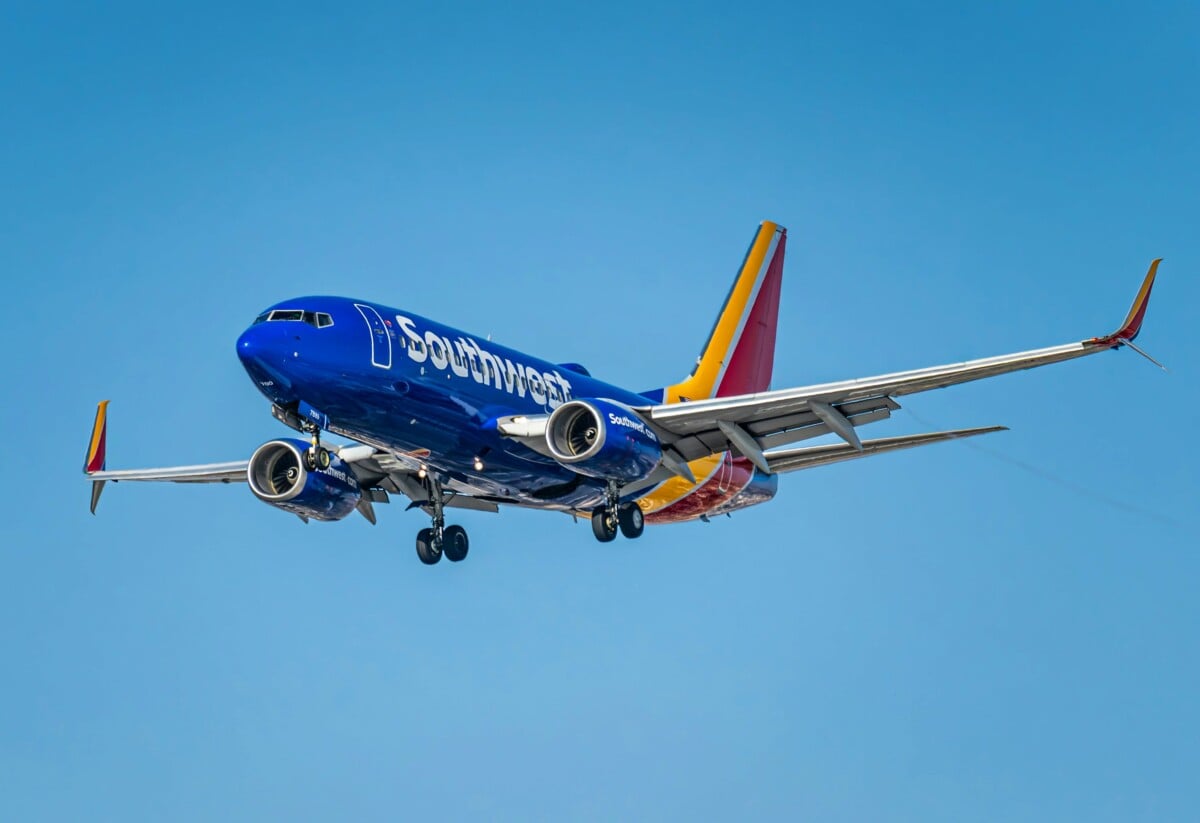
Southwest Airlines is selling its third quarter as proof the turnaround is working, and the headline figures give it some support: record revenue of $8.4 billion and adjusted earnings of $0.66 per share. A closer look at the filings shows how much of the profit came from one-off gains and accounting assumptions.
Here is what Southwest reported, how asset sales and a depreciation change shaped the result, and what the new fees have and have not shown so far.
What Southwest reported for the third quarter
Southwest’s third quarter 2026 earnings release shows net income of $270 million, or $0.55 per diluted share. Adjusted net income was $328 million, or $0.66 per share. Revenue rose 21.2% to $8.4 billion.
The operating margin was 4.5%, up 4.0 points from a year earlier, and the adjusted margin was 5.4%. Those margins held even though nominal fuel costs rose by $821 million. The $0.66 adjusted figure also landed inside the range of 50 cents to 75 cents per share the airline had forecast in July.
How asset sales and accounting changes shaped profit
The more pointed analysis comes from a breakdown of Southwest’s adjusted pretax profit published on October 23, 2026. Adjusted pretax profit for the quarter was $428 million. Aircraft and engine transactions contributed $214 million of that.
A second item sits in the costs. Southwest changed its assumptions about the resale value of its aircraft, which cut depreciation expense by another $48 million. Together, the $214 million in gains and the $48 million depreciation reduction come to $262 million, or about 61% of the $428 million.
Asset sale gains and depreciation assumptions are real accounting results, but neither comes from selling more tickets or charging more per flight. Readers comparing Southwest with other carriers should weigh that when they see the adjusted earnings per share.
What the bag and seat changes have shown
Southwest’s new revenue policies are the centre of its turnaround pitch. Its quarterly filing for the period ended September 30 credits first and second checked bag fees, for tickets bought on or after May 28, 2025, as a driver of passenger revenue. It also credits assigned and extra legroom seating on travel beginning January 27, 2026.
On the October 22 earnings call, management described the bag and seat initiatives as the two big ones and said the bag programme is on track, if not ahead. The one-off gains therefore draw close attention when the $0.66 is set against the fee story. Southwest’s own July guidance had already been cut, with the full-year adjusted range lowered to $3.25 to $4.25 per share.
What to watch next
The next test is a quarter without large aircraft sale gains. If revenue growth near 21% holds while fuel stays expensive, the argument that fees are lifting profit gets stronger. If earnings fall back once the gains are gone, the critics’ reading of this quarter gets harder to dispute.