

A journey from Dublin to Belfast can feel like an ordinary trip between cities. There is no routine passport checkpoint on the land border, and you may notice the change in road signs before anything else.
However, Ireland and Northern Ireland have different currencies, speed-limit units and entry requirements. Your phone plan and rental agreement may also treat crossing the border differently from travelling within one jurisdiction.
A little preparation makes it easier to combine both places in one holiday. Start with your travel documents, then check money, mobile coverage and transport before setting off.
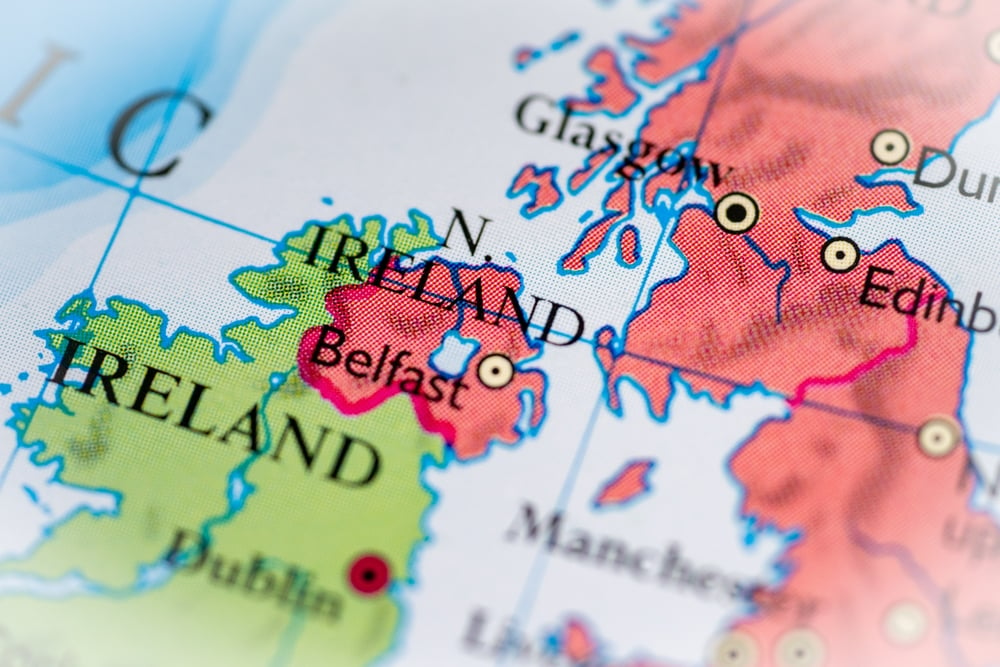
Ireland and Northern Ireland: The Practical Differences
Ireland is an independent country, also commonly called the Republic of Ireland. Northern Ireland is part of the United Kingdom. They share an island, but some everyday travel arrangements change when you cross between them.

| Detail | Ireland | Northern Ireland |
|---|---|---|
| Currency | Euro (€) | Pound sterling (£) |
| Speed limits | Kilometres per hour (km/h) | Miles per hour (mph) |
| Road distances | Generally shown in kilometres | Generally shown in miles |
| Driving side | Left | Left |
| Entry requirements | Irish immigration rules | UK immigration rules, including ETA or visa requirements where applicable |
| Mobile roaming | Check whether your plan covers Ireland | Check whether your plan covers the UK, including Northern Ireland |
An Open Border Does Not Remove Entry Requirements
There are no routine immigration checkpoints on the land border between Ireland and Northern Ireland. That makes the physical journey straightforward, but you still need to meet the entry conditions that apply to you.
British and Irish citizens can travel within the Common Travel Area without passports. Airlines and ferry companies can nevertheless impose their own identification requirements, including requiring a passport.
Visitors with other nationalities should check permission to visit both jurisdictions. An Irish visa does not automatically authorise entry to Northern Ireland, although specific arrangements such as the British-Irish Visa Scheme can apply to eligible travellers.
Many visitors who do not require a UK visa instead need a UK electronic travel authorisation, or ETA, before visiting Northern Ireland. Arriving through Dublin and crossing by road does not, by itself, provide an exemption. A short day trip can still require an ETA.
Use the official UK ETA guidance and Irish Common Travel Area information to check your nationality, immigration status and complete itinerary, including any return to Ireland.
| Traveller | What to check |
|---|---|
| British or Irish citizen | No UK ETA is required. Check identification rules for any airline or ferry journey. |
| Visitor from an ETA-eligible country | An ETA is normally required unless another exemption applies. |
| Traveller who requires a UK visa | Check the appropriate UK visa or qualifying visa scheme before travelling. Irish permission alone is not generally sufficient. |
| Eligible person living in Ireland | An ETA exemption can apply when travelling from Ireland. It does not remove UK visa requirements for visa-required nationalities. |
The residence exemption applies to people living in Ireland, rather than tourists simply visiting it. Eligible residents aged 16 or over need accepted, valid, physical evidence of Irish residence. Check the official ETA exemption and residence-document requirements before relying on it.
For international visitors, keeping your passport and relevant immigration documents accessible is sensible even when the road crossing does not involve a passport desk.
Budget for Euros and Pounds
Prices in Dublin, Galway and other destinations in Ireland are normally in euros. Prices in Belfast, Derry/Londonderry and elsewhere in Northern Ireland are normally in pounds sterling.
Cards are widely accepted on both sides of the border, but acceptance and charges depend on the business, card and provider. Check your card issuer’s foreign transaction and cash-withdrawal fees before travelling.
Pay attention to the currency shown at checkout. If a payment terminal offers conversion into your home currency, review the exchange rate and charges before accepting it.
Carrying a modest amount of the appropriate cash can be useful for small purchases. Do not assume a business will accept the other jurisdiction’s currency or offer a favourable conversion rate.
Check Mobile Roaming Before Crossing
Your phone may connect to another network as you travel north or south. Whether that creates an extra charge depends on your home provider and the particular plan you use.
For an Irish mobile plan, do not assume EU roaming arrangements automatically cover Northern Ireland. The UK is outside the EU, although some providers include UK use in their packages. Similarly, UK plans vary in how they treat roaming in Ireland.
Check calls, texts, data allowances and any fair-use limits. If you are using a travel SIM or eSIM, make sure its coverage includes both Ireland and the UK rather than relying on a broad “Europe” label.
Phones can also connect to a network across the border while you are still on the other side. ComReg’s roaming guidance explains this possibility and recommends checking your provider’s policy.
Download maps, accommodation instructions and booking confirmations before leaving a reliable connection. Offline information is useful for rural sightseeing as well as avoiding unnecessary data use.
Using an Irish VPN Server While Travelling
If you want websites to see an Irish IP address while you are in Northern Ireland, a VPN for Ireland can route your connection through an Irish server. Surfshark advertises servers in Dublin for this purpose.
This changes the public IP address seen by websites. Services may still use account details or other location checks, so an Irish IP address does not guarantee access to every app or service.
Your mobile provider’s normal data and roaming charges still apply. For banking and work accounts, follow the organisation’s access policies and keep a reliable authentication or recovery method available.
Watch the Speed-Limit Units
Both jurisdictions drive on the left, but their speed-limit signs use different units. Ireland uses kilometres per hour; Northern Ireland uses miles per hour.
The same number therefore represents different speeds:
- 50 km/h is approximately 31 mph.
- 50 mph is approximately 80 km/h.
Check the units on your speedometer and pay attention to signs as you cross. If the vehicle allows you to change its display, ask the rental company to show you the controls before leaving the depot.
Follow the posted limit rather than assuming a road has the same limit as a similar road elsewhere. Northern Ireland’s official driving advice for visitors explains the change in units and other practical rules.
Confirm Rental-Car Permission and Cover
Before collecting a rental car, tell the company that your itinerary includes both Ireland and Northern Ireland. Cross-border permission, fees and conditions depend on the rental firm and agreement.
Ask whether insurance and breakdown assistance cover the whole route, and whether any extra documentation is required. Keep the confirmation with your rental paperwork.
Returning a car in the other jurisdiction is a separate issue from making a sightseeing trip across the border. Confirm whether that drop-off is permitted and what it costs before building your flights around it.
Consider the Train Between Dublin and Belfast
You do not need a rental car simply to connect the two cities. The Enterprise rail service operates between Dublin Connolly and Belfast Grand Central.
Check the official Enterprise service information for your dates, including the timetable, ticket arrangements and any disruption. Make sure your accommodation and onward journey fit the station you will use.
Our guide to where to stay in Belfast can help you choose a practical base for the northern part of your trip. You can also compare Belfast tours if you would prefer to explore with a guide.
For smaller towns and rural attractions, check the complete public-transport journey and the last return service. A connection that works on a weekday may have a different schedule on Sunday.
Keep the Itinerary Manageable
Dublin, Belfast, Derry/Londonderry, Galway and the Cliffs of Moher can all feature in an island-wide trip. Trying to fit them into a short break, however, can leave little time for anything beyond driving and checking into accommodation.
Group attractions by region and allow time for narrow roads, stops and the occasional change of plan. For the Ireland portion, our five-day itinerary through Ireland’s Ancient East provides an example of a focused regional route.
Before departure, work through these final checks:
- Confirm entry requirements for everyone travelling.
- Check payment currencies and your card provider’s charges.
- Make sure your mobile plan covers both jurisdictions.
- Save maps, tickets and accommodation details offline.
- Confirm rental permission, insurance and breakdown arrangements.
- Allow enough time for connections and sightseeing.
If you are driving, our road-trip packing list can help organise the everyday essentials.
With the paperwork and practical details settled, the border can become a small part of the journey. You can spend more time exploring Belfast, enjoying a coastal stop or lingering over lunch, with fewer surprises waiting on your phone or payment card.