

On Long Island’s East End, “waterfront” can mean Atlantic surf, a Long Island Sound beach, Peconic Bay, or a working harbour. Those settings offer different scenery and beach conditions, and the address alone does not guarantee public swimming or dock access. Start by deciding which shoreline you want, then compare the exact location and access details of each rental.
The East End divides into the North Fork and South Fork, with Peconic Bay between them. Southampton, Sag Harbor, the North Fork and Montauk each make a different base. This guide explains the differences to help you choose where to stay on Long Island’s East End.
East End waterfront areas at a glance
| Area | Waterfront character | Consider it if… | Check before booking |
|---|---|---|---|
| Southampton | Village beaches face the Atlantic; the wider town also includes bay-side shoreline. | You want a village base and want to choose between ocean and bay settings. | Confirm the specific beach, swimming rules, parking and any permit requirements. |
| Sag Harbor | A working harbour, coves, marinas and a walkable village centre. | You want restaurants and shops nearby, or plan a boating or Shelter Island outing. | Private docks are not automatically open to rental guests. The Shelter Island South Ferry leaves from nearby North Haven. |
| North Fork | Long Island Sound lies to the north and Peconic Bay to the south; beaches and inlets vary by town. | You want a quieter base near vineyards, farm stands or small waterfront villages. | Check which body of water the property actually faces and whether the beach is open to visitors. |
| Montauk | Atlantic-facing beaches and the waters of Block Island Sound, with a distinct ocean-side and sound-side feel. | You want surf, fishing, coastal walks or a stay at Long Island’s eastern tip. | Check beach parking eligibility, seasonal lifeguard hours and the exact route to the shoreline. |

Southampton: village streets and more than one kind of shore
Southampton Village is a practical base if you want shops and restaurants nearby. Its village beaches face the Atlantic, while the larger Town of Southampton includes both ocean and bay shorelines. If calmer bay water is your priority, search for a specific bay-side location rather than assuming a Southampton address is on the bay. The Town’s beach and permit information can help you check access for your chosen location.
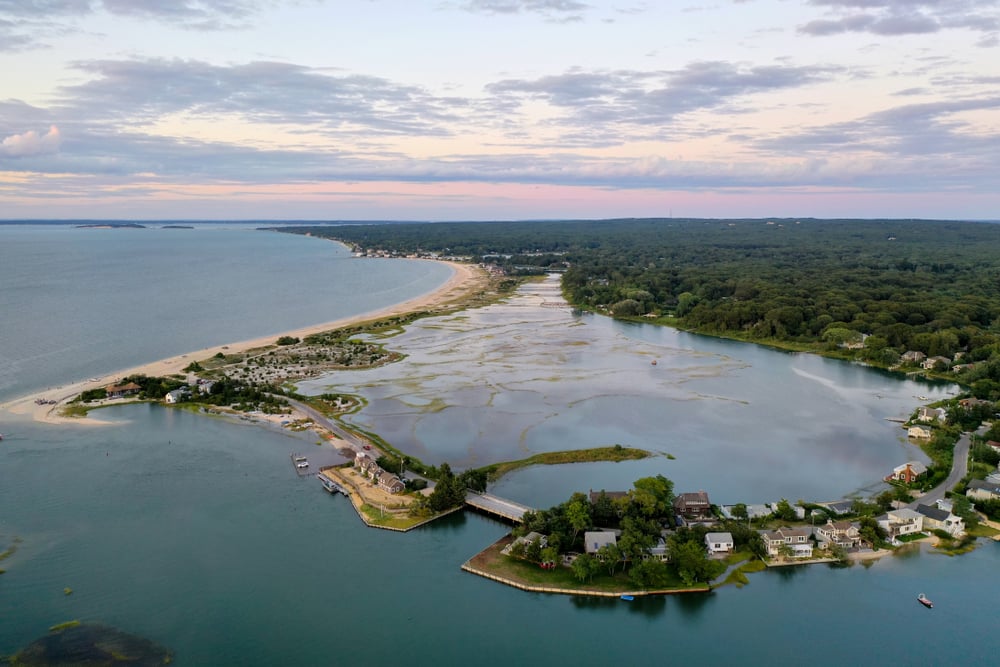
Southampton Village lists nearly seven miles of oceanfront and eleven beaches. It also notes that Cooper’s Beach is the only village beach with lifeguard supervision; conditions and access rules differ at other locations. Review the village’s current beach information and confirm parking or permit arrangements for your dates.
Sag Harbor: a harbour setting with village access
Sag Harbor suits travellers who want a harbourfront setting with shops and restaurants within reach. The village manages marina and mooring facilities, so a waterfront view does not mean you can use every dock. Check whether a rental includes a private dock or whether you will need to use a public facility, and review the village’s harbour and dock information if boating is part of your plan.
For Shelter Island, the South Ferry crossing is between North Haven and Shelter Island, not from Sag Harbor’s village centre. North Haven is just outside Sag Harbor, but allow time to reach the terminal and check the South Ferry route and schedule before planning a day trip.
North Fork: choose between the Sound and Peconic Bay
The North Fork sits between Long Island Sound to the north and Peconic Bay to the south. That makes the precise location important: a Sound-facing cottage, a bay-side house and a home beside an inlet are different stays, even when all are described as waterfront. Local beaches also have different access and swimming arrangements. For example, the Mattituck Park District lists beaches on both the Sound and Peconic Bay, but notes that one of its bay parks is not a swimming beach because it has no lifeguard.
Villages such as Southold, Cutchogue and Greenport can work well if you want local restaurants, vineyards and farm stands. If you are comparing properties, look at the distance to the particular beach or village you plan to use, rather than relying on a broad “North Fork” label. Once you have chosen a town and shoreline, compare the waterfront rentals along the East End collection against those practical details. Read each listing’s address, access notes and amenities carefully: “waterfront” alone does not say whether guests can swim from the shore or use a dock.
Montauk: Atlantic beaches and Block Island Sound
Montauk is at Long Island’s eastern tip, where the Atlantic Ocean meets Block Island Sound. The southern and eastern shores face the Atlantic, while the northern coastline includes the Sound. Check whether a property is near an ocean beach, the Sound or a harbour before choosing it for swimming, surfing or boating.

Ditch Plains is a popular surfing and swimming beach, but practical access matters: East Hampton Town says beach parking there is for town residents with a permit, and swimming is permitted in designated areas when lifeguards are on duty. Check the Town’s current Ditch Plains beach details before making it central to your stay. Montauk also has fishing, trails and the lighthouse at Montauk Point State Park, so an oceanfront rental is not the only reason to choose the area.
Questions to ask before booking a waterfront rental
A property can be beside the water without having a beach, safe swimming spot or guest access to a dock. Ask for the exact address and clarify the practical details before paying a deposit.
| Question | Why it matters |
|---|---|
| Which water is the property beside? | “Waterfront” may refer to the ocean, Sound, bay, harbour, pond or inlet, each with different conditions. |
| Is shore access included for guests? | A water view, private dock and public beach access are different things. Ask what guests can use. |
| Are parking permits or beach passes needed? | Some beaches restrict parking or vehicle access. Check the town or village rules for your dates. |
| Is swimming supervised, and when? | Lifeguard coverage is seasonal and limited to specific beaches, hours and designated areas. |
| How far is it to shops, food and transport? | A waterfront setting may mean driving for meals or supplies. Confirm distances and transport options that fit your group. |
| What are the rental dates, fees and minimum stay? | Availability, minimum nights, cleaning charges and cancellation terms vary by property and season. |
Build the rest of your New York trip around the East End
If your trip starts or ends in Manhattan, allow for the journey between the city and your East End accommodation instead of treating it as a quick local transfer. Our four-day New York itinerary can help organise time in the city before heading out to Long Island. For a wider route, browse our New York State travel ideas and decide how much time to give each region.
The right waterfront base depends on the water you want to spend time beside and the practical access that comes with the property. Compare the exact location, public beach rules, parking and transport alongside the view. That small bit of checking can make the difference between a stay that suits your trip and a waterfront address that does not.