
A flexible 5-7 day itinerary from Kraków Airport
Kraków deserves its reputation as one of Europe’s great city breaks, but the wider Małopolska region begins where the tramlines end. Beyond the old town are limestone castles, forested ravines, painted cottages, wooden churches and mountain roads that reveal a more intimate side of southern Poland. With Kraków Airport in Balice as a natural starting point, a car turns these scattered places into a rewarding 5-7 day journey rather than a series of complicated day trips.
Read on for a flexible route through the region, with memorable stops and practical advice on tolls, parking, and winter driving for UK visitors.

The journey briefly
- Allow 5–7 days for the loop, plus any time you want in Kraków itself.
- Begin with Ojców National Park and Pieskowa Skała, then turn east for Zalipie before heading south towards the Pieniny and Tatras.
- Use official car parks and explore historic centres, spa towns and trailheads on foot or by local transport.
- If you prefer to drive, you can hire a car locally – at the airport, in the city, or have it delivered to your hotel.
- There is no national vignette for ordinary cars in Poland, although selected motorway sections charge tolls.
- In winter, build extra time into mountain journeys and confirm that the hire car is equipped for the conditions.
Why is Małopolska best explored by car?
Rail links make Kraków easy to reach, but many of the region’s most memorable places sit between stations rather than beside them. Zalipie’s painted homesteads, the wooden church at Dębno, the castles above the Dunajec and the trailheads of the Pieniny are all easier to combine when you can choose your own departure time and stop along the way.
The distances are manageable, yet journey times can be deceptive. Roads through villages and foothills are often slower than the map suggests, while summer weekends and the ski season bring heavy traffic on the Zakopianka between Kraków and Zakopane.
Treat the drive as part of the trip: leave room for roadside viewpoints, small bakeries and the occasional flock of sheep crossing a local road.
Where should the road trip begin?
Kraków Airport is around 11–12 kilometres west of the city centre and sits close to the A4, making it a practical place to start a regional loop. If you plan to spend several days in central Kraków first, you may prefer to collect a car only when you are ready to leave; the Old Town is highly walkable and much of the historic core has restricted vehicle access.
If your itinerary begins beyond the city, booking car hire at Krakow Airport can remove an extra transfer from the first day. Kaizen Rent is a Polish rental company with a desk inside the international terminal’s arrivals area; vehicles are collected from the adjacent multi-storey car park. That makes it possible to complete the paperwork and head directly towards Ojców, the A4 or the mountains.
Bring your driving licence, passport or other accepted ID, and the payment card required by the booking. With Kaizen Rent, individual customers can drive without a mileage limit, while the Comfort PLUS protection package can reduce the deposit to 0 PLN and limit liability for unexpected damage. If you need an automatic transmission, child seat or permission to cross a national border, these options can be added when making your booking.
What is the best 5-7 day road trip from Kraków?
This route works as a clockwise loop, but it is deliberately flexible. In spring and autumn, shorter daylight and seasonal opening hours may encourage a slower pace; in summer, early starts help with parking and crowds.
Stop 1 – Ojców National Park and Pieskowa Skała
From Balice, drive north-east into the Kraków-Częstochowa Upland. Ojców is Poland’s smallest national park, yet it packs limestone cliffs, caves, woodland, and castle ruins into the Prądnik Valley.
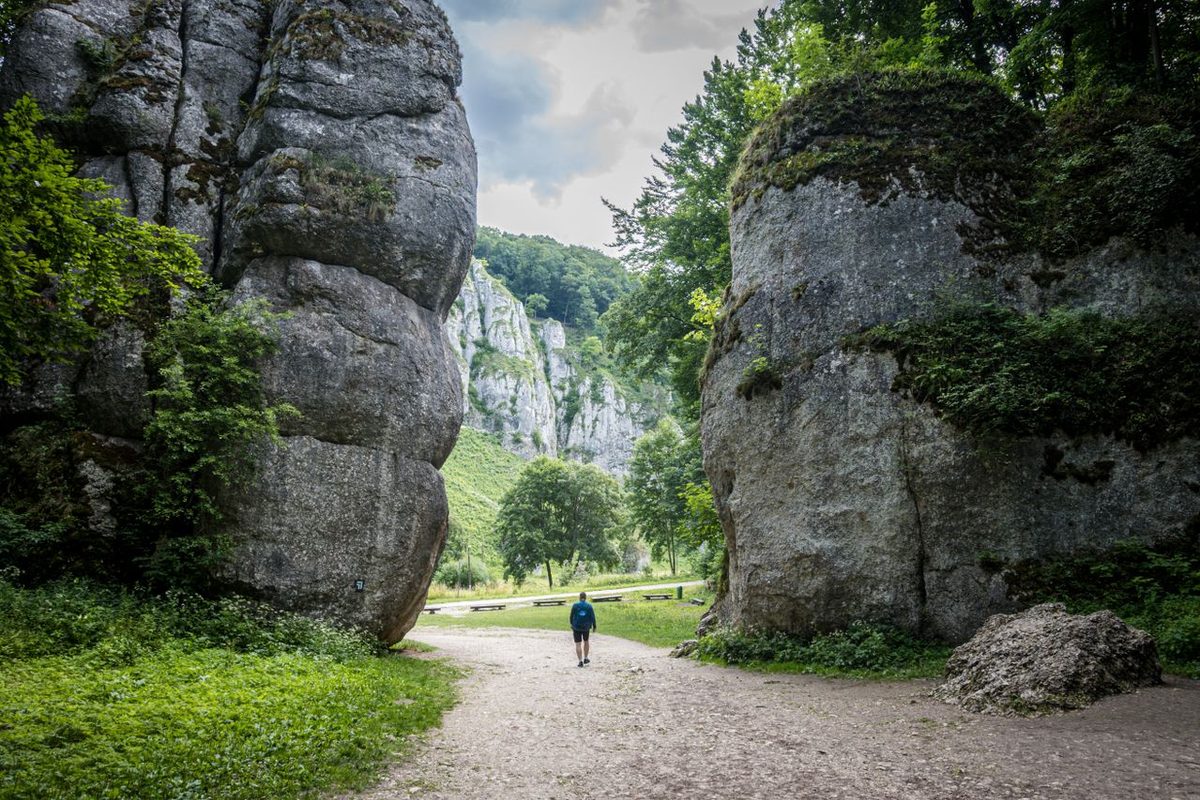
Park in a designated car park and continue on foot towards the Kraków Gate rock formation, the Chapel on the Water or one of the valley paths. The park’s official car parks charge by the started hour, so an early arrival is useful on fine weekends.
Continue to Pieskowa Skała, the best-preserved castle on the Małopolska section of the Trail of the Eagles’ Nests. Its Renaissance courtyard is a graceful contrast to the surrounding Jurassic limestone, while the tall rock known as Hercules’ Club stands just below. The full Eagles’ Nests route continues towards Ogrodzieniec and Częstochowa, but Pieskowa Skała and Ojców make a satisfying first day without overloading the itinerary.
Stop 2 – Zalipie and Lipnica Murowana
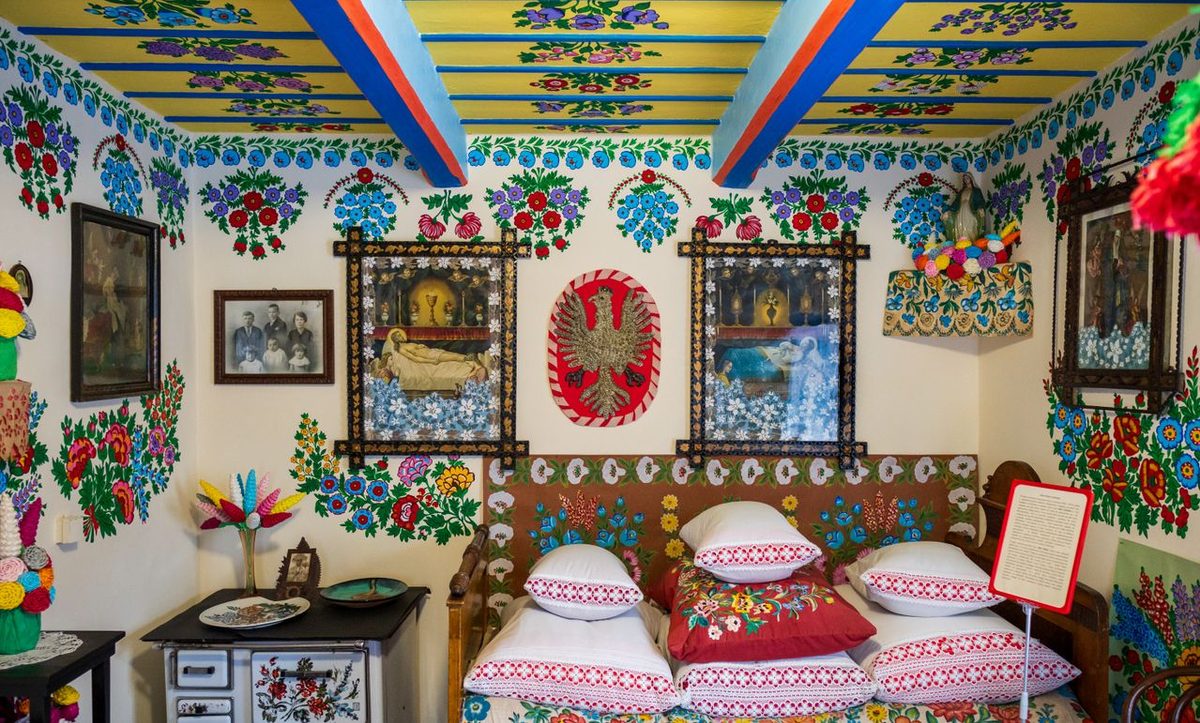
Turn east for Zalipie, a village known for floral motifs painted across cottages, barns, wells and everyday household objects. The tradition began as a way of brightening smoke-darkened interiors and has developed into a distinctive form of folk art. Start at the Felicja Curyłowa homestead or the local House of Painters, then explore with sensitivity: Zalipie is a living village, and not every decorated house is open to visitors.
From Zalipie, head south-west towards Lipnica Murowana. The small Church of St Leonard forms part of the UNESCO-listed Wooden Churches of Southern Małopolska. Its modest scale is part of the appeal – dark timber, a shingled roof and centuries of craftsmanship in a quiet riverside setting. Access to the interior can be limited outside the main season or during services, so check locally before planning the surrounding day.
Stop 3 – Dębno, Lake Czorsztyn and the Pieniny
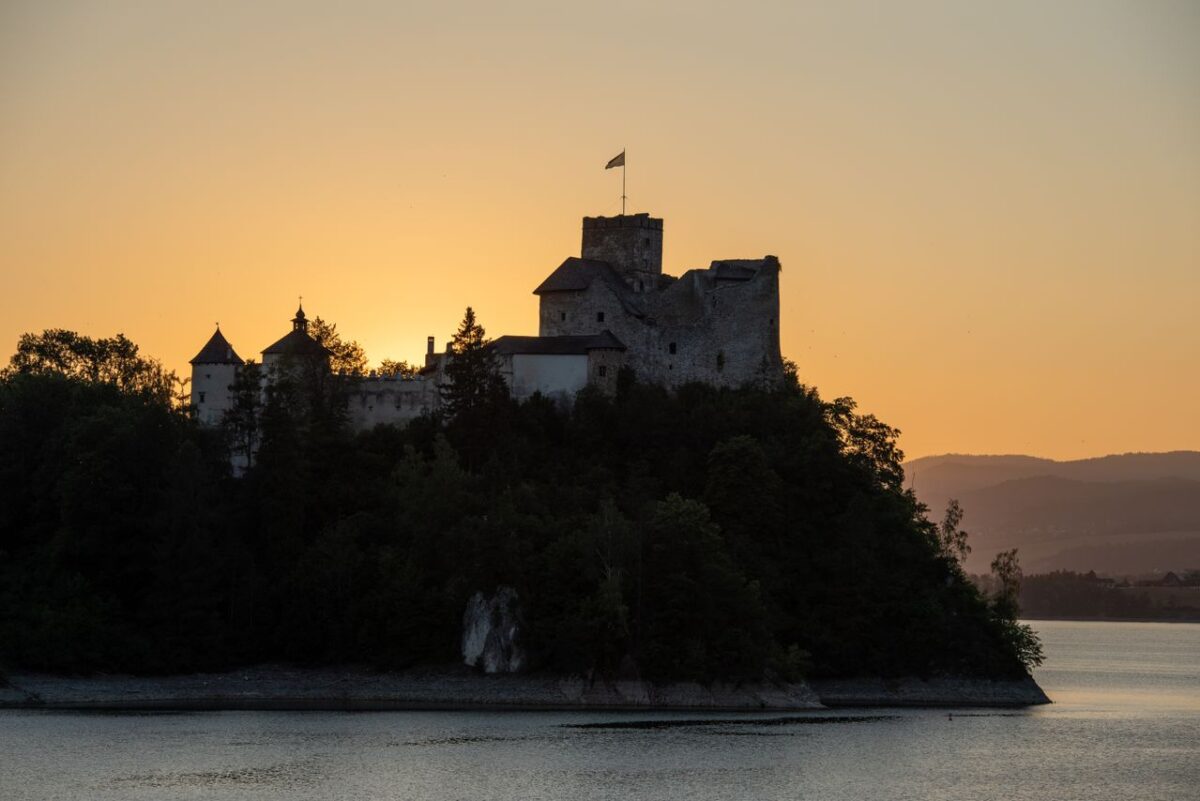
The route south brings another UNESCO-listed wooden church at Dębno Podhalańskie, celebrated for its remarkably preserved timber construction and painted interior. From there, the road reaches Lake Czorsztyn, where two castles face one another across the water: the ruins at Czorsztyn and the fortress at Niedzica. Even if you do not enter both, the lake and mountain views justify a pause.
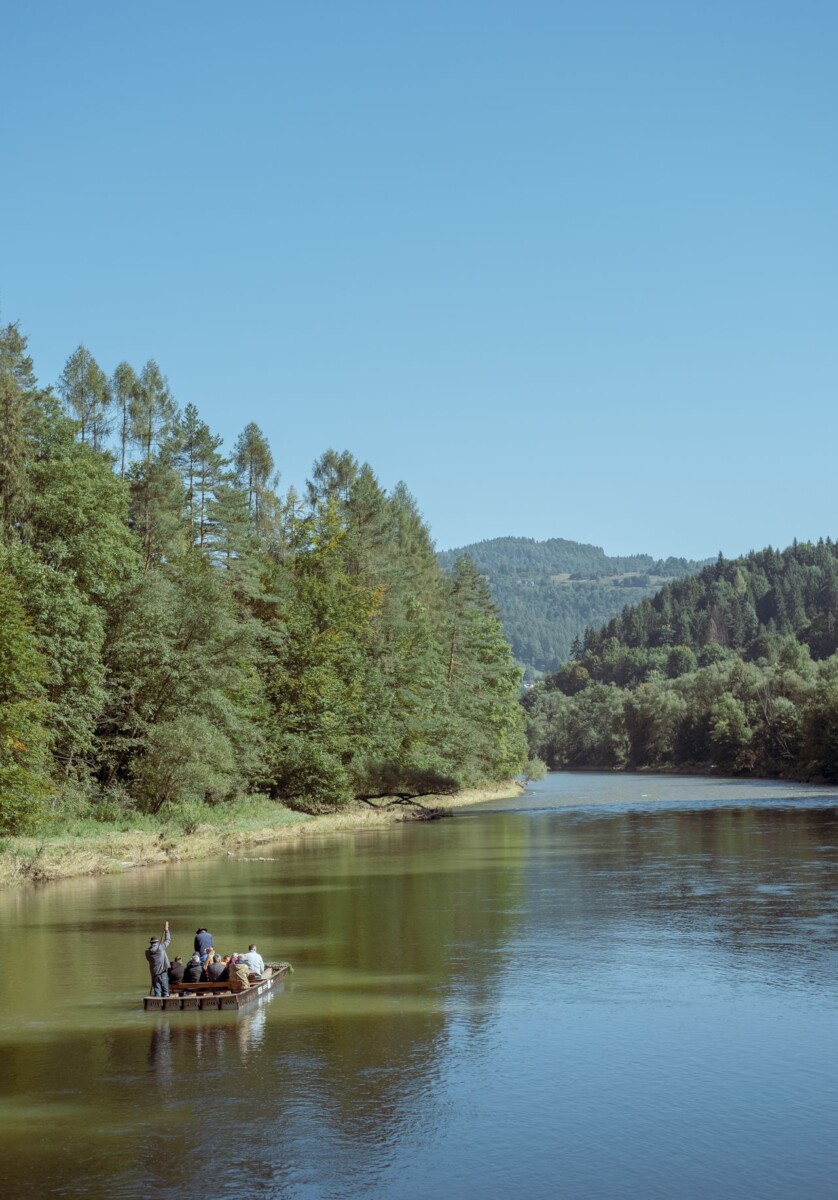
Continue into the Pieniny for one or two nights. The classic experience is a seasonal raft journey through the Dunajec Gorge, but the region also rewards hikers and cyclists with river paths, forested ridges and views towards the sharp summit of Trzy Korony. Szczawnica makes a convenient base, with restaurants and several official car parks. Leave the car there for riverfront walks or the chairlift to Palenica rather than trying to park beside every attraction.
Stop 4 – Zakopane and the Tatra foothills
The drive from the Pieniny to Zakopane is short enough for detours. The wooden church at Jaszczurówka and the traditional houses of Chochołów provide a gentler introduction to Podhale before the Tatras dominate the horizon. In Zakopane, park once and explore Krupówki, the old cemetery at Pęksowy Brzyzek and the town’s distinctive timber villas on foot.
A car is useful for reaching the wider foothills, but it does not guarantee access to the most popular trailheads. Kuźnice is served by local transport, and car parks for routes such as Morskie Oko can require advance booking – spaces fill up quickly. If the mountains are the main reason for your trip, give Zakopane two nights and keep one day free for weather changes.
Where can you add more wooden churches and Orthodox churches?
Travellers with two extra days can extend the loop east into the Beskid Niski and Sącz areas. Binarowa and Sękowa have UNESCO-listed Roman Catholic churches, while Kwiatoń and Owczary are known for slender wooden Orthodox churches with layered roofs and historic iconostases. These are active religious buildings rather than conventional museums. Summer visitor programmes are the easiest way to see interiors, and modest dress and quiet behaviour are appropriate at all times.
What should UK visitors know about driving in Poland?
Keep right and keep the lights on
Traffic drives on the right, and most hire cars have the steering wheel on the left. Take the first roundabouts slowly and ask passengers to help with navigation until the layout feels natural.
The essentials before you set off:
- Daytime running lights or dipped headlights are compulsory,
- seat belts are required,
- and a handheld phone must not be used while driving.
Poland’s alcohol limit is much lower than in most of the UK, so the simplest rule is not to drink at all before driving.
Carry the right documents
A UK photocard driving licence can be used in Poland for visits of up to six months. When driving a car hired from Kaizen Rent, you must carry your driving licence and proof of identity, as well as the documents provided with the vehicle.
Kaizen Rent allows people aged 18 and over to hire a car, provided they have held a driving licence for at least six months. These hire terms and conditions apply in addition to Polish legal requirements and any terms and conditions relating to payment cards.
Do you need a vignette or pay tolls on the A4?
Poland does not use a national vignette for ordinary passenger cars. Some motorway sections have their own toll arrangements. On the concession-operated A4 between Kraków and Katowice, a standard two-axle car is charged at both the Balice and Mysłowice toll plazas. From 1 April 2026, the listed charge is PLN 18 at each plaza, payable by bank card, cash or supported electronic methods. Rates can change, so check the operator’s current tariff before travelling. Other sections of the A4 may follow different rules.
How does parking work in mountain and spa towns?
Assume that central parking in Zakopane, Szczawnica and other resort towns is limited and paid. Zakopane’s central paid parking zone operates seven days a week, and charges vary by sub-zone. In Szczawnica, use one of the signed municipal or private car parks and continue on foot. Always read the sign beside the space rather than relying solely on a parking app, and confirm whether your accommodation includes a place before arrival.
What changes when you drive to the mountains in winter?
Snow, freezing fog and sudden temperature changes can transform a straightforward route. Make sure your rental car has the right winter tyres, or choose Kaizen Rent, where vehicles are equipped with all-season tyres that meet the highest applicable EU requirements for winter performance, and snow chains can also be added to your rental car if needed. Check live road conditions before leaving, travel in daylight where possible and keep extra fuel, warm clothing and water in the car. The Zakopianka can become heavily congested after fresh snowfall and on ski-season changeover days, so avoid building a flight connection around the fastest possible journey time.
How can you keep the itinerary relaxed?
The most enjoyable version of this trip is not a race to collect landmarks. Choose one castle, one substantial walk and one cultural stop per day. Book two-night stays in the Pieniny and Zakopane if the mountains matter to you, and keep the final night in or near Kraków before an early flight. That leaves space for weather, slow lunches and the unplanned turn-off that road trips are meant to deliver.
If Małopolska has sparked your curiosity, let Kraków be the beginning rather than the final destination. Pick your favourite stops, leave room for spontaneous detours and discover what lies beyond the city.
FAQ
Can you enjoy this route without doing serious hiking?
Yes. The castle courtyards, painted homesteads, wooden churches, lakeside viewpoints and resort promenades provide plenty to see at an easy pace. Cable cars and chairlifts can add higher-level views when operating, although accessibility and seasonal schedules vary.
Which local foods are worth trying along the way?
Look for obwarzanek krakowski in Kraków, smoked oscypek cheese in Podhale and warming kwaśnica cabbage soup in mountain inns. Around Ojców, locally raised trout is a regional speciality. Market stalls and family-run restaurants are often more memorable than motorway service areas.
Is it useful to carry cash in rural Małopolska?
Cards are widely accepted, but a modest amount of Polish złoty is useful for small parking machines, church donations, village attractions and roadside stalls. Keep coins and low-value notes rather than relying on large denominations.
What happens if bad weather cancels a day outdoors?
Switch to a castle interior, an ethnographic museum or one of the region’s wooden-architecture sites with confirmed opening hours. In the south, the thermal pools around Podhale can also turn a wet afternoon into a restorative part of the trip rather than a lost day.
Is it worth renting a car for this route?
Yes, especially if you want to explore beyond the main towns and travel at your own pace. A hire car makes it easier to combine places such as Ojców, Lake Czorsztyn, the Podhale villages and mountain viewpoints without relying on limited local connections. It also gives you more flexibility when the weather changes or you spot somewhere worth stopping along the way.
