
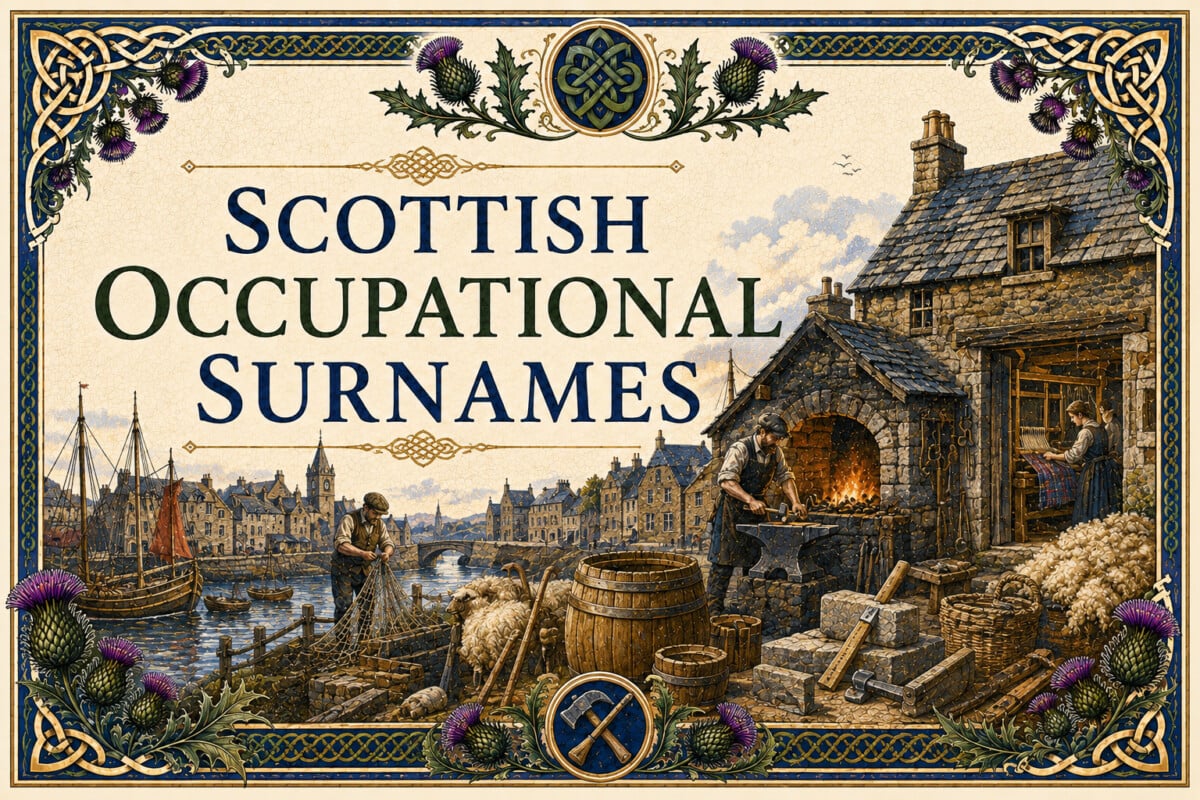
Scottish occupational surnames began as labels for a person’s work and became inherited family names when those labels stayed with descendants long after the original trade had changed. Stewart, Baxter, Walker, Fletcher, Webster, Mason, Wright and Taylor are among the clearest examples.
They are useful clues, not proof of a particular ancestor’s job. A surname could spread through a family, be adopted in a community, or arrive through migration, so the name points to a historical language and occupation before it proves an individual biography.
In Scotland, these names sit alongside patronymic names such as MacDonald, place-based names such as Douglas, and descriptive names. The mix reflects the long contact between Gaelic, Scots, English, Norse and Anglo-Norman naming traditions; browsing Scottish last names beginning with M shows just how quickly those naming patterns overlap.
If you are interested in specific last or first names of the Scottish origin, try our interactive tool below:
Scottish Names Beginning With
Choose which type of Scottish name you would like to explore.
How Jobs Became Scottish Family Names
Before surnames settled into fixed forms, a trade was a practical way to distinguish people with the same given name. A record might need to separate one John from another, and “John the tailor” or “John the mason” did the job neatly. In burghs and trading communities, where craftspeople, merchants and officials appeared in written records, occupational labels were particularly handy.
Over generations, those labels stopped changing with each person’s employment. A Taylor’s child could become a farmer, a Wright’s grandchild could work in a shop, and the inherited surname remained. Scottish surnames were used with increasing regularity from the medieval period, but spelling and inheritance were often inconsistent until the 16th century. That is why early family research can turn up several spellings for what looks like the same name.
The Ragman Roll of 1296, which recorded acts of homage by Scottish nobles and landholders to Edward I, includes the kinds of local, patronymic, nickname and occupational surnames also found in England at the time. Scotland’s surname history did not develop in a sealed box. Languages, people and naming habits crossed borders constantly.
Eight Traditional Scottish Occupational Surnames
| Surname | Traditional meaning | What the work involved |
|---|---|---|
| Stewart | Steward or manager | Overseeing an estate, household or administrative responsibilities |
| Baxter | Baker | Baking bread and other goods for a household or community |
| Walker | Fuller of cloth | Working cloth to clean and thicken it after weaving |
| Fletcher | Maker of arrows | Producing arrows, including their wooden shafts |
| Webster | Weaver | Weaving cloth on a loom |
| Mason | Stone worker | Building and shaping stone for homes, churches and public works |
| Wright | Craftsman or maker | A skilled worker, often associated with woodwork in later usage |
| Taylor | Tailor | Cutting, fitting and making clothing |
Stewart: A Role That Became a Dynastic Name
Stewart began as an occupational title for a steward, someone trusted with management and oversight. Its history is more conspicuous than most job-derived surnames because the hereditary office of High Steward of Scotland became associated with the royal House of Stewart. Still, most people named Stewart should not assume a direct line to that family. A shared surname alone is not evidence of clan or royal descent.
Baxter: The Baker’s Name
Baxter is the traditional occupational surname for a baker. It is especially interesting because the related Scots word was historically associated with a female baker in some usage, a reminder that surname origins can preserve older social vocabulary more than a simple modern job description. Once Baxter became hereditary, it no longer described the occupation of every bearer.
Walker and Webster: The Cloth Trades
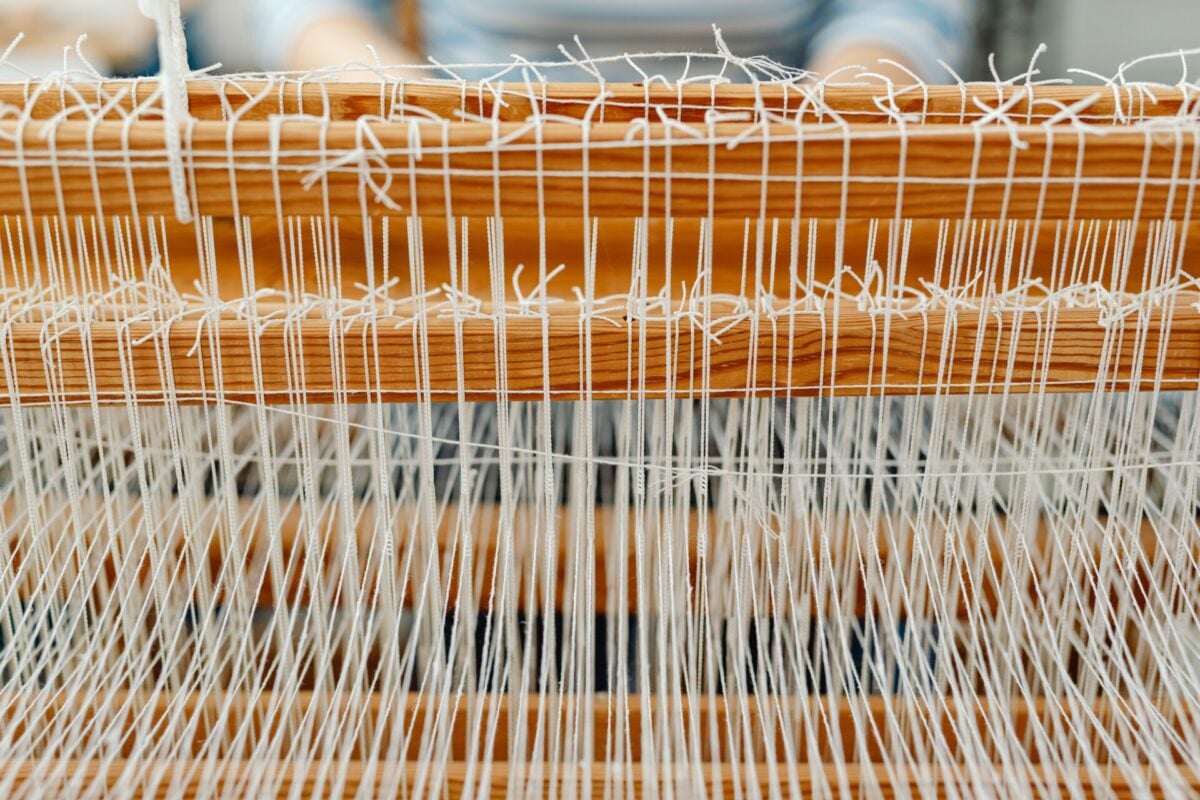
Cloth production produced several durable surnames. Walker refers to a fuller, the worker who processed woven cloth so it became cleaner and denser. The word is connected to the old practice of working or treading cloth. Webster comes from a word for a weaver, preserving another stage of textile production.
These names can appear in records with spelling changes, especially before spelling became more standardized. A search limited to one modern spelling is a fine way to miss the family you were looking for; checking adjacent lists such as Scottish last names beginning with W can also help when an index has been arranged alphabetically.
Fletcher, Mason, Wright and Taylor: Skilled Work in a Name
Fletcher identifies an arrow maker, a specialist trade in an age when arrows mattered for hunting and warfare. Mason is direct: it denotes a worker in stone. Taylor, also found as Tailor in some records, comes from the maker and fitter of clothes.
Wright is broader. It originally meant a worker or maker skilled in a craft, which is why English and Scots naming traditions later produced more specific forms such as Cartwright and Wheelwright. A Wright in an old Scottish record is not automatically a carpenter, although woodworking became a common association.
Why Occupational Surnames Differ Across Scotland
Occupational names were not distributed evenly across Scotland. In Lowland towns and burghs, Scots and English occupational vocabulary had strong influence, making names such as Baxter, Webster, Taylor and Wright familiar forms. Early written records also tend to preserve the naming practices of people most likely to appear in administrative, land or trade documents.
In Gaelic-speaking areas, hereditary surnames more often emphasized kinship and descent, especially names using Mac, meaning “son.” Occupational surnames existed, but they were comparatively less common in Gaelic contexts. This does not divide Scotland into two tidy surname zones. Families moved, languages overlapped, and later record keepers often rendered Gaelic names in English or Scots spellings. Gaelic given names followed their own traditions too, as seen in these traditional Scottish Gaelic girl names and pronunciations.
Regional spelling adds another layer. Mc and Mac are both seen in Scottish surnames, while occupational names may acquire or lose letters as clerks wrote them down phonetically. Treat spelling as a search tool, not a verdict.
How To Research an Occupational Surname
Start with the people you can document and work backwards one generation at a time. The surname’s dictionary meaning is a useful lead, but a baptism, marriage, death record, valuation roll, census entry or will is stronger evidence of where a particular family lived and worked.
- Record every spelling exactly as it appears in each document. Baxter, Baxster and similar forms may need to be searched separately.
- Separate surname meaning from family proof. A Taylor ancestor may have been a tailor, but only an occupation recorded beside their name can establish that.
- Check the parish, county and language context. A Lowland family called Webster and a Highland family with a Gaelic patronymic followed different naming patterns.
- Use the family-history guidance and record collections maintained by National Records of Scotland, then compare entries across civil registration, census and church material.
A genealogy research notebook is useful for keeping variant spellings, document references and unanswered questions together, particularly when several people share a common surname.

Genealogy Research Logbook: Genealogy Research Organizer, family Research Log to Build And Organize Your Family History, Timeline Genealogy Research, 100 Pages, Large Print 8.5 x 11 in
For copies of fragile certificates, parish extracts and old family photographs, use archival document sleeves and keep originals away from damp, sunlight and adhesive tape.

Office Werks Archival-Quality Document Protectors | Reinforced Clear Sheet Sleeves | Acid-Free 150 Pack | Heavy-Duty 3-Ring Binder Compatible | Transparent Letter-Size Page Covers
What an Occupational Surname Can and Cannot Tell You
An occupational surname can reveal the kind of work that first supplied a family label, the language in which that label was formed, and sometimes a broad connection to town, estate or craft life. It can also point you toward related terms worth searching in historical records.
It cannot, on its own, confirm a clan connection, social rank, precise birthplace or a specific ancestor’s profession. Scottish families adopted surnames over centuries, and people could change names through marriage, tenancy, allegiance or simple administrative habit. Treat the meaning as the opening page of the investigation, not the final chapter.
Frequently Asked Questions
Is Stewart an occupational Scottish surname?
Yes. Stewart comes from a title for a steward or manager. The name later gained major royal associations through the House of Stewart, but sharing the surname does not prove descent from that dynasty.
What does the Scottish surname Baxter mean?
Baxter means baker. The name comes from older Scots and English occupational vocabulary and became hereditary, so modern Baxters do not need to have baking ancestors in the recent past.
Is Walker a Scottish surname?
Walker is found in Scotland and elsewhere in Britain. It traditionally refers to a fuller, a textile worker who processed woven cloth.
Were occupational surnames common in Gaelic Scotland?
They occurred, but patronymic surnames based on descent were generally more characteristic of Gaelic-speaking communities. Occupational forms were more prominent in Scots and English naming traditions, especially in Lowland settings.
Does a Scottish occupational surname prove my ancestor’s trade?
No. The surname preserves an older occupational association, but only records that name an individual’s job can confirm that person’s occupation.