
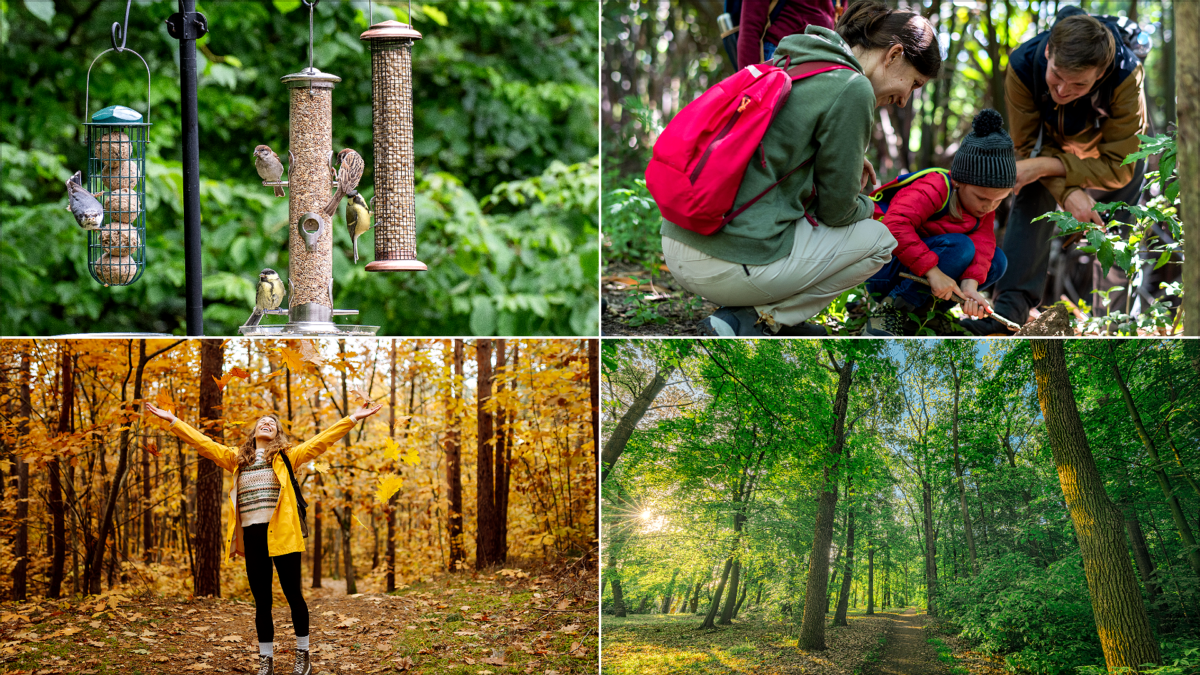
Boston has no shortage of famous family attractions, from Fenway Park and the New England Aquarium to Boston Common. However, parents looking for a quieter half-day trip can trade crowded sidewalks and long lines for wetland trails, community gardens, bird feeders, and outdoor nature play at Mass Audubon’s Boston Nature Center and Wildlife Sanctuary.
Located in Mattapan, the Boston Nature Center is one of the easiest nature escapes to combine with a family trip to the city. The trails are short, the routes can be adjusted to suit your children’s energy levels, and the Nature Nook gives younger visitors somewhere to play without requiring parents to plan an entire day around the outing.
If you’re planning one day in Boston, the sanctuary works best as a morning or afternoon break from sightseeing. Most families can comfortably explore it in two to four hours, depending on how many trails they walk and how long the children spend in the nature play area.
The 67-acre preserve is roughly eight miles south of downtown Boston. Driving from central Boston or Cambridge commonly takes around 25 to 35 minutes, although Boston traffic can quickly increase that. Families without a car can also reach the sanctuary using the MBTA bus network.
The main advantage for parents is flexibility. You can take a short half-mile walk with a toddler, follow the accessible one-mile route with a stroller, or combine several trails when older children want more time outdoors. There is no need to commit to a long hike before discovering whether everyone is in the mood for one.
Is the Boston Nature Center good for families?
The Boston Nature Center is a good family day trip because its main attractions are close together and easy to adapt around naps, weather, and different age groups. The sanctuary has approximately two miles of trails, a visitor center, bird-feeding areas, gardens, an accessible trail, and a 14,000-square-foot nature play space.
Families with young children do not need to walk every trail to enjoy the visit. A simple trip involving the Snail Trail, bird feeders, and Nature Nook can fill a relaxed morning. Families with older children can add the Fox Trail, wetlands, community gardens, and one of the sanctuary’s scheduled nature programs.
Unlike a traditional playground or indoor attraction, the experience is less structured. Children may spend more time examining a log, watching birds at a feeder, or building something from natural materials than they do walking. Parents should allow for that slower pace rather than measuring the outing only by the distance covered.
A former hospital site transformed into an urban sanctuary
The land has a history that predates its current trails and gardens. It was once part of the Boston State Hospital, a psychiatric institution whose origins date to the 1830s. Mass Audubon later acquired part of the property and opened the sanctuary in 2003.
The Boston Nature Center is therefore not remote wilderness. It is a restored and carefully managed urban landscape where meadows, wetlands, woodland, gardens, wildlife habitat, and community recreation now occupy land that once had a very different purpose.
Mass Audubon identifies the sanctuary as habitat for more than 150 bird species, approximately 40 butterfly species, and over 350 plant species. Those figures make it worthwhile for experienced birdwatchers and naturalists, but families do not need any specialist knowledge to enjoy the visit.
Children can simply look for birds, listen for movement in the trees, count butterflies, inspect plants, or see what changes as the trail moves between meadow and wetland. Parents who cannot confidently identify every bird can still turn the walk into a game by counting colors, listening for different calls, or seeing who notices movement first.
Before leaving, check the official Boston Nature Center visitor page for current opening information, visitor guidelines, notices, and seasonal updates.
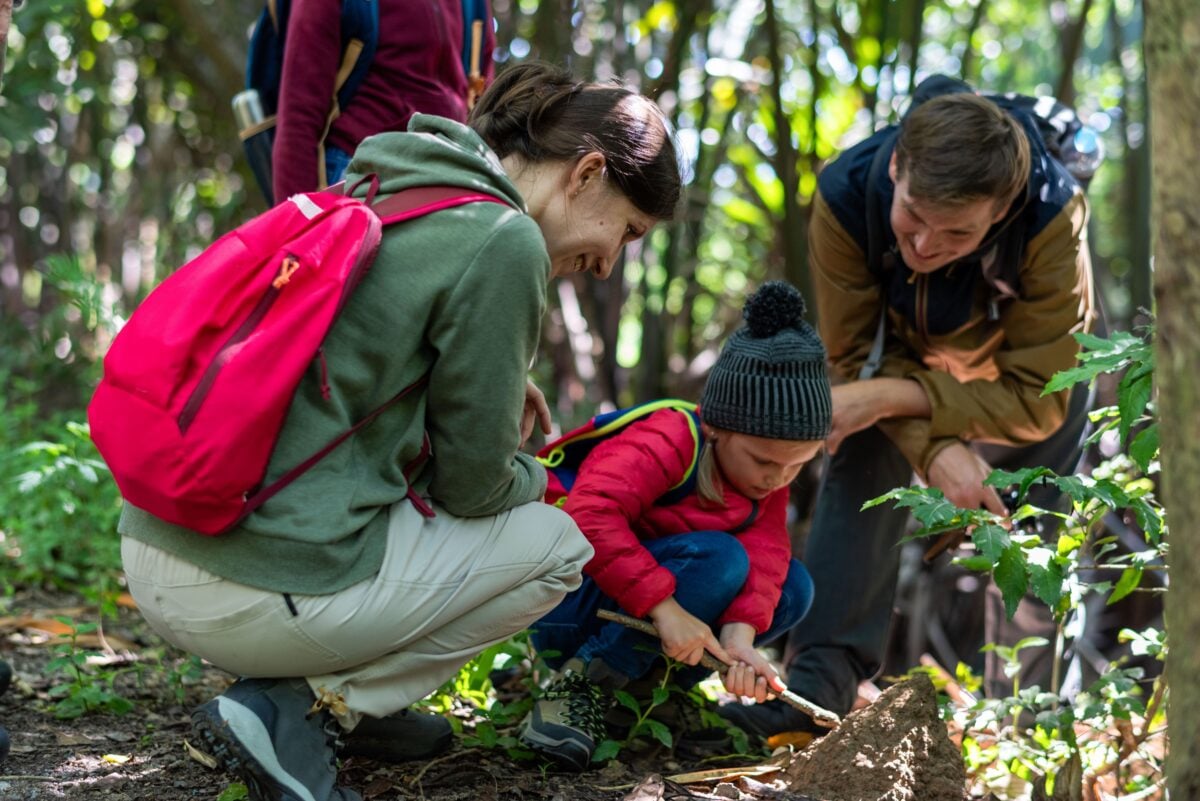
Boston Nature Center trails for families
The sanctuary has approximately two miles of connected trails and boardwalks. Because several routes overlap, parents can shorten or extend the walk without returning all the way to the beginning.
Start by viewing the official Boston Nature Center trails page. It includes individual trail descriptions, a downloadable trail map, and a digital map that can be opened on a phone.
Snail Trail
The Snail Trail is approximately half a mile long and passes through mixed woodland and meadow before connecting with the Fox Trail. It is one of the most convenient options for families with younger children because it provides a short walk without feeling like an abbreviated visit.
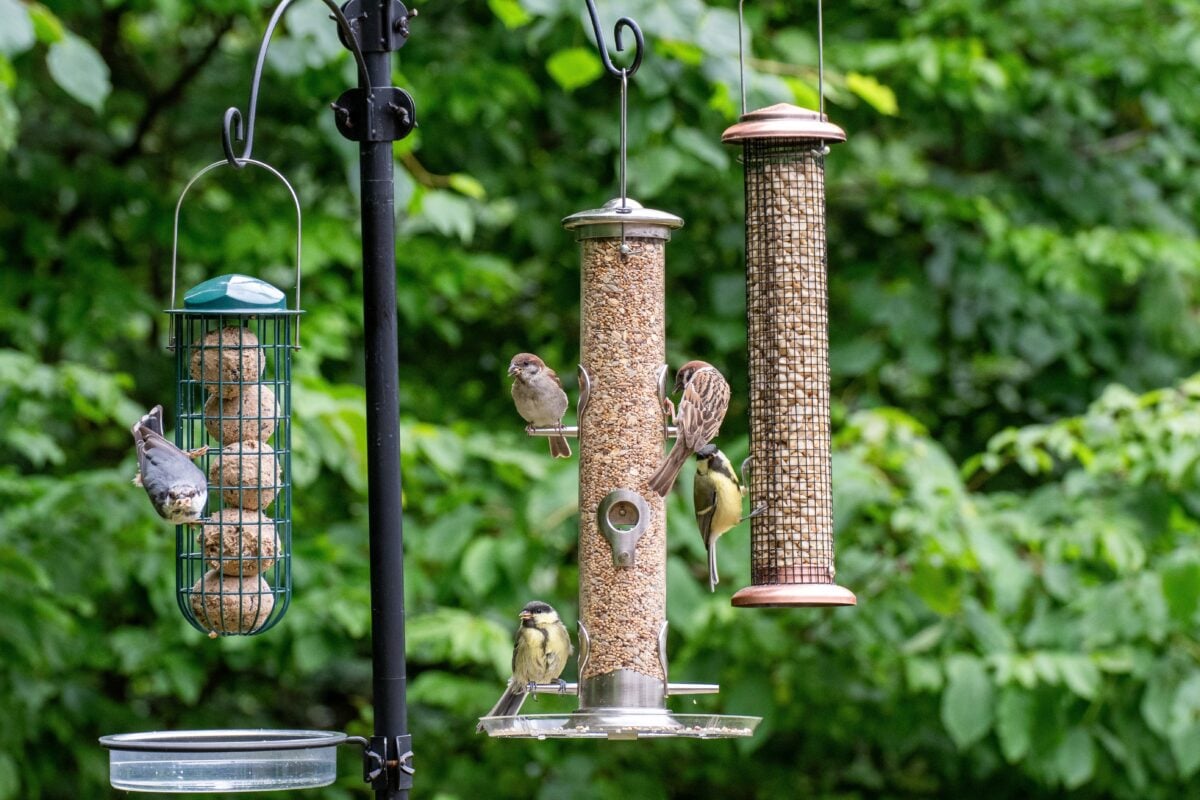
The trail includes the patio behind the nature center, where families can stop at the bird feeders. This is a useful early pause for children who need something specific to look at before settling into the walk.
The Nature Nook is also located just off the Snail Trail, making this the most practical first route for families primarily visiting for the children’s play area. Depending on your pace and the number of stops, the walking portion may take around 20 to 40 minutes.
Rabbit Trail
The Rabbit Trail is another half-mile option. It passes near the Clark Cooper Community Gardens and offers opportunities to look for birds around the meadow and woodland edges.
This route works well for families who want to include the gardens without attempting the longest possible loop. It can also be combined with sections of the other trails when children still have energy.
Fox Trail
The Fox Trail is approximately one mile and provides a more complete walk through the sanctuary. It follows raised boardwalks across wetland habitat and passes beside a brook, giving children more variation than a simple woodland path.
The boardwalk sections are likely to be one of the most memorable parts of the route for children. They provide a clear view into the wetland while making the walk feel more adventurous without requiring a difficult climb.
This trail is better suited to families who have allowed enough time for a longer walk or who have children comfortable covering approximately one mile. Stops for birds, insects, plants, snacks, and general distractions mean the route will usually take longer than the distance suggests.
All Persons Trail
The All Persons Trail is a one-mile universally accessible route that overlaps with the Fox, Rabbit, and Snail trails. It follows a wide, primarily level crushed-stone path and can be started from either the front or rear of the nature center.
There are 12 interpretive stops presented through audio, braille, and printed information. The route is the clearest choice for wheelchair users, families using a sturdy stroller, visitors with limited mobility, and anyone who prefers a wider and more even walking surface.
Conditions can still be affected by rain, snow, fallen leaves, and seasonal maintenance. Parents bringing a stroller or visiting with someone who has specific accessibility needs should check the official Boston Nature Center accessibility information before travelling.
Which trail should parents choose?
- For toddlers and preschoolers: Start with the Snail Trail and allow plenty of time for the Nature Nook.
- For families with limited time: Choose either the Snail Trail or Rabbit Trail instead of trying to complete every route.
- For boardwalks and wetland scenery: Choose the one-mile Fox Trail.
- For strollers and easier surfaces: Use the All Persons Trail, while checking current conditions before visiting.
- For older children: Combine the Fox Trail with the gardens, bird feeders, and Nature Nook.
Do not feel that a successful visit requires completing all two miles. For many families, one short trail followed by unstructured play will be more enjoyable than pushing tired children around every loop.
The Clark Cooper Community Gardens
The Clark Cooper Community Gardens add a different kind of nature experience to the sanctuary. Rather than only observing plants growing in meadows and woodland, families can pass a working community space shaped by people cultivating vegetables, fruit, flowers, herbs, and other plants.
Mass Audubon describes Clark Cooper as Boston’s oldest, largest, and most diverse community garden. The garden helps connect the sanctuary’s wildlife habitats with the way urban residents grow food and maintain shared green spaces.
For parents, the garden provides an easy opportunity to talk about where food comes from, how plants change through the seasons, and why bees and butterflies matter. The setting does much of the work, so the conversation does not need to become a formal lesson.
Children can look for vegetables they recognize, compare the shapes of leaves, watch pollinators, and notice how a cultivated garden differs from the surrounding meadow. Parents should remind children that this is a working community garden and that plants should not be picked unless a supervised program specifically allows it.
Some scheduled programs may focus on gardening, berries, plants, food, or seasonal nature activities. These are not available every day, so check the Boston Nature Center program calendar rather than planning around an older event listing.
Why families should allow time for the Nature Nook
For many children, the main attraction will be the Nature Nook, a 14,000-square-foot nature play area located just off the Snail Trail.
Unlike a standard playground organized around slides and swings, the Nature Nook is designed for open-ended outdoor play. Children can explore raised activity tables, a stone stream bed, a grassy maze, logs, benches, gardens, and small natural habitats.
The experience may look less organized than a conventional playground, but that is part of its appeal. One child may build with natural materials, another may investigate water or stones, and another may turn a log or grassy path into part of an invented game.
This flexibility makes Nature Nook useful for families with children of different ages. Younger children can examine textures and small natural features, while older children can build, balance, create games, or explore the maze.
Parents should plan the walking route around this stop instead of treating it as a final five-minute diversion. Depending on their ages and interests, children may happily spend 30 minutes or considerably longer here.
Because the play area uses natural materials and outdoor surfaces, clothes may become muddy or damp, especially after rain. A spare outfit for younger children can make the journey back into Boston much more comfortable.
Family programs and seasonal activities
The sanctuary runs organized programs throughout the year, including family birding, seasonal walks, nature activities, gardening events, and other educational experiences. A scheduled program can add structure for children who respond better to having a guide or a specific activity.
Family birdwatching sessions are particularly approachable for beginners. Parents and children can learn what to look and listen for without needing to arrive with binoculars, birding experience, or the ability to identify everything they see.
Programs change by date and season, and some require advance registration or a separate fee. Use the current Boston Nature Center events calendar to see what is available during your visit.
If an activity is especially important to your family, register before building the rest of your itinerary around it. Popular children’s programs may have limited spaces, while outdoor events can occasionally be adjusted because of weather or trail conditions.
How long should families spend at Boston Nature Center?
Most families should allow between two and four hours. Two hours can be enough for one short trail, the bird feeders, and a visit to Nature Nook. Three or four hours gives you time to include the gardens, a longer trail, snacks, and the inevitable stops caused by children finding something more interesting than the planned route.
- One to two hours: Snail Trail, bird feeders, and a shorter Nature Nook visit.
- Two to three hours: One or two trails, the community gardens, bird feeders, and Nature Nook.
- Three to four hours: A longer trail combination, Nature Nook, gardens, a snack or picnic break, and time inside the nature center when open.
- Half a day with a program: A scheduled family activity followed by a trail, garden visit, and outdoor play.
Avoid scheduling another timed attraction immediately after the visit. Leaving some flexibility will make it easier to accommodate traffic, a longer play session, or a child who suddenly becomes fascinated by the bird feeders.
Best time to visit with children
The sanctuary can be visited throughout the year, but each season offers a slightly different family experience.
- Spring: A good time for bird migration, new plant growth, and comfortable walking temperatures. Trails can be damp or muddy after rain.
- Summer: Gardens and vegetation are at their fullest, and more family programming may be available. Bring water, sun protection, and insect repellent.
- Fall: Cooler temperatures and changing leaves make walking comfortable. Fallen leaves can hide wet or uneven patches.
- Winter: The landscape is quieter and views through the trees may be more open. Check conditions after snow, ice, or severe weather.
For families with young children, a morning visit often works best during warm weather. Temperatures are usually more comfortable, children are less tired, and you have time to adjust the rest of the day if the outing runs longer than expected.
After heavy rain, consider waterproof shoes and clothes that can handle mud. Trail conditions can change quickly, so look for notices on the official sanctuary page before leaving.
What parents should bring
This is a manageable urban nature trip rather than a remote hike, but a few basic items will make the visit easier.
- Water for everyone in the family
- Comfortable closed-toe walking shoes
- Weather-appropriate layers
- Sun protection during warmer months
- Insect repellent, particularly near wetlands
- Snacks or a simple picnic
- A spare outfit for toddlers or children likely to get muddy
- Binoculars, if you already own a child-friendly pair
- A phone with the digital trail map loaded before setting off
Binoculars are optional rather than essential. Children can still see plenty from the paths, gardens, and bird-feeding area without additional equipment.
Food, bathrooms, and practical facilities
Parents should check the official visitor information for current nature center opening hours and facility availability. The outdoor trails may have different access hours from the indoor building, so do not assume the visitor center will be open whenever the trails are accessible.
Use the bathroom before setting out on the longer trail loops, particularly when visiting with younger children. It is also sensible to carry your own water and snacks rather than relying on food being available on-site.
If you plan to eat during the visit, follow posted rules and use designated areas. Pack out wrappers and other waste, avoid feeding wildlife, and keep food securely stored while walking.
Getting to Boston Nature Center
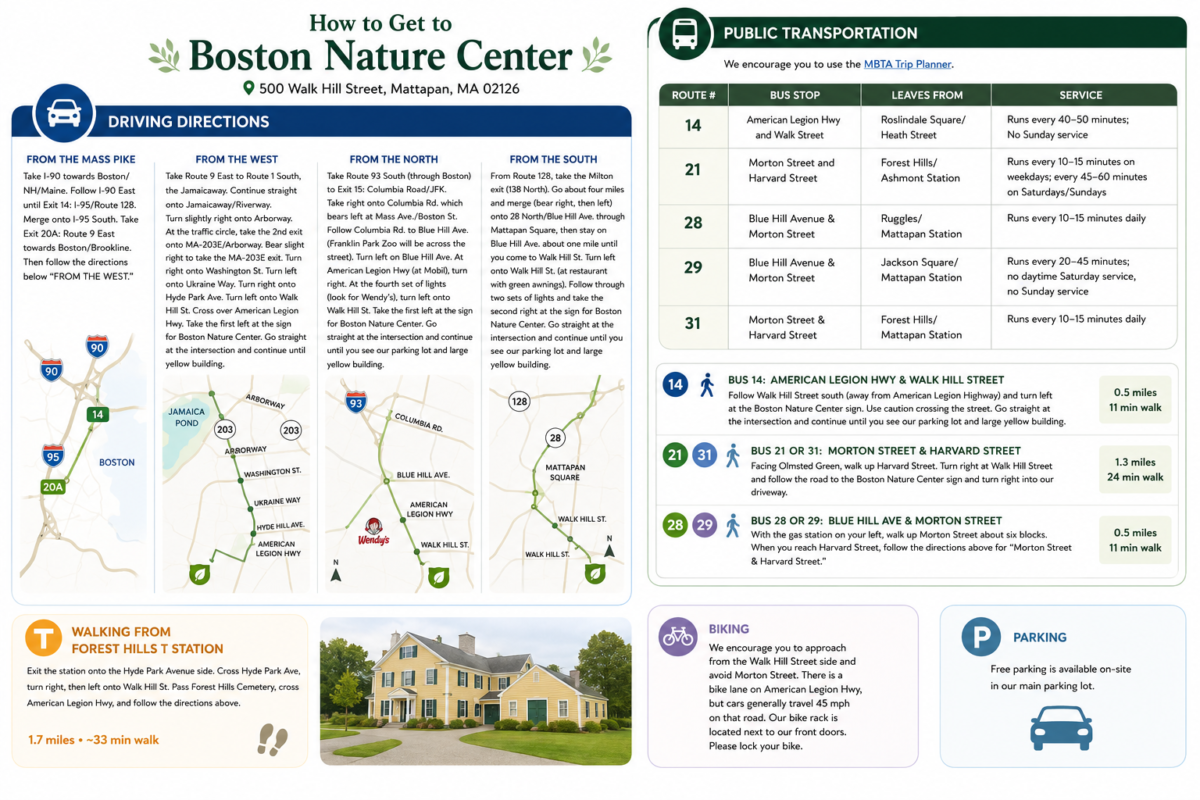
Boston Nature Center is located at 500 Walk Hill Street in Mattapan. The driveway leads from Walk Hill Street to the sanctuary’s main building and parking area.
Driving and parking
Driving is generally the simplest option for families carrying a stroller, spare clothes, food, and other children’s supplies. Allow extra time for Boston traffic, particularly during weekday commuting periods.
Before travelling, review the official directions to Boston Nature Center. This is more reliable than depending on an old blog post or saved map pin, especially when road construction or local traffic restrictions are in place.
Public transportation
Families can reach the area using MBTA buses, although the final journey includes a walk from the bus stop. Mass Audubon lists routes 14, 21, 28, 29, and 31 among the public transportation options serving nearby stops.
The amount of walking depends on the route and stop. This matters when travelling with small children, a stroller, or limited mobility, so check the complete instructions on Mass Audubon’s public transportation directions page.
Bus schedules and service conditions can change. Use the MBTA trip planner on the day of your visit rather than relying only on previously saved directions.
A simple half-day family itinerary
Boston Nature Center works best when the schedule remains flexible. If you’re building a wider city break, use the same practical approach outlined in this guide to planning a trip itinerary.
- Arrive and check the trail map. Confirm which routes are open and note the location of the visitor center, gardens, Nature Nook, and accessible paths.
- Start with the Snail Trail. Beginning with a shorter route allows parents to judge children’s energy levels before committing to a longer loop.
- Pause at the bird feeders. Give children a few quiet minutes to watch for movement rather than rushing immediately to the next stop.
- Spend time at Nature Nook. Allow at least 30 minutes, and longer if this is likely to be the main attraction for your children.
- Visit the Clark Cooper Community Gardens. Look for vegetables, flowers, insects, and seasonal changes while respecting the working garden beds.
- Add the Fox or All Persons Trail. Continue only if everyone still has the time and energy for another mile.
- Finish with a snack or picnic. Build in a calm break before returning to central Boston or moving on to another attraction.
This order is not compulsory. On a hot day, you may prefer to complete the longer walk first and save Nature Nook for later. With toddlers, it may be more realistic to begin with play and accept that the trail portion could be shorter.
Important family rules and safety tips
- Keep children on marked trails and boardwalks, especially around wetlands.
- Supervise children closely in the Nature Nook and near water features.
- Do not allow children to pick plants, disturb nests, or chase wildlife.
- Check children and adults for ticks after walking through natural areas.
- Bring insect protection during mosquito season.
- Follow current sanctuary rules concerning pets, food, bikes, and trail use.
- Leave the area if thunder, strong winds, or other unsafe weather develops.
The sanctuary is within Boston, but it remains a wildlife habitat. Treating it like a natural area rather than a city playground protects both visitors and the species living there.
Is Boston Nature Center worth visiting?
Boston Nature Center is worth considering for families who want a manageable break from museums, historic sites, traffic, and busy downtown attractions. It is close enough to fit into a Boston itinerary without consuming the entire day, but varied enough to feel like a genuine change of setting.
The combination of short trails, wetland boardwalks, community gardens, bird feeders, accessible routes, and open-ended nature play makes the sanctuary especially useful for parents. You can adjust the visit around your children’s ages and attention spans instead of following one fixed route.
The experience is not about covering a large distance or checking off a long list of attractions. Its value comes from giving children space to slow down, look closely, invent games, and experience a side of Boston that is easy to miss when a trip focuses only on the city center.
Boston’s history, architecture, and major attractions will still be waiting when you return. For a few hours, a boardwalk over wetlands, a working community garden, birds at a feeder, and a child-made adventure can provide a more breathable family day trip.
If your family enjoys discovering natural spaces within major cities, you may also like the river gorges, waterfalls, and parkland featured in this guide to Minneapolis’ best nature spots.