
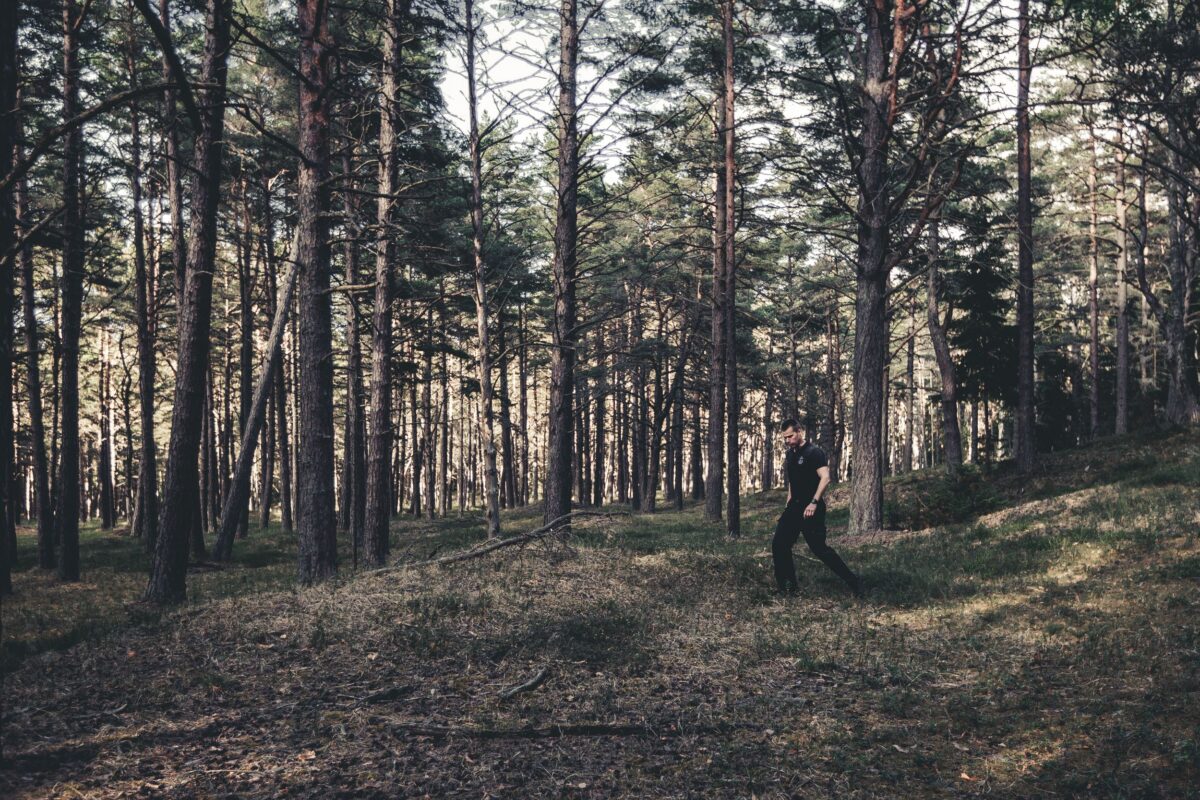
Forest bathing sounds like something that requires a towel, a waterfall, and a strong tolerance for cold water. It does not.
The practice is simply about spending unhurried time in nature and paying close attention to what you see, hear, smell, and feel. Think less fitness challenge, more sensory reset.
If you have ever walked into a wooded park, taken one deep breath, and immediately felt your shoulders drop an inch, you already understand the basic idea. Here is what forest bathing is, why people seek it out, and where you can actually try it.
What is forest bathing?
Forest bathing comes from the Japanese term shinrin-yoku, usually translated as taking in the forest atmosphere. The term was introduced in Japan in 1982 as part of a broader effort to encourage people to reconnect with forests and counter the strain of urban life and screen-heavy routines.
Despite the name, there is no literal bathing involved. You do not need hiking poles, a summit goal, or a smartwatch judging your pace. Forest bathing is about slowing down enough to notice the natural world.
A typical session might include:
- Walking slowly through a forest, arboretum, or park
- Stopping often rather than covering lots of ground
- Using the five senses to focus on the environment
- Leaving phones silent or tucked away
- Letting go of the need to achieve anything beyond being present
That last point matters. Forest bathing is not just a prettier version of exercise. It is closer to mindfulness in motion.
Forest bathing vs. forest therapy
The two terms are often mixed together, but they are not quite the same.
Forest bathing can be done on your own. You choose a natural setting, move slowly, and focus on sensory awareness.
Forest therapy is usually more structured and often led by a trained guide. Guided sessions may last two to three hours and include invitations such as listening quietly, touching bark, noticing patterns of light, or sitting still for a few minutes.
If solo silence sounds ideal, forest bathing is easy to do independently. If you prefer a framework, a guide can help you settle into the practice without feeling like you are just standing around looking at moss. Although, to be fair, moss is excellent at this.
Why do people do it?
People usually turn to forest bathing because they want to feel calmer, less distracted, and more grounded. Research on time in nature suggests several potential benefits, including lower stress, improved sense of well-being, and possible reductions in measures such as heart rate, blood pressure, and cortisol during or after deeper nature immersion.
Studies also suggest that even about 20 minutes outdoors can support mood and stress relief, and public health guidance in several countries now treats regular access to green space as a meaningful part of overall well-being. More immersive sessions of shinrin-yoku have also been linked to better relaxation and, in some cases, improved sleep quality.
That does not mean a woodland stroll is a miracle cure. It does mean that quiet time in nature can be a useful tool for people trying to step out of the constant buzz of work, traffic, notifications, and general life admin.
Do you need an actual forest?
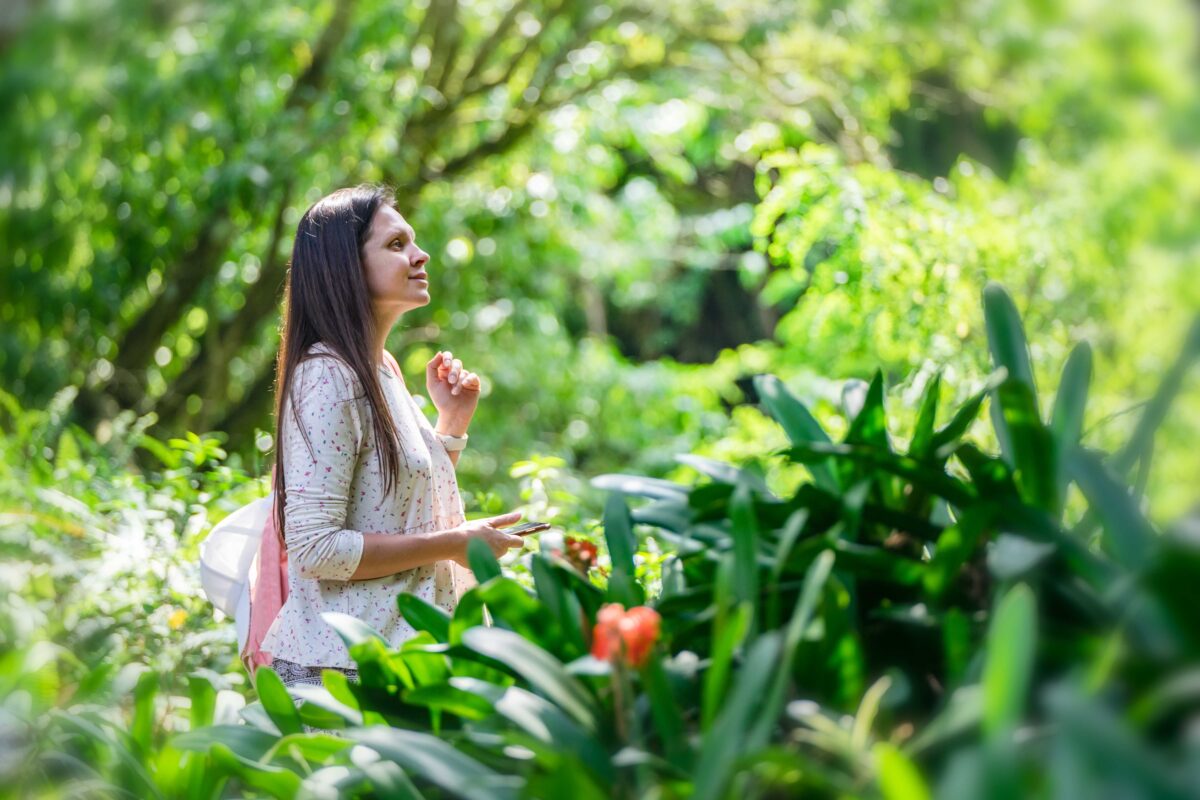
No. A true forest is lovely, but it is not mandatory.
You can practice in:
- A city park with mature trees
- An arboretum
- A botanical garden
- A woodland trail
- A coastal path or beach with minimal distraction
The key is not wilderness bragging rights. The key is finding a place where you can move slowly and engage with a natural setting without too much interruption.
If you live in a city, this is good news. You do not need to disappear into a remote mountain range. A quiet section of a large urban green space can work surprisingly well. In places with big urban parks, such as those covered in this Glasgow travel guide, the same idea applies even if you only have an hour to spare.
How to try forest bathing on your own
You do not need special equipment, but a little intention helps. A self-guided session can be very simple.
- Choose the right setting. Pick a natural place where you can walk safely and slowly. Arboretums and botanic gardens can be ideal because they combine access, paths, and plenty to notice.
- Give yourself time. Aim for at least 20 minutes. Longer is fine, but you do not need to block out half a day to begin.
- Silence your phone. Forest bathing and doomscrolling are not natural companions.
- Move slowly. This is not a step-count contest.
- Use your senses. Notice birdsong, the smell of pine, texture on leaves, light through branches, or the temperature shift in shade.
- Pause often. Sit on a bench, stand still, or look up into the canopy for a minute or two.
- Keep it low-pressure. If your mind wanders, that is normal. Just return your attention to the place around you.
Tip: Comfortable shoes, water, and weather-appropriate layers are enough for most sessions. You do not need to buy a whole new personality. If you are heading somewhere cooler or hillier, a practical layering mindset like the one in this guide to what to bring on a ski trip is more useful than people like to admit.
Where can you try forest bathing?
These places stand out because they offer either guided experiences or especially good settings for a self-guided walk. The details below stick to verified, durable facts, so always check the official site before you go for schedules, booking rules, and seasonal updates.
University of Washington Botanic Gardens, Seattle, Washington
Address: 2300 Arboretum Dr E, Seattle, WA 98112
This is one of the easiest places to try self-guided forest bathing if you want a low-stress introduction. The botanic gardens publish a self-guided forest bathing resource, which is handy if you like a little structure without joining a formal group. The Washington Park Arboretum covers roughly 230 acres, so it feels substantial without becoming logistically annoying.
Why it is worth visiting:
- It is accessible within Seattle, so you do not need a full wilderness outing
- The arboretum setting gives you trees, seasonal color, and quieter pockets for reflection
- It works well for beginners who want a clear, manageable environment
Best time to visit: Spring through fall tends to offer the most comfortable conditions and strongest plant variety, though a calm winter walk can be wonderfully moody if you like mist and fewer people.
Helpful tip: Go early in the day for a quieter experience. The practice is much easier when you are not sidestepping a crowd every three minutes. Parking is available on site, and accessible paths make it more approachable than many more rugged nature spots.
Hoyt Arboretum, Portland, Oregon
Address: 4000 SW Fairview Blvd, Portland, OR 97221
Hoyt Arboretum describes itself as a living museum of trees in Washington Park, and that is exactly why it suits forest bathing so well. You get a deep collection of trees in a setting built for slow exploration rather than speed hiking. The site includes about 190 acres and more than 12 miles of trails, which gives you options for a short reset or a longer wander.
Why it is worth visiting:
- It is a free botanical garden and tree-focused landscape, which makes the surroundings the whole point
- Washington Park gives you a larger green setting, so you can pair a visit with more time outdoors
- The variety of species adds texture, scent, and seasonal interest, which are all useful for a sensory practice
Best time to visit: Late spring through early fall is an easy choice for drier weather. That said, Portland’s damp, mossy mood does lend itself to a contemplative walk if you do not mind a jacket.
Nearby experiences: Since it sits within Washington Park, it works well as part of a wider park day rather than a single quick stop. If you are building a Pacific Northwest trip around urban nature, this kind of stop fits the same slow-travel instinct people often seek in places like the west coast of Scotland, just with less chance of horizontal rain sneaking up on you. Probably.
San Francisco Botanical Garden, San Francisco, California
Address: 1199 9th Ave, San Francisco, CA 94122
This is a good option for travelers who want a guided setting in a major city. The garden has hosted forest bathing walks, including structured sessions with set meeting times and participant fees. Inside the 55-acre garden, the cloud forest and redwood areas are especially good for slowing your pace and paying attention to scent, texture, and the shift in temperature under tree cover.
Why it is worth visiting:
- It offers a calmer nature experience inside San Francisco
- A botanical garden setting gives you diversity in plant life, scent, and texture
- Guided sessions can help first-timers understand the pace and focus of the practice
Helpful tip: If you are looking for a formal event rather than a solo wander, book ahead when guided programs are listed. Golden Gate Park is busy, but the garden itself can feel surprisingly insulated once you are inside.
Nearby experiences: The garden sits in Golden Gate Park, which makes it easy to build a slower, green-focused day around your visit.
The Arboretum, Arcadia, California
Address: 301 N Baldwin Ave, Arcadia, CA 91007
The Arboretum has hosted recurring forest bathing sessions such as its Second Sundays at Sunset program. That kind of scheduled experience can be helpful if you want the atmosphere of a group but still prefer something reflective over high-energy. The grounds stretch across about 127 acres, with lakes, mature trees, and enough room to escape the feeling that everyone around you is in a hurry.
Why it is worth visiting:
- It combines garden structure with a softer, guided pace
- Admission has been included with class registration for listed sessions
- Sunset timing adds a naturally quieter mood to the experience
Helpful tip: Advance online registration has been required for these classes, so check the official calendar before making the trip. If you are coming in summer, bring water and do not underestimate the afternoon heat.
Adirondack Park, New York
This is the big-landscape option. Stretching across more than six million acres of New York State, Adirondack Park offers scale, solitude, and a huge network of trails. It is also home to more than a hundred peaks and roughly 2,000 miles of hiking trails. For context, it is larger than Yellowstone, Yosemite, Glacier, Grand Canyon, and Great Smoky Mountains National Parks combined, which is frankly a ridiculous amount of room to think about trees.
Why it is worth visiting:
- There is ample room to find quiet space away from crowds
- Evergreen-rich areas add fragrance and atmosphere that many people associate with forest bathing
- It suits travelers who want to combine mindfulness with a larger outdoor trip
Best time to visit: Late spring through fall is the easiest for trail access. Autumn can be especially appealing if changing leaves help you slow down and stare at trees with even more commitment than usual.
Helpful tip: This is best for travelers prepared for a true park environment rather than a quick urban reset. Bring layers, plan your route, and know your trail conditions in advance. Cell service can be patchy in parts of the park, which is excellent for immersion and less excellent if you rely on your phone for every decision.
Places to try forest bathing
| Place | Type | Why it stands out | Good for | Practical note |
|---|---|---|---|---|
| University of Washington Botanic Gardens | Self-guided urban arboretum | Published self-guided forest bathing resource and about 230 acres to explore | Beginners and city visitors | Located at 2300 Arboretum Dr E, Seattle |
| Hoyt Arboretum | Arboretum | Free tree-focused setting in Washington Park with 12 miles of trails | Solo walkers and slow explorers | Located at 4000 SW Fairview Blvd, Portland |
| San Francisco Botanical Garden | Botanical garden with guided options | Structured programs in Golden Gate Park and varied themed gardens | First-timers who want guidance | Check event listings before visiting |
| The Arboretum | Arboretum with scheduled sessions | Recurring group classes such as sunset sessions on 127-acre grounds | Travelers who prefer a booked experience | Advance registration may be required |
| Adirondack Park | Large protected natural area | Massive landscape with long trail network and deep-immersion potential | Travelers seeking deeper immersion | Plan logistics like a proper outdoor trip |
What makes a good forest bathing spot?
If you are choosing your own location, look for these features:
- Natural sound, such as birds, wind, or water rather than constant traffic
- Tree cover or plant variety, which helps with sensory focus
- Safe, easy paths so you can slow down without watching every step
- Places to pause, including benches, clearings, or quiet corners
- Enough space to avoid feeling rushed by other visitors
In practical terms, arboretums and large botanical gardens are often excellent choices. They offer many of the benefits of a forest setting without the logistics of a backcountry outing. The same logic works well in destinations known for accessible green space, including places highlighted in this guide on what to do in the Isle of Skye, where short scenic walks can be just as restorative as longer hikes.
Best time to go forest bathing
There is no single perfect season. It depends on what helps you feel calm and attentive.
- Spring: Fresh growth, birdsong, and milder temperatures
- Summer: Longer daylight and dense canopy shade
- Autumn: Color, crisp air, and strong sensory contrast
- Winter: Quieter trails and a stripped-back atmosphere that can feel especially meditative
Early mornings and weekdays are often best if you want fewer distractions. If your local park is busiest at noon on a sunny Saturday, try another time. Forest bathing loses some charm when accompanied by a Bluetooth speaker two benches over.
Final thoughts
Forest bathing is simple on purpose. It asks very little, and that is part of its appeal.
You do not need expert knowledge, expensive gear, or a dramatic wilderness backdrop. You need a patch of nature, a bit of time, and the willingness to slow down. For many travelers, that makes it one of the easiest wellness practices to try on the road or at home.
If you want to start small, an arboretum in Seattle or Portland is a gentle entry point. If you prefer guidance, look for scheduled programs at places like San Francisco Botanical Garden or The Arboretum in Arcadia. And if you want the full, deep-green version, Adirondack Park offers enough room to disappear into the trees for a while.
Not literally disappear, obviously. Tell someone where you are going.
