Scottish last names that start with B include some of the country’s most recognisable surnames, such as Baird, Barclay, Bell, Blair, Boyd and Bruce. Some come from Gaelic, some from Scots place-names, and others arrived through Norman influence before becoming firmly part of Scotland’s surname landscape.
This guide is part of our Scottish Names collection. Browse our complete Scottish Names directory for A–Z first names, surnames, Gaelic names, meanings, and themed collections.
If you are building a family tree, choosing a character name or just curious about Scottish naming traditions, this guide gives you the practical version. You will find origins, likely meanings, simple pronunciation help and a few famous bearers where they are genuinely well known.
One quick note before we start. A surname can be common in Scottish records without being exclusively Scottish in origin. Scotland’s naming history includes Gaelic, Scots, Norse, Anglo-Norman and English influences, so the same family name can have more than one route into Scotland.
Scottish Names Beginning With
Choose which type of Scottish name you would like to explore.
How Scottish Surnames Developed
Scottish surnames did not come from one single system. In the Highlands and Islands, many family names grew from Gaelic patronymics, often using Mac, meaning “son of”. In the Lowlands, surnames were more likely to come from occupations, personal nicknames or place-names.
Norman influence also shaped Scotland’s surname pool. Anglo-Norman families were granted land by Scottish kings, and some names attached themselves to estates, lordships and local power. Bruce is the obvious example, but it is far from the only one.
If you are researching your own line, Scottish records from Old Parish Registers, statutory registration from 1855 onward, census records from 1841 to 1911, wills and testaments, Catholic parish records and valuation rolls are often where these surnames appear most consistently. The surviving national record set is unusually strong by UK standards, which is why Scotland can be rewarding for family-history work once you get past the spelling chaos.
What Counts As A Scottish Last Name?
A surname may be treated as Scottish for different reasons. It may have a Gaelic root, long use in Scottish records, strong association with a region of Scotland or a major role in Scottish history. That is why a name like Barclay, which traces back to an English place-name, still sits comfortably in a Scottish surname list.
So this article focuses on names that are either native to Scotland, strongly associated with Scotland, or deeply established in Scottish historical records.
Scottish Last Names That Start With B
Baird
Likely origin: Scots occupational surname.
Meaning: Often linked to “bard”, a poet or singer. In Scottish naming material, Baird is regularly treated as a surname with roots in the old word for a bard.
Pronunciation: BAY-rd.
Gaelic form: Mac an Baird or Mac a’ Bhaird appears in Gaelic naming tradition for bardic families, though Baird itself is the familiar modern surname form.
Famous bearer: John Logie Baird, the Scottish engineer associated with the development of television, is the best-known example for many people.
Baird feels very Scottish because it sits at the crossroads of language and profession. Like many old surnames, it may not point to one single family line. Different Baird families can have different local histories.
Barclay
Likely origin: Territorial surname.
Meaning: Usually traced to Berkeley, a place-name in England. The surname became established in Scotland over time and is widely recognised as part of Scottish family history.
Pronunciation: BAR-klee.
Gaelic form: No standard Gaelic original is usually given for Barclay in the same way as older Gaelic clan surnames.
Famous bearer: The Barclay name appears in Scottish noble and landed history, especially in eastern Scotland.
This is a good reminder that Scottish surnames are not always born in Scotland. Some arrived through migration, landholding and political ties, then stayed long enough to become woven into the country’s identity.
Bell
Likely origin: Occupational surname, and in some cases possibly a nickname.
Meaning: Often explained as relating to a bell-ringer or someone connected to a bell. In Britain, Bell is found in both Scottish and English surname traditions.
Pronunciation: BELL.
Gaelic form: No single standard Gaelic form is usually attached to Bell as a surname origin.
Famous bearer: Alexander Graham Bell, born in Edinburgh, gives the surname an instantly recognisable Scottish association.
Bell is short, straightforward and common enough to make genealogy slightly annoying. A neat name, less neat when there are several Bells in the same parish register. Modern surname maps and electoral data still show Bell spread widely across southern Scotland and the Central Belt, so it is one of those names you usually need to pin to a very specific parish before it becomes useful.
Blair
Likely origin: Scottish place-name surname from Gaelic.
Meaning: Usually linked to the Gaelic blàr, meaning a plain or field, often a battlefield or open ground.
Pronunciation: BLAIR, rhyming with “care”.
Gaelic form: Blàr is the underlying Gaelic place-word connected with the surname.
Famous bearer: Tony Blair is the most globally famous modern bearer, though the surname itself is much older and Scottish in origin.
Blair is one of those names that works as both a surname and a given name. In a Scottish context, it is first and foremost a surname tied to landscape and place. You also see it attached to Scottish place-names across Perthshire and beyond, which helps explain why it rooted itself so firmly in record sets.
Blane
Likely origin: Scottish personal name and surname association.
Meaning: Often glossed as yellow in Scottish naming references, though historical name meanings can be slippery and not always agreed in every source tradition.
Pronunciation: BLAYN.
Gaelic form: Blàthan appears as a related Gaelic personal name in Scottish naming material, and Saint Blane gives the name an old ecclesiastical link.
Famous bearer: Saint Blane is the historical figure most often linked with the name.
Blane is less common than Blair or Bell, but it has a very old Scottish feel. If you like surnames with saintly associations, this is one to keep in mind. It also turns up far less often in modern directories than Brown or Bell, which can make family-history searches a bit easier for once.
Boyd
Likely origin: Scottish surname with Gaelic links.
Meaning: Commonly explained as fair or blond, from a Gaelic descriptive root.
Pronunciation: BOYD.
Gaelic form: The surname is often connected with Gaelic descriptive naming, though the modern family name is usually simply given as Boyd.
Famous bearer: Mark Boyd and Kris Boyd are familiar names in Scottish football, while the surname itself has a much older aristocratic history.
Boyd is one of the surnames that appears often enough in Scottish records to feel immediately local, especially in the west of Scotland and Ayrshire contexts. If your research keeps circling Kilmarnock, Ayr or old Renfrewshire lines, Boyd will not feel rare for long.
Bowie
Likely origin: Scottish and Irish surname traditions both exist.
Meaning: In Scottish name lists, Bowie is often associated with yellow or blond.
Pronunciation: BOO-ee or BOH-ee, depending on family and region.
Gaelic form: A direct standard Gaelic surname form is not consistently used in everyday reference material.
Famous bearer: The name is well known internationally because of David Bowie, though his fame does not make the surname exclusively Scottish.
Bowie is a useful example of why surname research needs care. A name can appear Scottish in one branch, Irish in another, and the spelling alone does not settle the question. Older records can also throw up Bowy, Bowy and similar forms, which is exactly the kind of detail that sends people down a rabbit hole at midnight.
Bruce
Likely origin: Norman territorial surname established in Scotland.
Meaning: The surname comes from de Brus, linked to a place-name in Normandy. It became one of the most famous names in Scottish history through the family of Robert the Bruce.
Pronunciation: BROOS.
Gaelic form: Brus is the core historical form behind the modern surname Bruce.
Famous bearer: Robert the Bruce, king of Scots, is the defining historical bearer.
If you only know one Scottish surname beginning with B, it is probably Bruce. The Norman origin sometimes surprises people, but that is exactly how Scottish surname history works: migration, land, politics and then centuries of local identity. The name still has huge cultural weight in Scotland, turning up in schools, pubs, street names and the wider bundle of things associated with Scotland far beyond genealogy circles.
Brodie
Likely origin: Scottish territorial surname.
Meaning: The precise meaning is not securely settled in everyday surname guides, but the name is strongly associated with Moray and with the lands of Brodie.
Pronunciation: BROH-dee.
Gaelic form: No single widely used Gaelic original is normally cited in popular surname references.
Famous bearer: Clan Brodie is the usual historical association most people recognise.
Brodie has also become popular as a first name, especially outside Scotland. As a surname, though, it has clear Scottish territorial roots. Its Moray connection gives it a much tighter geographic feel than broad surnames like Brown or Bell.
Brown
Likely origin: Descriptive surname.
Meaning: Usually derived from a nickname for someone with brown hair, complexion or clothing.
Pronunciation: BROWN.
Gaelic form: Brown is widespread across Britain, so it does not have one distinctively Scottish Gaelic source in the way clan surnames often do.
Famous bearer: Gordon Brown, former UK prime minister and a Scot from Fife, is a familiar modern example.
Brown is common across the English-speaking world, so its presence in Scottish records does not necessarily point to a uniquely Scottish origin. Still, it is undeniably part of Scotland’s surname mix. In modern Scotland it remains one of the surnames you see everywhere, which is helpful for proving continuity and less helpful when you are trying to identify the correct John Brown out of six.
Why So Many B Surnames Have Different Origins
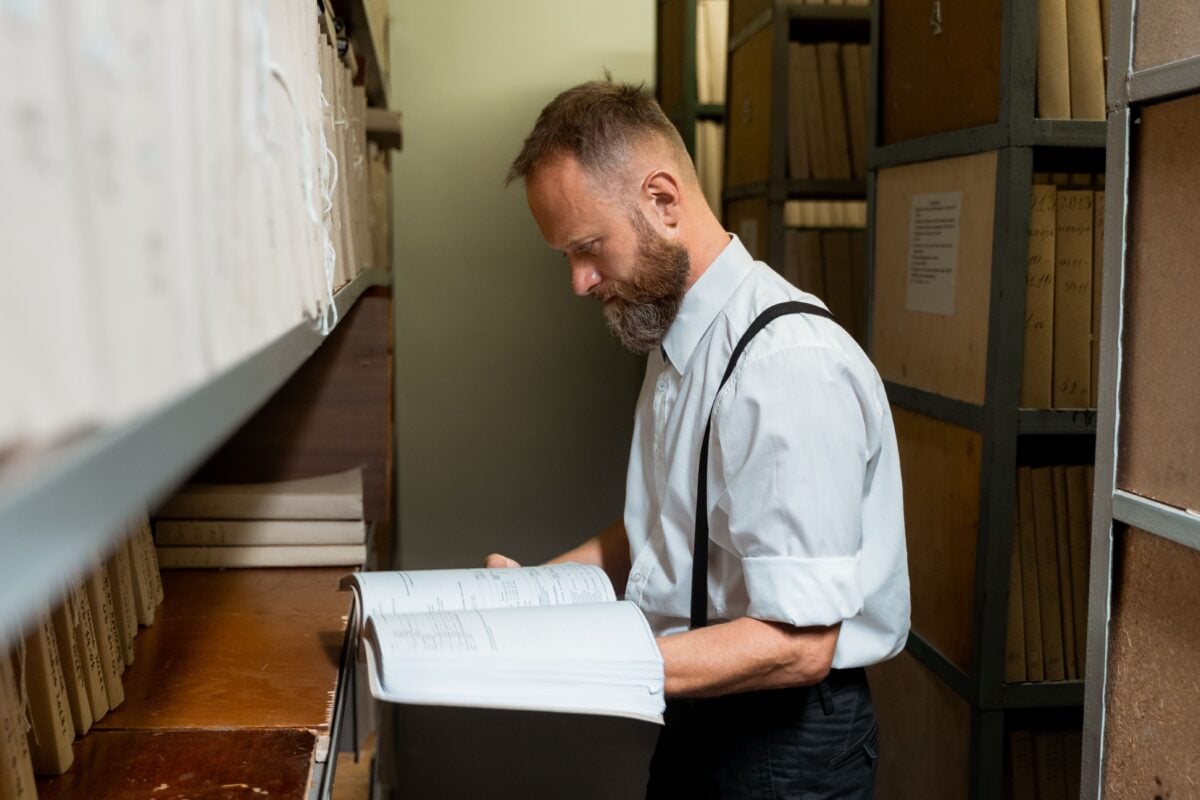
The B section is a good snapshot of Scotland itself. You get Gaelic landscape names like Blair, descriptive names like Boyd, occupational names like Baird and Bell, and Norman or territorial names like Bruce and Barclay.
That variety is exactly why surname lists can feel a bit messy. A tidy answer would be nice, but Scottish history did not bother organising itself for search intent.
How To Research A Scottish Surname Beginning With B
If you are trying to move from a surname list to actual family history, start with records rather than meaning alone. Surname meanings are useful, but records tell you where your people really were.
- Begin with civil records from 1855 onward. Scottish statutory registration covers births, marriages and deaths.
- Use census returns from 1841 to 1911 to track households, occupations and movement between parishes.
- Check Old Parish Registers for baptisms and marriages before civil registration.
- Look for spelling variants. Blair may stay fairly stable, but names like Baird, Barclay and Brodie can shift in older handwriting and indexing.
- Search by parish, county or burgh if the surname is common. Bell, Brown and Boyd especially need location context.
- Use wills, testaments and valuation rolls when you want to separate two men with the same name in the same district. Scottish genealogy is rarely a straight line.
For official Scottish family history research, ScotlandsPeople is the key starting point. Their guides to family history and surnames are useful if you want the record context behind the names. The National Records of Scotland also continues to digitise and catalogue material, so online access is better now than it was even a few years ago, though not everything useful has made the jump to a searchable database.
Common Themes In Scottish B Surnames
- Landscape: Blair comes from a Gaelic place-word.
- Occupation: Baird and Bell fit this group.
- Appearance: Boyd and Brown likely began as descriptive names.
- Territory and landholding: Barclay, Brodie and Bruce all show how place and power shaped surnames.
- Language overlap: Some names sit between Scottish, Irish, English and Norman traditions, which is very normal.
Are These Names Still Common In Scotland?
Some are, yes. Brown, Bell, Boyd and Blair remain widely recognisable in Scotland, while names like Bruce, Baird and Barclay still have a strong historical profile even if they feel less everyday depending on region.
Historical surname tables based on Scottish censuses, parish records, registration records, valuation rolls and wills show that many B surnames have long continuity in the record set. That does not make every bearer ethnically or culturally identical, of course. It just shows staying power. If you spend any time around school rolls, local football teams or old cemetery listings in Scotland, names like Brown, Bell and Boyd still crop up constantly.
Scottish Naming Traditions Behind The Surnames
Scottish surnames often sit beside equally old naming patterns in first names. Gaelic naming traditions preserved saints’ names, descriptive names and patronymics, while Scots and Lowland traditions absorbed occupational and territorial names more heavily.
That is one reason surnames and given names often cross over. Blair, Brodie, Bruce and Bryce all appear as first names as well as surnames in modern use. In older naming systems, the divide was not always as rigid as people assume.
If you are exploring more Scottish names, it helps to look at surnames and first names together. A family with the surname Baird might also preserve older Gaelic or saints’ names in the forenames, which can offer clues about region, religion and family habit. If you want to compare that with older female naming patterns, our guide to unusual Scottish girl names is a useful companion read.
FAQ About Scottish Last Names That Start With B
What is the most famous Scottish surname that starts with B?
Bruce is probably the most famous because of Robert the Bruce, one of the best-known figures in Scottish history.
Is Blair a Scottish surname?
Yes. Blair is a Scottish surname linked to the Gaelic word blàr, meaning a plain or field.
Is Baird a Scottish surname?
Yes. Baird is widely treated as a Scottish surname, often associated with the old word for a bard.
Are all Scottish surnames beginning with B Gaelic?
No. Some have Gaelic origins, but others come from Scots, Norman, English or territorial roots. Bruce and Barclay are good examples of non-Gaelic origins that became part of Scottish surname history.
Can a surname be Scottish even if it came from somewhere else first?
Yes. Scotland’s surname history includes families whose names arrived through migration, feudal landholding, church links and border movement. A name can have non-Scottish roots and still be long established in Scotland.
Where should I research Scottish surnames?
The main official starting point is ScotlandsPeople, especially for searching records and understanding how Scottish civil, church and census sources work.
Final Thoughts
Scottish last names that start with B cover a lot of ground. Some are tied to Gaelic words and Highland naming habits. Some grew from Lowland occupations. Some arrived with Norman families and became deeply Scottish over centuries.
If you are choosing a name, researching family history or filling out your Scottish names list, start with the names that have strong documentary roots: Baird, Barclay, Bell, Blair, Blane, Boyd, Bowie, Brodie, Brown and Bruce. Then follow the records, the region and the spelling variants. That is usually where the interesting stuff turns up.
For more name ideas, see our Scottish names hub and related guides to Scottish girl names and Scottish boy names. If your interest in surnames is tied to trip planning as well, you might also like our round-up of the best Scottish islands to visit or practical advice on traveling Scotland with a dog.