
Scottish first names that start with I include familiar choices like Ian, Isla, Isobel, and Iona, along with rarer forms such as Iain, Iseabail, and Ishbel. Some come from Scottish Gaelic, some are anglicised spellings, and some are tied to Scottish islands and place names.
This guide is part of our Scottish Names collection. Browse our complete Scottish Names directory for A–Z first names, surnames, Gaelic names, meanings, and themed collections.
If you are trying to pick a baby name, write a character, or just enjoy Scottish naming history, the letter I is a good one to explore. It gives you a mix of names that feel rooted in Scotland without all sounding the same.
This guide breaks down the best-known Scottish I names, how to say them, where they come from, and which ones still feel distinctive. We have kept to names with recognised Scottish use and avoided making up meanings where the record is fuzzy.
Scottish Names Beginning With
Choose which type of Scottish name you would like to explore.
Scottish Naming Traditions Behind I Names
Scottish names come from several strands at once. You will see Scottish Gaelic, Scots, Norse influence in the islands, Biblical names adapted through Gaelic, and surnames or place names that became first names over time.
That is why a Scottish name starting with I can look very different from the next one. Iain is a Gaelic form of John. Ian is the familiar anglicised version. Isla and Iona are both island names. Ivor comes into Scottish use through older Celtic and Norse naming patterns rather than straight Gaelic.
It is also very normal in Scotland to find several spellings of what is, effectively, the same name family. A name can have a Gaelic form used in Highland and Island contexts, plus a more widely recognised spelling that travelled across the UK and beyond. You see the same pattern across plenty of things associated with Scotland, where local forms and anglicised versions sit side by side without much drama.
Popular Scottish First Names That Start With I
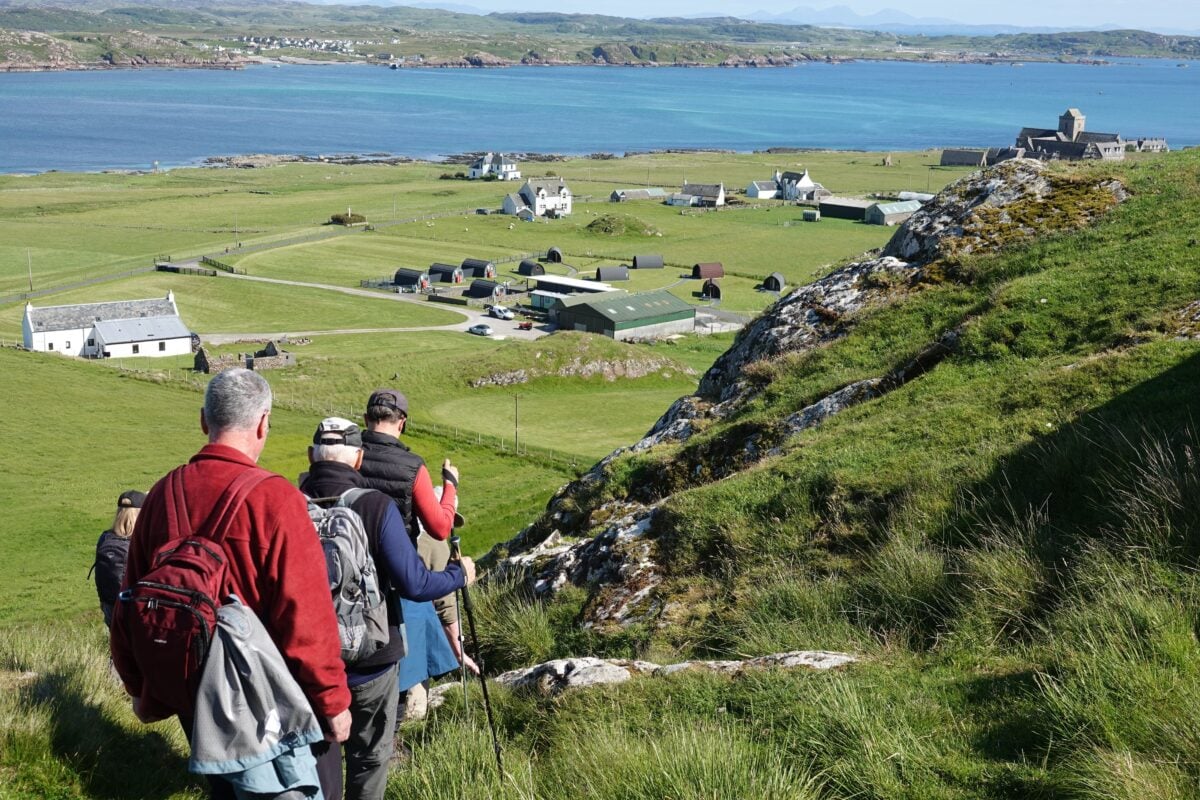
If you want the short shortlist first, these are the Scottish I names most people are likely to recognise: Ian, Iain, Isla, Isobel, and Iona. They cover boys’ names, girls’ names, island names, and Gaelic-rooted classics.
- Ian for a familiar, straightforward Scottish classic
- Iain if you want the Scottish Gaelic spelling behind Ian
- Isla for a place name with broad modern appeal
- Isobel for a distinctly Scottish twist on Isabel
- Iona for an island name with strong Scottish identity
The rest of the list is where things get more interesting, especially if you want a name that feels obviously Scottish without being overused.
Scottish Girl Names That Start With I
Isla
Gaelic or traditional form: Isla is used in Scots and English, and is associated with the Scottish island name Islay.
Meaning: It is usually treated as a Scottish place name. Some name dictionaries also note the Spanish word for island, but in a Scottish naming context the stronger association is with Islay, the island off Scotland’s west coast.
Pronunciation: EYE-lah.
Why it works: Isla is one of those names that sounds soft without being flimsy. It feels modern, but it is not made-up modern. It has real Scottish roots and broad recognition in both the UK and the US. It has also stayed high-profile in recent baby-name charts across Britain, so most people now know how to say it on sight, which was not always the case twenty years ago.
Famous bearer: While the name is strongly associated with Scotland as a place name, it is better known through widespread modern use than through one standout historic Scottish bearer.
Iona
Gaelic or traditional form: Iona is used as a Scottish place name and given name.
Meaning: Place name, taken from the island of Iona, the small Hebridean island off the west coast of Scotland.
Pronunciation: eye-OH-na.
Why it works: Iona has a calm, old-soul feel to it. The island itself carries religious and historical significance in Scotland, which gives the name a bit more depth than a pretty sound alone. If you already love Scottish islands, this one tends to land quickly.
Famous bearer: Iona is more strongly linked to the island than to a single famous namesake.
Isobel
Gaelic or traditional form: Iseabail is the Scottish Gaelic form commonly linked with Isobel.
Meaning: Usually understood as a Scottish form of Isabel, with the traditional meaning pledged to God.
Pronunciation: IZ-uh-bel.
Why it works: If Isabel feels a bit too polished and Isabella feels a bit too full red-carpet entrance, Isobel lands nicely in the middle. The spelling gives it a more Scottish character.
Famous bearer: Isobel Wylie Hutchison, the Scottish explorer, travel writer, and botanist, is an excellent real-world Scottish namesake.
Iseabail
Gaelic or traditional form: Iseabail.
Meaning: Scottish Gaelic form linked to Isabel and Isobel, traditionally interpreted as pledged to God.
Pronunciation: Often given for non-Gaelic speakers as roughly EE-sha-bal or ISH-a-byl, though pronunciation can vary by region and Gaelic tradition.
Why it works: This is the one for people who want the Gaelic form itself, not just the Scottish-flavoured spelling. It is uncommon and unmistakably rooted in Gaelic naming. If you are drawn to names that feel more traditional than trendy, it sits comfortably alongside other rare Gaelic picks.
Famous bearer: No widely recognised modern bearer stands out above the name itself, which is often the case with rarer Gaelic forms.
Ishbel
Gaelic or traditional form: Ishbel is a recognised Scottish form related to Isabel.
Meaning: As with Isabel and Isobel, it is generally understood as pledged to God.
Pronunciation: ISH-bel.
Why it works: Ishbel feels very Highland in style and has a sharper sound than Isobel. It is rare, but not obscure if you know Scottish naming traditions.
Famous bearer: Ishbel MacDonald, daughter of Prime Minister Ramsay MacDonald, is one of the best-known historical bearers.
Ilisa
Gaelic or traditional form: Ilisa is usually treated as a Scottish and English variant of Alisa or Elisa.
Meaning: The exact meaning depends on the underlying form, so it is safest to describe it as a variant of Alisa or Elisa rather than force a single Scottish meaning onto it.
Pronunciation: Usually ih-LEE-sah or ih-LISS-ah, depending on family preference.
Why it works: This is a much rarer choice in Scottish name lists. It may appeal if you want something familiar-looking but not often heard.
Famous bearer: No major Scottish bearer is strongly attached to the name in common reference works.
Idonea
Gaelic or traditional form: Idonea is not specifically a Gaelic form, but it appears in older naming records and has been noted in Scottish-oriented name lists.
Meaning: Usually traced to a medieval form meaning suitable or appropriate.
Pronunciation: eye-doh-NEE-ah or ih-DOH-nee-ah.
Why it works: It is unusual, antique, and a bit literary. Not for everyone, which is probably part of the appeal.
Famous bearer: No famous Scottish bearer is regularly cited.
Scottish Boy Names That Start With I
Ian
Gaelic or traditional form: Iain is the Scottish Gaelic original usually sitting behind Ian.
Meaning: The Scottish form of John, from the Hebrew name Yohanan, commonly given the meaning God is gracious.
Pronunciation: EE-an.
Why it works: Ian is one of the best-known Scottish boys’ names anywhere in the English-speaking world. It is simple, recognisable, and still feels properly Scottish rather than generic. It peaked decades ago in many English-speaking countries, so now it often reads as classic rather than fashionable, which plenty of parents prefer.
Famous bearer: Ian McKellen is not Scottish, but the name itself is so widely established in Scottish use that it hardly needs a passport stamp for credibility. For a Scottish association, Ian Rankin is an obvious one.
Iain
Gaelic or traditional form: Iain.
Meaning: Same root as Ian and John, usually given as God is gracious.
Pronunciation: Usually EE-an.
Why it works: Iain gives you the Gaelic-rooted Scottish spelling without being impossible for non-Scots to learn. You may have to correct the odd person who says eye-ain, but that is manageable.
Famous bearer: Iain Banks, the Scottish novelist, is a strong literary namesake.
Ivor
Gaelic or traditional form: Ivor is a Scottish form and variation also linked to Welsh Ifor and the Norse name Ívarr.
Meaning: Sources vary, but common interpretations include yew tree, archer, or bow warrior. Because the name has a long cross-cultural history, meanings are not always presented identically.
Pronunciation: EYE-vor.
Why it works: Ivor has an older, slightly patrician feel in modern ears, but it is distinctive and grounded in the wider naming history of Britain and the Norse world.
Famous bearer: There are famous Ivors in British culture, though not all are Scottish. The name’s Scottish relevance comes more from historical use than from one standout modern Scottish bearer.
Irvin
Gaelic or traditional form: Irvin is a Scottish surname and place-name derived first name.
Meaning: Often given as handsome or fair of face in some modern name lists, though name traditions around Irvin, Irvine, and Irving can overlap.
Pronunciation: ER-vin.
Why it works: Irvin feels old-school and surname-led, which will suit some families and put off others. That is fine. Not every Scottish name has to sound dainty and islandy.
Famous bearer: No singular Scottish bearer dominates the name, but it sits in a wider family with Irvine and Irving.
Irving
Gaelic or traditional form: Irving is another Scottish surname and place-name based first name.
Meaning: It is commonly explained through Scottish place-name origins, with interpretations including green river or sea friend in modern naming sources.
Pronunciation: ER-ving.
Why it works: This one has a sturdy, traditional feel and a strong surname-to-first-name style. It is less common for babies now, which may be exactly why some people will like it.
Famous bearer: Washington Irving is the best-known Irving internationally, though the name’s origin is Scottish rather than American.
Iagan
Gaelic or traditional form: Iagan.
Meaning: It is described as a masculine Scottish Gaelic variant of Eoghan, which is often anglicised as Owen. Meanings attached to Eoghan are debated, so it is safest to say Gaelic variant of Eoghan rather than oversimplify.
Pronunciation: This can vary, but non-Scots may hear it roughly as EE-ah-gan or YAH-gan depending on Gaelic treatment.
Why it works: Iagan is rare and very much a specialist choice. If you want a name people already know, keep walking. If you want something with genuine Gaelic roots, it is worth a look.
Famous bearer: No widely known modern Scottish bearer is regularly cited.
Place Names Used As Scottish First Names That Start With I
Two of the strongest Scottish first names that start with I are also place names: Isla and Iona. That is not unusual in Scotland.
Isla is commonly linked with Islay, the Hebridean island. Iona comes straight from the island of the same name. Both names feel rooted without being heavy, and both travel well outside Scotland.
You will also occasionally see Islay used directly as a given name. It is less common than Isla and may require more pronunciation help. For many families, Isla is the easier everyday choice. If your taste runs strongly toward map-based names, Scotland has plenty beyond these two, especially across the islands and Highlands.
How To Choose Between Gaelic and Anglicised Spellings
This is often the real decision. Not just which name you like, but which version of the name.
For example:
- Ian is the familiar anglicised form
- Iain is closer to the Scottish Gaelic tradition
- Isobel feels Scottish in standard English spelling
- Iseabail is the Gaelic form behind it
If you live outside Scotland and want fewer pronunciation corrections, Ian and Isobel are easier. If honouring Gaelic heritage matters more, Iain and Iseabail carry that more clearly.
There is no wrong answer here. A Scottish name does not stop being Scottish because it is easier for a teacher in Texas or Kent to read aloud.
Which Scottish I Names Feel Most Distinctive?
If you want something common enough to be usable but not flat-out ordinary, these are the standouts:
- Iona for a calm, place-based Scottish girls’ name
- Isobel for a classic that feels more Scottish than Isabel
- Ishbel for a rarer Highland-leaning option
- Iain for a traditional boys’ name with clear Scottish identity
- Ivor for something older and less expected
Ian and Isla are the most broadly familiar. That is a strength if you want easy spelling and recognition. It is less ideal if your aim is to avoid sharing a name with half the class and at least one dog.
Scottish First Names That Start With I: Quick Reference List
| Name | Usual Use | Type | Meaning or Origin | Pronunciation |
|---|---|---|---|---|
| Ian | Boy | Anglicised Scottish form | Form of John, God is gracious | EE-an |
| Iain | Boy | Scottish Gaelic | Form of John, God is gracious | EE-an |
| Isla | Girl | Scottish place name | Associated with Islay | EYE-lah |
| Iona | Girl | Scottish place name | Island name | eye-OH-na |
| Isobel | Girl | Scottish form | Pledged to God | IZ-uh-bel |
| Iseabail | Girl | Scottish Gaelic | Gaelic form related to Isabel | EE-sha-bal |
| Ishbel | Girl | Scottish form | Related to Isabel, pledged to God | ISH-bel |
| Ivor | Boy | Scottish usage with Norse and Celtic links | Linked to Ívarr or Ifor | EYE-vor |
| Irvin | Boy | Surname-based Scottish name | Associated with handsome or fair of face | ER-vin |
| Irving | Boy | Surname-based Scottish name | Scottish place and surname origin | ER-ving |
| Ilisa | Girl | Variant form | Variant of Alisa or Elisa | ih-LEE-sah |
| Idonea | Girl | Medieval form in Scottish lists | Suitable or appropriate | eye-doh-NEE-ah |
| Iagan | Boy | Scottish Gaelic variant | Variant of Eoghan | EE-ah-gan |
Are Scottish I Names Mostly for Girls or Boys?
It is fairly balanced, though the most internationally visible names may skew female because Isla has become so well known. On the boys’ side, Ian and Iain are the core Scottish classics.
If you want a distinctly Scottish girls’ list, start with Isla, Iona, Isobel, Iseabail, and Ishbel. For boys, begin with Ian, Iain, Ivor, Irvin, and Irving.
FAQ About Scottish First Names That Start With I
What is the most popular Scottish first name that starts with I?
Ian and Isla are the two most widely recognised Scottish I names internationally. Ian is a long-established Scottish boys’ name, while Isla has become especially popular as a girls’ name. In recent name rankings across the UK, Isla has regularly sat near the top for girls, while Ian now feels more established than rising.
Is Ian a Scottish name?
Yes. Ian is a Scottish form of John and is usually treated as the anglicised form of the Scottish Gaelic Iain.
What is the Gaelic form of Ian?
The Gaelic form is Iain. Both Ian and Iain are used in Scotland, but Iain is the form most directly tied to Scottish Gaelic.
Is Isla actually Scottish?
Yes. In Scottish use, Isla is strongly associated with Islay, the island on Scotland’s west coast. That Scottish place-name link is the reason it appears so often in Scottish name lists.
How do you pronounce Iseabail?
A common guide for non-Gaelic speakers is EE-sha-bal, though Gaelic pronunciation can vary by region and speaker.
What are rare Scottish names beginning with I?
Rarer options include Iseabail, Ishbel, Iagan, Idonea, and Ilisa. These are less common than Ian, Isla, or Iona, and some are much more traditional or niche in style.
Final Thoughts on Scottish First Names That Start With I
The best Scottish first names that start with I cover a surprisingly wide spread. Ian and Iain give you a classic Scottish boys’ route. Isla and Iona bring in Scottish islands. Isobel, Iseabail, and Ishbel show how one name family can branch into standard, Gaelic, and distinctly Scottish forms.
If you want the easiest names to live with day to day, start with Ian, Isla, Isobel, and Iona. If you want something more rooted in Gaelic or old Scottish usage, look at Iain, Iseabail, Ishbel, and Iagan.
And if you have fallen down the Scottish names rabbit hole completely, fair enough. It is a good one. If you end up wandering from names into places, culture, and family history, that tends to happen with Scotland.