
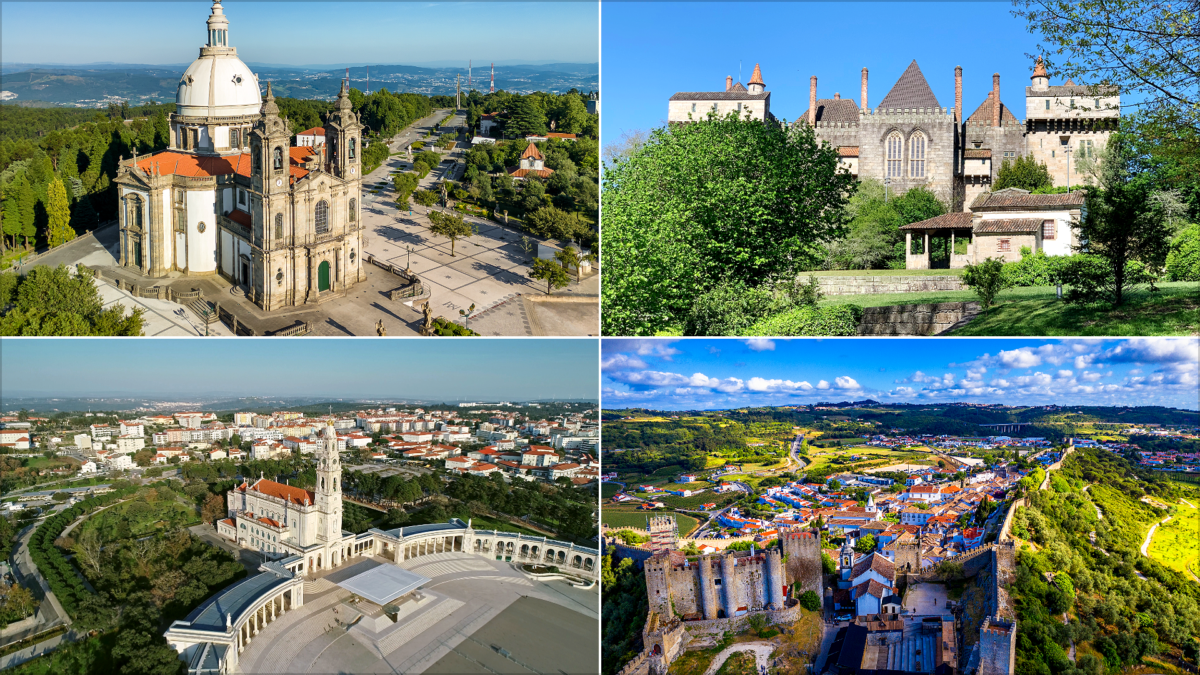

Portugal has a habit of being reduced to Lisbon, Porto and a long strip of Algarve beaches. That is slightly unfair on a country that keeps some of its best stories in places with medieval walls, hilltop castles and populations smaller than a busy football stadium.
The smaller towns are where things become interesting. One was passed between Portuguese royals as a wedding gift, another grew around boulders the size of houses, and one asks visitors to climb nearly 600 steps for fun. Portugal clearly has a different definition of a relaxing holiday.
Plenty of Portugal tours packages already include stops beyond the major cities, so organised tour groups worked this out long ago. Independent visitors can create a similar route with a hire car, comfortable shoes and a reasonably loose schedule.
Before setting off, you can compare car hire in Portugal through DiscoverCars, bringing rental options together in one place so you can choose something that suits your route and budget. It is a useful starting point whether you are collecting a car in Lisbon or planning a longer journey through the country. Customer support is available 24/7, too. Check each offer’s deposit, fuel policy and collection details before booking, then leave a little room in your itinerary for the villages and roadside cafés that were never part of the original plan.
This road trip connects five memorable places, beginning near Lisbon before heading north and finishing with a longer detour toward the Spanish border. Anyone spending extra time in the capital can also browse our wider collection of Portugal travel guides before setting off.
Portugal Small-Town Road Trip at a Glance
| Stop | Known For | Suggested Time | Best Travel Tip |
|---|---|---|---|
| Óbidos | Medieval walls and ginjinha | Half a day | Walk the walls only in dry weather |
| Fátima | The Sanctuary of Fátima | Two to three hours | Avoid major pilgrimage dates for a quieter visit |
| Guimarães | Portugal’s early history | Half a day | Leave time for the historic lower town |
| Braga | Bom Jesus do Monte | Half a day | Take the funicular up and walk down |
| Monsanto | Houses built around giant boulders | Half a day | Visit early or late to avoid the heat |
What to Pack for This Portugal Road Trip
This is not an especially difficult route, but cobbled lanes, castle steps and uneven paths appear regularly. The person wearing brand-new white trainers will usually discover this first.
- Comfortable walking shoes with reliable grip
- A refillable water bottle, especially during summer
- Sun protection and a light layer for cooler evenings
- A small amount of cash for drinks, cafés and parking
- A camera or phone with plenty of available storage
Óbidos: The Medieval Town Given as a Wedding Gift
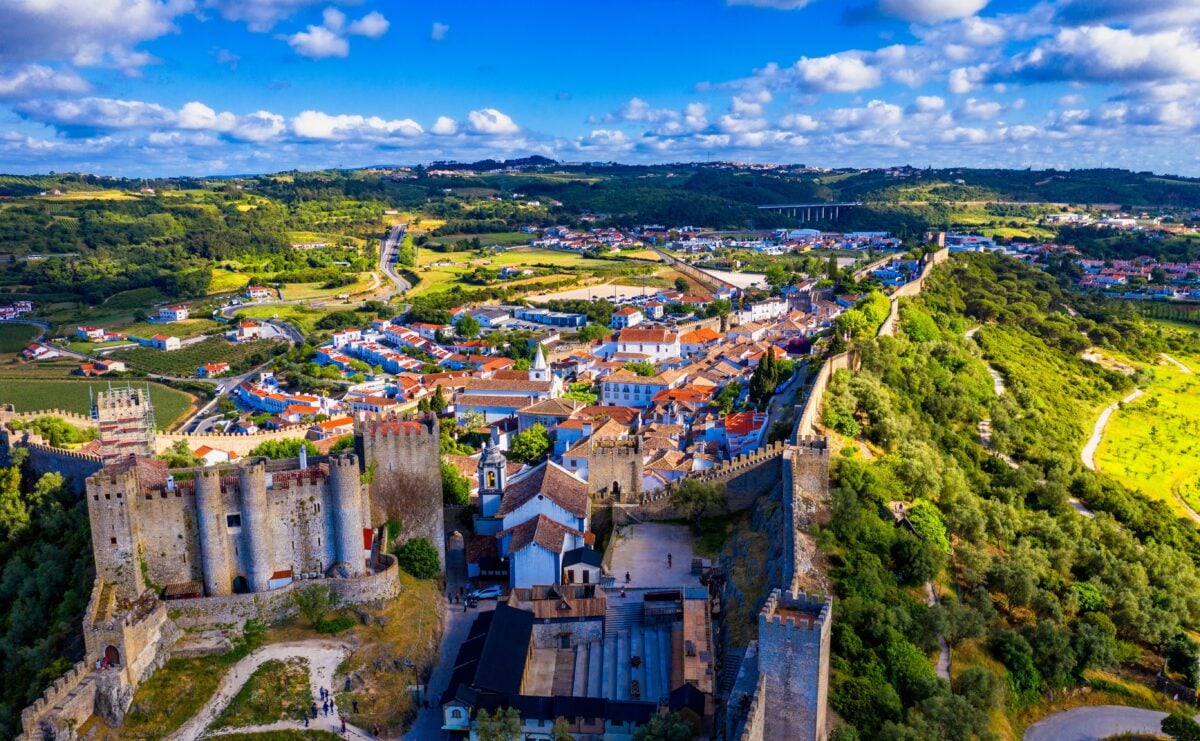
About an hour north of Lisbon, Óbidos hides its old town inside a remarkably complete ring of medieval walls. Visitors can walk along sections of the wall and look down over terracotta roofs, whitewashed houses and the surrounding countryside.
There is an important catch. The walls have limited protection in places, the stone can become slippery, and the drops are very real. Save the walk for a dry day, wear decent shoes and avoid attempting it after sampling the local liqueur.
At street level, Rua Direita runs through the historic centre past bakeries, small bars, craft shops and flower-covered houses trimmed in blue and yellow. Óbidos also has an impressive literary side, including bookshops tucked into unexpected buildings.
The town became closely associated with Portugal’s queens after King Dinis gave it to Queen Isabel in the 13th century. It subsequently formed part of the House of the Queens for centuries. You can read more about the town’s royal history through the official Visit Portugal guide to Óbidos.
Before leaving, order a ginjinha de Óbidos, a sweet sour-cherry liqueur often served in a small chocolate cup. You drink the liqueur and eat the cup afterwards, which is both efficient and far more enjoyable than washing glasses.
Óbidos also hosts seasonal events, including its popular medieval market. Costumes, performances, food stalls and historical entertainment spread through the walled town, creating an atmosphere that is lively, theatrical and only occasionally interrupted by someone checking Google Maps.
Óbidos is one of the easiest additions to a Lisbon itinerary. Our guide to the best day trips from Lisbon includes more ideas for exploring outside the capital without reorganising your entire holiday.
Fátima: Portugal’s Most Important Pilgrimage Destination
Roughly an hour north of Óbidos, Fátima feels very different from the walled streets and cherry liqueur of the previous stop. It is one of the world’s best-known Catholic pilgrimage destinations and attracts visitors from across Portugal and far beyond.
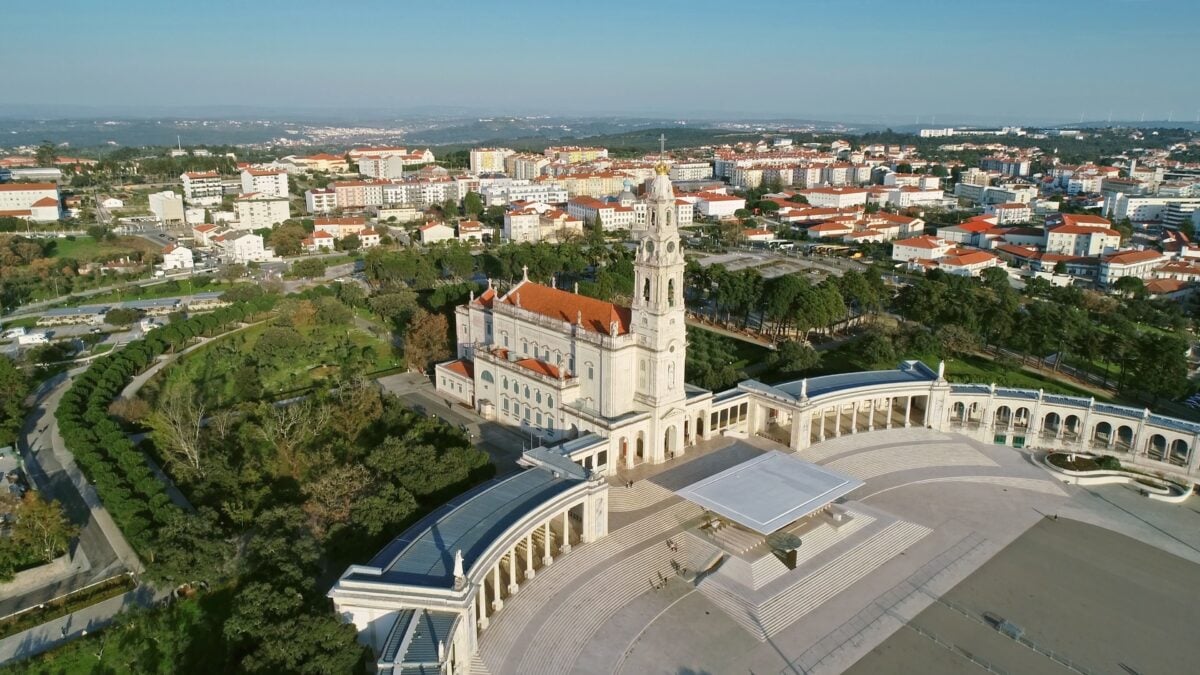
The story dates to 1917, when three shepherd children reported a series of apparitions of the Virgin Mary near Cova da Iria. The religious complex that developed around the site now includes the Chapel of the Apparitions, the Basilica of Our Lady of the Rosary and the modern Basilica of the Most Holy Trinity.
The enormous prayer area between the basilicas gives Fátima much of its visual impact. Even when it is quiet, the scale of the space is striking. During the major pilgrimage celebrations in May and October, it can fill with vast crowds.
You do not need to be religious to appreciate the atmosphere. Visitors can observe pilgrims crossing parts of the sanctuary on their knees, light candles or sit quietly near the Chapel of the Apparitions. Just remember that this is an active place of worship rather than an attraction where every corner needs a selfie.
The official Visit Portugal Sanctuary of Fátima guide provides an overview of the principal religious buildings and spaces.
Allow at least two hours for Fátima. Give yourself longer when a service is taking place or if you plan to visit Aljustrel, the nearby village associated with the three children.
Sponsored: Travelers planning a wider Catholic itinerary can learn more about this fatima and lourdes pilgrimage, which connects Fátima with Lourdes and sacred sites in Spain.
Guimarães: The City Where Portugal Began
Continue north and you eventually reach Guimarães, a city closely tied to the formation of Portugal. The famous words Aqui nasceu Portugal, meaning “Portugal was born here,” appear on a section of wall near the historic centre.
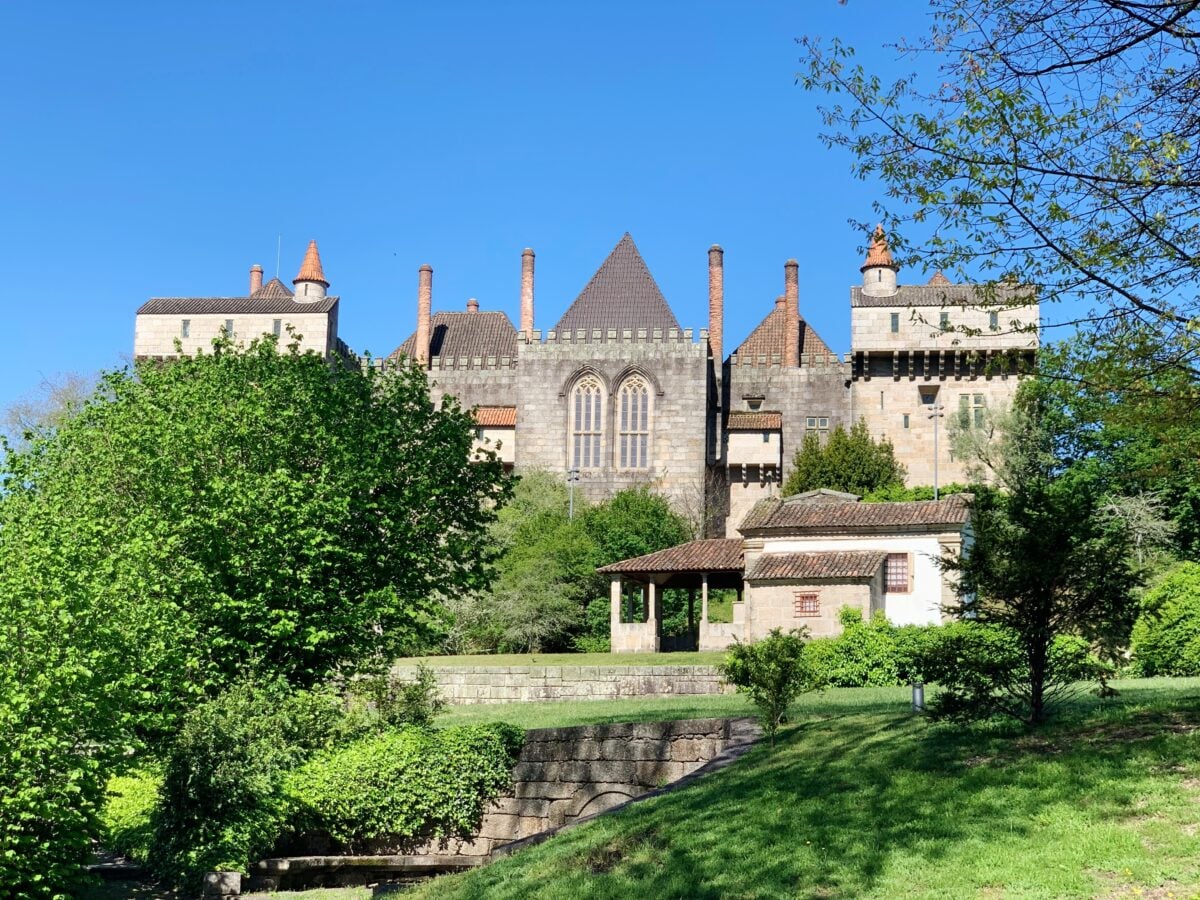
Guimarães is associated with Afonso Henriques, traditionally recognised as Portugal’s first king. The city’s hilltop castle, with its heavy granite walls, battlements and central keep, looks exactly like the castle most of us drew at school before perspective became a problem.
Beside it stands the Palace of the Dukes of Braganza, distinguished by a collection of tall brick chimneys. The palace contains period furniture, tapestries, weapons and decorative objects, making it worth entering rather than simply photographing the roof.
The lower historic centre deserves just as much attention. Cobbled lanes open onto small squares framed by arcades, balconies and traditional buildings. Largo da Oliveira is a particularly pleasant place to stop for coffee, lunch or the pastry you had no intention of ordering until it appeared in the display cabinet.
Guimarães’ historic centre is recognised by UNESCO as a World Heritage Site for its connection to Portuguese identity and its well-preserved development from a medieval settlement into a modern town.
Do not treat Guimarães as a castle-only photo stop. A slow afternoon gives you enough time to explore the monuments, wander through the old streets and enjoy the city after some of the organised groups have moved on.
Braga: Churches, Cafés and Nearly 600 Steps
Braga sits around half an hour from Guimarães and combines ancient religious landmarks with a busy student population. It is one of Portugal’s oldest cities, but the terraces, restaurants and university crowd stop it from feeling like an outdoor museum.
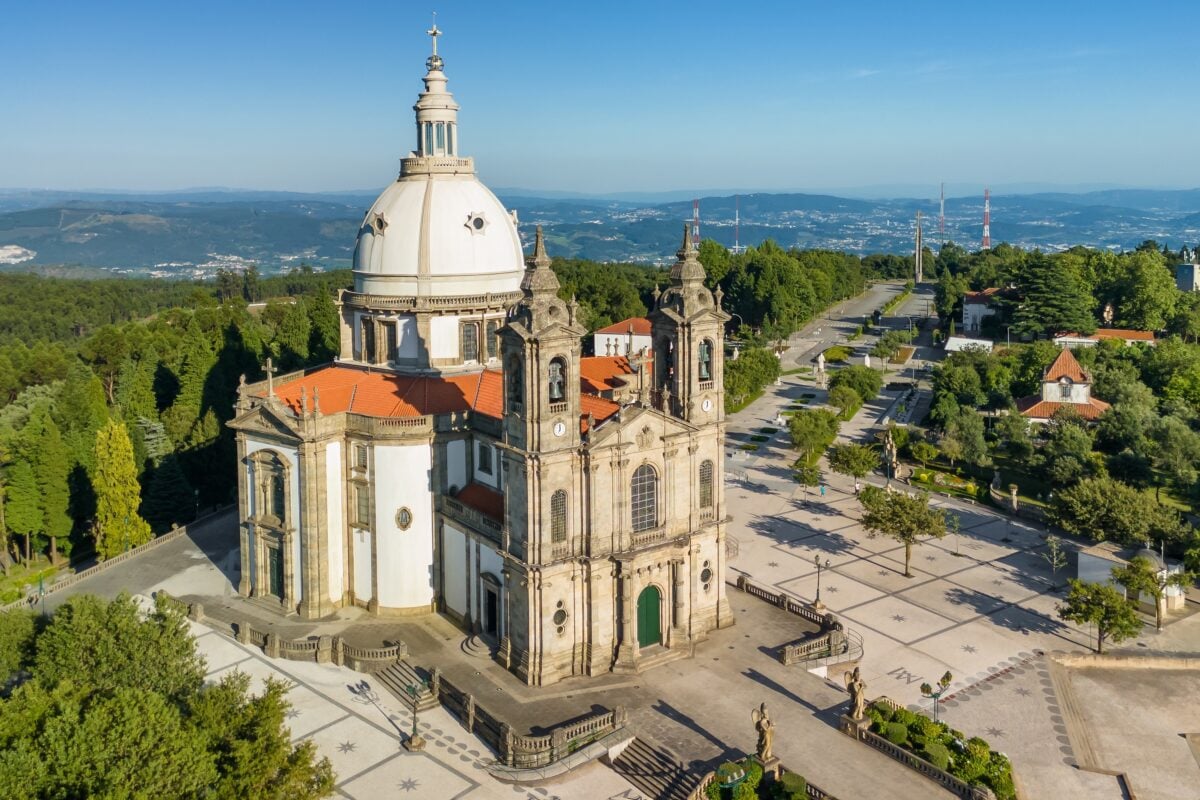
The headline attraction is Bom Jesus do Monte, a hilltop sanctuary east of the city. Its baroque staircase zigzags up the wooded slope through terraces decorated with fountains, statues and chapels.
The climb involves close to 600 steps. Walking to the top earns excellent views and an entirely reasonable sense of superiority. There is, however, another option.
A historic water-powered funicular carries passengers up the hillside. Taking the funicular to the top and walking down is kinder on the knees and still allows you to see the staircase properly. This is not cheating. It is strategic sightseeing.
Back in central Braga, visit the cathedral, wander through the old streets and stop at one of the cafés around the historic centre. The official Visit Portugal guide to Braga provides additional ideas for exploring the city and its principal landmarks.
Braga is especially atmospheric during Holy Week, when religious processions move through the city with candles, music and traditional ceremonies. Accommodation becomes busier around major events, so booking ahead is sensible.
Monsanto: The Portuguese Village Built Around Boulders
The final stop requires a significant detour toward Portugal’s eastern border, but Monsanto is not the sort of place you casually confuse with anywhere else.
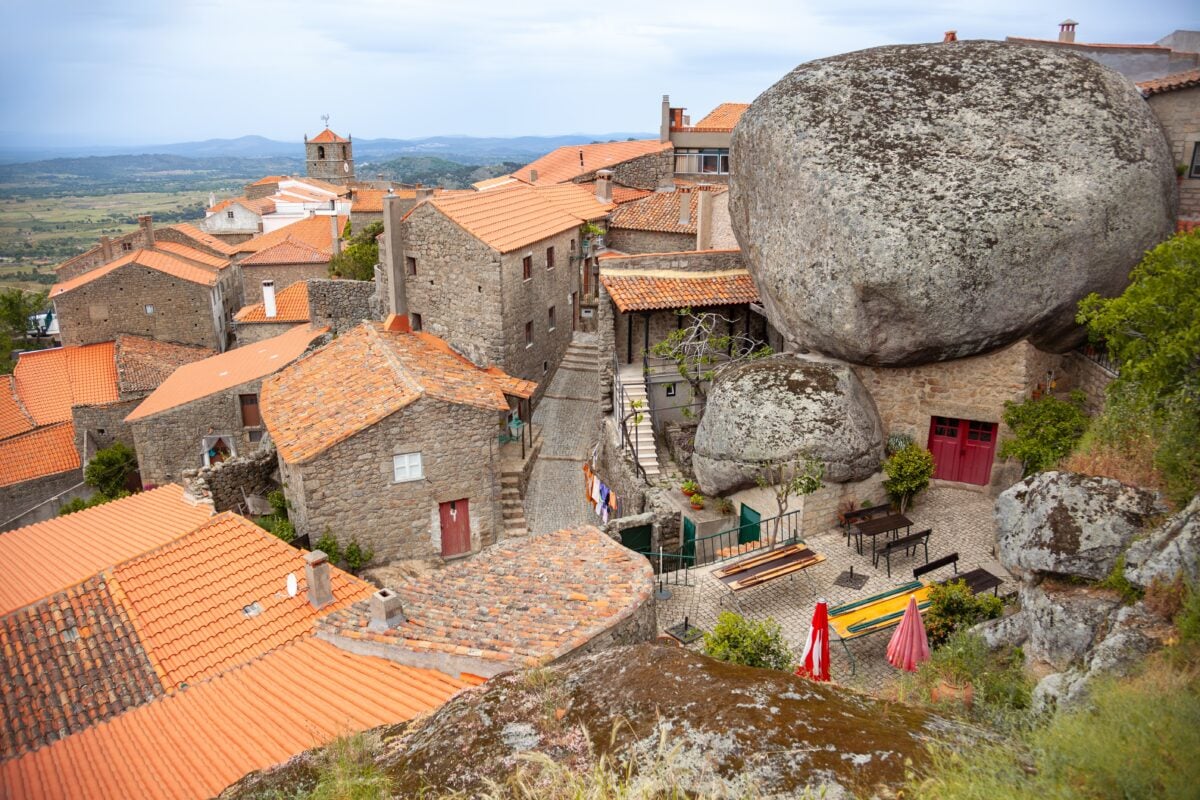
The village spreads across a steep granite hill where enormous boulders have been incorporated into houses, walls and lanes. In several places, buildings appear to have been squeezed into whichever gaps the rocks were willing to provide.
Portugal named Monsanto its “most Portuguese village” in 1938. More recently, its dramatic landscape reached a new audience after appearing as a filming location in House of the Dragon.
The walk through the village is steep and uneven. Narrow lanes climb past stone houses, tiny gardens and cats that appear far less troubled by the gradient than everyone else.
Continue upward to the remains of Monsanto Castle. From the summit, broad views stretch across the surrounding plains toward the Spanish border. The climb is exposed in places, so carry water and avoid the hottest part of a summer afternoon.
Early morning and late afternoon are the best times to explore. Temperatures are usually more comfortable, day-tripping crowds are thinner, and the lower light gives the granite a warmer colour.
How to Plan the Route From Lisbon
Trying to cover all five stops in a single rushed trip would mean spending too much time staring at motorway signs and not enough time inside the towns. A slower route works better.
- Begin in Lisbon and spend at least two or three days exploring the capital.
- Drive to Óbidos before continuing to Fátima.
- Stay overnight around Coimbra, Fátima or central Portugal.
- Continue north to Guimarães and Braga, using either city as a base.
- Add Monsanto as a separate eastern detour rather than forcing it into an already busy northern itinerary.
Before collecting a hire car, leave some time for Lisbon itself. Eating well does not have to mean falling into the nearest restaurant facing a major square. Our guide to restaurants in Lisbon covers a range of places to eat around the city.
Anyone watching their budget can also use our list of things to do in Lisbon for under €15. Saving money in the capital leaves more room in the budget for road tolls, pastries and the occasional parking decision you immediately regret.
Is This Portugal Road Trip Worth It?
Yes, particularly if you want to see more than Portugal’s largest cities and busiest coastal resorts. Each stop offers a different side of the country, from royal history and religious traditions to university life and villages shaped by the landscape.
Óbidos is the easiest addition to a Lisbon trip, while Guimarães and Braga work naturally as a northern pairing. Fátima offers a completely different atmosphere, and Monsanto rewards visitors willing to make the longer journey east.
You could rush through them, collect five photographs and tick five boxes. A better plan is to choose the places that interest you most, allow time for an unplanned coffee or two, and accept that old Portuguese streets were not designed with wheeled suitcases in mind.
