
Moving abroad sounds romantic until your dining table disappears under passport photos, visa forms, flight confirmations, vaccine records, and sticky notes saying “DO NOT FORGET THIS.” I’ll be honest: the paperwork can feel like a second full-time job if you leave it until the month before you fly.
The trick is to stop thinking of it as one giant admin monster. Break it into travel, identity, health, money, and arrival documents.
Here’s how to get your documents in order without panic-packing your passport at midnight.
Quick Answers: Moving Abroad Paperwork
- Start with your passport. Check expiry dates, blank pages, name accuracy, and whether your destination expects extra validity beyond your arrival date.
- Sort your visa or residence route early. Some applications require police records, financial proof, medical checks, or apostilled documents.
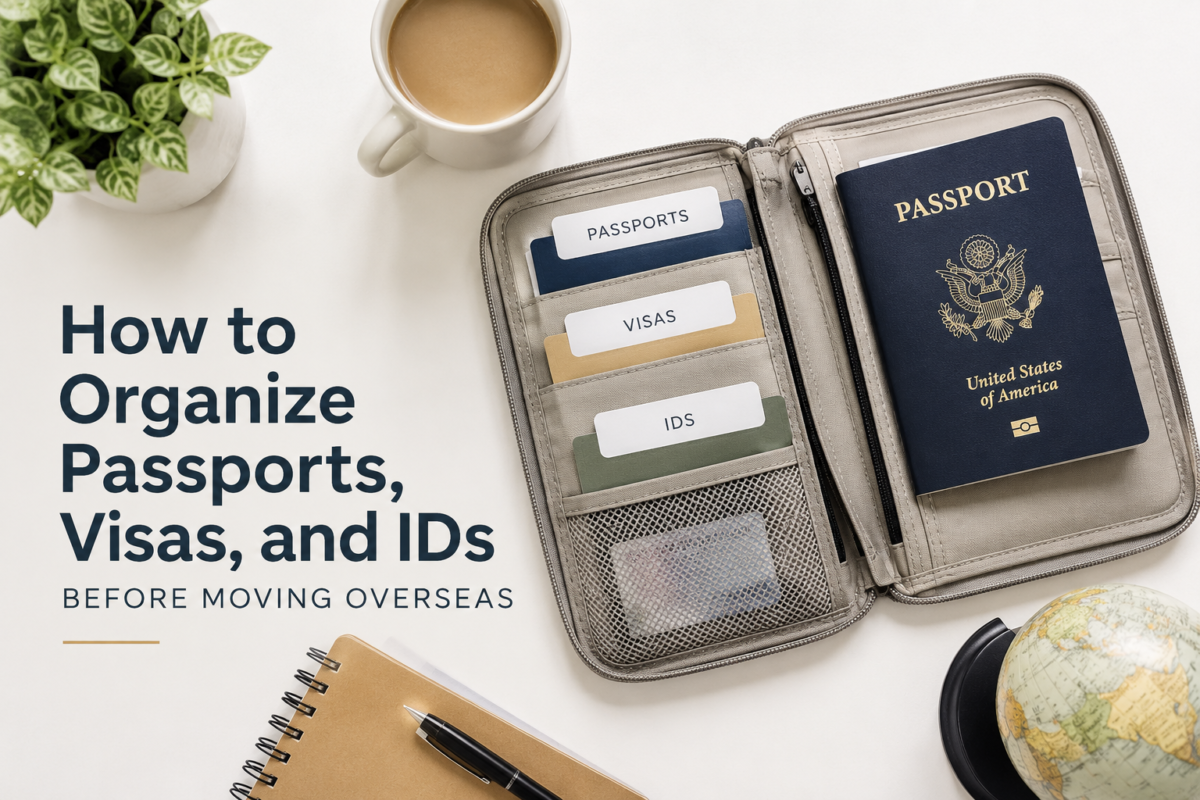
- Create one master folder. Keep digital and paper copies of your passport, visa approval, insurance, prescriptions, lease, employment letter, and emergency contacts.
- Bring originals, not just scans. Border officers, banks, landlords, schools, and local authorities may ask to see physical documents.
Step One: Do a Passport Reality Check
Your passport is the document everything else leans on. Before booking flights, applying for visas, or signing an overseas lease, check three things: expiry date, name consistency, and physical condition.
If your passport is close to expiring, deal with it before the move. Also, name consistency matters more than people realize. Your passport, airline ticket, visa documents, trusted traveler profile, and immigration paperwork should match exactly. A missing middle name or mismatched surname after marriage can turn a smooth travel day into a help-desk marathon.
Also check the passport’s condition. Water damage, torn pages, peeling laminate, or unreadable information can cause trouble at check-in or border control. If it looks like it survived a festival, a monsoon, and three backpacking trips, replace it.

Step Two: Make a Visa and Residency Checklist
This is where moving abroad becomes very different from taking a long vacation. A tourist entry stamp usually does not give you the right to work, rent long-term, enroll children in school, access public health systems, or stay indefinitely.
Create a checklist for your exact move. Include:
Employment or Study Documents
You may need an employment contract, university admission letter, sponsorship certificate, proof of income, or business registration documents.
Civil Documents
Birth certificates, marriage certificates, divorce decrees, adoption records, and name-change documents may be required. Some countries ask for apostilles, certified translations, or recently issued copies.
Financial Proof
Bank statements, pension letters, tax returns, or proof of remote income may be needed for residence permits, digital nomad visas, student visas, or family reunification.
If you need to obtain residency in Bulgaria, for example, you may decide to discuss with local specialists who can help you obtain it.
Criminal Record Checks
Several countries require background checks for long-term residence. These can take longer than expected, especially if fingerprints are involved.
Do not assume another traveler’s timeline applies to you. A single person moving for a job, a couple retiring overseas, and a family relocating with children can face completely different document requirements.
Step Three: Build an Airport Folder
Even if your visa is approved and your passport is valid, your travel day still deserves its own folder. I like to keep this separate from the wider moving file because these are the papers you may need quickly at the airport or border.
Include printed and digital copies of:
- Passport identity page
- Visa or residence approval
- Flight details
- Accommodation address for arrival
- Travel insurance
- Return or onward ticket, if required
- Proof of funds, if relevant
- Prescription notes for medication
- Pet documents, if traveling with animals
- Emergency contacts
This folder is especially useful if you have a multi-leg journey. Long moves often involve connecting flights, overnight layovers, extra luggage, and the kind of tiredness where you forget your own postcode.
Step Four: Check Safety, Health, and Entry Rules
Before you go, look up your destination on the Travel Advisories pages from the U.S. Department of State. These pages cover safety risks, local laws, crisis information, and country-specific guidance for U.S. citizens abroad.
Health paperwork is easy to forget until someone asks for it. Depending on where you are moving, you may need vaccination records, a yellow fever certificate, prescription documentation, or proof of health insurance. The CDC Travelers’ Health destination pages are useful for checking health recommendations by country.
If you take regular medication, ask your doctor for a signed letter using the generic drug names, not just U.S. brand names. Some common prescriptions are restricted abroad, and carrying large quantities without documentation can create problems at customs.
Step Five: Prepare for Life Admin After Arrival
The paperwork does not stop when you land. In the first few weeks, you may need to register with local authorities, open a bank account, get a tax number, set up health coverage, sign a lease, or exchange a driver’s license.
This is where copies save your sanity. Bring more than you think you need: passport copies, passport photos, proof of address, bank letters, insurance certificates, and printed confirmation of your visa or residence status.
Two Scots Abroad has a useful guide on moving to Scotland from England that shows how even a move without international visa hurdles can still involve benefits, housing, legal differences, and practical admin. That is the real lesson: every move has paperwork, even the “easy” ones.
Step Six: Back Everything Up Properly
A phone full of screenshots is not a document system. Before leaving, create a secure digital backup with clearly labeled files. Use names you will understand when jet-lagged, such as:
- Passport-Name-ExpiryDate
- VisaApproval-Country-Year
- TravelInsurance-PolicyNumber
- PrescriptionLetter-DoctorName
- Lease-FirstMonthAddress
Store copies somewhere secure and accessible, and share emergency access with one trusted person. Keep paper copies in your carry-on, not your checked luggage. Checked bags are exactly where important documents go to have an adventure without you.
Step Seven: Keep a “Do Before You Leave” List
The most stressful moving-abroad tasks are often not the dramatic ones. They are the tiny, boring ones that snowball if forgotten.
Before departure, consider whether you need to:
- Renew your passport
- Update your name on travel accounts
- Complete the TSA PreCheck Application Process.
- Notify banks and credit card companies
- Order international driving documents, if applicable
- Request medical and dental records
- Cancel or pause subscriptions
- Set up mail forwarding
- Scan essential documents
- Check baggage rules for every airline on your route
Do these in batches. Passport and visa tasks first. Health and insurance next. Banking, phones, and address changes after that. The goal is not to make moving abroad effortless. It is to make it predictable.
Final Thoughts
Moving abroad will always involve a bit of chaos. There will be forms with confusing wording, printers that stop working at the worst time, and at least one moment when you wonder whether you really need twelve copies of the same document.
You probably do not.
But you do need a valid passport, the right visa or residence documents, reliable backups, and a simple system for finding everything fast. Once the paperwork is under control, the move starts to feel less like an administrative obstacle course and more like what it actually is: the beginning of a new chapter.
