
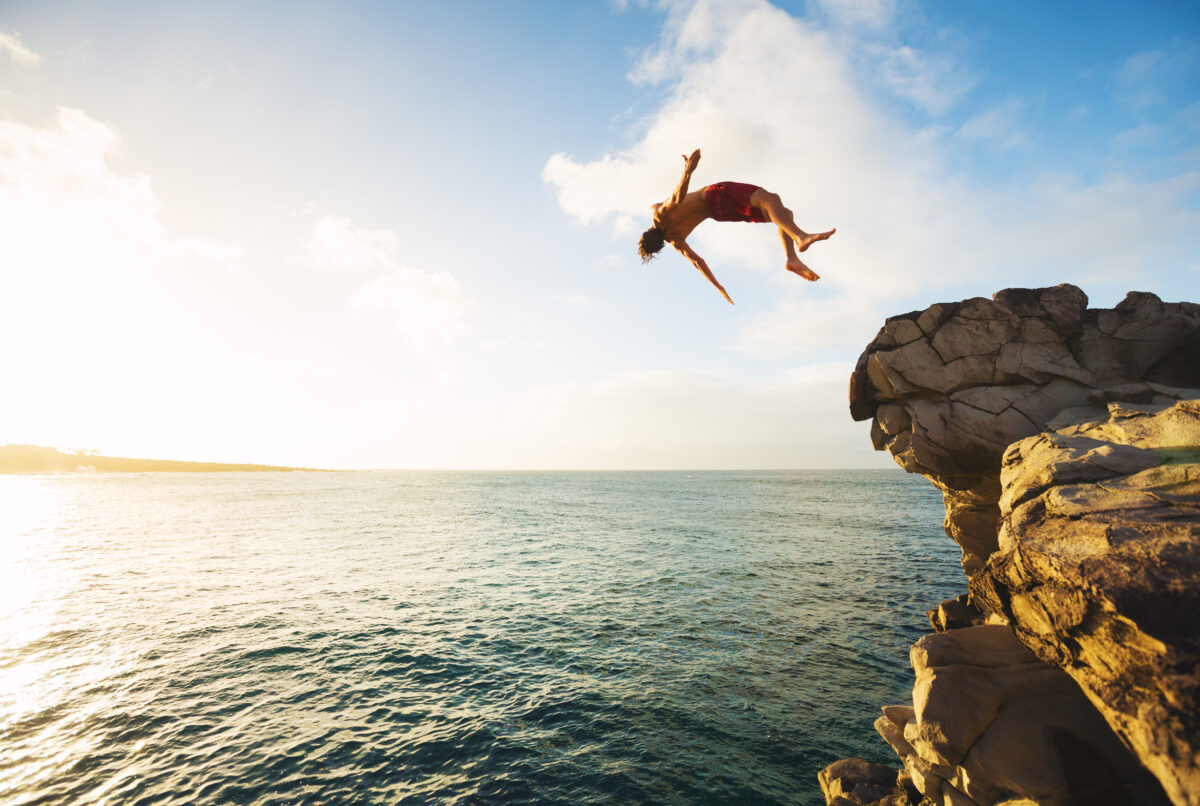
There’s a moment, right before your toes leave the rock, when every cliff jumper asks themselves the same question: “Why do we keep doing this?” Then you’re airborne, the water rushes up to meet you, and you remember exactly why. We’ve spent years chasing that feeling across the country road-tripping to desert reservoirs, hiking into granite swimming holes, and treading water below sandstone walls waiting for our buddies to work up the nerve. Along the way, we’ve compiled our definitive list of the ten best cliff jumping spots in the United States.
Before we dive in (pun fully intended), a quick word on safety, because we take this seriously. Always scout your landing zone before you jump (I use the rock throw method but thats probably not the correct way to do it). Water levels change season to season, and a spot that was 20 feet deep last summer can hide a submerged log this year. Never jump into water you haven’t personally checked, always land feet first with your body tight, and know that anything above 25 feet hits hard even with perfect form. Check local regulations too…. some of these spots have rules about where and when jumping is allowed, and rangers do enforce them. Okay, lecture over. Let’s go jumping.
1. Hell’s Gate, Possum Kingdom Lake — Texas
We’re starting with our home-state favorite, and honestly, it’s not just hometown bias. Hell’s Gate is a pair of towering limestone cliffs that frame the entrance to a cove on Possum Kingdom Lake, about 90 minutes west of Fort Worth. The walls here are legitimately world-class. Red Bull brought its Cliff Diving World Series here, with pros launching from platforms nearly 90 feet up. We are not pros, and we stick to the lower shelves in the 15-to-25-foot range, which still deliver plenty of stomach-drop.
What we love about Hell’s Gate is the scene. On summer weekends, the cove fills with boats rafted together, music drifting across surprisingly clear blue-green water, and a steady rotation of jumpers climbing the rock. You’ll need a boat (rentals are available at several marinas on the lake), and we recommend going early on a Saturday or on a weekday if you want the cliffs mostly to yourself. The water gets deep fast off the walls, but always verify your line — lake levels on the Brazos River system fluctuate.
2. Lake Powell — Arizona/Utah
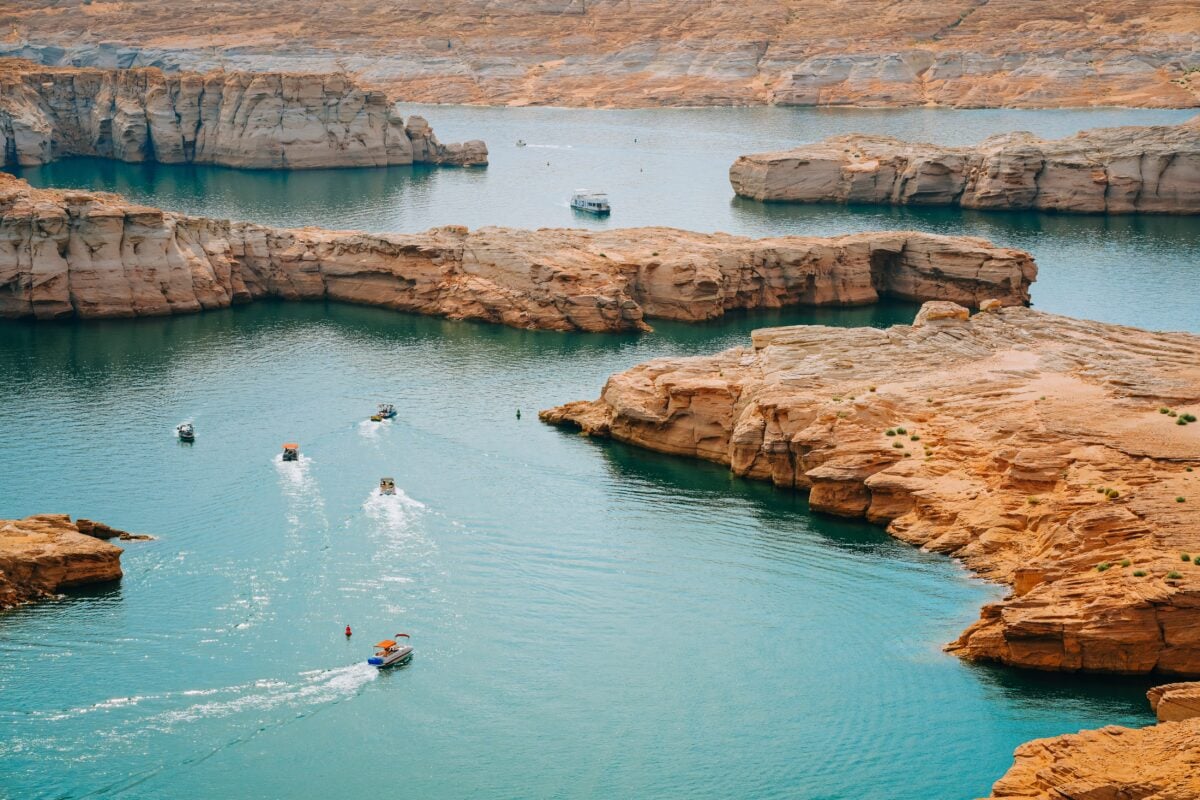
If we could only jump one place for the rest of our lives, it might be Lake Powell. Nearly 2,000 miles of shoreline carved through Glen Canyon means endless sandstone walls dropping straight into deep, warm, impossibly blue water. The red rock against that turquoise is the kind of view that makes you forget you’re terrified.
The classic move here is renting a houseboat or pontoon and hunting for your own private cove — half the fun is scouting walls at idle speed, sounding the depth, and arguing about whether that ledge is 18 feet or 30 (it’s always higher than it looks from the water). Because Powell’s water level swings dramatically year to year, depth-checking is non-negotiable; ledges that were safe at full pool can be shallow now. The National Recreation Area also has rules about jumping heights, so check current regulations at the marina before you launch yourself off anything ambitious. Padre Bay and the slots near Antelope Canyon are our favorite zones.
3. Black Rock (Pu’u Keka’a), Ka’anapali Beach — Maui, Hawaii
This one comes with history. Pu’u Keka’a, the volcanic point anchoring the north end of Ka’anapali Beach, is where the Maui chief Kahekili famously proved his courage by leaping into the sea — a tradition reenacted every evening in a torch-lighting and cliff dive ceremony that still gives us chills. By day, it’s one of the most accessible and beginner-friendly ocean jumps in America.
The main jump is in the 15-to-20-foot range into deep, clear Pacific water, and you can snorkel with sea turtles literally in the same spot you land. We love that you can walk here from the beach, jump until your legs are jelly, then collapse onto the sand with a shave ice. Watch the swell — on calm days it’s mellow, but bigger surf changes the equation fast, and getting back onto the rock requires timing. Be respectful here, too: this is a culturally sacred site, not just a diving board.
4. Waimea Bay — Oahu, Hawaii
The famous “Jump Rock” at Waimea Bay on Oahu’s North Shore might be the most photographed cliff jump in the country, and it earns it. In summer, when the monster surf disappears and the bay turns to glass, a steady line of jumpers forms on the big lava rock just off the beach. The leap is around 25 feet into deep, sapphire-blue water, and the climb back out is part of the experience.
What makes Waimea special for us is the atmosphere, locals, tourists, kids, and grandparents all cheering each other on, with lifeguards keeping an eye on things. It’s communal in a way few jump spots are. Critical note: this is strictly a summer activity. From roughly October through April, Waimea hosts some of the biggest rideable waves on Earth, and the bay is absolutely not for swimming. Always follow lifeguard guidance if the rock is flagged off, it’s off.
5. Summersville Lake — West Virginia
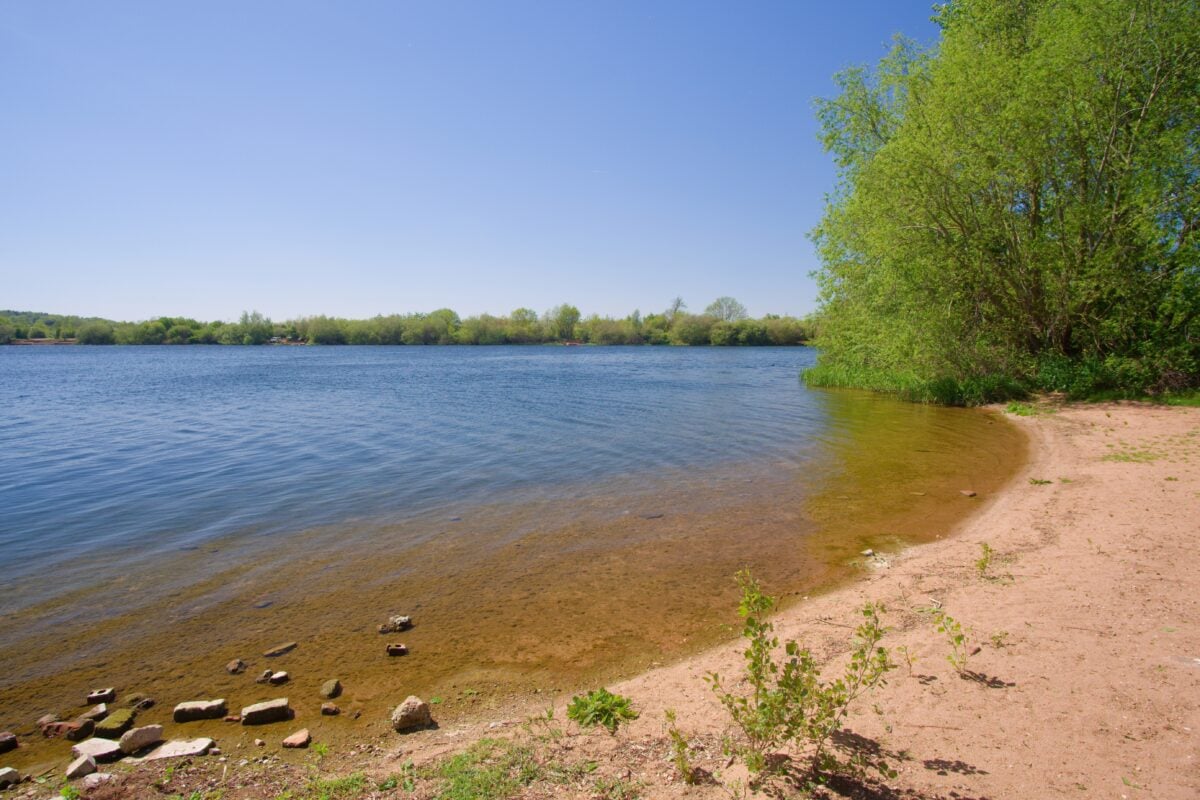
They call Summersville “the Little Bahamas of the East,” and the first time we saw that clear emerald water surrounded by sandstone cliffs, we understood. This 2,700-acre lake near the New River Gorge is ringed with rock walls of every height, from confidence-building 10-footers to ledges that will make you reconsider your life choices.
The cliffs around Long Point and the climbing areas are the marquee zones, and the water below the main walls is deep and clean this is also a popular scuba and deep-water-soloing destination, which tells you something about the clarity and depth. We like pairing a jump day here with rafting on the nearby Gauley or New River for a full West Virginia adrenaline weekend. Kayak or boat access opens up the best walls, and as always, check current Army Corps regulations and water levels, since the lake is drawn down significantly in fall.
6. Sand Harbor & the East Shore — Lake Tahoe, Nevada
Lake Tahoe’s east shore is a granite playground. Around Sand Harbor in Lake Tahoe Nevada State Park, smooth boulders and rock outcrops rise out of some of the clearest water in North America, with jumps ranging from toddler-friendly hops to solid 15-plus-foot launches. The water is so transparent you can usually see your landing zone from the top, a luxury we never take for granted.
Here’s the honest review: that water is cold. Even in August, Tahoe rarely cracks 70 degrees at the surface, and the first jump of the day will reboot your nervous system. We consider that a feature. Arrive early!!!! Sand Harbor’s parking lot fills by mid-morning in summer or paddle in by kayak or SUP from Hidden Beach to explore the quieter rock clusters along the shoreline. The alpine setting, with snow-dusted peaks behind you in early summer, makes this the most scenic cold plunge in America.
7. Red Rocks Park — South Burlington, Vermont
New England’s best-known jump spot sits in a modest 100-acre park on Lake Champlain, where reddish quartzite cliffs drop into deep, cool water with the Adirondacks stacked on the horizon. The ledges at Red Rocks range from about 10 feet up to a high point in the 70-foot neighborhood that we have personally watched people jump and have personally declined every single time.
The vibe here is classic Vermont summer: college kids from Burlington, families picnicking on the trails, and a rotating cast of jumpers egging each other on. Champlain is deep off the cliffs, but it’s a lake with real boat traffic, so keep your head on a swivel before you commit. Worth knowing: the city has periodically restricted or ticketed jumping here depending on conditions and incidents, so check the current posted rules when you visit. When it’s open and the water’s up, it’s one of the purest swimming-hole experiences in the Northeast.
8. Lake Jocassee — South Carolina
Tucked into the Blue Ridge escarpment, Lake Jocassee is the South’s best-kept cliff jumping secret though we suppose we’re not helping with that. This 7,500-acre reservoir is fed by cold mountain rivers and waterfalls, which keeps the water strikingly clear and refreshingly brisk even in the dead of a Carolina summer. The shoreline is almost entirely undeveloped forest, broken up by rock faces and ledges in the 10-to-30-foot range.
Access is the adventure here: you’ll launch a boat or kayak from Devils Fork State Park, then explore the lake’s fingers and coves to find jump rocks, rope swings, and waterfalls you can paddle right up to. Our favorite day involves jumping until lunch, then drifting beneath one of the lake’s waterfalls to cool down. Because the spots are scattered and informal, scouting depth is on you bring goggles and check every landing before anyone jumps. Go midweek and you might not see another soul.
9. Hippie Hole — Black Hills, South Dakota
Hidden in a granite canyon on Battle Creek in the Black Hills, Hippie Hole is the swimming hole you dreamed about as a kid. A short, scrambly hike (under a mile, but bring real shoes) drops you into a punchbowl where a small waterfall pours into a deep, cold pool surrounded by rock walls. Jumps range from a few feet up to ledges around 20-plus feet, and the compact canyon means your cannonball echoes gloriously.
We love Hippie Hole because it feels earned… theres no boat ramp, no parking lot full of trailers, just a trail, a rope-assisted scramble, and a perfect pool at the bottom. It’s busy on hot weekends (the locals know), but the setting absorbs the crowd well. The pool is deep in the center, but it’s a natural creek system, so depths shift with runoff; check before you huck anything. Pair it with a Mount Rushmore or Custer State Park trip and you’ve got the perfect Black Hills day.
10. Pace Bend Park, Lake Travis — Texas
We’re bookending this list back in Texas, because Lake Travis deserves its reputation. Pace Bend Park, on a horseshoe bend of the lake outside Austin, offers miles of limestone cliff shoreline with ledges at every height and unlike most spots on this list, many of them are accessible on foot. Park, walk to the edge, pick your shelf, and send it.
The water at Travis is a beautiful blue-green when levels are healthy, and therein lies our biggest caution: this Hill Country reservoir rises and falls dramatically with drought cycles. A 15-foot jump at full pool becomes a 35-foot jump over questionable depth when the lake is down, so reading current lake levels (and the water itself) is essential here, every single visit. On a good summer day, with the cliffs busy, boats anchored below, and Austin’s swim-hole culture in full effect, Pace Bend is pure Texas joy and at a few bucks per vehicle for entry, it’s the best adrenaline bargain on this list.
Final Thoughts: Jump Smart, Jump Often
Ten spots, thousands of miles, and more nervous countdowns from “three” than we can remembe that’s our list. Whether you’re easing in with a 10-foot hop at Sand Harbor or staring down the ledges at Hell’s Gate, the formula stays the same: scout the water, confirm the depth, go feet first, and never let peer pressure pick your height for you. The cliff will still be there next summer; make sure you are too.
One last housekeeping note from us: conditions, access rules, and even legality at these spots can change with water levels, land management decisions, and local ordinances. A two-minute check of the park’s website or a chat with a ranger before you jump is cheap insurance. Now get out there, find your ledge, and when you’re standing on the edge talking yourself into it remember that the hesitation is the worst part. The flight is the reward.
Have a favorite jump spot we missed? Drop it in the comments we’re always looking for an excuse for another road trip.
