
Luxury yacht market heads toward $12.8 billion, and the sweet spot is not the mega-mega stuff
If your travel budget tops out somewhere well below “Jacuzzi on the deck” territory, the luxury yacht market probably sounds like a world for other people. Still, the latest numbers are worth a glance: Allied Market Research says the sector could climb to $12.8 billion by 2031, and the 75 to 120 foot category is doing the heavy lifting.
That size band matters because it is the market’s biggest contributor, which tells you something about what wealthy buyers actually want. Not just floating palaces for show, but yachts that are still practical enough to handle, customise, and send out on long trips without requiring a small army to operate them.
For budget travelers, the takeaway is less “time to buy a yacht” and more “this is why yacht tourism keeps showing up in destination marketing.” When the rich keep buying and chartering boats, the places that host them often build out more marine tourism infrastructure, more luxury port services, and sometimes more ways for regular visitors to sample the scene without owning the whole ocean.
What the report says
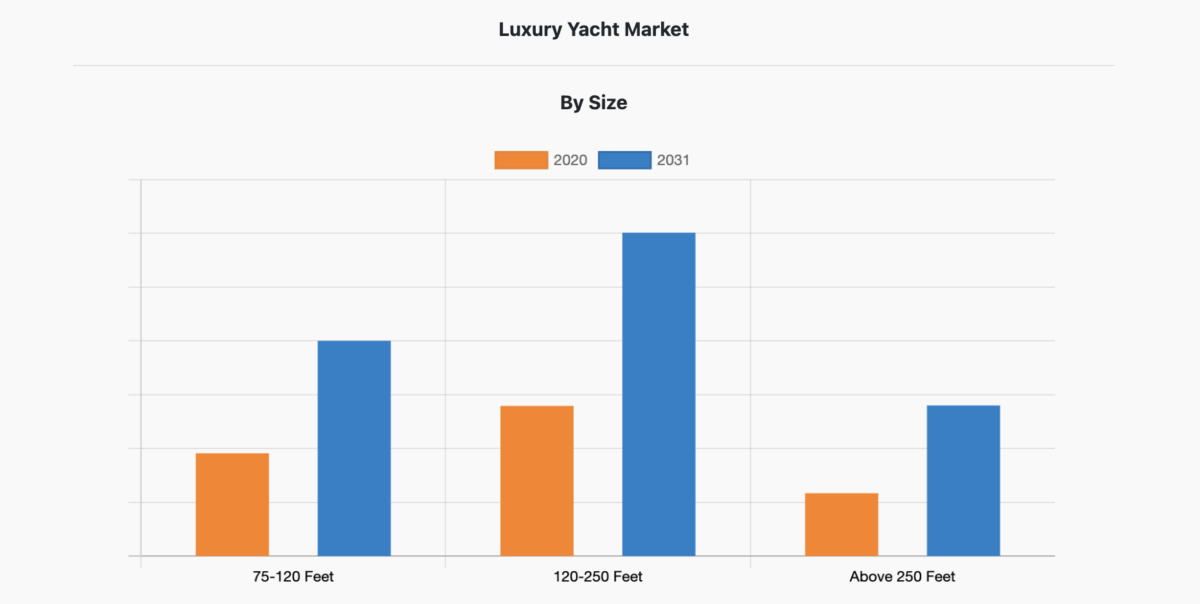
According to the report, the luxury yacht market was valued at $5.8 billion in 2020 and is projected to reach $12.8 billion by 2031. That works out to a compound annual growth rate of 8.0% from 2022 to 2031.
Credit: Allied Market Research
Volume-wise, Europe held around two-thirds of the market in 2020, and Italy accounted for about 50% of global volume that same year. In plain English: if you are looking at where a lot of the yacht action happens, Europe remains the big playground.
Quick facts from the report
- 2020 market value: $5.8 billion
- 2031 forecast: $12.8 billion
- Forecast CAGR: 8.0% from 2022 to 2031
- Biggest size segment: 75 to 120 feet
- Largest material share: Fiber reinforced polymer and composites, at about three-fourths of the market in 2020
- Leading country by volume: Italy, with about 50% share in 2020
Why the 75 to 120 foot range keeps winning
The report says the 75 to 120 foot category is the top contributor because it sits in the useful middle ground. These yachts are large enough to pack in the fancy extras, but not so absurdly huge that they become impossible to manage without a full-time logistics department.
That size tier is also where a lot of the market’s modern comforts show up: Jacuzzis, gyms, saunas, sun pads, jet skis, tenders, and the kind of onboard touches that make a boat feel more like a floating boutique hotel than a transport option.
For travelers watching the marine tourism scene, that trend matters because this is the segment most likely to shape charter offerings, harbor upgrades, and destination branding. In other words, the boats getting the most attention are often the ones that feed the visitor economy around them.
What is driving demand
The report points to several forces behind growth: rising wealth among high-net-worth individuals, stronger corporate earnings, and a broader upswing in the global economy. It also notes that ultra-high-net-worth millennials are treating yachts as status symbols, which is a very expensive way to say “look at me, I have arrived.”
It also highlights yacht tourism itself as a major driver. What started as an elite pastime has expanded into a broader leisure market, with sailing, sightseeing, and fishing among the main uses. Leisure sailing is said to be the most popular.
Another reason the market is expanding is simple engineering. Better hydraulics, push-button electrical systems, improved thrusters, and easier deck gear have made large yachts more manageable than they once were. For buyers, that means less fuss. For everyone else, it means the rich can now enjoy smoother weekend escapes with fewer moving parts.
For travelers, the practical angle is this
- Yacht-heavy destinations often have stronger marina facilities and waterfront tourism services.
- More charter activity can mean more day-trip and short-term boat options in some markets.
- Luxury marine tourism can push up prices around ports, so budget travelers may want to stay a little farther from the waterfront.
- Destinations with strong yacht scenes often also have ferry links, sailing tours, and harbor cruises that are cheaper ways to get the same sea views.
Materials, motors, and the business of making boats float in style
One of the more technical points in the report is the rise of fiber reinforced polymer and composites. This material category held about three-fourths of the market share in 2020 and is expected to grow quickly. In simple terms, these materials help make yachts lighter and more efficient while still keeping the luxury look intact.
Motorized yachts are also projected to grow rapidly because they are easier to maneuver, offer more power, and usually come with more onboard amenities. That is good news for the people who want the yacht experience without spending their entire day wrestling with sails.
The report also flags customization as a major part of the business. Buyers want yachts built around their own specs, which can include water toys and nightlife-style features such as DJ booths and floating dance floors. Subtlety, evidently, was not invited.
How this affects ordinary travelers
You are probably not about to book a private yacht because a market report said so. Fair enough. But the growth of luxury yacht travel does have spillover effects that show up in real-world trip planning.
In some coastal cities, the yacht economy supports:
- marina districts with more restaurants and bars
- charter companies that also sell shorter excursions
- seasonal jobs tied to tourism and boat services
- better waterfront transport links in busy ports
That can be useful if you are chasing a cheaper version of the same experience. Many destinations with luxury yacht traffic also offer public ferries, harbor cruises, and island day trips that cost a lot less than chartering a vessel with a sauna attached.
What to keep an eye on if you travel near yacht hubs
If your trip takes you to major yacht destinations in Europe, especially Italy or other busy Mediterranean ports, the luxury side of the market can affect accommodation prices and availability during peak season. That does not mean the trip is off-limits for budget travelers. It just means timing and neighborhood choice matter more than usual.
A few practical tips:
- Stay away from the most glamorous marina zones if you want lower hotel or hostel rates.
- Look for ferry terminals and older neighborhoods for better value.
- Book boat tours early if you want a cheaper seat on a popular route.
- Travel shoulder season when the marina crowds thin out and the bills usually do too.
The companies behind the market
The report names several major players in the luxury yacht space, including Alexander Marine Co Ltd, Damen Shipyards Group, AzimutBenetti S.p.A., Feadship, Ferretti S.P.A., Horizon Yacht USA, Princess Yachts International plc, Sanlorenzo Spa, Sunseeker International Limited, and Viking Yacht Company.
Those names matter mainly if you follow the boat-building business. For most travelers, the bigger story is that this segment keeps growing, and that growth tends to shape the kind of waterfront destinations, charter offerings, and marina developments that eventually trickle down to everyone else.
Bottom line
The luxury yacht market is not exactly a backpacker headline, but it is a useful window into how high-end travel continues to reshape coastal tourism. The report’s biggest signal is that mid-size luxury yachts are driving demand, Europe still dominates the market by volume, and yacht tourism remains a powerful engine behind the industry’s growth.
For budget travelers, the upside is indirect but real: more marine tourism activity can mean more ferry routes, more harbour cruises, and more ways to enjoy the waterfront without needing your own private crew.
