
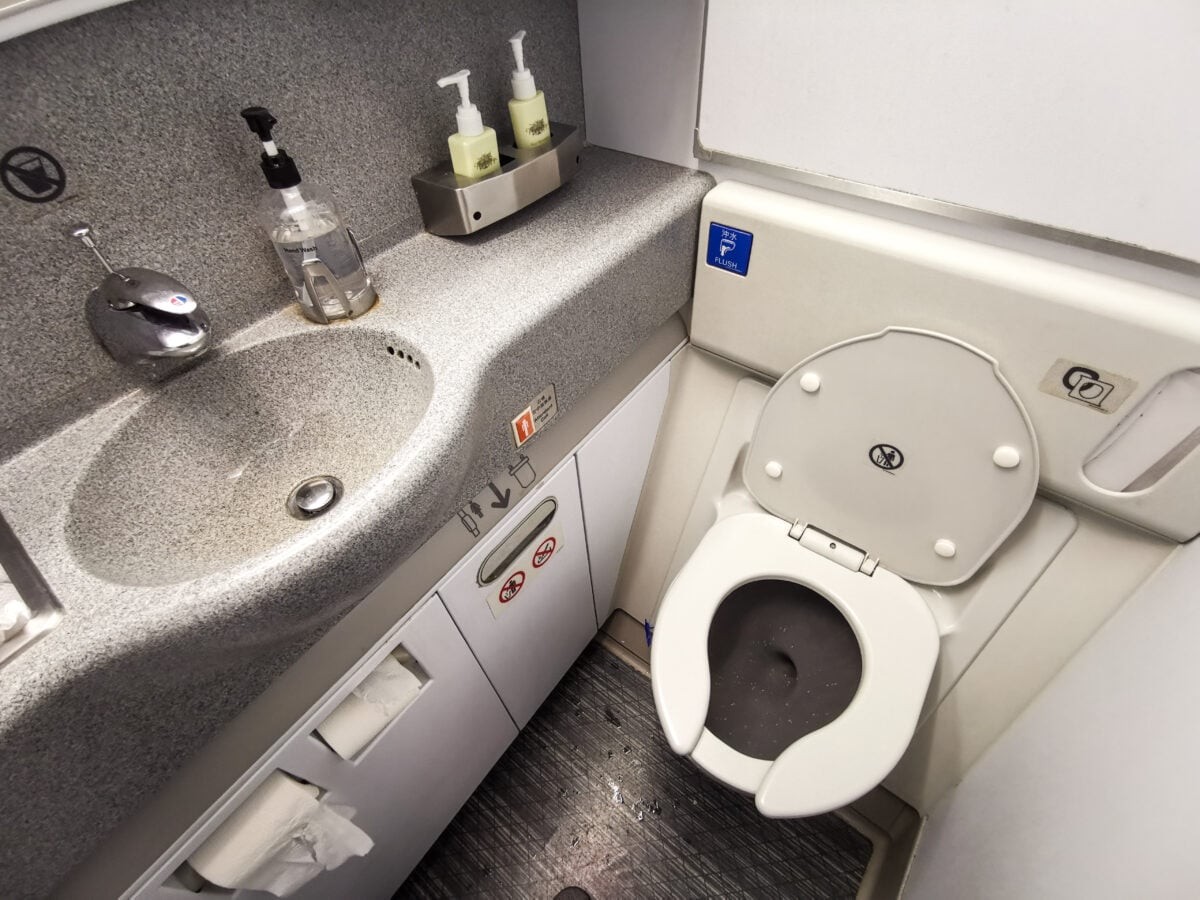
When you flush an airplane toilet, nothing is released into the sky. Instead, a vacuum system pulls waste into a sealed tank inside the aircraft using a pressure difference between the cabin and the plumbing system.
The loud whooshing sound is simply fast-moving air rushing through the pipes. Modern aircraft are designed so everything stays onboard until landing, where it is safely removed by ground crews.
If you have ever wondered how this works mid-flight, the answer is simple, efficient engineering built for high altitude conditions.
What Happens When You Flush
Press the flush button and a valve opens at the bottom of the toilet bowl. This triggers a pressure-driven vacuum that instantly pulls waste into a network of pipes connected to a central holding tank. The system uses very little water, relying instead on airflow and pressure differences to move contents quickly and cleanly.
Once the waste reaches the tank, it remains there for the duration of the flight. After landing, airport crews connect hoses to empty and clean the system before the next journey.
Why Airplane Toilets Are So Loud
The noise comes from rapid air movement, not from anything being dumped outside. Aircraft cabins are pressurized while the exterior environment at cruising altitude has much lower pressure. When you flush, that pressure difference creates a powerful suction effect that pulls air and waste through the system almost instantly. The sound you hear is the result of that sudden airflow being forced through narrow pipes.
This design also improves hygiene and efficiency. The quick suction clears the bowl in a fraction of a second, reducing the chance of lingering waste or odors. It is one of the reasons airplane toilets can handle hundreds of uses on long-haul flights without major issues.
Where the Waste Actually Goes
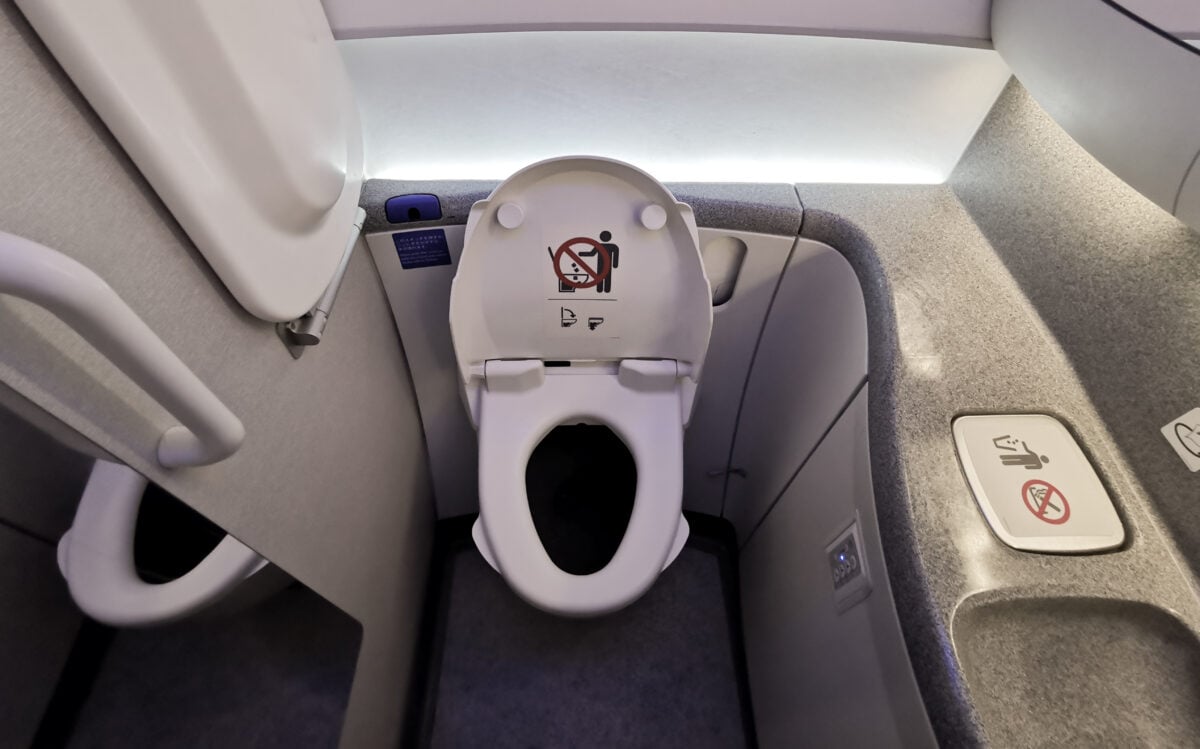
All waste is stored inside the aircraft in sealed tanks, typically located in the lower section of the plane. These tanks are designed to handle the full capacity of passengers and crew for the entire duration of the flight, including long international routes. Nothing is released mid-air under normal operation.
After landing, trained ground staff connect specialized equipment to the aircraft and remove the waste safely. It is then transported to proper treatment facilities, similar to how city sewage systems process waste. This controlled process ensures both environmental safety and compliance with aviation regulations.
Why Planes Use Vacuum Toilets Instead of Water Systems
Weight is one of the most important factors in aviation. Traditional toilets rely on gravity and large volumes of water, which would add unnecessary weight to an aircraft and increase fuel consumption. Vacuum toilets solve this by using minimal water and relying on pressure differences instead of gravity to move waste.
This system also works consistently at altitude. Standard plumbing would struggle in low-pressure environments, but vacuum systems are designed specifically for aircraft conditions. The result is a reliable setup that functions the same way whether you are taxiing on the runway or cruising at 35,000 feet.
If you are interested in how aircraft systems and travel logistics impact your trip overall, it helps to understand broader planning basics like those covered in this travel planning resource hub, which breaks down how different parts of a journey come together.
How Much Water Does an Airplane Toilet Use?
An airplane toilet uses a fraction of the water required by a household toilet. While a standard home system might use over a gallon per flush, aircraft toilets often use less than half a liter. This difference becomes significant across hundreds of passengers and multiple flights per day, helping airlines reduce overall fuel burn and operational costs.
Less water also means faster processing and fewer mechanical complications. The system is built to prioritize efficiency without sacrificing cleanliness, which is why the vacuum approach has become standard across commercial aviation fleets.
Common Myths About Airplane Toilets
- Waste is dumped mid-air: It is stored in onboard tanks and removed after landing.
- The suction is dangerous: The system is powerful but carefully controlled and safe for normal use.
- Blue ice is common: It is rare and linked to system leaks, not standard operation.
These myths often come from outdated systems used decades ago or exaggerated stories that continue to circulate. Modern aircraft follow strict safety and environmental standards that prevent these scenarios during normal operation.
What Is “Blue Ice” and Should You Worry?
“Blue ice” refers to frozen waste that can form if there is a leak in the system. The blue color comes from disinfectant chemicals used in aircraft toilets. While there have been rare reports of this occurring, modern aircraft are designed to prevent leaks, and maintenance checks are routine.
For passengers, this is not a practical concern. It is treated as a maintenance issue rather than a normal part of flight operations, and aviation standards are strict about preventing it.
How the System Works at 35,000 Feet
At cruising altitude, the outside air pressure is far lower than inside the cabin. Aircraft maintain a controlled, pressurized environment for passengers, and this pressure difference is what powers the vacuum toilet system. When the flush valve opens, air naturally rushes from higher pressure to lower pressure, carrying waste with it into the storage tank.
This setup means the system works consistently regardless of altitude or turbulence. It is a simple concept in theory, but it requires precise engineering to operate reliably across different flight conditions.
Understanding systems like this can make flying feel less mysterious and more predictable, especially if you are planning longer trips or multi-leg routes.
Practical Tips for Using Airplane Toilets
You do not need special training to use an airplane toilet, but small habits can make a difference. Only flush toilet paper and waste, as items like wipes or paper towels can clog the system even with strong suction. Timing also matters. Toilets are busiest after meals, so planning ahead can help you avoid queues.
Flushing before you stand up is a simple way to keep things clean, especially during turbulence. While the system is efficient, using it thoughtfully helps maintain cleanliness for everyone onboard.
Comparison: Airplane vs Household Toilet
| Feature | Airplane Toilet | Household Toilet |
|---|---|---|
| Flush system | Vacuum-based | Gravity-based |
| Water usage | Very low | High |
| Waste storage | Onboard tank | Sewer system |
| Noise level | Loud suction | Relatively quiet |
| Efficiency | Optimized for weight and altitude | Not weight-sensitive |
Why This System Matters for Your Trip
Efficient onboard systems like vacuum toilets play a small but important role in modern air travel. Reducing weight lowers fuel consumption, and reliable waste systems allow aircraft to operate long-haul routes without interruption. These details might seem minor, but they directly impact ticket prices, flight efficiency, and overall travel experience.
If you are planning a trip and want to better understand how different parts of travel connect, resources like the Two Scots Abroad travel guides offer practical insights into planning routes, managing logistics, and making smarter travel decisions.
What You Should Remember
Flushing an airplane toilet triggers a vacuum system that moves waste into a sealed onboard tank, not into the sky. The loud noise is simply air pressure doing the work quickly and efficiently. The entire system is designed to function reliably at high altitude while keeping weight low and hygiene standards high.
Next time you hear that sharp whoosh, you will know exactly what is happening behind the scenes and why it works so well.
