
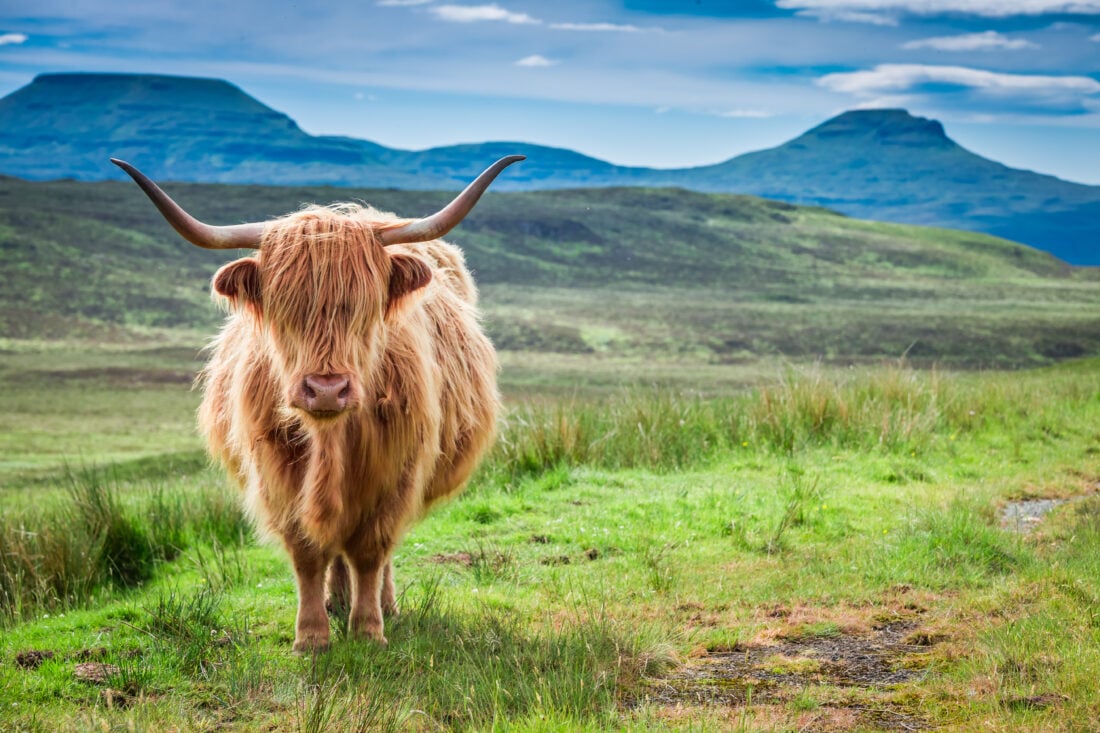
Highland cows (known as “heilan coos” in Scots or “Bò Ghàidhealach” in Gaelic) are the oldest registered cattle breed in the world, with a history traceable to the 6th century in the Outer Hebrides. They are hardy, long-lived, and far more interesting than their postcard image suggests.
Quick Facts at a Glance
| Fact | Detail |
|---|---|
| Gaelic name | Bò Ghàidhealach |
| Scots name | Heilan coo / Hairy Coo |
| Origin | West of Scotland and Outer Hebrides |
| Oldest record | 6th century; Herd Book published 1885 |
| Lifespan | Up to 20 years |
| Bull weight | Up to 800kg |
| Cow weight | Around 500kg |
| Coat layers | Two – coarse outer (approx. 33cm) plus woollen undercoat |
| Daily grass intake | Around 70kg |
| Milk yield | Approx. 2 gallons per day; approx. 10% butterfat content |
| Group name | A fold (not a herd) |
| Coat colours | Ginger, black, red, yellow, dun, brindle, white, silver |
What Makes Highland Cows Different from Other Cattle?
Highland cows carry a double coat that sets them apart. The outer layer is coarse and oily, roughly 33cm long, and acts as a weather shield against rain and wind. Underneath sits a softer, woollen undercoat for insulation. Together, these layers mean the breed can live outdoors year-round in the Scottish Highlands without needing enclosed barns.
Their long, curved horns serve a practical winter purpose: clearing snow to reach grazing underneath. Bulls have thicker horns than cows, but both sexes carry them.
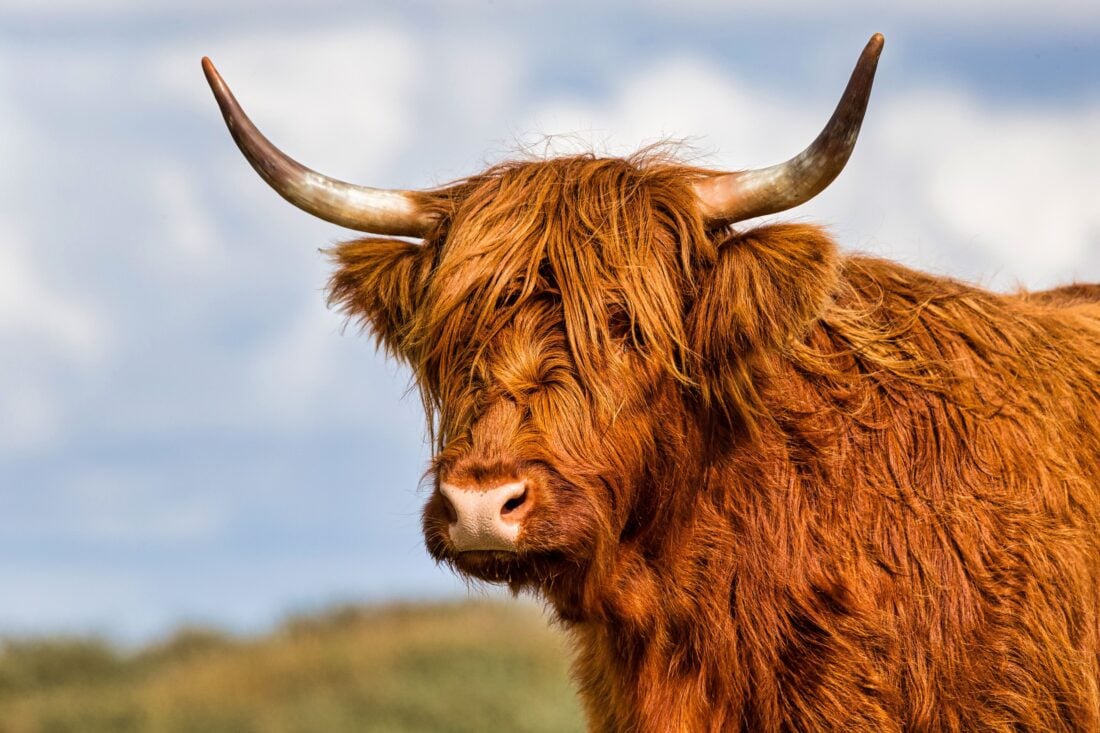
The famous fringe, called a dossan, covers the eyes and can be treated with an oily conditioner. Whether they can see clearly through it remains unclear, but it does not prevent them from foraging effectively.
Are Highland Cows Really the Oldest Cattle Breed in the World?
Yes. Highland cattle are the oldest registered cattle breed in the world. The Highland Cattle Society was founded in 1884 and published the first Herd Book in 1885, predating the breed records of all other cattle. The breed itself dates to the 6th century, originating in the Outer Hebrides before spreading across the West of Scotland.
The Highland Cattle Society’s Breed Standard, published at that time, remains unchanged today.
Why Are Most Highland Cows Ginger?
Not all Highland cows are ginger, and the full colour range includes black, red, yellow, dun, brindle, white, and silver. Ginger is simply the most common colour because of deliberate selective breeding. Queen Victoria had a preference for red-coloured Highland cows, which drove Victorians to breed for that trait. The result is the ginger-dominant population you see across Scotland today. Honestly, it’s one of those facts that sounds made up, but Victoria really did have that much influence over what Scotland’s countryside looks like in 2026.
How Long Do Highland Cows Live?
Highland cows can live up to 20 years, which is significantly longer than most other cattle breeds. They also remain productive for longer, with females breeding past 18 years old and producing more calves over their lifetime than shorter-lived breeds.
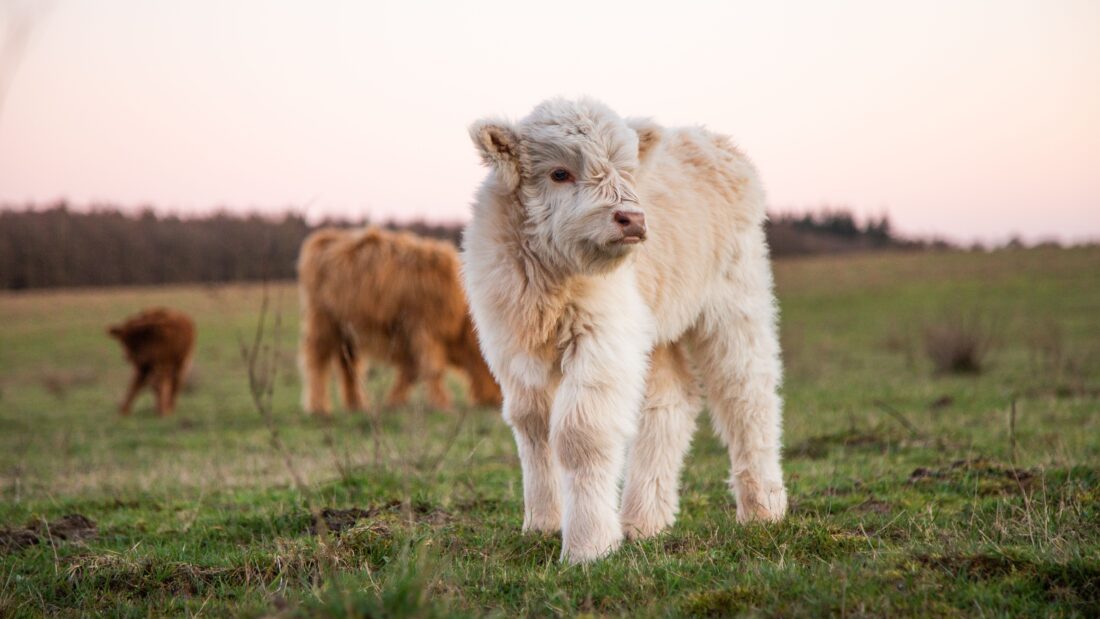
Newborn calves can stand and walk almost immediately and stay with their mothers for around six months.
Highland Cow Temperament: Are They Safe to Approach?
Highland cows are among the most docile cattle breeds, and their calm temperament is a big part of why they attract tourists. They are naturally friendly and rarely aggressive.
That said, they are large animals with long horns, and cows with young calves can become protective, particularly if you approach with a dog. If you’re exploring Scotland with a dog, give any cows with calves a wide berth and keep your pup on a short lead. Treat them with the same respect you would give any large animal.
Highland Cow Meat and Milk: What’s the Story?
Beef
Highland beef is leaner than most other cattle beef. A study by the Scottish Agricultural College found it to be around 40% lower in fat and cholesterol than standard beef. The meat is fine-textured, well-marbled, and high in protein. Highland cow meat is even lower in fat than chicken.
Highland beef is not widely produced at scale because the cost of raising the breed is higher than commercial alternatives. Demand for the meat is growing internationally, particularly in North America, where the low cholesterol levels are a selling point.
Milk
Highland cows can be milked, but not on a commercial scale. They have smaller teats than most dairy breeds and produce around 2 gallons per day. The milk has a high butterfat content of approximately 10%, which makes it rich but limits large-scale use.
What Do Highland Cows Eat, and How Much?
Highland cows are grazers. They spend around 8 hours a day eating and consume roughly 70kg of grass daily, equivalent in weight to about 70 pineapples. When they are not sleeping, they are usually grazing.
This appetite, combined with their low-impact grazing style, makes them valuable for conservation grazing. They can work through a wide range of vegetation without causing significant ground damage, which is why landowners and conservation bodies use them to manage habitats across Scotland.
What Is a Group of Highland Cows Called?
A group of Highland cattle is called a fold, not a herd. The name comes from the open-sided shelters (also called folds) that the cattle use during winter. The term applies specifically to Highland cattle.
Highland Cow Social Media Fame
Highland cows have a dedicated following online. Every Tuesday, fans post photos under the hashtag #coosday, and the breed regularly appears on postcards, souvenirs, and travel content from across Scotland and beyond. They have long vied with the Loch Ness Monster and the unicorn for the title of Scotland’s most iconic creature. If you’re looking for gifts from Scotland for someone back home, turns out a Highland cow mug or tea towel is basically guaranteed to land well.
Where to See Highland Cows in Scotland
Highland cows are spread across rural Scotland, but certain areas give you the best chance of a sighting:
- Torridon and Applecross – remote Highland scenery with working cattle
- Blair Castle, Perthshire – accessible and well-known for its Highland cows
- Newtonmore area – reliable sightings in the Cairngorms region
- Isle of Skye – popular with visitors and frequently photographed
- Glencoe – dramatic backdrop for spotting the breed
- Culloden Battlefield – near Inverness, easy to combine with a history visit
- Easter Dalziel Farm – near Loch Ness, family-friendly
- Cameron’s tea rooms – Inverness area, known for accessible coo encounters
- Loch Ness by Jacobite – combines a loch cruise area with nearby cattle
- Loch Lubnaig and Isle of Mull – additional reliable spots
A lot of these spots work brilliantly as part of a Scotland road trip, since the coos tend to turn up in the same remote places you’d be driving through anyway. Tours from Edinburgh and Glasgow regularly include Highland cow stops as part of wider Highland itineraries too. One thing to be aware of if you’re visiting between May and September: some of these areas, particularly the west coast, are prime midge territory, so pack repellent unless you enjoy being eaten alive.
Do Highland Cows Live Outside Scotland?
Yes. The breed has been exported to Australia, Canada, the United States, Denmark, and Finland, among other countries. Highland cattle have also been recorded grazing at altitudes above 10,000 feet in the Andes, which demonstrates the breed’s adaptability to extreme conditions.
Highland Cow Facts Summary
- Oldest registered cattle breed in the world – Herd Book dates to 1885, breed to the 6th century
- Double coat – oily outer layer (33cm) plus woollen undercoat; no barn needed
- Dossan – the fringe has a name, and it can be conditioned
- Not just ginger – Queen Victoria’s preference shaped the colour dominance
- A fold, not a herd – named after their open winter shelters
- Live up to 20 years and breed past 18
- 70kg of grass per day – 8 hours of grazing
- Milk is approx. 10% butterfat – not commercially viable but possible
- Beef is around 40% lower in fat than standard cattle beef
- Used for conservation grazing across Scotland
- Found worldwide – from the Outer Hebrides to the Andes
- Every Tuesday is #coosday on social media
