
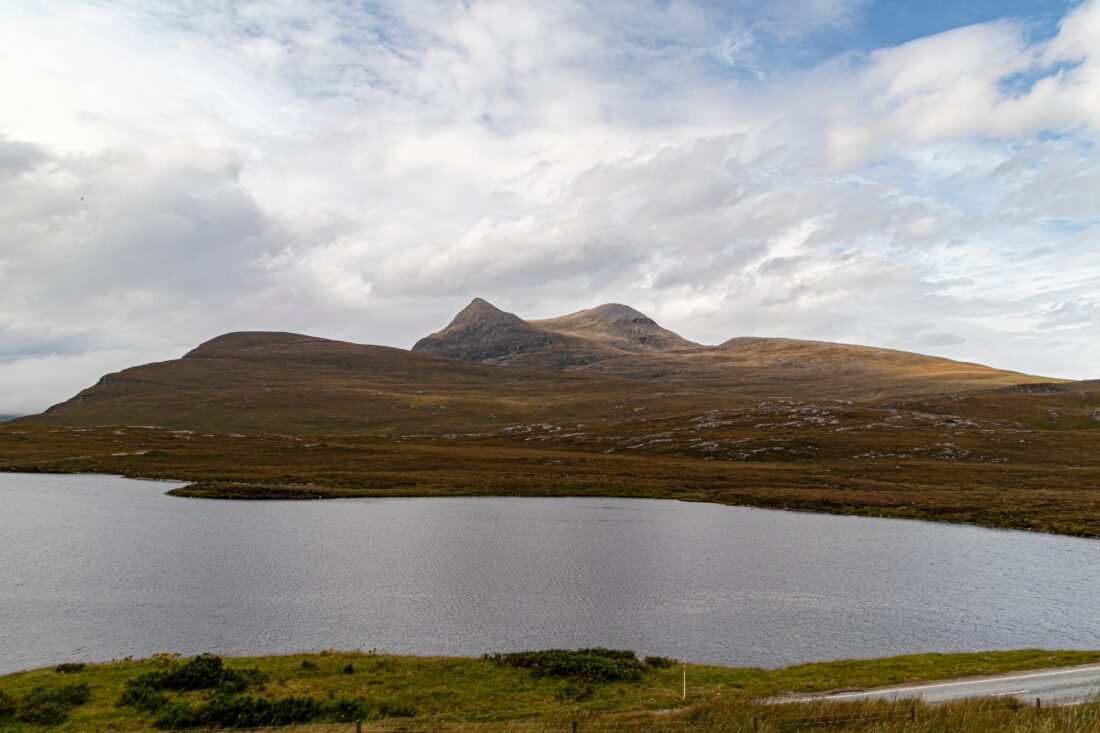
The North Coast 500 is a 516-mile circular driving route around the northern Highlands of Scotland, starting and ending in Inverness. Launched in 2015 and often called “Scotland’s Route 66,” it can technically be driven faster, but 7 days gives you a well-paced trip with time to stop, walk, and breathe. Six days is the minimum most guides recommend; 10 to 14 days would still keep you busy, especially if hiking is your thing. If you’re still in the early stages of figuring out logistics, our NC500 planning tips cover the essentials before you commit to dates.
Quick-Answer Box
| Question | Answer |
|---|---|
| How long is the NC500? | 516 miles, starting and ending in Inverness |
| Minimum days needed | 6 days (7 recommended for a relaxed pace) |
| Clockwise or anti-clockwise? | Anti-clockwise – saves the dramatic west coast for last |
| Best months | April-May (quieter), June-August (best weather but busiest) |
| Book accommodation in advance? | Yes, especially June-August – popular spots fill fast |
| Can you wild camp? | Yes – wild camping is legal across most of Scotland |
Should You Go Clockwise or Anti-Clockwise?
Go anti-clockwise from Inverness. That means heading up the east coast first (through Dornoch, Wick, and John O’Groats), crossing the north coast, then finishing on the more dramatic west coast. You save the best scenery, Applecross, Torridon, and the road to Bealach na Ba, for the final days when you are most familiar with driving Scottish single-track roads.
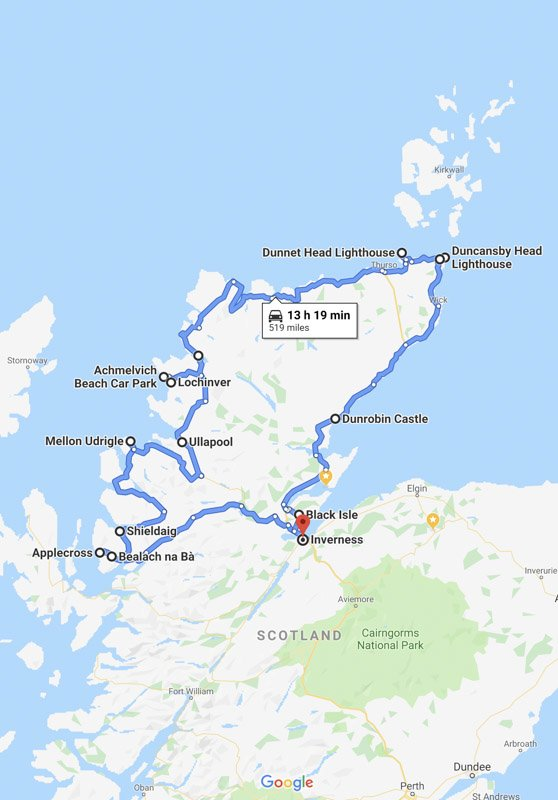
Day-by-Day NC500 7-Day Itinerary
Day 1: Inverness to Dunnet Head (or Wick area) – East Coast Highlights
Leave Inverness and head north along the A9. The direct drive to Dunnet Head takes around 4 hours, but with stops plan for 5 hours 30 minutes.
Key stops:
- Chanonry Point (Black Isle) – reliable dolphin-spotting spot. The Moray Firth bottlenose dolphins are resident year-round, but your best odds are an incoming tide between May and September. Arrive about an hour before high tide and you’ll likely see them feeding surprisingly close to shore.
- Fairy Glen Walk – short detour worth the stop
- Tarbat Ness Lighthouse – remote and photogenic
- Dornoch Beach – white sand, worth a quick stretch. The Royal Dornoch Golf Club is right here too, consistently ranked among Scotland’s top links courses if that’s your thing.
- Dunrobin Castle (Golspie) – the standout stop of the east coast. Dating back to the 13th century, it has fairytale-like turrets and formal gardens with 189 rooms, making it the largest house in the northern Highlands. Home to the Earls and Dukes of Sutherland, the castle runs daily falconry displays during the open season (April to October). Grounds are accessible even in winter.
- Whaligoe Steps (near Wick) – 330 stone steps from the car park down to sea level, originally carved by herring fisherwomen in the 18th century. One of the most memorable stops on the entire east coast.
- Duncansby Head Lighthouse (near John O’Groats) – walk around 30 minutes down to the Duncansby Stacks, dramatic sea stacks at the most northeasterly point of mainland Britain. Good for puffin spotting between April and July.
- Grey Cairns of Camster – a pair of Neolithic stone tombs over 5,000 years old, slightly off the main route but worth it for history fans. You can actually crawl inside the long cairn through a narrow passage, which is honestly a bit eerie but brilliant.
- Old Pulteney Distillery in Wick if whisky is your thing. Other distilleries on or near the NC500 include Glen Ord, Glenmorangie, and Dalmore.
Fuel note: Fill up at Tesco Petrol Station in Wick or John O’Groats petrol station before heading further north. Fuel prices up here tend to run noticeably higher than in Inverness, so topping up before you leave the city is a smart move.
John O’Groats honest tip: It is well-known as the start or end of the 874-mile route to Land’s End in Cornwall. Beyond the signpost and John O’Groats Brewery, there is not much here. Do not build your day around it.
Dunnet Head is the actual northernmost point of mainland Britain (not John O’Groats). The lighthouse there gives views across to the Old Man of Hoy on Orkney on a clear day.
Where to stay: Dunnet Head Car Park (campervan/camping), Dunnet Bay Caravan Club Site, or Black Rock Caravan and Camping Park. For a hotel base, Wick works well – Mackay’s Hotel sits on what is claimed to be the world’s shortest street. If you’re weighing up accommodation types for the whole route, our NC500 accommodation guide breaks down what’s available at each major stop.
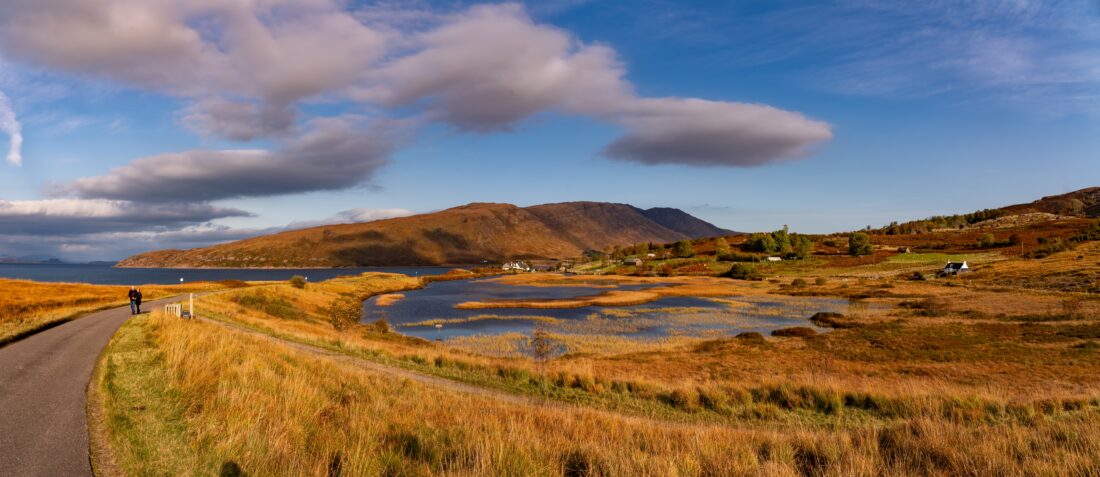
Day 2: North Coast – Dunnet Head to Durness
Direct drive is 2 hours 45 minutes; allow 5 hours with stops. This stretch takes you along the top of Scotland.
Key stops:
- Castle Varrich (near Tongue) – short walk up, new metal staircases, good views from the ruins. The castle dates to the 14th century and overlooks the Kyle of Tongue, so on a clear day the panorama is properly rewarding for minimal effort.
- Coldbackie Sands – peaceful and scenic but access involves a steep walk from a small layby
- Loch Eriboll – scenic loch with mountain surroundings and a causeway to near-island Ard Neackie. During WWII, the Royal Navy used Loch Eriboll as a deep-water anchorage, and it was here that German U-boats surrendered in 1945.
- Ceannabeine Beach and Village Trail – the walking trail passes ruins of Ceannabeine village and gives context to the Highland Clearances
- Strathy Beach – attractive beach with public toilets, suitable for swimming
- Smoo Cave (Durness) – large sea cave, free to visit. Turns out it’s one of the largest combined sea and freshwater caves in Britain, with a main chamber over 60 metres long. Boat trips run inside the cave when conditions allow (typically Easter to September, around £8 per adult). Parking is the one headache on this section: the car park is small and fills fast. Try the nearby layby or Durness Village Hall as alternatives.
- Sango Sands Beach – one of the best beaches on the entire NC500. Visit regardless of where you sleep.
- John Lennon Memorial Garden in Durness – commemorates Lennon’s childhood visits to the area. He spent summers here as a boy visiting his cousin, and the garden sits in a quiet spot that’s easy to miss if you’re not looking for it.
- Balnakeil Craft Village – originally a 1960s Cold War early warning station, now home to artists’ galleries. The Durness Deep Time Geology Exhibition here covers 3,000 million years of local geological history and is free.
- Cocoa Mountain Cafe in Balnakeil Craft Village – handmade chocolates, desserts, and hot chocolates. Rich and worth the higher price.
Where to stay: Sango Sands Oasis Camping in Durness is the top camping pick on this stretch, clifftop location above the beach with genuinely stunning views you don’t expect from a campsite. The Smoo Cave Hotel is a solid budget hotel option with a local pub feel.
Day 3: Durness to Lochinver – The Far Northwest
Direct drive is around 4 hours; allow 6 hours 30 minutes with stops. The landscape shifts from coastal to mountainous, and honestly, this is where the NC500 starts to feel like a completely different trip.
Key stops:
- Cape Wrath – only accessible by ferry and minibus from Durness, or on foot via the Cape Wrath Trail. The ferry runs seasonally (typically May to September) and is weather-dependent, so check current availability before planning around it. The name comes from the Norse word “hvarf” meaning turning point, not the English word for anger, though the weather up there can make you question that.
- Sandwood Bay – requires a 4-mile hike each way with no facilities. Suited to prepared walkers; excellent for wild camping.
- Handa Island (from Scourie) – ferry costs £20 per adult. Outstanding wildlife including puffins (April to August), dolphins, and otters. Allow at least half a day. The Shore House Restaurant overlooks the bay.
- Kylesku Bridge – built in 1984, marks the transition from coastal to mountain scenery
- Wailing Widow Falls – viewable from the top or bottom of the A894. Wear hiking boots; the ground is boggy and there is no set path.
- Drumbeg Viewpoint – strong views over the coast
- The Secret Tea Garden in Drumbeg – good for a stop
- Clashnessie Falls – 15-minute walk from Clashnessie Beach
- Clachtoll Beach – less crowded than Achmelvich, short walk from the car park. The Split Rock at Clachtoll is a massive boulder cleaved in two that’s become one of the most photographed spots on this stretch.
- Achmelvich Bay – white sand, turquoise water, dog-friendly, parking available
- Old Man of Stoer hike – sea stack with panoramic views, boggy approach but rewarding. The stack stands 60 metres tall and was first climbed in 1966.
Where to stay: Shore Caravan Site in Clachtoll, Achmelvich Beach Youth Hostel, or roadside campervan parking near Loch Assynt.
Day 4: Lochinver to Ullapool – Assynt and Beyond
Key stops:
- Lochinver Larder – famous for pies: meat, fish, veggie, and sweet varieties. Stock up. Not gonna lie, the wild venison pie is the one to get if they have it.
- Ardvreck Castle – 16th-century MacLeod Clan ruin on the shores of Loch Assynt. Pull into the parking bays on the A837 and walk to it. The castle was where the Marquis of Montrose was betrayed and captured in 1650, which gives the ruin a weight beyond just the scenery.
- Loch Assynt – drive the A837 and stop for photos. Small islands dot the loch.
- Inchnadamph Bone Caves – 3-mile round trip. Archaeological site with ancient reindeer and wolf bones, some dating back over 45,000 years.
- Knockan Crag Nature Reserve – free toilets, short trails, geological interest. The High Crag trail takes just over an hour. This is where geologists first proved that older rocks could be pushed on top of younger ones, which at the time was pretty revolutionary stuff.
- Stac Pollaidh hike – 3-mile circular route, takes 2 to 2.5 hours, some scrambling near the top. Strong views. The pinnacled ridge at the summit looks far more intimidating than it is from below, though the final scramble section is optional and exposed.
- Corrieshalloch Gorge – 60 metres deep. The Falls of Measach drop 46 metres. A suspension bridge gives the best viewpoint. The bridge was built in 1867 and sways a bit underfoot, which adds to the experience whether you want it to or not.
- Ullapool – central town with shops, a harbour, and transport links. The Arch Inn is a solid hotel option after days of camping. Ullapool also has a surprisingly good food scene for its size, with the Seaforth and the Ceilidh Place both worth a look.
Where to stay: Ullapool has Ardmair Point Holiday Park and Broomfield Holiday Park for camping. The Arch Inn suits those wanting a hotel.
Day 5: Ullapool to Gairloch – Loch Ewe and the West
Key stops:
- Gruinard Beach – views from the road; less dramatic than others on the route. Gruinard Island offshore has an unusual history: it was used for anthrax testing during WWII and wasn’t officially decontaminated until 1990.
- Mellon Udrigle Beach – secluded, quiet, camping facilities nearby
- Loch Ewe – the loch served as a key WWII convoy staging point for Arctic convoys to Russia. The Russian Arctic Convoy Exhibition at Aultbea tells the full story and is worth a stop for history enthusiasts.
- Firemore Beach – clear water and sandy beach
- Gairloch – small town with a marine life centre and sea views. Gairloch Marine Wildlife Centre runs boat trips (typically March to October) where minke whales, porpoises, and white-tailed eagles are regularly spotted. Gairloch South Beach is slightly outside the village.
- Loch Maree – scenic loch with short nearby hikes and the Beinn Eighe Visitor Centre. Often considered one of the finest freshwater lochs in Scotland, with over 60 islands, several holding fragments of ancient Caledonian pine forest.
- Victoria Falls – pretty waterfall off the road along Loch Maree. Access road has potholes.
Where to stay: Sands Caravan and Camping in Gairloch costs around £32 per night and is well-regarded for its facilities. Gairloch Holiday Park is another option.
Day 6: Gairloch to Applecross – Torridon and Bealach na Ba
This is a 60-mile leg and arguably the most scenic day on the route.
Key stops:
- Beinn Eighe Nature Reserve – Britain’s first National Nature Reserve, established in 1951. The 6.5 km mountain trail reaches 550m elevation. Steep and rocky in sections; navigational skills needed.
- Torridon – the road through here is among the most scenic on the NC500, maintained by the National Trust for Scotland. There is a free campsite with limited facilities. The Torridon mountains, including Liathach and Beinn Alligin, are made of some of the oldest rock in Britain (Torridonian sandstone, around 750 million years old), and you can see the layered red rock clearly from the road.
- Shieldaig – larger than Torridon, with accommodation and food options. Views of Shieldaig Island. Note: sat nav may not route you through the village automatically.
- Bealach na Ba – a notable mountain road to the Applecross peninsula, with single-track sections and tight hairpin bends rising to 626 metres, making it one of the highest roads in Britain. Experienced driving required; not suitable for large motorhomes on the main pass. At the top, cloud inversions at sunset are worth waiting for if timing allows.
- Applecross – the peninsula is the reward at the bottom of the pass. The Applecross Inn is known for its seafood (the king prawns and venison are the popular picks), so book a table if you’re staying the night.
Where to stay: Applecross Inn – book ahead. Torridon has hostel, B&B, and campsite options.
Day 7: Applecross to Inverness – The Final Leg
Estimated drive time from Applecross back to Inverness via Loch Ness is around 2 hours 30 minutes direct.
Key stops:
- Eilean Donan Castle – well-preserved and famous, on a rock by Loch Duich. Originally built in the 13th century, the castle was destroyed in a Jacob
