
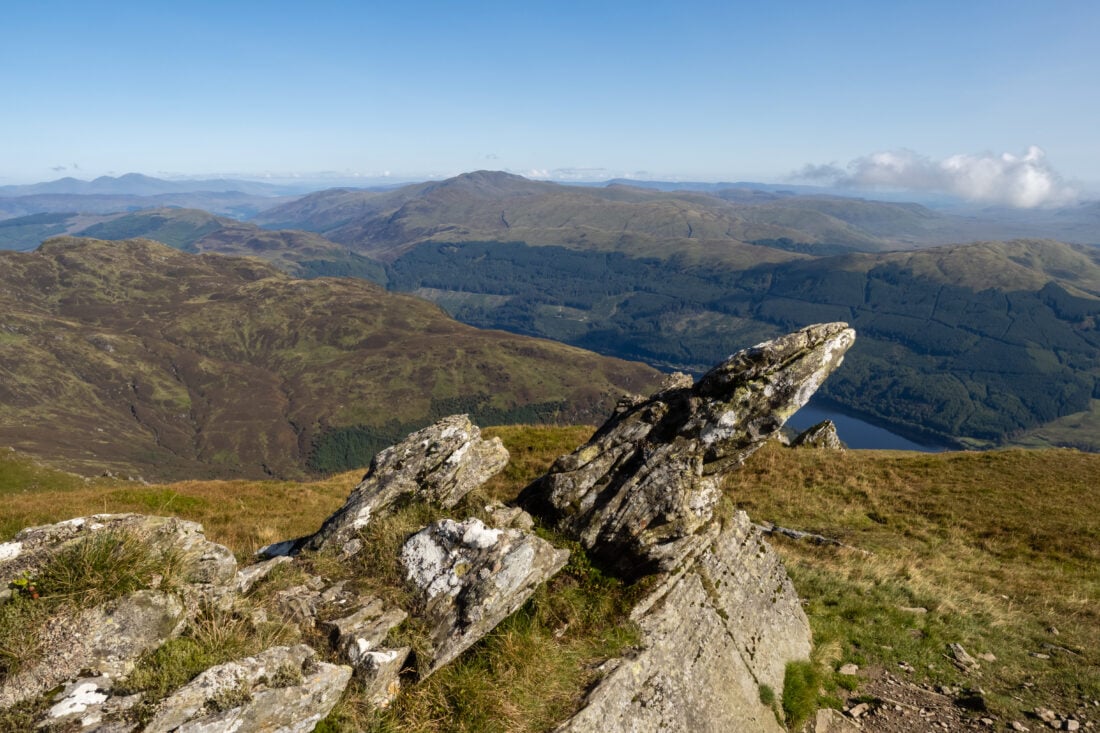
August is one of the recommended months for climbing Ben Ledi, but that does not mean predictable or easy conditions. The 879-metre summit sits in the Scottish Highlands within the Grampians range, and weather can shift from warm and clear to near-freezing with snow dusting within a single forecast window. Honestly, plan for the full range.
- Best months to climb Ben Ledi: April through October, including August
- Summit elevation: 879 metres
- August temperature range at summit: Can swing from around 11°C down to -2°C within days
- Key hazard: Rapid deterioration above 300 metres, where visibility drops and the path becomes obscure
- Nearest base: Callander
- Forecast source: Mountain-Forecast.com issues summit forecasts at 12 am local time, updated regularly
How Weather Changes with Altitude on Ben Ledi
The base of Ben Ledi can feel mild and manageable while the summit is a different environment entirely. Weather deteriorates quickly from 300 metres upward. At that point, temperature drops toward freezing, visibility becomes poor, and the path grows increasingly obscure.
Between 600 and 800 metres, approaching the summit, conditions can reach a full white-out with very difficult and dangerous going. This applies even in August. The quote from climber Matthew McCann on Mountain-Forecast.com captures it well: “Don’t let the somewhat mild weather at the bottom of the walk fool you, this is one angry and bitter hill today.”
The altitude profile matters for kit decisions:
| Altitude | Typical Conditions (any season) |
|---|---|
| Base (Callander area) | Often mild, path clear |
| 300 m | Temperature drops toward freezing, visibility worsens |
| 600-800 m | Possible white-out, dangerous going |
| Summit (879 m) | Full exposure, wind and precipitation amplified |
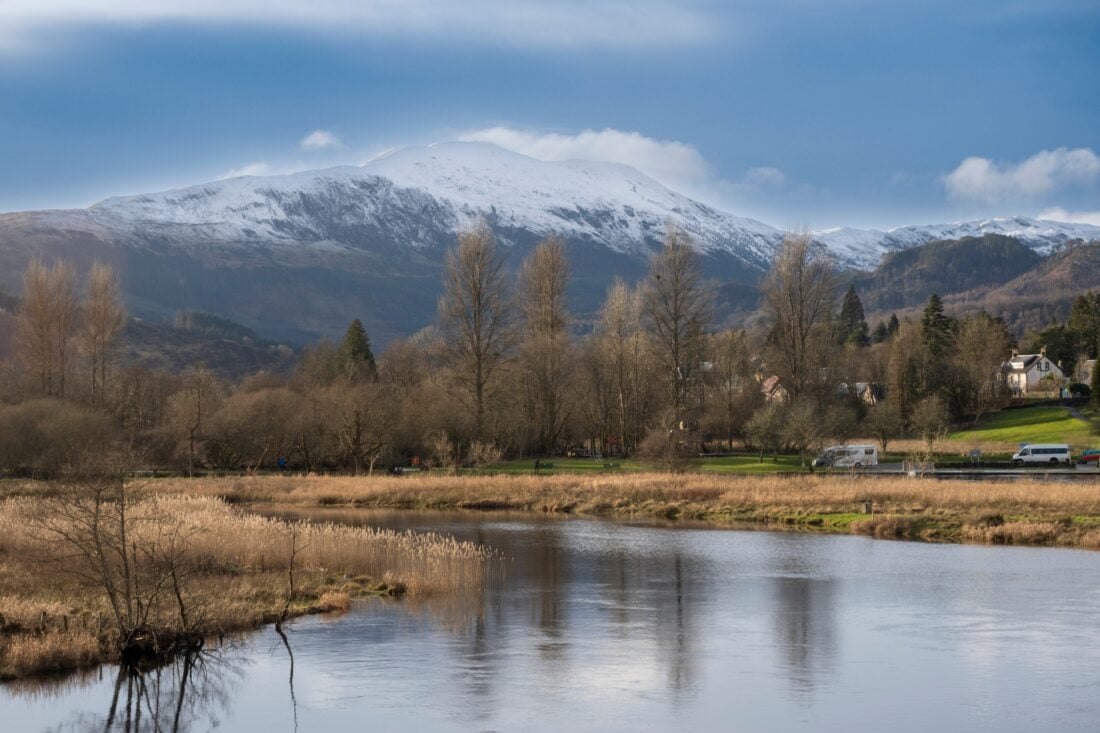
What the Forecast Looks Like for Ben Ledi in August
A representative forecast from Mountain-Forecast.com for the 879-metre summit shows the kind of variability you should expect even in summer:
Days 1-4:
- Light rain (around 3mm) at the start
- Conditions turn colder, with a dusting of snow possible by Thursday morning
- Temperatures range from a maximum of 11°C down to a minimum of -2°C
- Freeze-thaw conditions prevail
- Winds build from moderate SSW to strong westerly
Days 5-7:
- Snow dusting transitions back to light rain (around 4mm) by Friday night
- Temperatures range from a maximum of 3°C to a minimum of -3°C
- Winds ease from near-gale force (SSW on Friday night) to calm by Sunday afternoon
That is a significant temperature swing and near-gale winds within a single week in what is nominally a summer month. Check the Mountain-Forecast.com summit forecast (issued at 12 am local time) close to your planned date, not days in advance.
Why August Weather on Ben Ledi Can Catch You Out
The Scottish Highlands do not operate on a conventional summer schedule. The forecast data shows rapid transitions rather than sustained settled spells, with temperatures capable of swinging from double figures to below zero and winds building to near-gale force within days. If you’ve been exploring Scotland’s west coast and enjoyed balmy conditions at sea level, don’t assume the hills will play along.
Midges are also a factor in August. They’re highly weather-dependent and can be manageable on breezy days, but calm, damp weather around Callander can change that quickly. Bring a head net and midge repellent just in case. Not gonna lie, a swarm of midges at the base while you’re trying to lace up your boots is its own special kind of misery.
Kit and Preparation for Ben Ledi in August
Given the forecast patterns above, treat August the same as any shoulder-season Scottish hill day:
- Waterproofs (top and bottom): Rain is likely at some point
- Insulating mid-layer: Temperatures at the summit can drop below zero
- Windproof outer layer: Winds can reach near-gale force at 879 metres
- Navigation gear: Visibility can deteriorate rapidly above 300 metres, so carry a map and compass (and know how to use them, not just carry them for the aesthetic)
- Microspikes or traction aids: Snow dusting is possible even in August based on forecast data
If you’re building up experience on Scottish hills, our guide to climbing Ben Nevis covers similar kit advice in more detail. The currency in the UK is the British pound (£), so if you’re visiting from overseas you can grab any last-minute gear in Callander or Stirling without worrying about currency conversion shops.
Where to Get the Ben Ledi Forecast
Mountain-Forecast.com provides the most specific summit-level forecast for Ben Ledi. Forecasts are available for both the 879-metre peak and the base, issued at 12 am local time and updated at regular intervals. Check it the evening before your climb, not a week out. The forecast data above shows conditions can reverse completely within a short time frame.
Callander is the nearest town and a practical base for accessing Ben Ledi. It’s a small but well-equipped place with cafés, outdoor shops, and accommodation options. Ben Ledi sits within the Grampians range at coordinates 56.26 N, 4.32 W.
Nearby Peaks for Context
If conditions on Ben Ledi look poor, the surrounding area offers alternatives. Peaks within roughly 19 kilometres include Ben Venue, Stuc a’ Chroin, and Craiglich. Turns out Ben Vorlich is also close by and well worth considering, though check individual summit forecasts for each since conditions vary across the range.
Summary
August is a viable month for climbing Ben Ledi, but summit conditions can include near-freezing temperatures, snow dusting, and near-gale winds even in mid-summer. Weather deteriorates sharply above 300 metres. Check the Mountain-Forecast.com summit forecast the night before, carry full mountain kit, and do not judge summit conditions from the base.
