Everest Base Camp elevation depends on which side of the mountain you mean. The South Base Camp in Nepal sits at 5,364 metres (17,598 feet) above sea level. The North Base Camp in Tibet is lower, at 5,150 metres (16,900 feet). When most trekkers and articles refer to “EBC,” they mean the Nepal side.
Quick-Answer Summary
| Base Camp | Country | Elevation |
|---|---|---|
| South Base Camp (EBC Nepal) | Nepal | 5,364 m / 17,598 ft |
| North Base Camp (EBC Tibet) | Tibet | 5,150 m / 16,900 ft |
| Tibet tourist-accessible area | Tibet | approx. 5,010-5,200 m |
For context: Mount Everest’s summit stands at 8,848 metres (29,032 feet), so the Nepal base camp is roughly half the mountain’s height.
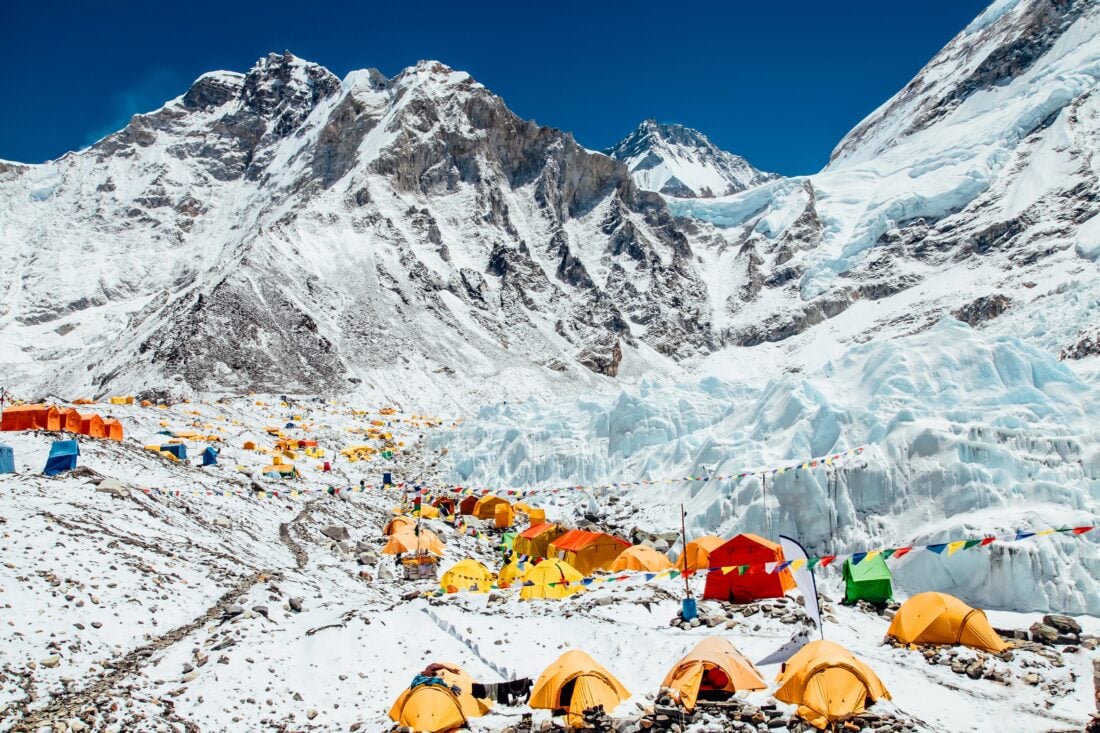
Nepal South Base Camp: 5,364 m (17,598 ft)
South Base Camp in Nepal’s Khumbu region is the world’s most visited high-altitude trekking destination, drawing around 40,000 trekkers per year. It serves as the staging area for climbers attempting the summit via the southeast ridge. Interest in the trek has been steadily rising, with search traffic peaking around September and November, which lines up perfectly with the main trekking seasons.
Facilities at South Base Camp include tents, a field hospital, a heliport, and communication centres. Expedition operators like Furtenbach Adventures add private tent accommodation, heated dining domes, hot showers, Wi-Fi, and on-site medical staff for their clients.
Access is by foot or helicopter only. The standard trekking route starts at Lukla Airport (2,860 m / 9,383 ft), then moves through Namche Bazaar, Dingboche, and Gorakshep before reaching base camp. One thing worth flagging: Nepal runs on UTC+05:45 (yes, that 45-minute offset catches people off guard), and Nepali is the primary language you’ll encounter on the trail, though English is widely spoken in the trekking corridors.
Note: as of June 2022, it was announced that South Base Camp will eventually move 200 to 400 metres lower because of rapid melting of the Khumbu Glacier.
Tibet North Base Camp: 5,150 m (16,900 ft)
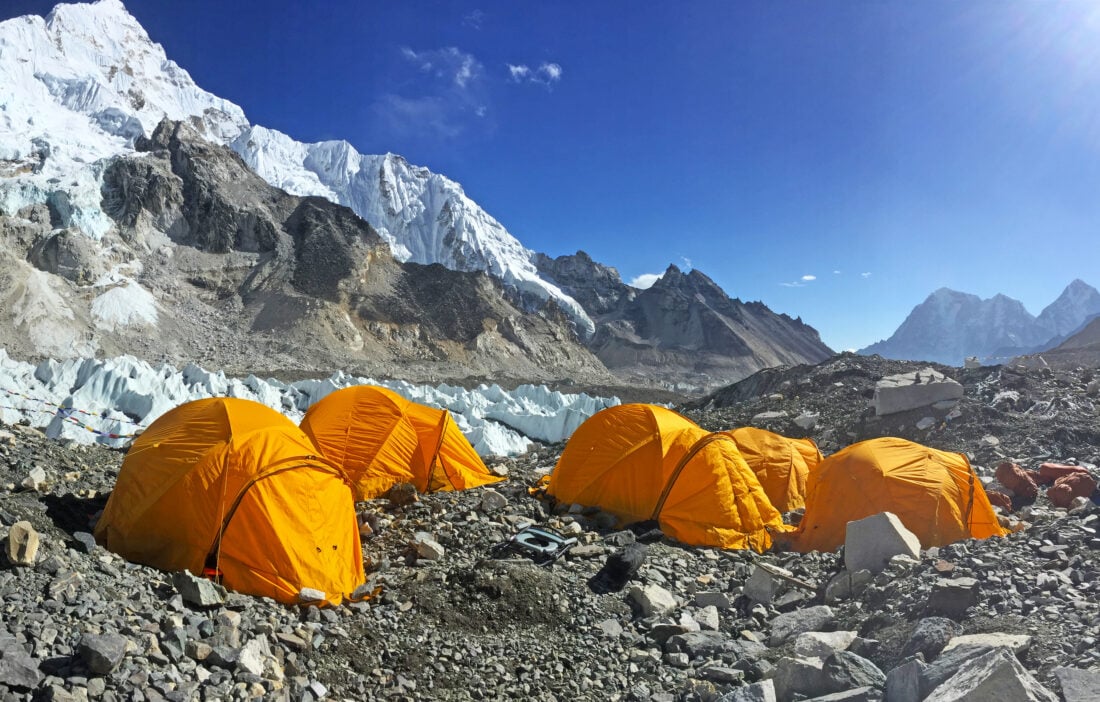
North Base Camp in Tibet is the starting point for Everest summit attempts via the northeast ridge. At 5,150 metres (16,900 feet), it is slightly lower than the Nepal camp.
Unlike the Nepal side, North Base Camp is reachable by vehicle via a paved road off China National Highway 318, passing through Rongbuk Monastery. Private vehicles are restricted at a designated point at 5,200 metres; horse-drawn carriages cover the final stretch to camp.
Accommodation options include the Rongbuk Monastery Guesthouse and the Yak Tent Hotel. Additional permits are required to enter the Tibet Autonomous Region and reach the camp, and you must book through a licensed local travel agency. Honestly, the permit logistics on the Tibet side are the bit that trips most people up, so start that process well in advance.
The tourist-accessible area of Tibet EBC is sometimes cited at approximately 5,010 to 5,200 metres depending on the source and access point.
How Does EBC Compare to Other Points on the Route?
For the Nepal trek, altitude builds gradually from Kathmandu. Key elevations along the standard route:
| Location | Elevation |
|---|---|
| Kathmandu | 1,400 m / 4,593 ft |
| Lukla | 2,860 m / 9,383 ft |
| Namche Bazaar | 3,440 m / 11,286 ft |
| Dingboche | 4,410 m / 14,469 ft |
| Lobuche | 4,940 m / 16,207 ft |
| Gorak Shep | 5,164 m / 16,942 ft |
| Everest Base Camp | 5,364 m / 17,598 ft |
| Kala Patthar | 5,545-5,644 m / 18,192-18,519 ft |
Kala Patthar is actually higher than Everest Base Camp and is included in most EBC itineraries because it offers views of Everest’s summit. Not gonna lie, the sunrise from Kala Patthar is the photo opportunity of the entire trek, so don’t skip it just because your legs are screaming at you.
For context on what lies above base camp, the south-side climbing camps continue:
- Camp I: 6,065 m (19,900 ft), above the Khumbu Icefall
- Camp II (Advanced Base Camp): 6,400 m (21,000 ft)
- Camp III: 7,200 m (23,600 ft)
- Camp IV (South Col): 7,920 m (26,000 ft) – the last camp before the summit push
Altitude Sickness at EBC: What You Need to Know
At 5,364 metres, the air contains significantly less oxygen than at sea level. Altitude sickness is a real risk, and acclimatization is not optional. This is the part of the trip that humbles even the fittest people, so park your ego at Lukla.
Symptoms to watch for:
- Headache, nausea, vomiting
- Dizziness and fatigue
- Loss of appetite
- In serious cases: High Altitude Pulmonary Edema (HAPE) or High Altitude Cerebral Edema (HACE)
Practical steps the sources recommend:
- Drink 3 to 4 litres of water daily
- Avoid alcohol and smoking during the trek
- Take preventive altitude sickness medication (consult a doctor before travel)
- Follow the “travel high, sleep low” principle, ascending during the day and descending to sleep at a lower altitude
- Build in rest days at Namche Bazaar and Dingboche specifically for acclimatization
- Do not race the route or compete with other trekkers on pace
Climbers typically spend several days at base camp itself before moving higher, using the time for equipment checks and further adjustment to the thin air. If you’ve done other big trips where planning made or broke the experience (similar to how even a road trip needs proper preparation), multiply that mindset by ten for EBC.
Nepal vs Tibet: Which EBC Should You Visit?
| Factor | Nepal (South) | Tibet (North) |
|---|---|---|
| Elevation | 5,364 m / 17,598 ft | 5,150 m / 16,900 ft |
| Access | Trekking or helicopter from Lukla | Paved road by vehicle |
| Trek duration | Approx. 10+ days from Lukla | Reachable by road tour |
| Permits needed | Standard Nepal trekking permits | Tibet Travel Permit plus additional permits |
| Accommodation | Teahouses along route; tents at camp | Rongbuk Monastery Guesthouse, Yak Tent Hotel |
| Annual trekkers | Approx. 40,000 | Lower volume |
The Nepal route is the classic EBC trek and sees far more visitors. The Tibet route is less physically demanding to reach but requires more logistical preparation and mandatory guided booking. If you’re someone who prefers a quieter, more remote feel and doesn’t mind handing over control of the logistics, the Tibet side has its appeal. But for the full “I earned this” trekking experience, Nepal is the one.
Packing Essentials for the Altitude
The elevation makes certain gear non-negotiable:
- Trekking poles (stability and knee protection on descents)
- Insulated water bottle (water freezes at altitude)
- Layered clothing: base layer, mid layer, outer shell
- Sun protection: sunscreen and lip balm (UV intensity increases with altitude)
- Altitude sickness medication (prescribed before departure)
- Energy snacks: bars, beef jerky, or similar high-calorie options
- Cash in Nepalese rupees (NPR, ₨), because card payments are unreliable at high elevation, and turns out many teahouses along the route only accept cash
For Tibet EBC, all logistics including permits must be arranged through a licensed Tibetan travel agency before arrival. Seriously, do not show up thinking you can sort this on the ground. If you’re the type who likes having a solid travel tips checklist before any trip, this is one destination where that instinct will serve you well.
