
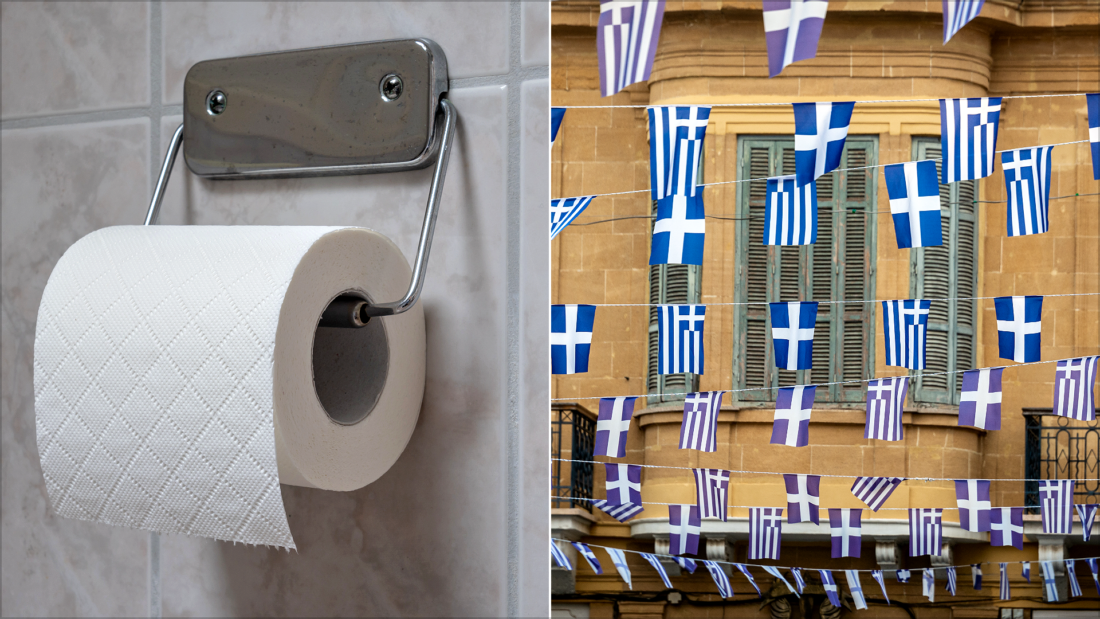
No. In Greece, you should not flush toilet paper down the toilet. The plumbing infrastructure across the country uses pipes roughly 2 inches in diameter, about half the width of standard American pipes. Flushing paper causes blockages. The correct approach is to place used toilet paper in the small bin provided next to the toilet.
Quick Answer
Do not flush toilet paper in Greece. Pipes are too narrow (around 2 inches in diameter) and will clog. Dispose of used paper in the bin beside the toilet instead. This applies throughout mainland Greece and the Greek islands. Signs in restrooms will often remind you, though they may not always spell out “toilet paper” specifically.
Why Can’t You Flush Toilet Paper in Greece?
The core reason is pipe size. Greek plumbing pipes are approximately 2 inches in diameter, which is roughly half the size of pipes used in the United States. Toilet paper does not dissolve fast enough to pass through these narrower pipes without causing a blockage.
Sanitary products and anything else that is not human waste should also go in the bin, not the toilet.
Some newer buildings do have larger sewer pipes capable of handling toilet paper, but these are not common enough to assume. Honestly, it’s just not worth the gamble, especially when the fix is as simple as using the bin right next to you.
What to Do Instead
Every toilet in Greece should have a small bin next to it specifically for this purpose. Use it.
If you find the idea uncomfortable, a practical workaround is to wrap used toilet paper in a few clean sheets before placing it in the bin. This is the approach recommended for hygiene reasons.
A few other things worth knowing before you go:
- Carry your own toilet paper. Public restrooms in Greece can run out of stock, so keeping a small supply in your bag is a sensible habit. Not glamorous, but you’ll thank yourself.
- Septic-safe toilet paper dissolves faster than standard paper and is less likely to cause a clog if accidentally flushed. Some travelers bring it as a precaution, though it is not a widely established solution in Greece specifically.
- Signs may not be explicit. Restroom notices often ask you not to flush paper products without listing exactly what counts. Assume toilet paper is included.
One more practical note: Greece uses the euro (€) and the local language is Greek, though English is widely spoken in tourist areas. As of April 2026, £1 gets you roughly €1.15 and $1 gets you about €0.87, so budgeting is fairly straightforward if you’re coming from the UK or North America.
Does This Apply to the Greek Islands Too?
Yes. The same rule applies across the Greek islands. The narrow pipe infrastructure is not limited to the mainland. Signs reminding visitors of the no-flush rule appear in restrooms throughout the islands.
If you’re planning to island-hop, keep in mind that the weather can surprise you outside of peak summer. Current conditions in Greece are sitting at around 43°F with overcast skies and high humidity (as of April 2026), so spring visits are cooler than many first-timers expect. Greece operates on UTC+02:00, which is handy to know if you’re coordinating ferries and flights.
What If a Toilet Looks Modern?
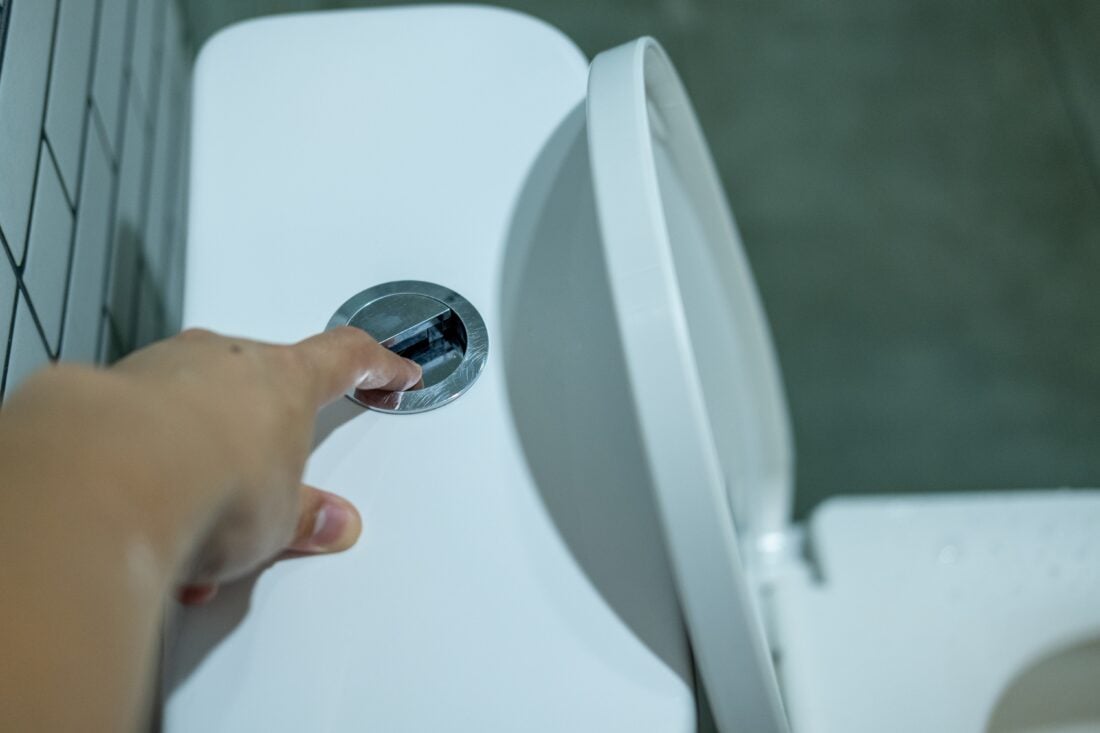
A modern-looking toilet does not mean the pipes behind the wall are larger. Unless a building was specifically constructed with wider sewer pipes, which is uncommon, the standard 2-inch pipe restriction still applies. The flush mechanism and the toilet bowl design are separate from the pipe diameter. Turns out, shiny fixtures mean nothing when the plumbing behind them hasn’t changed in decades.
Other Countries with the Same Rule
Greece is not alone in this practice. You will encounter the same bin-not-bowl system in:
- Turkey
- Egypt
- Thailand
- Cambodia
- Vietnam
- Parts of South America
- Parts of the Caribbean
If you are traveling through multiple destinations on a trip that includes Greece, this habit may already be familiar. It’s one of those road trip tips that sounds small but saves you a world of embarrassment. The same goes for destinations like Dubai, where local customs catch visitors off guard if they don’t do a little homework first.
A Brief Note on Greece and Toilet History
For context: the island of Crete is considered the site of the world’s first flushing toilet, dating to around 1700 B.C. at the palace of Knossos. The modern plumbing challenge is entirely separate from that history.
You may also encounter squat toilets in Greece, a hole in the floor with two foot slots. These are less common but worth knowing about.
Frequently Asked Questions
Can you flush toilet paper in Greek hotels?
Generally, no. Most Greek hotels use the same narrow-pipe infrastructure as the rest of the country. A bin will be provided next to the toilet. Some newer buildings may have upgraded plumbing, but you should use the bin unless you see a clear sign saying otherwise.
What happens if you accidentally flush toilet paper in Greece?
Repeated flushing increases the risk of a blockage. Use the bin to avoid the problem entirely.
Is septic-safe toilet paper a solution in Greece?
It dissolves faster than standard paper and reduces the risk of clogs, but it is not a widely adopted or officially recommended solution for Greece. The standard advice remains: use the bin.
Do Greek restroom signs explain the no-flush rule?
Signs are common, but they do not always specify toilet paper. They may say something general about not flushing paper or foreign objects. Assume the rule applies to toilet paper regardless of how the sign is worded.
