

I’ll be honest, when I first started looking into this topic I assumed it was basically just a house move with a longer drive. Pack the boxes, hire a van, done. Turns out there are a few things worth knowing before you book the removals truck.
The good news: if you’re a UK citizen, you don’t need any special paperwork to move from England to Scotland. No visa, no forms, no bureaucratic hoops. You just go. Immigration is not devolved to the Scottish Government, so the UK-wide rules apply, and for English movers that means the process is administratively pretty painless.
What does require a bit of thought is everything else: benefits, property, the legal system, the weather (yes, really), and whether you’ll understand a word anyone says to you in Glasgow for the first three months.
Quick Answers: Moving to Scotland from England
- Do you need a visa or special paperwork? No. UK citizens can move freely.
- Is the cost of living lower? Generally yes, especially compared to London.
- Are there benefits you’ll gain? Yes – free prescriptions, free university tuition (after 3 years’ residency), free school meals.
- Do your DWP benefits transfer automatically? No. You need to inform your provider and apply to Social Security Scotland for Scottish equivalents.
- Is the property-buying process the same? No. Scotland has its own legal system and a different conveyancing process.
- Will English people be welcome? By and large, yes. Anti-English sentiment is minimal.
Why People Are Making the Move
Post-COVID, the flow of people heading north has been noticeable, particularly from London. Interest in Scotland as a destination has actually been climbing steadily, with search trends for Scotland travel rising through late 2025 and into early 2026. The reasons come up again and again: lower cost of living, a slower pace, more space, and frankly just wanting out of the city.
For a lot of former Londoners, housing costs are the headline. Property in Scotland is significantly cheaper than in the capital, and the general cost of living reflects that gap too. The currency is the British pound (£), so there’s no exchange rate headache to deal with, just a pleasant shock when you see what your money actually buys. If you’ve been paying London rent for years, Scottish prices can feel almost suspicious.
Beyond the money, people cite the friendliness, the landscape, the feeling that life is a bit less relentless. Whether that holds up after your first proper Scottish winter is a different question.

We earn a commission if you buy through this link, at no extra cost to you.
The Benefits You Actually Get
This is where moving abroad to Scotland from England has some genuinely useful upsides that don’t get talked about enough.
Free prescriptions – no charge, regardless of what you need. If you’re on regular medication, this adds up fast.
Free university tuition – for Scottish residents who have lived in Scotland for at least three years before starting a degree. The Student Awards Agency for Scotland (SAAS) manages fees and bursaries. The three-year rule matters, so if you’re moving with kids who are planning to go to university, timing is relevant.
Free school meals are available, and free elderly care is funded by the Scottish Government.
Scotland also runs NHS 24/7 services, giving you access to medical advice around the clock.
Sorting Your Benefits When You Move

This part catches people out. If you’re currently receiving disability or carer benefits from the Department for Work and Pensions, those don’t just follow you north automatically.
When you move, you need to:
- Tell your existing benefit provider your new address
- Apply separately to Social Security Scotland for the Scottish replacement benefits
The main swaps are:
| DWP Benefit | Scottish Replacement |
|---|---|
| Attendance Allowance | Pension Age Disability Payment |
| Carer’s Allowance | Carer Support Payment |
| Disability Living Allowance (adults) | Scottish Adult DLA |
| Disability Living Allowance (children) | Child Disability Payment |
| Personal Independence Payment (PIP) | Adult Disability Payment |
Don’t leave this until after you’ve moved. Sort it in advance to avoid gaps in payments.
The Legal Differences Worth Knowing
Scotland and England are separate legal jurisdictions. That sounds dry but it has real practical implications.
Property law is the big one. The buying process in Scotland works differently from England. One thing that surprises a lot of movers is the “Offers Above” pricing system – properties are listed with a guide price and buyers submit sealed bids, which can turn into a proper bidding war. Fixed-price sales as you’d know them from England are less common. Do your homework on this before you start viewing.
Family law also differs. Scotland has a simplified DIY divorce process that allows for mutual consent without assigning blame, which is distinct from England’s traditional approach.
Neither of these things should put you off, but going in without knowing about them is how you end up surprised at a stressful moment.
Jobs and Industries in Scotland
The best job prospects are concentrated in the central belt, particularly Edinburgh, Glasgow, and Aberdeen. If you’re in a sector that overlaps with Scotland’s strengths, the opportunities are solid.
Industries doing well include:
- Renewable energy
- Oil and gas (Aberdeen is the hub)
- Agriculture, forestry, and fishing
- Whisky production
- Education and the public sector
For whisky specifically, checking producers’ own websites (Diageo is one example) for vacancies is more useful than generic job boards.
The Climate, Honestly
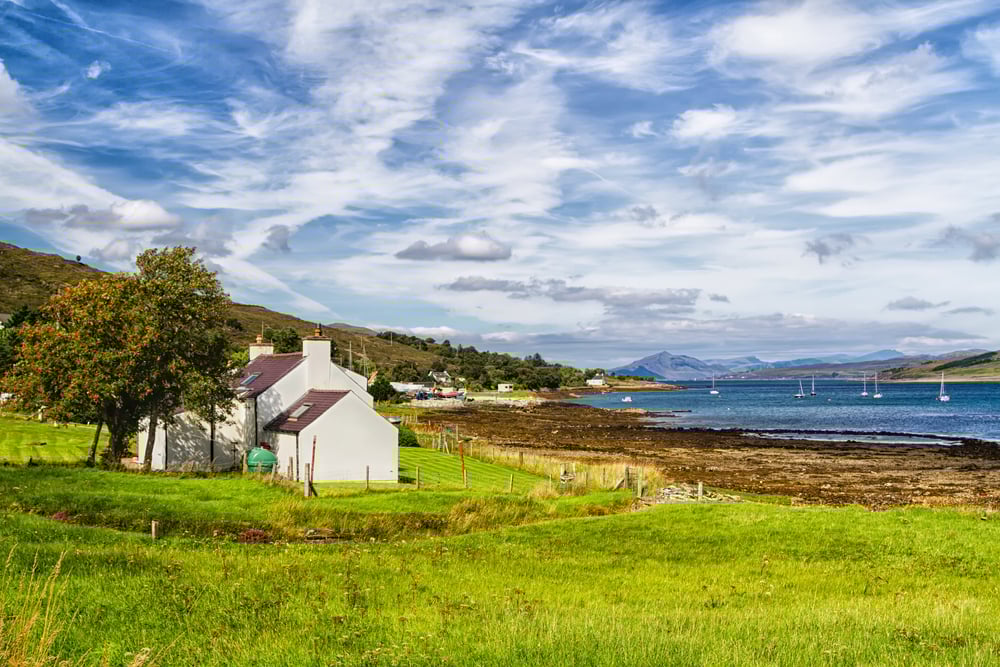
I’m not going to pretend the weather is the selling point. Scotland is wetter, windier, and colder than most of England, and winters are darker and more relentless. Scottish winters can be dull and miserable, a notch above England, and that’s probably fair.
That said, a few things are worth knowing:
- Summers are genuinely lovely – longer daylight hours than England, roughly an extra hour of light, though temperatures usually sit in the early 20s Celsius rather than anything warmer
- It’s not uniform – some coastal areas like Lossiemouth and Dornoch can be milder than you’d expect for their latitude. If you’re planning to explore the coastline, our guide to Scotland’s west coast covers some of the best spots.
- Winters are cold but not extreme – nothing like central Europe, despite what the latitude suggests. Check out our winter travel tips if you’re making the move during the colder months.
At the time of writing, Scotland was sitting at 61°F with clear skies and 88% humidity (as of March 2026), which honestly felt like a gift. Don’t get used to it.
If you’re moving from London, the shift is more noticeable than if you’re coming from somewhere like Newcastle, where you’re already used to a bit of grim.
The Language and Culture Shift
Accents vary enormously across Scotland. Glaswegian is its own thing entirely, and east coast differs from west coast. Give yourself time. You’ll get there.
A few words you’ll encounter immediately:
- Aye – yes
- Wee – small, little (used constantly)
Gaelic still influences Scottish English in various ways, and the culture has its own distinct events and traditions, Burns Night, Hogmanay, and a general pride in being Scottish that’s different from English regional identity. None of this is unwelcoming to outsiders. Scots are, by most accounts, genuinely warm toward people moving there.
Anti-English sentiment exists in the abstract but in day-to-day life it’s minimal. You’re unlikely to encounter it.
Practical Costs to Factor In

A few financial things that are easy to overlook:
- Council tax applies in Scotland as in England, banded by property, covering services like waste collection, schools, and emergency services
- VAT is 20% on goods and services, same as England, with reduced rates on some items
- TV licence costs £159 per year if you’re watching live TV
- Car insurance is generally cheaper in Scotland than in major English cities, particularly compared to London postcodes
- Traffic is lighter outside the cities, which is either a relief or irrelevant depending on where you’re moving from. If you’re thinking about exploring by car once you’re settled, we’ve got a full breakdown of the best Scotland road trips to get you started.
One thing that trips up newcomers is tipping etiquette in Scotland, which is less pressured than in some countries but still has its own unwritten rules.
Scottish Islands: Worth Considering
If you’re after a serious lifestyle change, some Scottish islands actively offer incentives to attract new residents. This isn’t for everyone, but if the appeal of moving to Scotland is space and a slower pace, it’s worth knowing the option exists.
Is It Worth It?
Depends entirely on what you want from it. If you’re chasing lower costs, more space, and a different pace of life, particularly coming from London, Scotland makes a strong case. The social benefits are real and meaningful. The landscape is genuinely extraordinary. The people are welcoming.
The winters are hard. The property process will confuse you at first. And you’ll need to actively sort your benefits rather than assuming they transfer.
But people who’ve made the move tend not to regret it. That’s probably the most honest summary available.
