
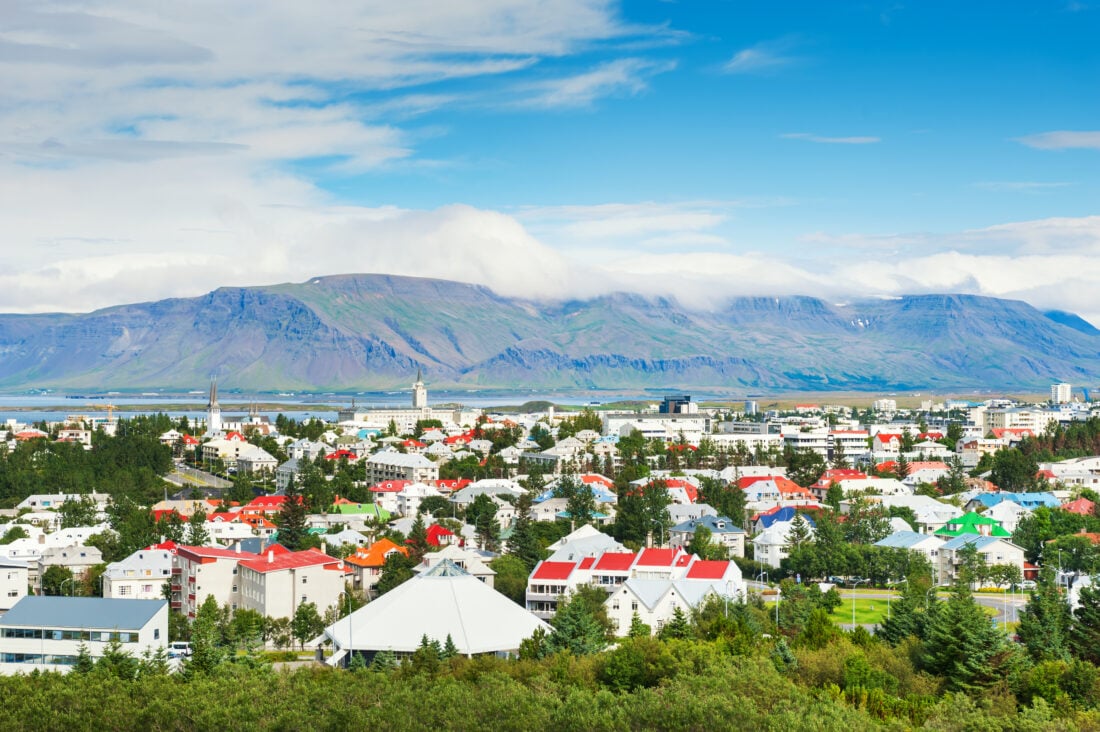
Arriving in Reykjavik with a full day to spare and little sense of how walkable the city is can feel like a gamble. In reality, it’s extremely walkable. The bus system often ends up being unnecessary for a short visit.
With just one day in Iceland’s capital, it’s possible to cover a surprising amount of ground without feeling rushed. The city is compact, the main sights sit close together, and most are genuinely worth your time. In March, temperatures hover around 32°F with light snow and high humidity, so layering up is essential. Here’s how to make the most of it.

Quick Answer: What to Do in One Day in Reykjavik
- Morning: Sun Voyager, Hallgrimskirkja tower, Old Town wander along Skólavörðustígur and Laugavegur
- Lunch: Bæjarins Beztu Pylsur (the famous hot dog stand, open since 1937)
- Afternoon: Old Harbor area – FlyOver Iceland, Whales of Iceland museum, or Harpa Concert Hall
- Evening: Perlan Museum and/or Sky Lagoon geothermal spa
- Dinner: Café Loki, Reykjavik Kitchen, or Islenski Barinn for traditional Icelandic food
Reykjavik is walkable, credit cards are accepted everywhere (the currency is the Icelandic króna, and £1 gets you roughly kr166 ISK while $1 gets you about kr125 ISK), and there is no Uber or Bolt. Use public buses or taxis for spots further out like Perlan.
While Reykjavík is easy to explore on foot, having a campervan makes it simple to venture beyond the city and discover more of Iceland. Cozy Campers offers a convenient option for travellers who want to combine a Reykjavík stay with a wider road trip around the country.
Start Early at the Sun Voyager
Most Reykjavik attractions don’t open until mid-morning, so use that time well. Head to the Sun Voyager, the stainless steel sculpture on the waterfront designed by Jón Gunnar Árnason as a dream boat, an ode to sun and light. It looks like a Viking longship and photographs brilliantly, especially with the mountains behind it. It consistently ranks among the top free attractions in the city, and honestly, the early morning light makes it worth dragging yourself out of bed for.
While you’re out here, walk along Sæbraut. The Atlantic Ocean on one side, Mount Esja in the distance. It’s a good way to shake off any travel fog before the day properly starts.
Hallgrimskirkja: Go Up the Tower
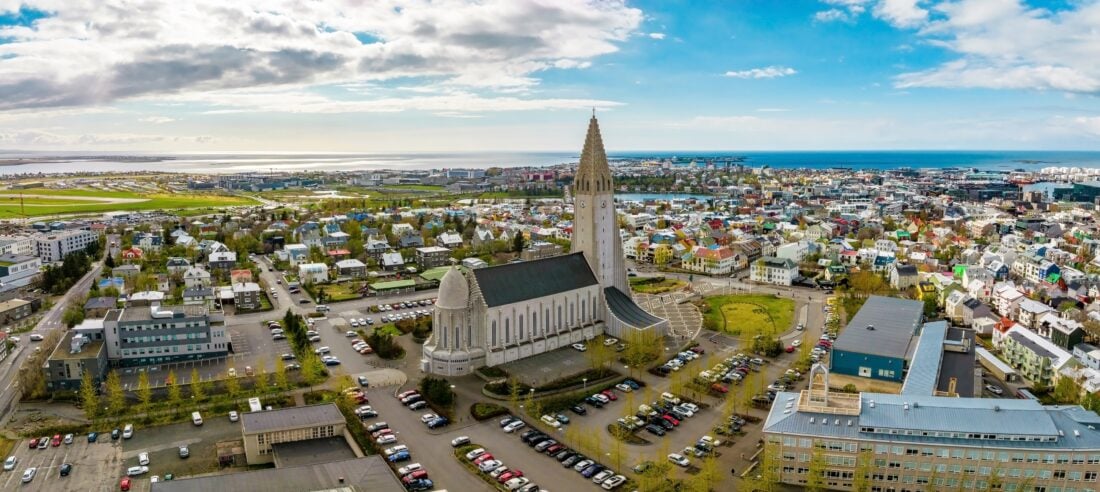
Hallgrimskirkja is the tallest building in Reykjavik and the second-tallest in Iceland, standing at 74.5 metres. The design was created by Guðjón Samúelsson in the 1940s, inspired by Iceland’s geology, and the church took over 40 years to complete. It’s free to go inside if no service is on, but the tower tour costs ISK 1,400 (roughly £8.50 or $11) and is worth it for the panoramic views over the city.
Out front, there’s a statue of Leifur Eiriksson, the Norse explorer. Worth a look.
Tickets for the tower can usually be bought on the day at Hallgrímstorg 1. If you’ve been up Arthur’s Seat or Calton Hill in Edinburgh, you’ll appreciate the same “tiny colourful rooftops” effect here, just with way more ocean.
Old Town: Laugavegur, Street Art, and the Pond
Head north from Hallgrimskirkja into the old town. Laugavegur is Reykjavik’s oldest shopping street, originally used by women to reach hot springs, now lined with independent shops. You won’t find many chains here. The area around Laugavegur, Grettisgata, and Skólavörðustígur has a strong street art scene that expanded significantly after 2015 thanks to a project called Wall Poetry, which connected artists with musicians to create murals. Visitors regularly call this one of the most photogenic neighbourhoods in Scandinavia, and not gonna lie, I burned through my phone battery here embarrassingly fast.
If you want an authentic Icelandic sweater, the Handknitting Association of Iceland is the place. For a cinnamon bun that will ruin all other cinnamon buns for you, find a Brauð & Co bakery, the main one is near Hallgrimskirkja.
While you’re in the area, loop around Tjörnin, the city’s main lake. It’s home to various bird species, has statues dotted around it, and the views are genuinely lovely. Reykjavik City Hall and Parliament House are both nearby if you want to tick them off.
Lunch: Just Get the Hot Dog
Bæjarins Beztu Pylsur has been serving hot dogs since 1937. The toppings (fried onion, remoulade, mustard) are not what you’d expect, and they work. Even if hot dogs are not your thing, just do it. It’s cheap, fast, and one of those food experiences that actually lives up to the reputation. It pulls in thousands of visitors a year and the queue moves quickly, so don’t be put off if you see a line.
Afternoon: Old Harbor and What’s There
The Old Harbor is a short walk from the city center and gives you several options depending on your interests. Photography-wise it’s excellent, aqua-colored buildings, the Harpa Concert Hall in the background, views of the mountains.
Harpa Concert Hall opened in 2011 and its facade is made of three-dimensional glass panels using the same hexagonal shape as Iceland’s basalt columns. It’s home to the Icelandic Symphony Orchestra and hosts regular performances throughout the year, from classical concerts to contemporary music events. Much of the building can be explored for free; guided tours run at 11am and 1pm and last around 45 minutes to an hour.
For something more immersive, FlyOver Iceland is a simulated flight experience that takes you over Iceland’s landscapes. Turns out it’s one of the highest-rated indoor attractions in Reykjavik, and people who are usually sceptical about “ride experiences” tend to come away impressed. It takes about half an hour and is located near the Old Harbor. Book in advance.
The harbor area also has several museums worth knowing about:
- Whales of Iceland – life-sized models of 23 whale species with interactive displays and an audio guide
- Saga Museum – Icelandic history told through life-size wax figures (you can dress up as a Viking, which is either brilliant or embarrassing depending on your travel companions)
- Maritime Museum – housed in a former fish-freezing plant, covers Iceland’s relationship with fishing
- Icelandic Phallological Museum – exactly what it sounds like, and it draws a lot of visitors annually
Evening: Perlan or Sky Lagoon (or Both, If You’re Ambitious)
Perlan is a museum dedicated to Iceland’s natural environment, covering glaciers, volcanoes, wildlife, and a planetarium show about the Northern Lights. It needs 2-3 hours to do properly. Perlan opens late and is worth visiting in the evening, especially in winter when it’s dark. It’s not walkable from the center, so take a public bus. Book timed tickets in advance. This is one of those places that people consistently rave about, and the indoor ice cave exhibit is a highlight even if you’re planning to see real ice caves elsewhere.
Sky Lagoon is a geothermal spa in Kópavogur, about 10-15 minutes by car from the city. It has an infinity pool overlooking the Atlantic Ocean, hot waterfalls, a sauna, and a seven-step ritual. It stays open until 10pm and takes about 1.5-2 hours to enjoy properly. Between September and March, there’s a chance of seeing the Northern Lights from the water. Pre-book this one, timed entry is essential. Fair warning though: some visitors find the seven-step ritual a bit gimmicky, and the changing facilities can get crowded during peak evening slots. The pool itself, however, is the real draw.
Perlan is actually on the way to Sky Lagoon, so if you want both, do Perlan first and Sky Lagoon to close out the day.
Dinner: Where to Eat Traditional Icelandic Food
- Café Loki – directly across from Hallgrimskirkja, known for rye bread ice cream and open-top sandwiches
- Reykjavik Kitchen – traditional Icelandic food in the old town
- Islenski Barinn – another solid option for local dishes in the center
- Saegreifinn (Sea Baron) – famous for lobster soup, communal seating on fish barrels at the harbor
Be prepared: eating out in Reykjavik is expensive. A main course at a sit-down restaurant can easily run ISK 3,500-5,000 (roughly £21-30 or $28-40). Nobody comes to Iceland for budget dining, but at least the food is genuinely good.
Practical Tips for One Day in Reykjavik
| Topic | What You Need to Know |
|---|---|
| Getting around | Reykjavik city center is very walkable. Use public buses for Perlan and Sky Lagoon. |
| Taxis/rideshare | No Uber, Lyft, or Bolt. Taxis and public buses only. |
| Payment | Credit cards accepted everywhere. The currency is the Icelandic króna (ISK). No need for cash. |
| Booking ahead | Pre-book FlyOver Iceland, Perlan, and Sky Lagoon. Hallgrimskirkja tower is usually fine on the day. |
| Summer vs winter | In summer, daylight is essentially endless, so order of visits matters less. In winter, prioritize outdoor spots early and save Perlan for the evening. |
| Safety | Reykjavik has some of the lowest crime rates in the world. |
| What to wear | Layers, always. Comfortable shoes, you will walk a lot. Iceland runs on UTC, so no jet lag if you’re coming from the UK. |
| Language | Icelandic is the official language, but virtually everyone speaks English fluently. |
Is One Day in Reykjavik Enough?
Honestly, yes, for the main highlights. You’ll hit the iconic landmarks, eat well, and get a real feel for the city. More time would let you take a day trip to the Golden Circle (Þingvellir National Park, Gullfoss waterfall, and Geysir cover about 155 miles in a loop) or spend longer at places like Perlan. But one day, done right, is not a compromise. It’s a solid visit.
If you’re the type who likes to pack activities into city breaks, you might also enjoy our guides to things to do in Amsterdam or cool things to do in León, both similarly compact and walkable cities where a day or two goes a long way.
