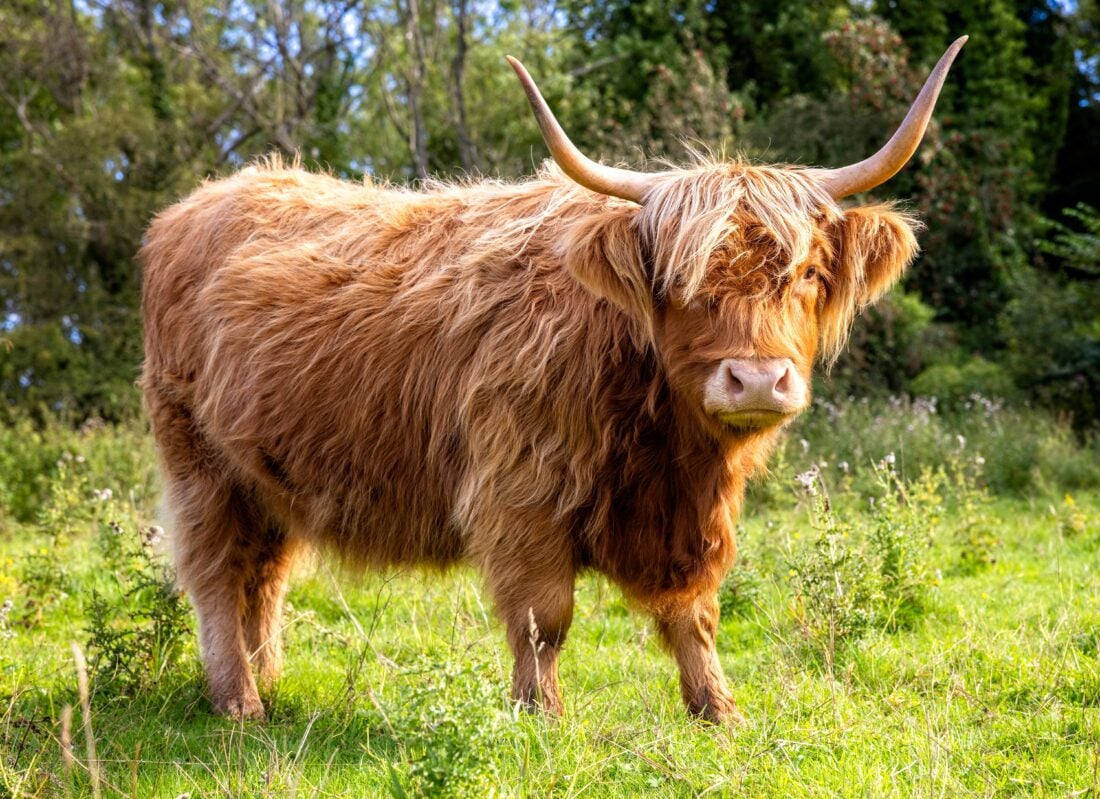
I’ll be honest. The first time I saw a Highland cow up close, I confidently pointed at one and said, “That one’s the male. Look at the horns.”
boy was, I was wrong.
Very wrong.
And if you’re here wondering “do female Highland cows have horns?”, you’re probably in the same boat I was, standing in a muddy field somewhere in Scotland, pretending you understand livestock while a shaggy cow judges you silently.
Let’s clear it up properly.
The Short Answer (Before We Overthink It)
Yes. Female Highland cows absolutely have horns.
Not just small ones either. Proper, dramatic, Instagram-worthy horns that make you question everything you thought you knew about farm animals.
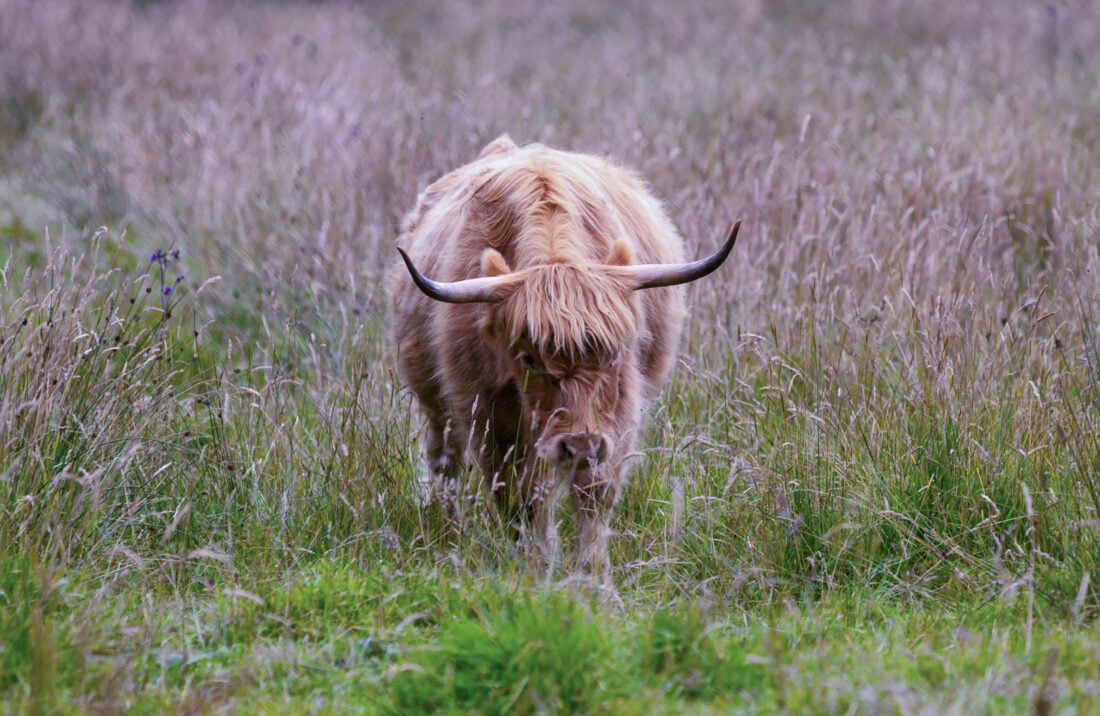
Both males and females grow horns. The difference isn’t whether they have them. It’s how they look.
Male vs Female Highland Cow Horns
Here’s where things get interesting, and slightly less embarrassing for the rest of us.
| Feature | Female Highland Cow | Male Highland Cow |
|---|---|---|
| Horn Shape | Long, thinner, curve upward | Thicker, shorter, curve forward or downward |
| Overall Look | Elegant, sweeping | Heavy, powerful |
| First Impression | “That’s majestic” | “That could absolutely ruin my day” |
The easiest way to tell them apart is the direction and shape of the horns.
- Females: horns grow outward and curve upwards
- Males: horns tend to go forward or slightly downward
Simple. In theory.
In practice, when you’re standing in a field in the Scottish Highlands with wind in your face and a cow staring into your soul, it becomes a lot less obvious.
Why Do Female Highland Cows Have Horns?
This was my next question, usually asked out loud to whoever I was traveling with, followed by a shrug and some confident nonsense.
Turns out, there are actual reasons.
1. Defense (Yes, Even the Females)
Highland cows evolved in pretty harsh conditions. Think cold weather, open landscapes, and the occasional predator back in the day.
So those horns?
They’re not just for show.
- Protection from threats
- Establishing space within the herd
- General “don’t mess with me” energy
And honestly, it works.
Even the calmest Highland cow gives off a quiet authority that says, “I am fluffy, but I am not to be tested.”
2. Foraging Through Snow
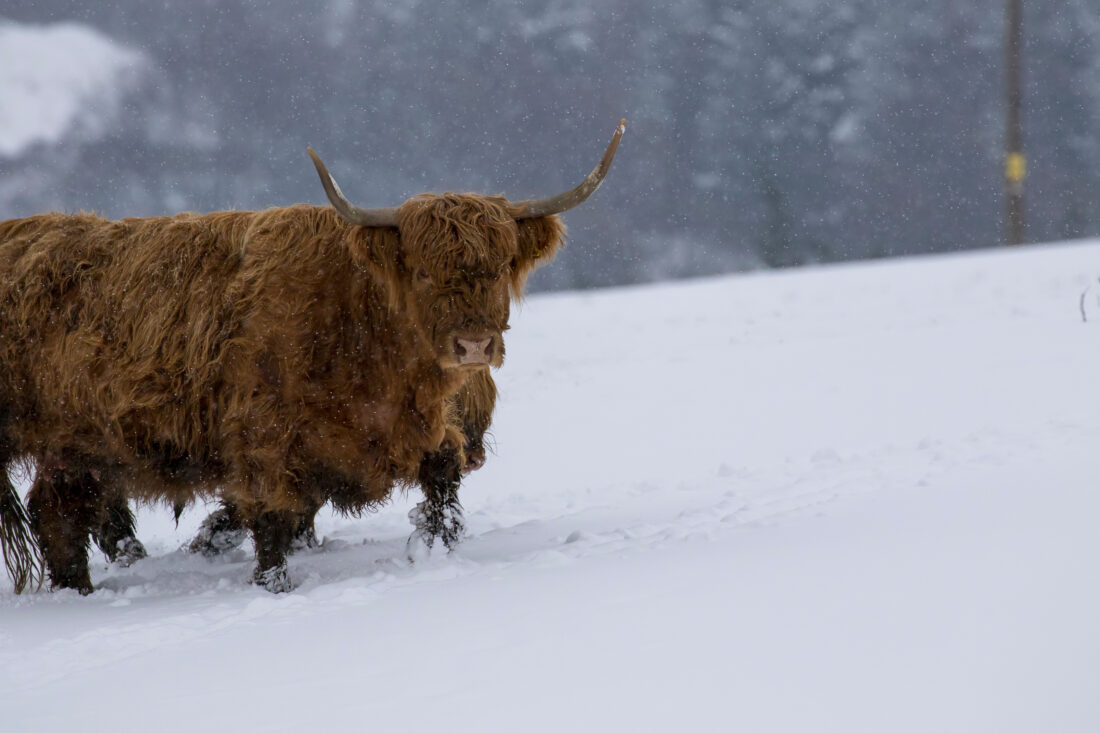
This one surprised me. Highland cows use their horns to move snow aside when searching for grass in winter. It’s less dramatic than a wildlife documentary and more like slow, determined shoveling.
Still impressive.
3. Social Hierarchy (Cow Politics, Basically)
Within a herd, horns help establish dominance and order.
Not constant fighting or anything chaotic. More like subtle positioning and the occasional reminder of who’s in charge.
It’s surprisingly civilized.
Do All Female Highland Cows Have Horns?
Short answer: almost always, yes.
Longer answer:
- It’s a natural trait of the breed
- Both sexes are expected to have horns
- If a cow doesn’t, it’s usually due to:
- Breeding variations
- Dehorning (rare in traditional Highland farming)
If you’re visiting Scotland or a farm and see a hornless Highland cow, it’s the exception, not the rule.
My First Close Encounter (And Mild Panic)
When we first visited Scotland, I had this romantic idea of Highland cows. Soft. Fluffy. Basically oversized dogs with bangs.
Then one walked toward me Slowly. With horns that looked like they belonged on something significantly more dangerous.
I remember saying, “They’re friendly, right?” in the same tone you’d use asking if a rollercoaster is safe while already strapped in.
They are generally calm and docile. But standing there, realizing both males and females have horns, there’s a brief moment where your brain goes:
“Maybe don’t test this.”
A healthy level of respect kicks in. As it should.
Are Female Highland Cows Dangerous?
Let’s not swing too far in the other direction.
No, they’re not dangerous by default.
In fact, Highland cattle are known for being:
- Calm
- Gentle
- Good-natured
But like any large animal with horns…
- Give them space
- Don’t approach calves
- Avoid sudden movements
Basically, apply common sense. Something I occasionally forget on trips, usually right before learning a lesson.
How to Tell If a Highland Cow Is Female (Without Guessing Like I Did)
If horns won’t help you, here are better clues.
1. Horn Shape (Still Useful)
Yes, we’re back here.
- Upward curve = likely female
- Forward/downward = likely male
Once you know it, you can’t unsee it.
2. Body Size
Males are typically:
- Larger
- More muscular
Females are slightly smaller and leaner.
Though “slightly smaller” is relative when the animal still outweighs you by a lot.
3. Behavior
This one’s subtle.
Females often appear:
- More relaxed in groups
- Less territorial
But honestly, unless you spend a lot of time around them, this isn’t the most reliable method.
4. The Obvious (If Visible)
I won’t overexplain this one.
If you’re close enough and paying attention, biology tends to make things clear.
Where You’ll See Female Highland Cows (With Horns, Obviously)
If you’re planning a trip and want to see these iconic animals in real life, here are some classic spots.
Best Places to Spot Highland Cows in Scotland
- Isle of Skye
- Glencoe
- Cairngorms National Park
- North Coast 500
Honestly, you’ll probably see them when you least expect it.
Usually when you’re driving, slightly lost, and suddenly pulling over because “OH MY GOD THERE’S A HAIRY COW.”
Quick Facts About Female Highland Cows
If you like your information fast and scannable, here you go.
- Yes, females have horns
- Horns are longer and curve upward
- Used for defense, foraging, and social structure
- They are generally calm but should be respected
- Native to Scotland’s rugged landscapes
Why This Question Is So Common (And Why We All Get It Wrong)
I think the confusion comes from what we expect.
In many animal species:
- Males = horns, antlers, big dramatic features
- Females = smaller, less… spiky
Highland cows completely ignore that expectation. Both sexes show up fully equipped.
No compromises.
And honestly, I kind of respect that.
Final Thoughts (From Someone Who Learned the Hard Way)
So yes, female Highland cows have horns.
Not tiny ones. Not optional ones. Proper, sweeping, majestic horns that make them one of the most recognizable animals in Scotland.
If you remember nothing else from this guide, remember this:
Next time you’re staring at a Highland cow, trying to confidently identify it…
Maybe don’t lead with the horns. Trust me on that.
